St. Lucy Filippini
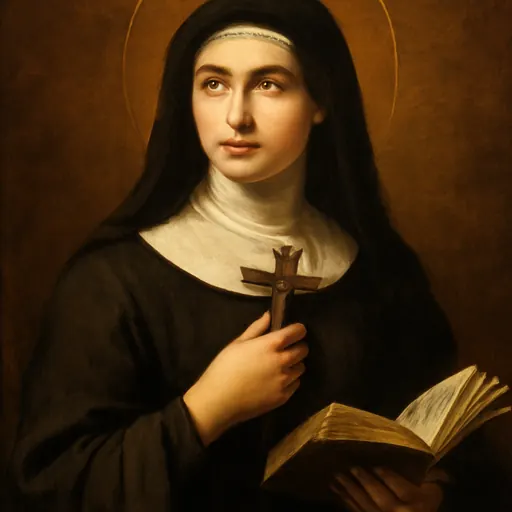
St. Lucy Filippini (1672–1732) was an orphaned noble girl from Corneto, Italy, who became a teacher of poor girls and women at Montefiascone under Cardinal Marco Antonio Barbarigo. She founded the Religious Teachers Filippini, saw fifty-two schools opened in her lifetime, and was canonized by Pius XI in 1930. Her feast is March 25.
Who was St. Lucy Filippini?
St. Lucy Filippini was an Italian teacher who gave her life to educating poor girls and women in the hill towns around Lake Bolsena and in Rome. Under the guidance of Cardinal Marco Antonio Barbarigo, bishop of Montefiascone, she trained teachers, opened schools and founded the community that bears her name, the Religious Teachers Filippini. She died on the feast of the Annunciation in 1732 and was canonized in 1930.
The Dicastery for the Causes of Saints sums up her ideal in five Italian words: illuminare le intelligenze e sollevare i cuori, "to enlighten minds and lift up hearts."
The life of St. Lucy Filippini
An orphan at Corneto
Lucy was born on January 13, 1672, at Corneto, the town now called Tarquinia, north of Rome. Her mother died before Lucy's first birthday, and her father six years later, so she grew up in the house of an aunt and uncle. As a little girl, the sisters' biography says, she built small altars and prayed at them. She often visited the Benedictine nuns of the monastery of Santa Lucia in Corneto, and there she made her First Communion.
Called to Montefiascone
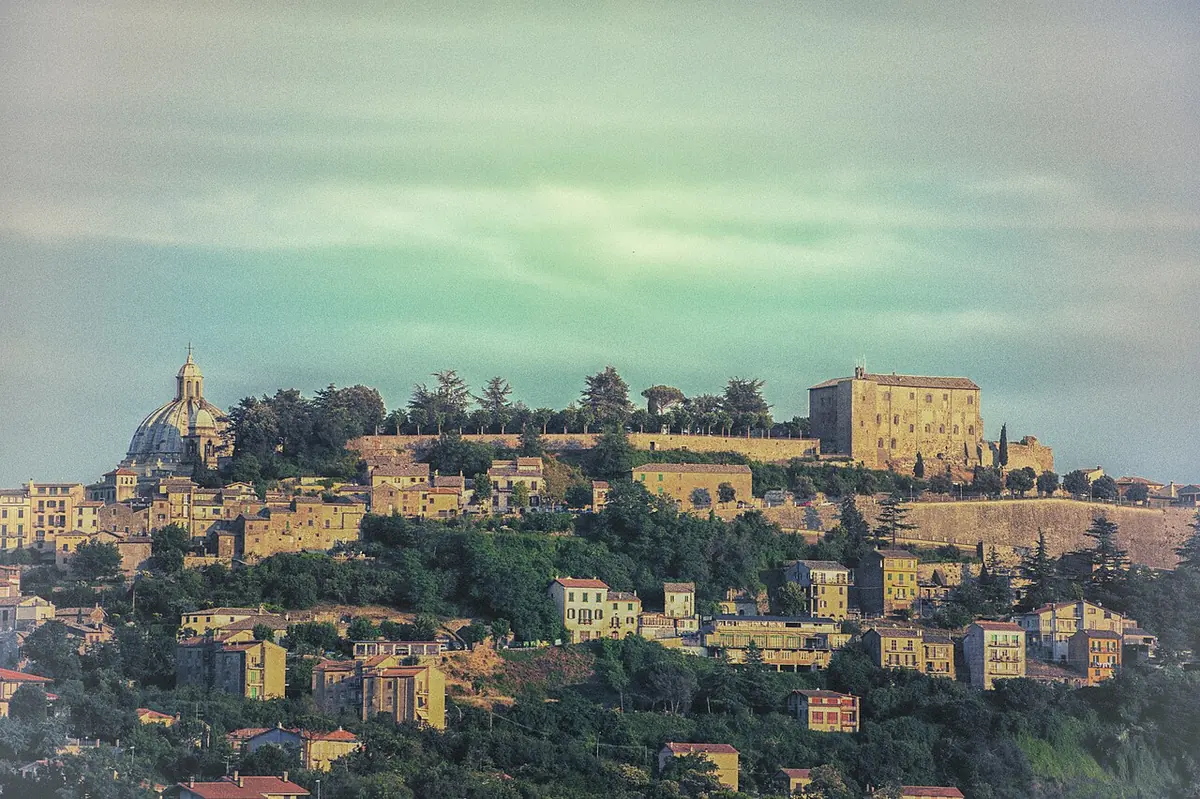
When Cardinal Barbarigo came to Corneto on his first pastoral visit, he noticed the earnest young woman, and Lucy followed him to Montefiascone, his cathedral town, to put her life in his hands. Barbarigo wanted to renew Christian life in his diocese, and he believed the way to do it ran through the education of girls, who would one day shape their own homes.
In 1692 he invited St. Rose Venerini, who had opened the first public school for girls at Viterbo, to found schools in his diocese. Over about two years Rose opened some ten of them, in Montefiascone, Corneto and the villages nearby. The Venerini sisters still call Rose Lucy's "prima Maestra," her first teacher. When Rose went home, Lucy was put in charge.
The schools
The girls of Montefiascone learned reading, Christian doctrine, weaving, embroidery and the other arts of the home. Reading for poor girls was still unusual then. Barbarigo wrote a rule for Lucy and her companions about twelve years after the work began, and fifty-two schools were opened during her lifetime. Lucy also gathered grown women for classes, prayer and works of charity, and sent her teachers to the sick and the poor.
She trusted the children to carry what they learned home. The sisters preserve her words: "Having learned in school those things that were necessary, they repeat them to parents and relatives at home and thus become so many young teachers."

Rome
In 1707 Pope Clement XI called Lucy to Rome to open schools there. Her first Roman school, opened that May, drew pupils at once, but difficulties soon called her back to Montefiascone. She asked Rose Venerini to take her place, and Rose came to Rome that December. Lucy later returned and completed the founding of the Roman schools, which the pope placed under his protection.
Her death
Lucy died at Montefiascone on March 25, 1732, the feast of the Annunciation, sixty years old. Her community kept growing after her death. In the twentieth century the Religious Teachers Filippini came to the United States, where they taught among Italian immigrant families.
Miracles and canonization
Pope Pius XI beatified Lucy Filippini in 1926 and canonized her on June 22, 1930. Both steps required miracles attributed to her intercession, examined and approved by the Church. We have not found a reliable published account of those cures, so we don't describe them here. She was given the last empty founder's niche in St. Peter's Basilica, where her marble statue by Silvio Silva was placed in 1949.
Symbols of St. Lucy Filippini in art
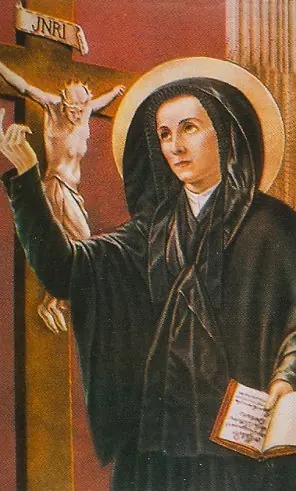
- Crucifix: her love for Christ crucified, the center of her prayer. Statues show her raising a cross.
- A girl at her side: the pupils to whom she gave her life.
- Book: the catechism and the reading lessons she brought to poor girls.
- Dark habit and veil: the plain dress of her Teachers.
In St. Peter's she stands high in a niche on the left side of the nave, a girl kneeling at her feet. A similar statue stands outside her sisters' house in Rome.
Feast day and where she is honored
We keep her memory on March 25, the day she died, which is also the Solemnity of the Annunciation. She is honored at Montefiascone and Tarquinia and wherever the Religious Teachers Filippini serve. See other saints of these days on our feast days page.
Praying with St. Lucy Filippini
We have found no traditional prayer to St. Lucy Filippini in the standard prayer books; her sisters pray to her in their own devotions. We can ask her intercession simply, in our own words.
Let us ask St. Lucy Filippini to pray for teachers and catechists, for girls and women who are denied an education, and for every child who carries the faith home to their family.
Frequently asked questions
Who was St. Lucy Filippini?
An Italian teacher and foundress of the late 1600s and early 1700s. Trained by St. Rose Venerini and guided by Cardinal Marco Antonio Barbarigo, she opened schools that taught poor girls reading, Christian doctrine and the domestic crafts, and she founded the community now called the Religious Teachers Filippini.
When is the feast of St. Lucy Filippini?
March 25, the day she died in 1732. It is also the Solemnity of the Annunciation of the Lord.
When was St. Lucy Filippini canonized?
Pope Pius XI beatified her in 1926 and canonized her on June 22, 1930, according to the Dicastery for the Causes of Saints.
Where are the Religious Teachers Filippini today?
The community she founded works in Italy and abroad, including the United States, where the sisters have long run schools and taught among Italian immigrant families.
Keep exploring
Sources
- Lucia Filippini, Dicastero delle Cause dei Santi. Beatification in 1926 and canonization on June 22, 1930, with an address of John Paul II to the Teachers' general chapter
- Our Founders, Religious Teachers Filippini (U.S. Province). Her childhood, the fifty-two schools, Clement XI's call to Rome in 1707, and her words on girls as 'young teachers'
- La Fondatrice, Maestre Pie Venerini. Rose Venerini's schools at Montefiascone in 1692–1694, and Lucy's school in Rome in 1707, which Rose took over for her