St. Julian of Antioch (St. Julian of Cilicia), Martyr
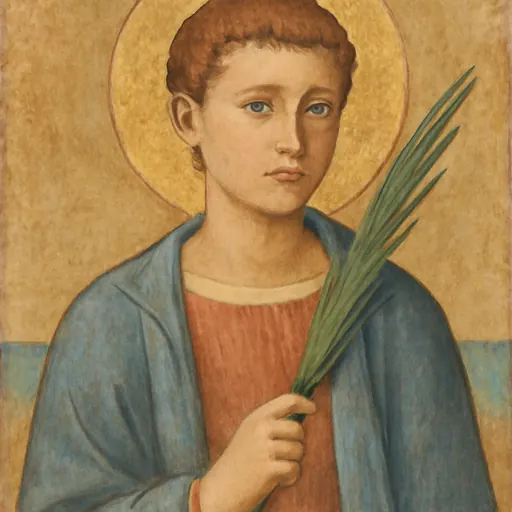
St. Julian of Antioch, also called St. Julian of Cilicia or of Anazarbus, was a young Christian of a senatorial family who was martyred about 305 under Diocletian. After a year of trials he was sewn into a sack with snakes and thrown into the sea; his body was recovered and enshrined at Antioch, where St. John Chrysostom preached in his honor. His feast is March 16 in the Roman Martyrology and June 21 in the Orthodox Church.
Who was St. Julian of Antioch?
St. Julian of Antioch was a young Christian from Cilicia, on the southern coast of what is now Turkey, who died for Christ in the great persecution of Diocletian about the year 305. He is also called St. Julian of Cilicia, of Anazarbus or of Tarsus. After his death his relics were enshrined at Antioch, and there, near the end of the fourth century, St. John Chrysostom preached a panegyric in his honor.
Alban Butler, who drew his life from that sermon, sums up his story in one line: "This saint was a Cilician, of a senatorian family in Anazarbus, and a minister of the gospel."
Our sources are two. The oldest is Chrysostom's sermon, preached at the shrine within a century of Julian's death, which Butler followed. The second is the later Greek life used by the Orthodox Church, which adds details about his family. They agree on the main story and differ on some places.
The life and martyrdom of St. Julian
A senator's son with a Christian mother
According to the Orthodox life, Julian was born at Diocaesarea in Cilicia. His father was a pagan senator and his mother a Christian. After his father died, she moved with her son to Tarsus, the city of St. Paul, where Julian was baptized and raised in the faith.
A year of trials
When Julian was eighteen, Diocletian ordered everyone to offer sacrifice to the gods. Julian refused and was brought before the governor. Butler, following Chrysostom, says the judge tried to wear him down by time. For a whole year Julian was brought before the tribunal and dragged from town to town through Cilicia, sometimes flattered and sometimes tortured. Instead of breaking him, Butler writes, the year "gave him an opportunity of encouraging in the faith all the Christians of Cilicia by his example and exhortations."
The Orthodox life adds that his mother followed him from city to city. At Aegea, a port on the coast, she won leave to visit him in prison, supposedly to persuade him to give in. She spent three days with him and urged him to stand firm to the end, and then she too confessed Christ before the governor and suffered for it.

Into the sea
At last the governor condemned him. He had Julian sewn into a sack with sand, snakes and scorpions and thrown into the sea off Aegea. Butler notes that this was the old Roman punishment for parricides, the worst of criminals, and rarely carried out even on them.
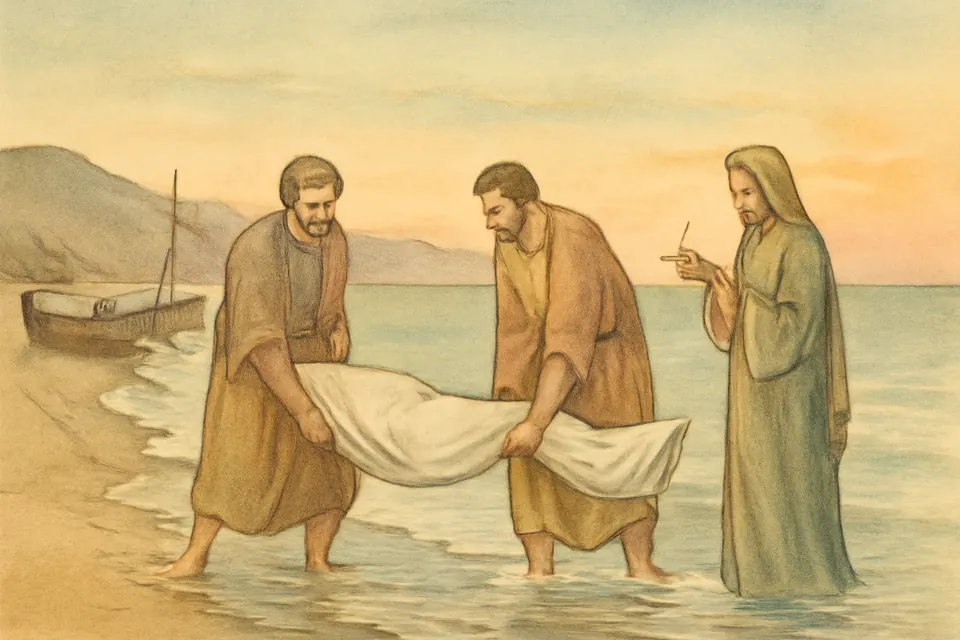
The sea gave back his body. Butler says the faithful carried it to Alexandria in Cilicia (now İskenderun); the Orthodox life says a pious Christian buried it at Alexandria. From there his relics were brought to Antioch.
St. Julian's shrine and miracles
At Antioch, St. Julian's relics rested in a shrine where Christians came to pray. Preaching before the shrine, Chrysostom affirmed, in Butler's words, "that no devil could stand their presence, and that men by them found a remedy for their bodily distempers, and the cure of the evils of the soul." These healings at his tomb are reported by a witness who knew the shrine himself.
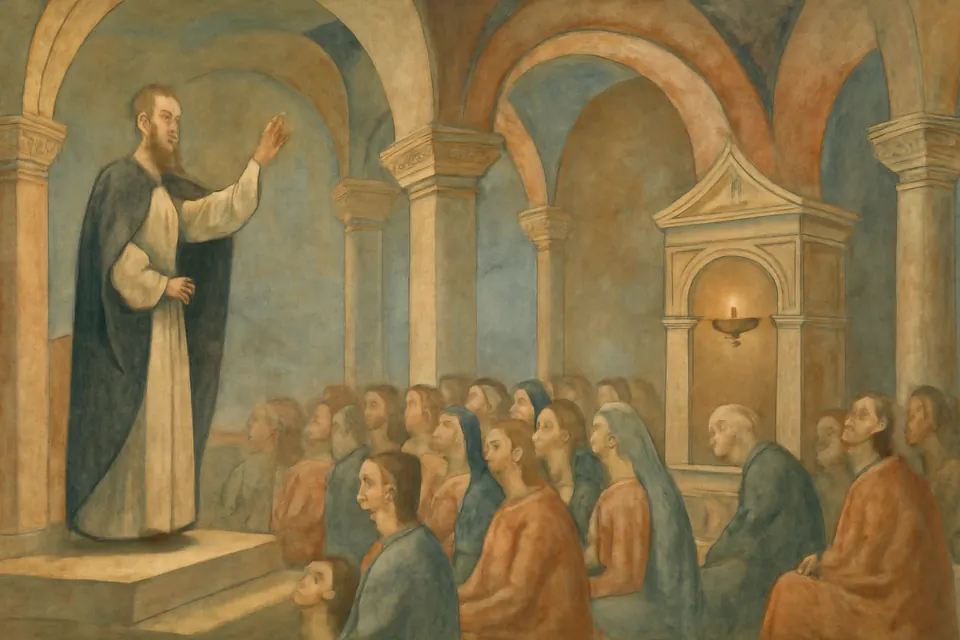
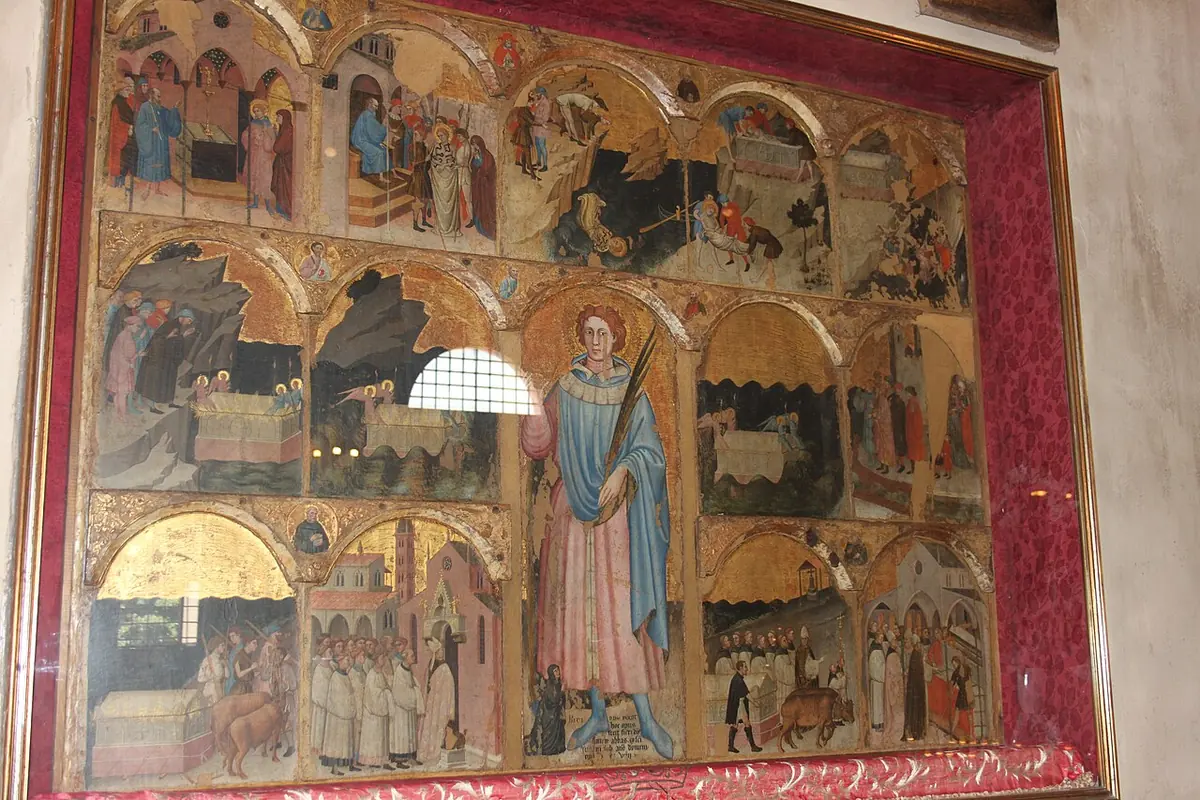
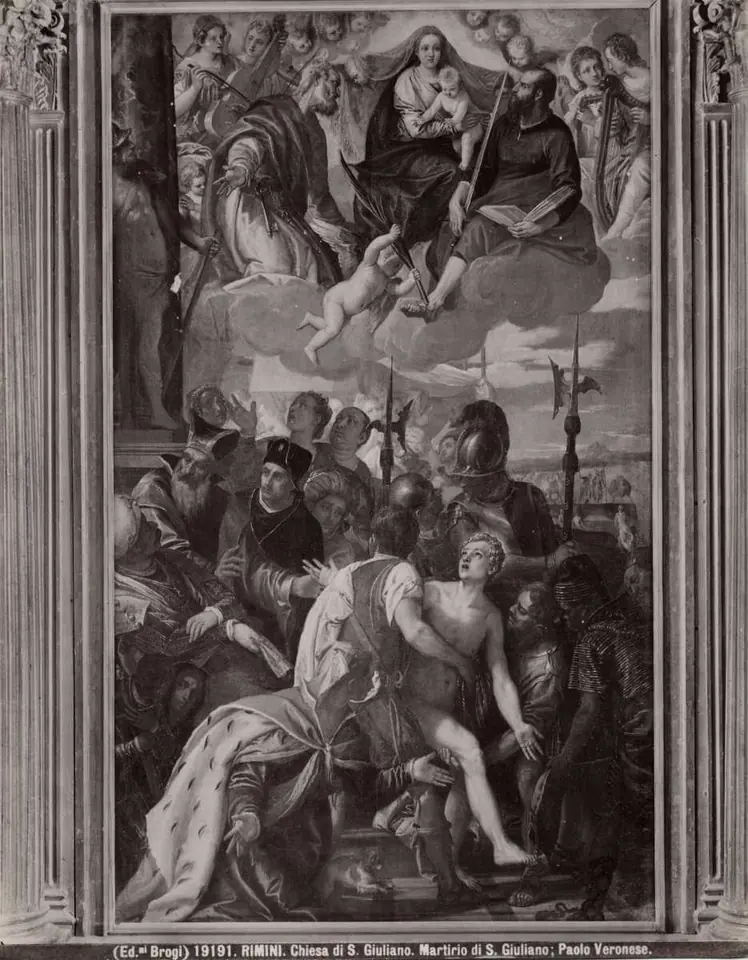
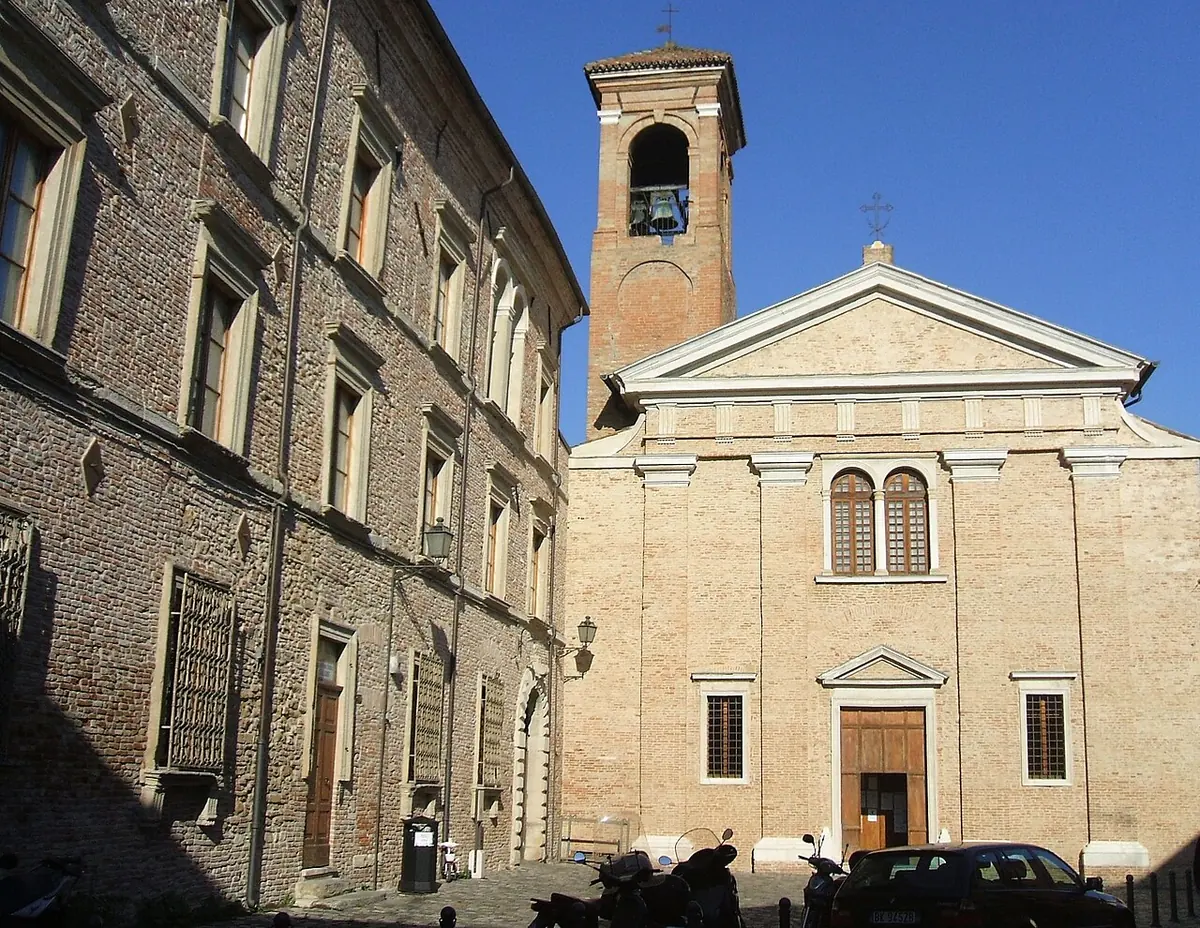
Fragments of his relics are kept today on Mount Athos, at the Pantokrator and St. Panteleimon monasteries, according to the Orthodox Church in America. In Italy, the Church of San Giuliano Martire in Rimini is dedicated to him and keeps Veronese's altarpiece and Bittino's polyptych.
Why St. Julian is the patron of gardens and fields
Because he was thrown into the sea with snakes and scorpions, Orthodox Christians ask St. Julian to protect gardens and fields "from creeping things, snakes, and harmful insects," in the words of the OCA life.
Symbols of St. Julian in art
Look for:
- A young, beardless man in a cloak, often with curly hair, as in Bittino's polyptych.
- A martyr's palm.
- A sack with snakes and scorpions, and the sea, for the manner of his death.
- A procession of scenes around him in older Italian altarpieces, telling his trials one by one.
In Orthodox icons he is a young martyr holding a cross.
Feast day and prayer
The Roman Martyrology remembers him on March 16; the Orthodox Church keeps his feast on June 21. See our feast days calendar for other saints of the month.
The Orthodox Church in America prays this troparion:
Your mother guided you to become a glorious soldier of Christ, / and you were clad in the armor of the Spirit, / and entering the contest, you cast down the Enemy. / Now, O godly-minded Julian, pray to Christ God for all of us.
Let us ask him to pray for young people whose faith is tested, and for every mother who prays for her children: Holy Martyr Julian, pray for us.
Frequently asked questions
When is the feast of St. Julian of Antioch?
March 16 in the Roman Martyrology. The Orthodox Church honors him on June 21 as St. Julian of Tarsus.
Why is he called Julian of Antioch if he was from Cilicia?
He was born and martyred in Cilicia, on the southern coast of what is now Turkey, but his relics were brought to Antioch, where his shrine became famous. That is why he is known by both names, and also as Julian of Anazarbus and Julian of Tarsus, after the Cilician cities linked to his life.
Is St. Julian of Antioch the same as St. Julian the Hospitaller?
No. St. Julian the Hospitaller is a medieval legend about a nobleman who did penance by caring for travelers. St. Julian of Antioch was an early martyr of the Diocletian persecution, praised by St. John Chrysostom.
What is St. Julian of Antioch the patron of?
The Orthodox life asks his prayers to protect gardens and fields from creeping things, snakes and harmful insects, because of the snakes he was thrown into the sea with.
Keep exploring
Sources
- Alban Butler, The Lives of the Fathers, Martyrs and Other Principal Saints, vol. 3, March 16: St. Julian of Cilicia (1815, Internet Archive). Butler's account from St. John Chrysostom's panegyric, the sack thrown into the sea at Aegea, and the relics at Antioch
- Orthodox Church in America: Martyr Julian of Tarsus, in Cilicia. His mother, the year of trials, the relics on Mount Athos, and his protection of gardens and fields
- Orthodox Church in America: Martyr Julian of Tarsus, Troparion and Kontakion
- Rimini.com: Borgo San Giuliano. Veronese's altarpiece of the saint's martyrdom in the Church of San Giuliano