St. John Almond, Lancashire Priest Martyred at Tyburn in 1612

St. John Almond (about 1567–1612) was a Catholic priest from near Allerton, Lancashire, who was hanged, drawn and quartered at Tyburn on December 5, 1612, after ten years of secret ministry in England. He died, an eyewitness wrote, with a smiling face. Pope Paul VI canonized him in 1970 among the Forty Martyrs of England and Wales.
Who was St. John Almond?
St. John Almond was a Lancashire priest who served English Catholics in secret for ten years and died for the faith at Tyburn on December 5, 1612. We keep his feast on that day. He is remembered for a mind so quick that a bishop could not trap him, and for a death so cheerful that the eyewitness who wrote it down could not forget his face.
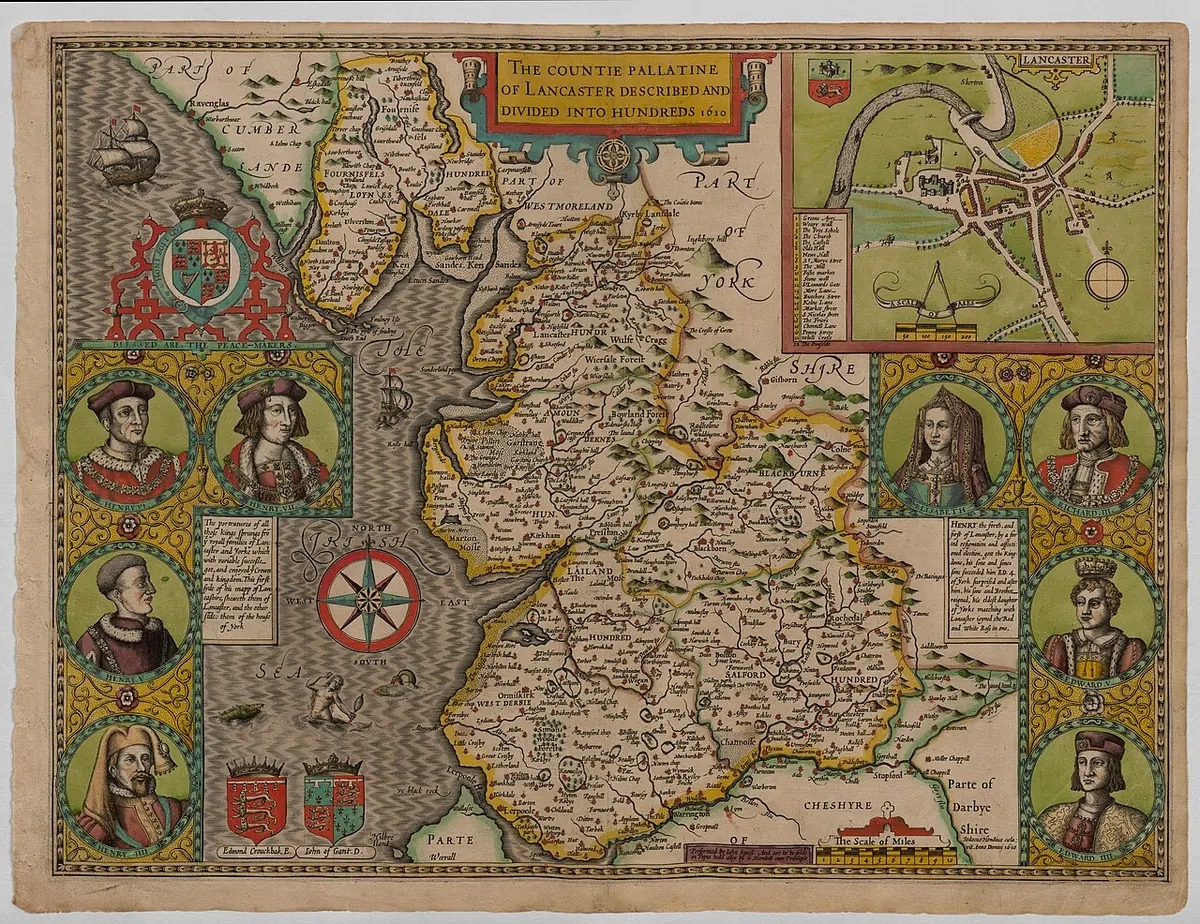
He was born about 1567 "on the skirts of Allerton," near Liverpool, and went to school at Much Woolton. As a young man he crossed to Ireland and then went abroad. Bishop Richard Challoner, who gathered the martyrs' records in the 1700s, thought he might be the Almond sent from the English College at Rheims to Rome in 1582. What is certain is that he spent about ten years studying on the Continent, that he defended theses in divinity at Rome in 1601 "with great applause," and that in 1602 he passed through the English College at Douai on his way home as a priest.
A priest in hiding
Almost nothing survives about his ten years of ministry. He went by the names Lathom and Molineux, and he was arrested and banished more than once. An eyewitness of his death described him as a man "of an ingenious and acute understanding, sharp and apprehensive in his conceits and answers, yet complete with modesty, full of courage." He was of middle height and lean, "either by nature or through ghostly discipline," and his dark hair was turning white early. In his conversation, the same witness wrote, he was "mild, learned and persuasive."
Before the Bishop of London
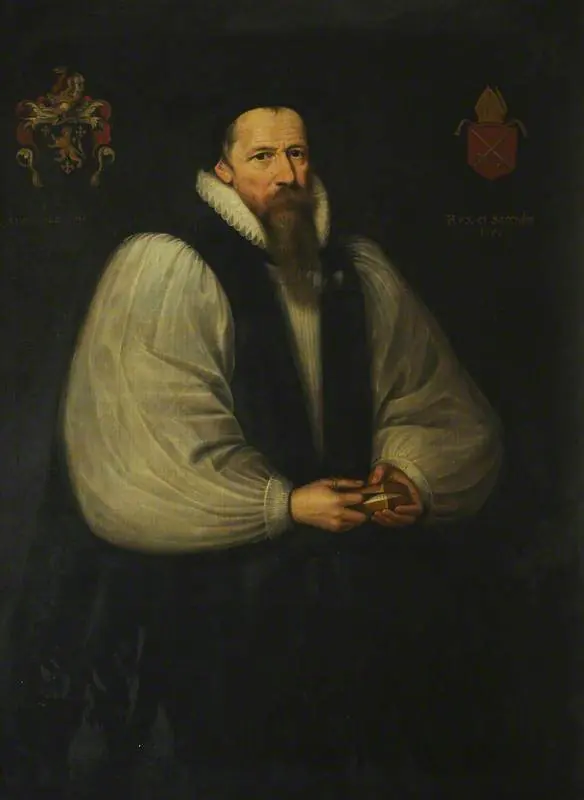
He was arrested on March 22, 1612, and brought before Dr. John King, the new Bishop of London. Almond wrote down the examination himself, and Challoner printed it. It is one of the liveliest records we have from any of the martyrs.
Asked where he was born, he said, "About Allerton." The bishop pounced on the word. Almond explained that he was born not in Allerton but "in the edge or side of Allerton." "You were born under a hedge, then, were you?" said King. Almond answered, "Many a better man than I, or you either, has been born under a hedge."
Asked whether he was a priest, he would neither admit it nor deny it, since no one had accused him. When the bishop offered him the Oath of Allegiance and said he had taken it himself seven times, Almond replied, "God forbid!" and argued that the oath required a man to swear as heretical something Scripture nowhere condemned. When King lost his temper and called him "a proud arrogant Jack," Almond wrote, "I replied, God forgive you, your words trouble me not." He offered instead to swear all the allegiance to King James that "any Christian king could expect by the law of nature, the law of God, or the positive law of the true Church."
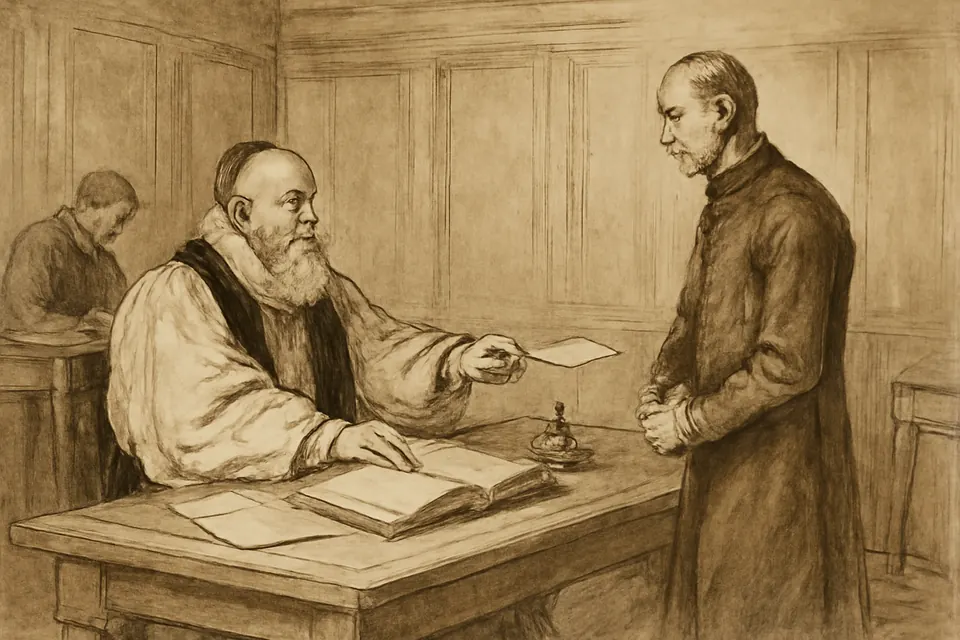
He was sent to Newgate, tried for being a priest ordained abroad and found guilty, though, Challoner notes, "what proofs were brought of his being such, does not appear."
His death at Tyburn
For about ten days before his execution he and other prisoners were kept in the dungeon of Newgate called Little Ease, loaded with irons and lying on the damp ground. On the frosty morning of Saturday, December 5, 1612, he "stept with a smiling countenance into the sledge" and was drawn to Tyburn. His legs were so stiff from the cold cell that he could barely climb into the cart.
From the cart he declared that he died "for the Catholic religion, and for Christ's cause," and that he was "sorry he had no more lives to lose." He prayed aloud for King James and his family. Ministers interrupted him again and again; he answered each one patiently. He threw three or four pounds in silver to the poor crowding around the gallows and forgave the keeper of Newgate. He gave the hangman a gold coin and spoke of death in words the witness took down:
And yet not death, for death is the gate of life unto us, whereby we enter into everlasting blessedness.
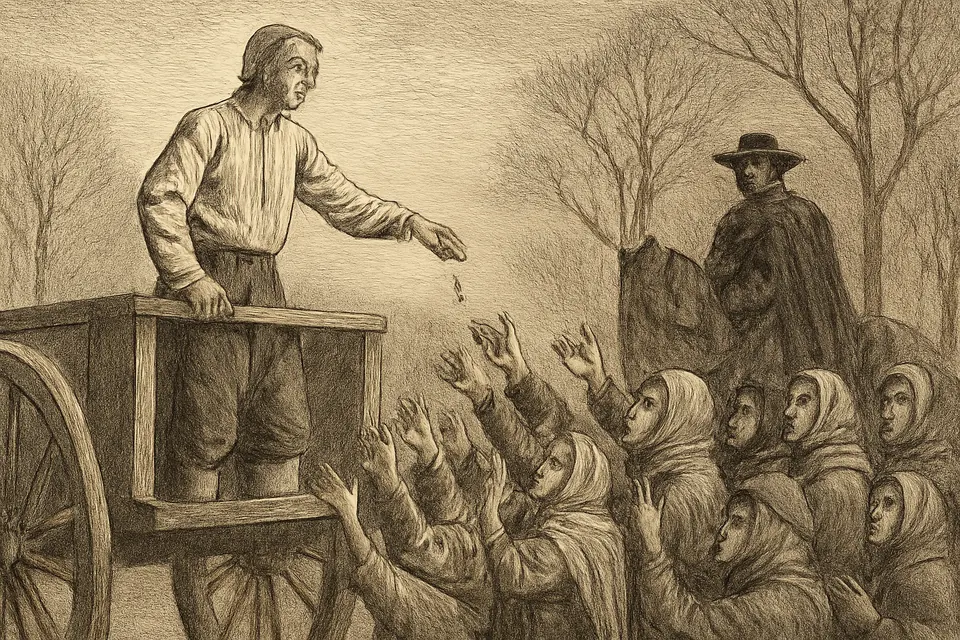
Standing in his shirt in the cold, he said that at the last day Christ "will then reveal what I am." He asked the hangman to give him a sign so that "he might die with the name of his blessed Saviour that sweet name of comfort in his mouth," and died saying "Jesu, Jesu, Jesu!" He was about forty-five.
A bishop's sorrow
Challoner adds a story he tells with care. Bishop King, who was held responsible for Almond's death, "is said to have been ever after a man of sorrows," and Catholic writers of the time claimed that he was reconciled to the Catholic Church before he died in 1621. A book printed after his death, The Bishop of London's Legacy, puts these words in his mouth: "O happy Almond... in thy blood, even in thy blood did I wash my hands." Challoner introduces the story with "if we may believe" it, and so should we. The conversion is reported, never proven.
Canonization
Pope Pius XI beatified John Almond in 1929. Pope Paul VI canonized him on October 25, 1970, as one of the Forty Martyrs of England and Wales.
Symbols of St. John Almond in art
No portrait from his lifetime survives, so every image of him is modern. He is shown as a lean priest in a black cassock, sometimes with graying hair, as the eyewitness described him. Look for:
- The palm: the sign of a martyr.
- The rope: the manner of his death, in group images of the English martyrs.
- A book: a nod to his learning and the theses he defended at Rome.
In paintings and windows of the Forty Martyrs he is easy to miss among the many priests. Look for the Lancashire men grouped with St. Edmund Arrowsmith and St. John Rigby.
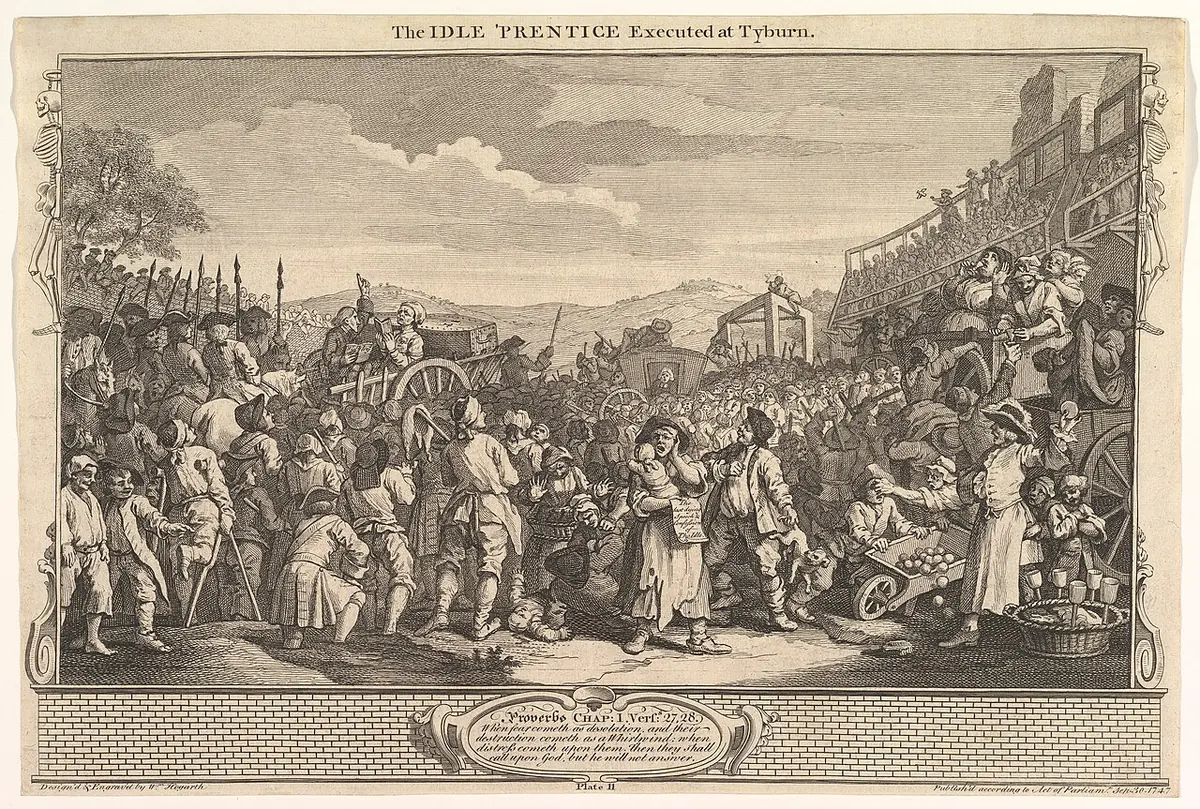
Feast day, relics and prayer
We keep his feast on December 5. According to Dom Bede Camm's Forgotten Shrines (1910), the son of the Spanish ambassador, the Count of Gondomar, was present at Tyburn and obtained relics of Almond for his father. They were venerated at Gondomar in Spain, and Camm writes that portions were later brought to Downside Abbey in Somerset. See the feast day calendar for the other martyrs of these years.
We know of no traditional prayer composed for St. John Almond alone. Let us ask him, who answered his accusers with wit and without bitterness, to pray for all who must defend their faith before hostile questioners, and for the grace to forgive as he forgave. St. John Almond, pray for us.
Where the relics of St. John Almond are kept: see them on the relics map →
Frequently asked questions
Who was St. John Almond?
An English Catholic priest born about 1567 on the edge of Allerton, near Liverpool. He studied abroad for about ten years, defended theses in divinity at Rome in 1601, returned to England in 1602 and worked in secret under the names Lathom and Molineux. He was arrested in March 1612 and executed at Tyburn on December 5 of that year.
Why was John Almond executed?
He was condemned for high treason under the statute of 1585 that made it a capital crime for a priest ordained abroad to be in England. He refused the Oath of Allegiance of 1606 because of a clause he could not swear in conscience, though he declared his loyalty to King James.
When is the feast of St. John Almond?
December 5, the day of his martyrdom in 1612. He is also honored with the Forty Martyrs of England and Wales, canonized by Pope Paul VI on October 25, 1970.
Where are St. John Almond's relics?
According to Dom Bede Camm's Forgotten Shrines (1910), relics of John Almond and Thomas Maxfield were obtained for the Spanish ambassador, the Count of Gondomar, and were venerated at Gondomar in Spain, with portions later brought to Downside Abbey in Somerset.
Keep exploring
Sources
- Richard Challoner, Memoirs of Missionary Priests (1924 ed.), pp. 328–338, at archive.org. His examination before Bishop King in his own words, and an eyewitness account of his death
- Bede Camm, Forgotten Shrines (1910), p. 357, at archive.org. His relics at Gondomar and Downside; Bishop King's portrait at Christ Church
- Holy See: Paul VI, Canonization of forty martyrs from England and Wales, October 25, 1970