Blessed Nicolas Steno
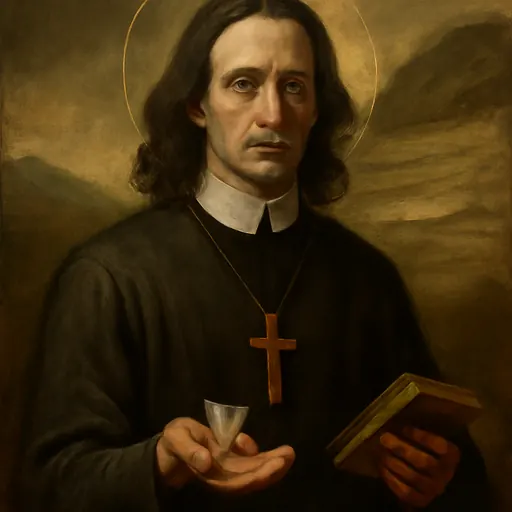
Blessed Nicolas Steno (Niels Stensen, 1638–1686) was a Danish anatomist who discovered the duct of the parotid gland, showed that fossil "tongue stones" were sharks' teeth and laid the foundations of geology. Raised a Lutheran, he became a Catholic in Florence in 1667, then a priest and a bishop in northern Germany. We keep his feast on December 5.
Who was Blessed Nicolas Steno?
Blessed Nicolas Steno was one of the great scientists of the seventeenth century and a holy bishop of the Catholic Church. Born Niels Stensen in Copenhagen in 1638, the son of a Lutheran goldsmith, he made discoveries in anatomy and geology that are still taught today. Then, in the middle of his fame, he became a Catholic, a priest and a missionary bishop who gave away everything he had. He died at Schwerin in northern Germany in 1686, and we keep his feast on December 5.
He saw no war between the two halves of his life. In his Demonstrationes anatomicae he wrote that the true end of anatomy is to lead those who study the body "to the dignity of the soul" and through the wonders of both "to the knowledge and love of their Author" (our translation, as quoted by John Paul II).
The scientist
Steno studied medicine at Copenhagen, Rostock and Amsterdam. In Amsterdam, still in his early twenties, he found and described the duct that carries saliva from the parotid gland to the mouth. Anatomists still call it Stensen's duct.
He went on to Paris and then to Florence, where the Grand Duke of Tuscany, Ferdinand II, gave him a post at the Hospital of Santa Maria Nuova and time for research. In October 1666 fishermen caught a huge shark near Livorno, and the Grand Duke had its head sent to Steno. Dissecting it, Steno was struck by how its teeth matched the "tongue stones," or glossopetrae, found in rocks. People had long said these stones fell from the sky or grew inside the earth. Steno argued that they were simply the teeth of sharks that had once lived and been buried in sediment.

That led him to a bigger question: how can one solid body come to lie inside another? His answer, the short book called the Prodromus (1669), explained how layers of rock settle out of water one on top of another, the lower ones older than the upper. Geologists still use the principles he set down.
The convert
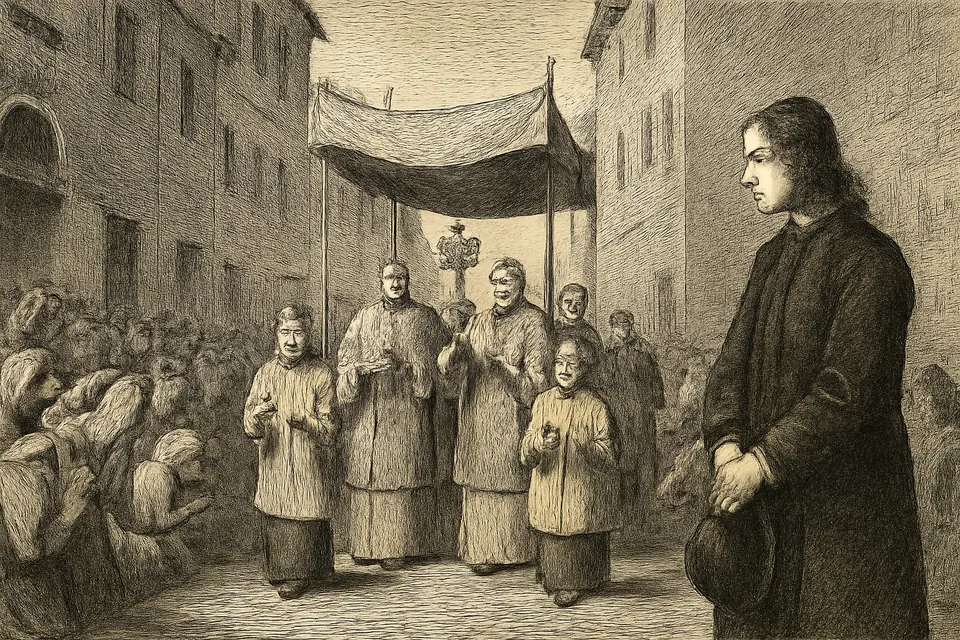
Steno was raised a devout Lutheran, and he took his faith seriously. In Catholic Florence he watched, asked questions and argued. The Dicastery's account names two women who helped him, the noblewoman Lavinia Arnolfini of Lucca and a Poor Clare, Sister Maria Flavia del Nero. In June 1667 he was deeply moved by the Corpus Christi procession in Livorno. On November 4, 1667, he was received into the Catholic Church.
He kept up his research for a time, and wrote letters to his Lutheran friends explaining why he had become a Catholic. Soon he felt a higher call. He was ordained a priest in Florence in 1675, and in 1677 St. Gregory Barbarigo consecrated him a bishop.
The missionary bishop
Pope Innocent XI sent him as vicar apostolic to the scattered Catholics of northern Germany, a region almost entirely Lutheran. The Dicastery's biography says he walked from Rome to Hanover. He served in Hanover, Münster, Hamburg and finally Schwerin, made his visitations on foot, and lived in great poverty and penance, giving all he had to the poor. He was firm when he had to be: he said no when a Catholic prince tried to lay hold of a bishopric unlawfully. And he was gentle with everyone, Catholic and Lutheran alike.

His bishop's coat of arms, from 1677, shows a heart with a cross above it. Worn out by penance and kidney disease, he went to Schwerin as a simple missionary. He died there in 1686. With no Catholic priest near to hear his confession, he confessed his sins aloud before those present.
His tomb and beatification
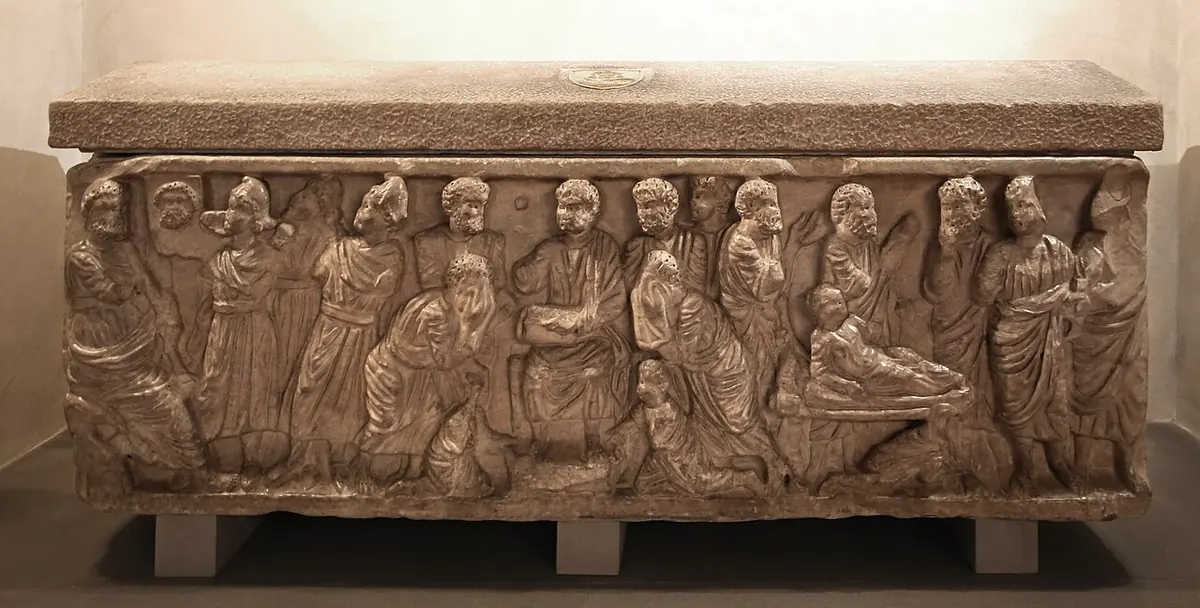
The Dicastery records that Lutherans received his body into their church at Schwerin. It was later carried to Florence and laid in the crypt of the Basilica of San Lorenzo, the church of the Medici, where he rests today.
Pope John Paul II beatified him in St. Peter's Basilica on October 23, 1988. The Pope called him a seeker of truth all his life, in science and in faith, and was glad, he said, to add "a new star" to the constellation of saints that lights up Scandinavia's past, beginning with St. Ansgar (our translation). No miracle stories, reported or traditional, are attached to his name in the sources we trust. The Church honors him for the holiness of his life.
Symbols of Blessed Nicolas Steno in art
- Bishop's pectoral cross: in the 1868 engraving by J. P. Trap he holds a simple cross on his breast.
- Heart with a cross: the device of his coat of arms, a cross set above a heart.
- Shark's teeth and fossils: his work on the glossopetrae.
- Layers of rock: the strata he explained in the Prodromus.
- Anatomical drawings: the young anatomist of Amsterdam and Florence.

Feast day and prayer
We keep his feast on December 5. See the feast day calendar. John Paul II quoted his words: "Beautiful are the things we see, more beautiful those we cannot know" (our translation).
We know of no traditional prayer to him in public-domain form. Let us ask Blessed Nicolas to pray for scientists, students and teachers, for all who seek the truth with an honest heart, and for the unity of Christians in the North.
Frequently asked questions
Who was Blessed Nicolas Steno?
A Danish scientist, born in Copenhagen in 1638, whose work in anatomy and geology made him famous across Europe. In Florence he became a Catholic in 1667, was ordained a priest in 1675 and consecrated a bishop in 1677. He spent his last nine years as a missionary bishop in Lutheran northern Germany and died at Schwerin in 1686. John Paul II beatified him in 1988.
What did Nicolas Steno discover?
As a young anatomist in the Netherlands he described the duct of the parotid gland, still called Stensen's duct. In Florence, after dissecting a shark's head in 1666, he argued that the stones called glossopetrae were the teeth of real sharks. In his Prodromus of 1669 he explained how layers of rock are laid down one on another, ideas that geologists still use.
When is Blessed Nicolas Steno's feast day?
December 5, the day of his death in 1686 by the modern calendar. Older books give November 25, the same day in the Julian calendar then used in Denmark and northern Germany.
Where is Nicolas Steno buried?
In Florence, in the crypt of the Basilica of San Lorenzo. His body was first laid in a Lutheran church in Schwerin and later brought to Florence.
Keep exploring
Sources
- Catholic Encyclopedia (1912): Nicolaus Steno. His birth and death dates in the old calendar, his reception into the Church on November 4, 1667, his ordination and consecration, and his burial in San Lorenzo
- Dicastery for the Causes of Saints: Niels Stensen, biography and beatification homily (October 23, 1988). The Corpus Domini procession at Livorno, Lavinia Arnolfini, his walk from Rome to Hanover, his public confession at death, and the quotation from the Demonstrationes anatomicae
- University of California Museum of Paleontology: Nicholas Steno. The shark's head of 1666, the glossopetrae, and the Prodromus of 1669