Orthodox Saints
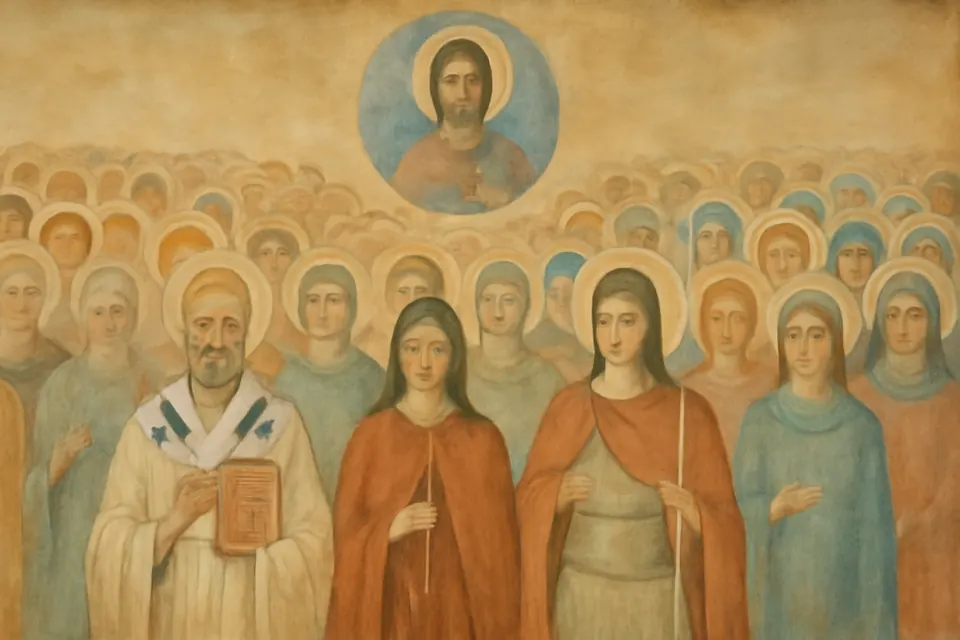
Orthodox saints are the holy men and women honored by the Eastern Orthodox Church: the saints of the first thousand years, whom we Catholics share, and the saints it has recognized since, such as St. Sergius of Radonezh, St. Seraphim of Sarov, St. Nektarios and St. Paisios. The Orthodox Church does not make saints; it glorifies those it already sees as holy.
What are Orthodox saints?
Orthodox saints are the men and women whom the Eastern Orthodox Church honors as holy, in glory with God, and able to pray for us. The Orthodox Church is a family of about fifteen self-governing Churches, among them the Patriarchate of Constantinople, the ancient Churches of Alexandria, Antioch and Jerusalem, and the Churches of Russia, Serbia, Romania, Bulgaria, Georgia, Greece and Cyprus, with the Orthodox Church in America and other Churches in the West. They share one faith, one Divine Liturgy and one great calendar of saints.
Much of that calendar is ours as well. For the first thousand years Christians of East and West honored the same apostles, martyrs, monks and bishops, and the Catholic and Orthodox Churches still keep them: St. Nicholas, St. George, St. Basil the Great, St. John Chrysostom, St. Catherine of Alexandria and hundreds more. After East and West drifted apart, each Church went on recognizing new saints of its own. This page is about the Orthodox side of that story: how the Orthodox Church recognizes its saints, the titles it gives them, and the saints it loves best.

The Second Vatican Council spoke warmly of this heritage. In its Decree on Ecumenism, it said of the Eastern Churches:
In this liturgical worship, the Christians of the East pay high tribute, in beautiful hymns of praise, to Mary ever Virgin, whom the ecumenical Council of Ephesus solemnly proclaimed to be the holy Mother of God, so that Christ might be acknowledged as being truly Son of God and Son of Man, according to the Scriptures. Many also are the saints whose praise they sing, among them the Fathers of the universal Church.
So we come to the Orthodox saints as family. Let us ask them to pray for us, and for the day when East and West will again praise God at one altar.
How the Orthodox Church glorifies its saints
"The Church does not make saints"
The Orthodox usually speak of glorification rather than canonization, and the word says a great deal. A booklet the Orthodox Church in America published for the canonization of St. Herman of Alaska in 1970 puts it plainly: "Canonization does not make anybody a saint. Canonization recognizes that someone already was, in his own lifetime, a saint." To glorify a saint is to give glory to God for what he has already done in that person, and to add the saint's name to the list, the canon, of those remembered in the Church's services.
For the first thousand years, that same booklet says, saints were recognized without any formal rite. A local church began to remember a martyr or a holy bishop in its prayers, to visit the grave, to ask for the saint's help, and the memory spread. The great saints of the early Church were honored this way in East and West alike.
How a saint is glorified today
The Orthodox Churches never built a process as detailed as the Catholic one, and each self-governing Church glorifies its own saints. The usual path, as Fr. Joseph Frawley of the OCA's Canonization Commission described it in 2000, runs like this:
- The people come first. Long before any inquiry, the faithful honor the holy person where he or she lived and died. They pray at the grave, keep the memory alive, and sometimes have icons painted.
- The bishop asks. A request goes, usually through the diocesan bishop, to the Holy Synod of that Church.
- A commission studies the life. It looks at the holiness of the life and at the person's teaching, which must be "fully Orthodox." Miracles may be studied, but no set number is required.
- The Holy Synod decides. It numbers the person among the saints, sets a feast day and has hymns written and an icon painted.
- The service of glorification. The last memorial service (panikhida) is sung for the departed one. Then, at Vespers and Matins, the new hymns are sung for the first time and the saint's icon is unveiled. From that moment the Church no longer prays for the person, but asks the saint to pray for us.
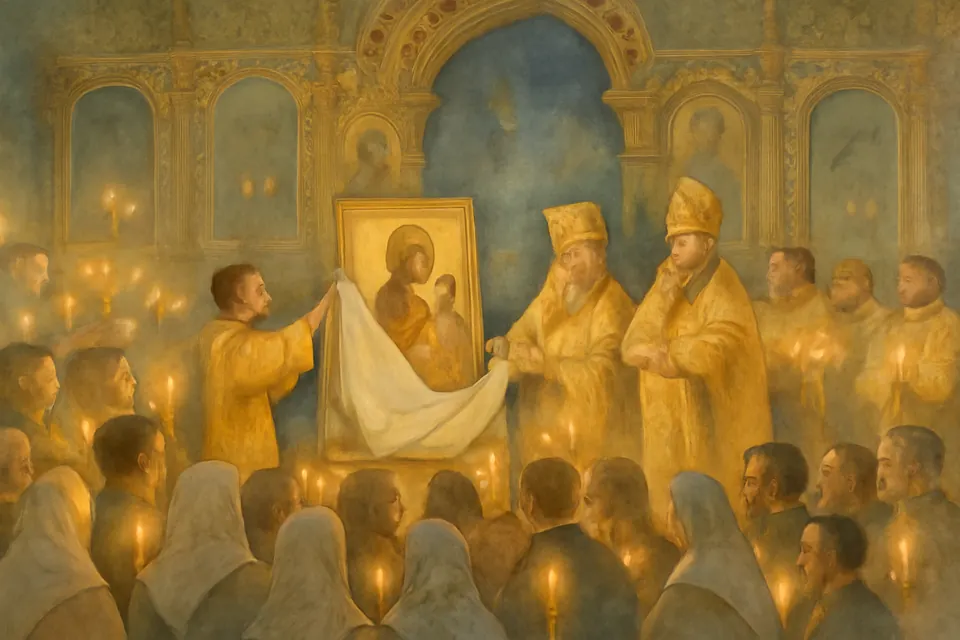
The other Orthodox Churches are then told, so that they can add the saint to their own calendars. A saint may first be honored in one land and later in all. The Patriarchate of Constantinople, for example, added St. Nektarios of Aegina and St. Cosmas of Aetolia to its list of saints in 1961 and St. Paisios of Mount Athos in 2015.
Glorifications to remember
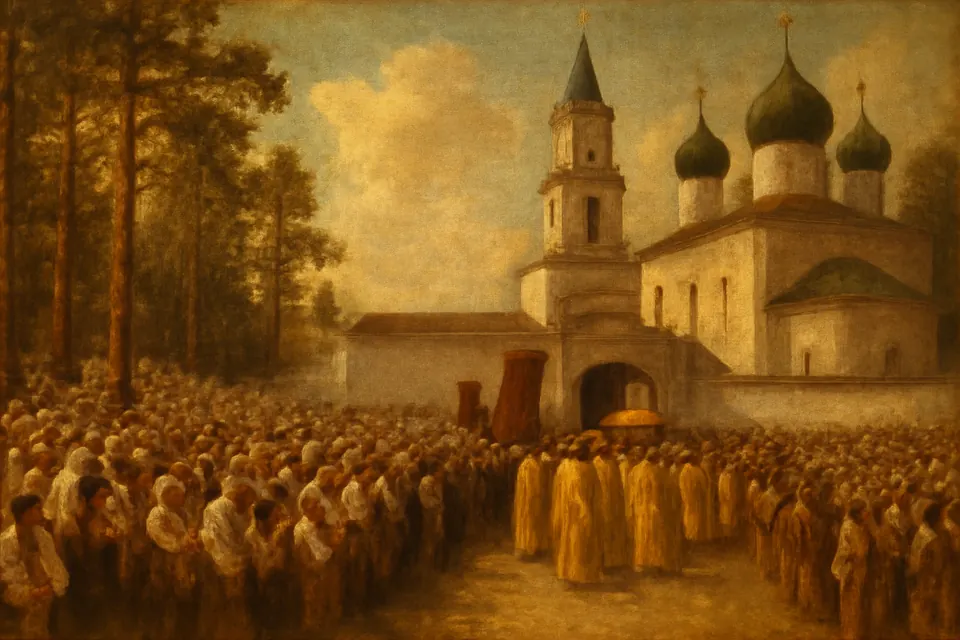
Some Orthodox glorifications drew whole nations. When the Russian Church glorified St. Seraphim of Sarov at Sarov in July 1903, an immense crowd of pilgrims came, and Tsar Nicholas II helped carry the relics in procession.
In 1970 the Orthodox Church in America glorified St. Herman of Alaska at Kodiak, following the pattern used for St. Seraphim. Since then it has glorified other saints of North America, among them St. Alexis Toth of Wilkes-Barre in 1994 and St. Raphael of Brooklyn in 2000. After the fall of Communism, the Russian Church began glorifying the thousands who died for Christ under Soviet rule, among them the surgeon-archbishop St. Luke of Crimea.
What about miracles?
Fr. Frawley wrote that while a glorification "may be initiated because of miracles, it is not an absolute necessity." What is needed is "a virtuous life of obvious holiness," and teaching in harmony with the faith of the apostles and the Fathers. He named St. Nicodemus of the Holy Mountain and St. Innocent of Moscow as saints not known to have worked any miracles.
On this site we label the miracles of saints glorified by the Orthodox Church reported or traditional, because their Churches recognize saints without the Catholic process of approving particular miracles. That is a matter of method, not a judgment on the miracles. Many of them are very well attested.
The kinds of Orthodox saints
Orthodox calendars and icons give each saint a title that tells you at once what kind of holiness the Church sees in them. Learning the titles is the easiest way to read an Orthodox calendar.
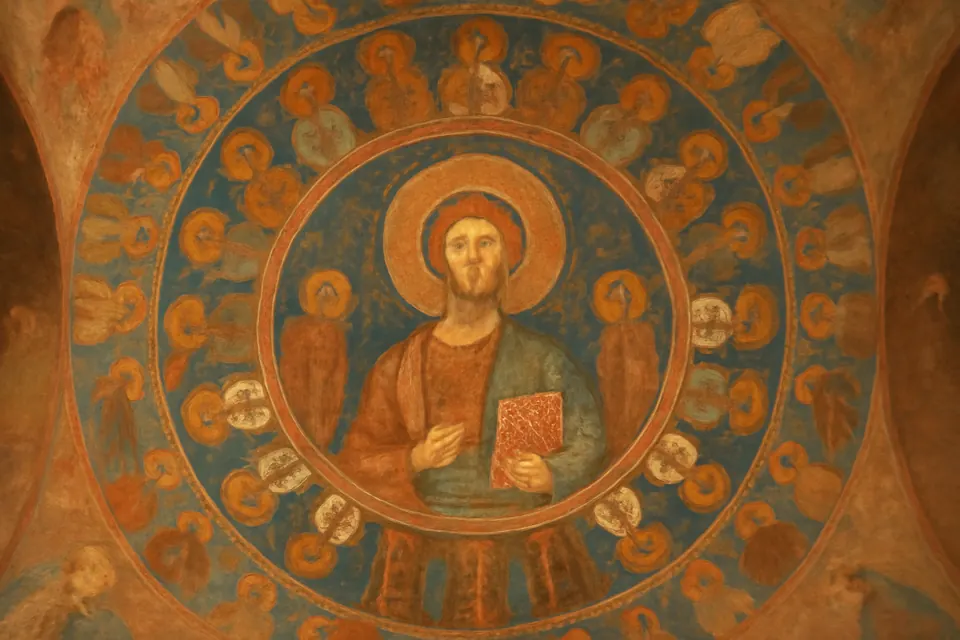
- Apostles and Equal-to-the-Apostles: the Twelve and those who, like them, brought the Gospel to a whole people. The Equal-to-the-Apostles include St. Mary Magdalene, the first to proclaim the Resurrection; St. Constantine and his mother St. Helena; St. Nino, who converted Georgia; Sts. Cyril and Methodius, apostles of the Slavs; St. Olga and St. Vladimir, who brought Kyivan Rus' to baptism; and St. Nicholas of Japan.
- Hierarchs (Agios or Svyatitel): holy bishops, such as St. Nicholas, St. Spyridon, the Three Holy Hierarchs Basil, Gregory and John, St. Gregory Palamas and, in modern times, St. John of Shanghai and San Francisco.
- Martyrs and Great Martyrs: those who died for Christ. The Great Martyrs are those whose sufferings were especially famous, among them St. George, St. Demetrius, St. Barbara, St. Catherine, St. Euphemia, St. Kyriaki, St. Pantaleon and St. Phanourios. A hieromartyr is a martyred bishop or priest, like St. Ignatius of Antioch; a venerable martyr is a martyred monk or nun, like St. Paraskevi of Rome and St. Efraim of Nea Makri.
- New Martyrs: those killed for Christ under Ottoman or Communist rule, from St. Cosmas of Aetolia to the countless New Martyrs and Confessors of Russia.
- Confessors: those who suffered prison, exile or torture for the faith but did not die for it, such as St. Maximus the Confessor, St. Theodore the Studite and St. Luke of Crimea.
- Venerable (Hosios, Prepodobny): holy monks and nuns, the largest company on the calendar. They include St. Anthony the Great, St. John Climacus, St. Sergius of Radonezh, St. Alexander of Svir, St. Seraphim of Sarov and St. Paisios.
- Unmercenaries (Anargyroi): physicians who healed without taking payment, above all Sts. Cosmas and Damian and St. Pantaleon.
- Passion-bearers: those who met a violent death in a Christlike spirit of forgiveness, though not strictly for confessing the faith. The first were Sts. Boris and Gleb of Kyiv; the best known today are St. Nicholas II and his family.
- Fools-for-Christ: those who hid their holiness behind an appearance of folly, like St. Xenia of Petersburg.
- Righteous: holy lay people and married clergy, from the forefathers of Christ such as St. Joachim and St. Anne to St. John of Kronstadt, the parish priest whose prayers moved all Russia.
The calendar of Orthodox saints
Every day belongs to the saints
The Orthodox Church remembers saints every day of the year. The hymns for each day are in the twelve volumes of the Menaion, one for each month, and short lives of the day's saints are read from the Synaxarion. The great illustrated Menologion made for Emperor Basil II about the year 985, now in the Vatican Library, gives a miniature for each saint of the day, and it shows how old this way of keeping the saints is.
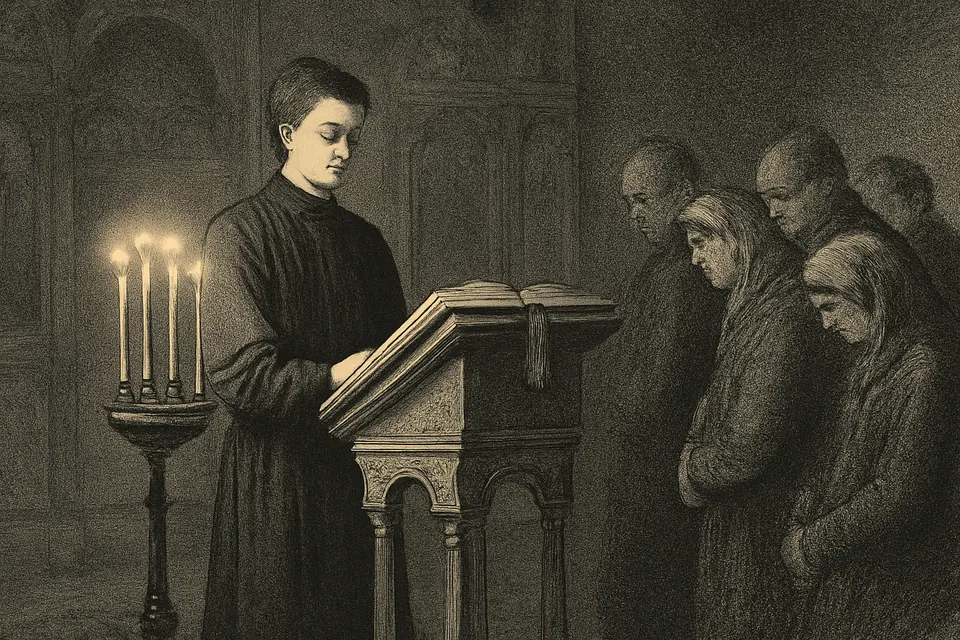
Many Orthodox Christians celebrate their name day, the feast of the saint whose name they bear, more than their birthday. In Greece, July 26 brings greetings to everyone named Paraskevi, and December 6 to every Nikos.
Old and New Calendar
Fixed feasts fall on different civil dates in different Orthodox Churches. The Churches of Russia, Serbia, Georgia, Jerusalem and Mount Athos keep the Julian, or Old, calendar, now 13 days behind the civil calendar, so their St. Nicholas Day, December 6, is our December 19. The Churches of Greece, Constantinople, Romania and Bulgaria, the Orthodox Church in America and others keep fixed feasts by the Revised Julian, or New, calendar, the same dates as the civil one. On this site, each saint's feast note gives both dates where they differ. See our feast day calendar for the Catholic dates.
All Saints and the saints of each land
The Sunday after Pentecost is the Sunday of All Saints in the Orthodox Church, the feast of every saint, known and unknown. Its kontakion offers the martyrs of the whole world to Christ as the first fruits of creation and asks, through their prayers and the Theotokos's, that the Church be kept in peace; the OCA prints the text on its website.
On the following Sunday, each Church honors the saints of its own land: All Saints of Russia, All Saints of Mount Athos, All Saints of North America, and so on. Icons of these gatherings, called a synaxis, show dozens of saints standing together.

The best-loved Orthodox saints
Here are the saints you will meet most often in Orthodox churches and homes. All of them have full entries on this site.
Saints of the undivided Church
The great saints of the first millennium are as loved in the East as anywhere. St. Nicholas of Myra is honored in every Orthodox land. St. Spyridon, the shepherd-bishop of Cyprus whose relics are on Corfu, is a favorite of the Greeks, as are the Three Holy Hierarchs and St. Gregory of Nazianzus. St. Demetrius is the protector of Thessaloniki, St. George of countless Orthodox villages, and St. Mary of Egypt is honored on a Sunday of Lent. The hymnographers St. Romanos the Melodist, St. Andrew of Crete and St. John of Damascus wrote much of what Orthodox Christians still sing.
Saints of the Greek world
- St. Gregory Palamas (died 1359), the archbishop of Thessaloniki who defended the prayer of the Athonite monks, honored on the second Sunday of Lent.
- St. Mark of Ephesus (died 1444), honored by the Orthodox for his stand at the Council of Ferrara-Florence.
- St. Dionysios of Zakynthos (died 1622), the bishop who forgave his brother's murderer.
- St. John the Russian (died 1730), a Russian prisoner of war who lived as a slave in Cappadocia and whose incorrupt relics are now on Euboea.
- St. Cosmas of Aetolia (died 1779), the monk who preached across Greece and founded schools before his martyrdom.
- St. Nektarios of Aegina (died 1920), the humble bishop and wonderworker whose monastery on Aegina draws pilgrims from all over Greece.
- St. Paisios of Mount Athos (died 1994), the elder of Mount Athos, glorified in 2015.
- St. Efraim of Nea Makri (died 1426), the monk-martyr whose relics were found in 1950.
- St. Phanourios, the martyr whose icon was found on Rhodes, to whom Greeks pray when something is lost.
Saints of Russia and Ukraine
- St. Olga and St. Vladimir, who brought Kyivan Rus' to Christ.
- St. Alexander Nevsky (died 1263), the prince who defended Novgorod and became a monk at the end of his life.
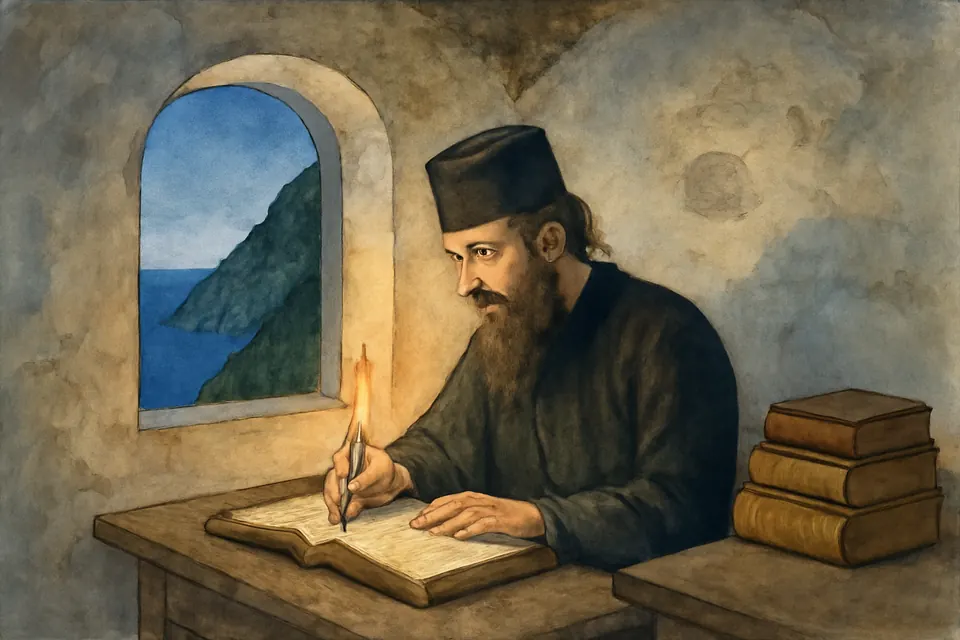
- St. Sergius of Radonezh (died 1392), the forest hermit whose Trinity Monastery became the heart of Russian monasticism.
- St. Alexander of Svir (died 1533), the northern abbot to whom, his life says, the Holy Trinity appeared.
- St. Seraphim of Sarov (died 1833), who greeted every visitor with "My joy, Christ is risen!"
- St. Xenia of Petersburg, the widow who became a fool-for-Christ.
- St. Theophan the Recluse (died 1894), bishop, hermit and translator of the Philokalia into Russian.
- St. John of Kronstadt (died 1908), the parish priest of Kronstadt, famous for his prayers for the sick.
- St. Nicholas II and his family, honored as passion-bearers.
- St. Luke of Crimea (died 1961), surgeon, archbishop and confessor.
- St. Alexander Schmorell (died 1943), the Orthodox member of the White Rose resistance in Munich, glorified as a passion-bearer in 2012.
Saints of Serbia, the Balkans and Georgia
St. Sava (died 1236), the prince who became a monk on Mount Athos and the first archbishop of the Serbian Church, is the father of the Serbian people's faith. St. Basil of Ostrog (died 1671), whose shrine high in a cliff in Montenegro is visited by Christians and Muslims alike, is the great wonderworker of the Balkans. St. Naum of Ohrid (died 910), a disciple of Cyril and Methodius, is honored at his monastery on Lake Ohrid. St. Nino is the enlightener of Georgia, whose grapevine cross is still the symbol of the Georgian Church.
Saints of North America
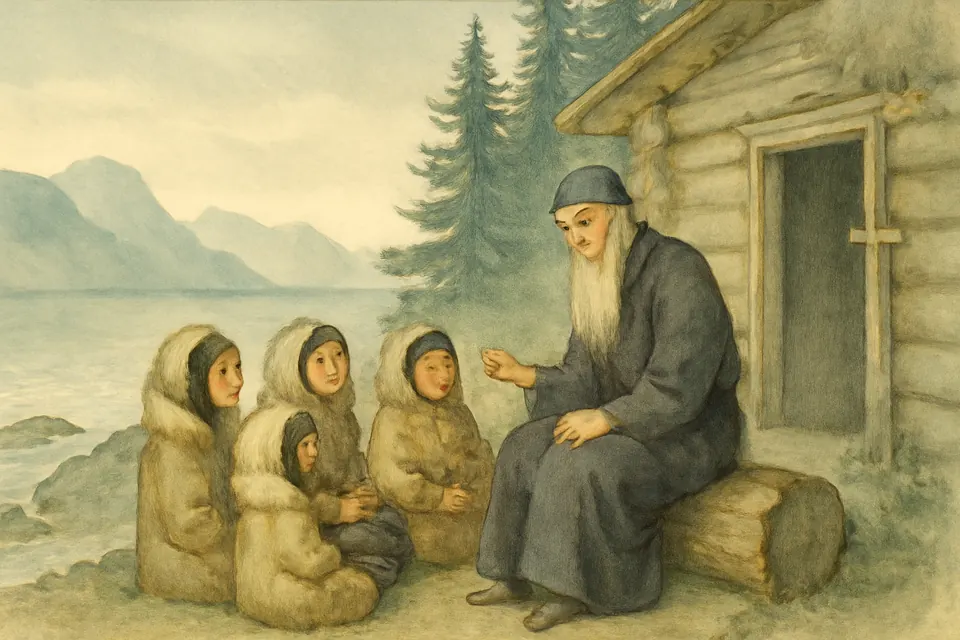
The Orthodox Church came to North America through Alaska, and its first saints were missionaries and natives there. St. Herman of Alaska, a monk from Valaam, was glorified in 1970, and the young Aleut martyr St. Peter the Aleut in 1980. St. Alexis Toth led many Carpatho-Russian immigrants in Pennsylvania into the Orthodox Church. St. Raphael of Brooklyn, the first Orthodox bishop consecrated in North America, shepherded the Arab Christians of the New World. St. John of Shanghai and San Francisco (died 1966), a wandering archbishop who cared for orphans in China and refugees in the Philippines, is buried in San Francisco, where pilgrims pray at his relics.
How Orthodox Christians honor the saints
Icons
In an Orthodox church the saints are everywhere: on the iconostasis, the screen of icons before the altar, on the walls and in the domes. The faithful light candles before the icons, bow and kiss them. The OCA's 1970 booklet explains that the believer "bows to honor the image of God" seen in the saint, and that "praying to a saint means something very easily understood: we ask the holy person to pray for us." The Second Council of Nicaea, in 787, taught both East and West that the honor given to an image passes to the one it shows, and the Orthodox keep the restoration of icons in 843 every year on the Sunday of Orthodoxy, the first Sunday of Lent.
Relics and pilgrimages
The Orthodox love the relics of the saints, and many shrines keep whole bodies: St. Spyridon on Corfu, St. John the Russian on Euboea, St. Seraphim at Diveyevo, St. Basil in his cliff at Ostrog. On a saint's feast the relics are often carried in procession. Many are reported to be incorrupt, and some are said to give off fragrance or myrrh; see our page on incorruptible saints.
Hymns, the Akathist and the troparion
Each saint has at least a troparion and a kontakion, short hymns sung on the feast and often at home. Many have an Akathist, a long hymn of praise sung standing. Orthodox Christians ask a saint's prayers with these hymns, and the Church does not compose new hymns for anyone until he or she is glorified.
Catholics and the Orthodox saints
Our common saints
Everything above the year 1054, roughly, is shared. The apostles, the martyrs of the Roman persecutions, the Desert Fathers, the great Eastern Fathers and Doctors of the Church such as St. Athanasius, St. Basil, St. Gregory of Nazianzus, St. John Chrysostom, St. Cyril of Alexandria, St. Ephrem and St. John of Damascus are honored by both Churches. Some Western saints of that time are honored by the Orthodox too, such as St. Ambrose, St. Martin of Tours, St. Patrick and St. Benedict. See our pages on the Church Fathers and the Desert Fathers.
The saints of the separated Churches
Saints glorified by the Orthodox after the separation, like St. Sergius or St. Seraphim, are not on the Roman calendar. Yet the Catholic Church has spoken of them with great respect. St. John Paul II, in his 1995 encyclical Ut Unum Sint, wrote that the communion between Christians, though still incomplete, "is truly and solidly grounded in the full communion of the Saints," and that "these Saints come from all the Churches and Ecclesial Communities which gave them entrance into the communion of salvation."
In 2023 Pope Francis took a concrete step: with the consent of Pope Tawadros II of the Coptic Orthodox Church, he added the 21 Coptic martyrs killed in Libya in 2015 to the Roman Martyrology. The Coptic Church belongs to the Oriental Orthodox family, a separate communion from the Eastern Orthodox; see our page on Coptic saints.
The Eastern Catholic Churches, which pray in the Byzantine and other Eastern rites in full communion with Rome, keep the same great calendar of the early saints. Catholic saints of the Eastern Churches include St. Charbel of the Maronite Church, St. Alphonsa of the Syro-Malabar Church and St. Josaphat of the Ukrainian and Belarusian Greek Catholics, and Pope Francis named the Armenian monk St. Gregory of Narek a Doctor of the Church in 2015.
A prayer with the Orthodox saints
The Orthodox Church sings on the Sunday of All Saints a troparion that every Christian can make his or her own. It pictures the Church clothed in the blood of the martyrs and crying out to Christ for peace and mercy; the OCA prints the text on its website.
All holy saints of the East, St. Nicholas, St. Sergius, St. Seraphim, St. Nektarios and all who have pleased God, pray for us, and pray for the unity of Christ's Church.
Frequently asked questions
What is an Orthodox saint?
A man or woman whom the Orthodox Church honors as holy and in glory with God, and whose prayers it asks. The saints of the first thousand years, from the apostles and martyrs to St. Nicholas and St. John Chrysostom, belong to Catholics and Orthodox alike. The Orthodox Church has also glorified many saints since the 11th century, such as St. Sergius of Radonezh, St. Seraphim of Sarov and St. Nektarios of Aegina.
How does the Orthodox Church make someone a saint?
It speaks of glorification rather than canonization, and it says the Church does not make saints but recognizes those God has already glorified. Usually the faithful honor a holy person for years; then the local bishop asks the Holy Synod to investigate, the Synod decides, and a service of glorification is held, with a last memorial service for the departed, new hymns and the unveiling of the saint's icon.
Does the Orthodox Church require miracles for sainthood?
No set number of miracles is required. A holy life and right faith are what matter, and miracles are one sign among others. The Orthodox Church in America notes that some saints, such as St. Nicodemus of the Holy Mountain, are not known to have worked any miracles.
Who is the most popular Orthodox saint?
After the Mother of God, St. Nicholas of Myra is probably the most loved saint in every Orthodox land. Greeks also have a special love for St. Nektarios, St. Spyridon and St. Paisios; Russians for St. Sergius of Radonezh, St. Seraphim of Sarov and St. Xenia of Petersburg; Serbs for St. Sava and St. Basil of Ostrog.
Can Catholics pray to Orthodox saints?
Catholics share all the saints of the undivided Church and may ask their prayers on the Church's calendar. Saints glorified by the Orthodox after the separation are not on the Roman calendar, but many Catholics read their lives and writings, and St. John Paul II wrote that the saints 'come from all the Churches and Ecclesial Communities which gave them entrance into the communion of salvation.'
Why do Orthodox feast days fall on different dates?
Many Orthodox Churches, including those of Russia, Serbia, Georgia and Jerusalem and Mount Athos, still use the old Julian calendar, which is now 13 days behind the civil calendar. St. Nicholas's day, December 6, falls on December 19 for them. Others, such as the Churches of Greece and Romania and the Orthodox Church in America, keep fixed feasts by the civil dates.
What does "Equal-to-the-Apostles" mean?
It is the Orthodox title for saints who brought the Gospel to a whole people, as the apostles did: St. Mary Magdalene, St. Constantine and St. Helena, St. Nino of Georgia, Sts. Cyril and Methodius, St. Olga and St. Vladimir of Kyiv, and in modern times St. Nicholas of Japan and St. Cosmas of Aetolia.
What is a fool-for-Christ?
A holy person who, for love of Christ, gave up every appearance of good sense and respectability, living in poverty and sometimes behaving strangely, while hiding a life of prayer and charity. St. Xenia of Petersburg and St. Basil the Blessed of Moscow are the best-known fools-for-Christ.
Sources
- Orthodox Church in America: Canonization (from the commemorative book for the canonization of St. Herman of Alaska, 1970)
- Orthodox Church in America: The Glorification of the Saints in the Orthodox Church (Fr. Joseph Frawley, 2000)
- Orthodox Church in America: Troparia and kontakia of the Synaxis of All Saints
- Second Vatican Council: Unitatis Redintegratio, Decree on Ecumenism (1964), no. 15
- St. John Paul II: Ut Unum Sint (1995), no. 84
- Vatican News: Pope Francis adds 21 Coptic Orthodox martyrs to Catholic list of saints (2023)