St. Luke of Crimea (St. Luke the Surgeon, Archbishop of Simferopol)

St. Luke of Crimea (1877–1961), born Valentin Voyno-Yasenetsky, was a Russian surgeon who became a priest, a monk and an archbishop, spent more than ten years in Soviet prisons and exile, and kept operating on the sick wherever he was sent. The Russian Orthodox Church glorified him as a confessor in 1995–2000. His feast is June 11, and doctors and surgeons ask his prayers.
Who was St. Luke of Crimea?
St. Luke of Crimea was a surgeon and an archbishop at the same time, and he refused to give up either. Born Valentin Voyno-Yasenetsky, he was one of the best surgeons in Russia, a professor and the author of a textbook that surgeons used for decades. He was also a priest and bishop who spent more than ten years in Soviet prisons and Siberian exile for his faith, and who operated on the sick in every place they sent him. He died in 1961 as Archbishop of Simferopol and Crimea, almost blind, and the Russian Orthodox Church now honors him as a confessor, one who suffered for Christ without being killed.
He is honored above all in Russia, Ukraine and Greece, where his icon hangs in many hospitals. This account follows the life published by the Orthodox Church in America.
The life of St. Luke
A doctor for the poor
He was born in Kerch, in Crimea, on April 27, 1877 (April 14 by the old Russian calendar), the third of five children. His father, a pharmacist, was a Roman Catholic; his mother was Orthodox and taught him the faith. He trained in Kyiv as both a painter and a doctor, and chose medicine because he wanted to relieve suffering. He graduated from the University of Kyiv in 1903 and announced, to his teachers' surprise, that he wanted to be a doctor for the poor.
He served as a surgeon with the Red Cross in the Russo-Japanese War, and in 1904 married a nurse, Anna Lanskaya. For more than ten years he worked in country hospitals across Russia, and in 1916 he defended a doctoral thesis on regional anesthesia.
Widower, priest and bishop
From 1917 he was chief surgeon of a hospital in Tashkent and later a professor at the new university there. His wife died of tuberculosis in 1919, leaving him with four children. He became active in church life, and when Bishop Innocent of Tashkent asked him to become a priest, he agreed. He was ordained in 1921 and went on operating and teaching in his cassock.
In 1923 he became a monk. Bishop Andrew (Ukhtomsky) first meant to name him Panteleimon, after the physician-martyr St. Pantaleon, but chose instead the name of St. Luke, the Evangelist and "beloved physician." That same spring he was secretly consecrated a bishop, and within days he was arrested for his loyalty to Patriarch Tikhon.
Prisons and exile
What followed was a long road of arrests: Tashkent, Moscow's Butyrka and Taganka prisons, exile to Yeniseisk in Siberia, a second arrest in 1931 and exile to Arkhangelsk, and a third arrest in 1937. In 1937 he was interrogated for days on end and went on a hunger strike rather than sign false statements. He was exiled again to Bolshaya Murta, in the Krasnoyarsk region. Wherever he was, the OCA life says, he served the Liturgy where he could and operated on the people around him.
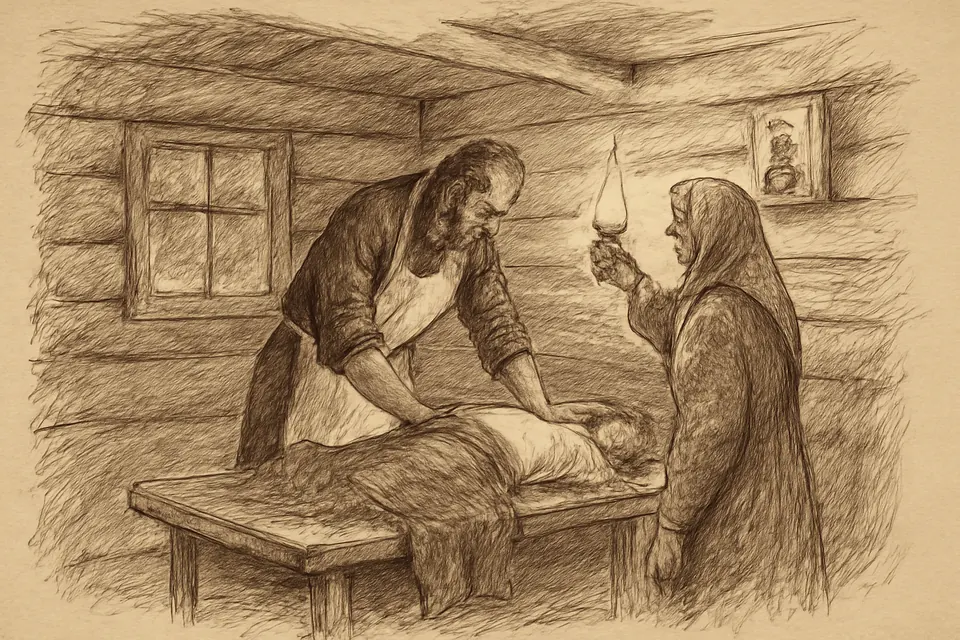
War surgeon and archbishop
When war came in 1941, he was moved to Krasnoyarsk to operate on the wounded. In 1943 he became Archbishop of Krasnoyarsk and in 1944 of Tambov. In February 1946 the same government that had imprisoned him awarded him the Stalin Prize for his work in medicine, above all his Essays on Purulent Surgery, first published in 1934.
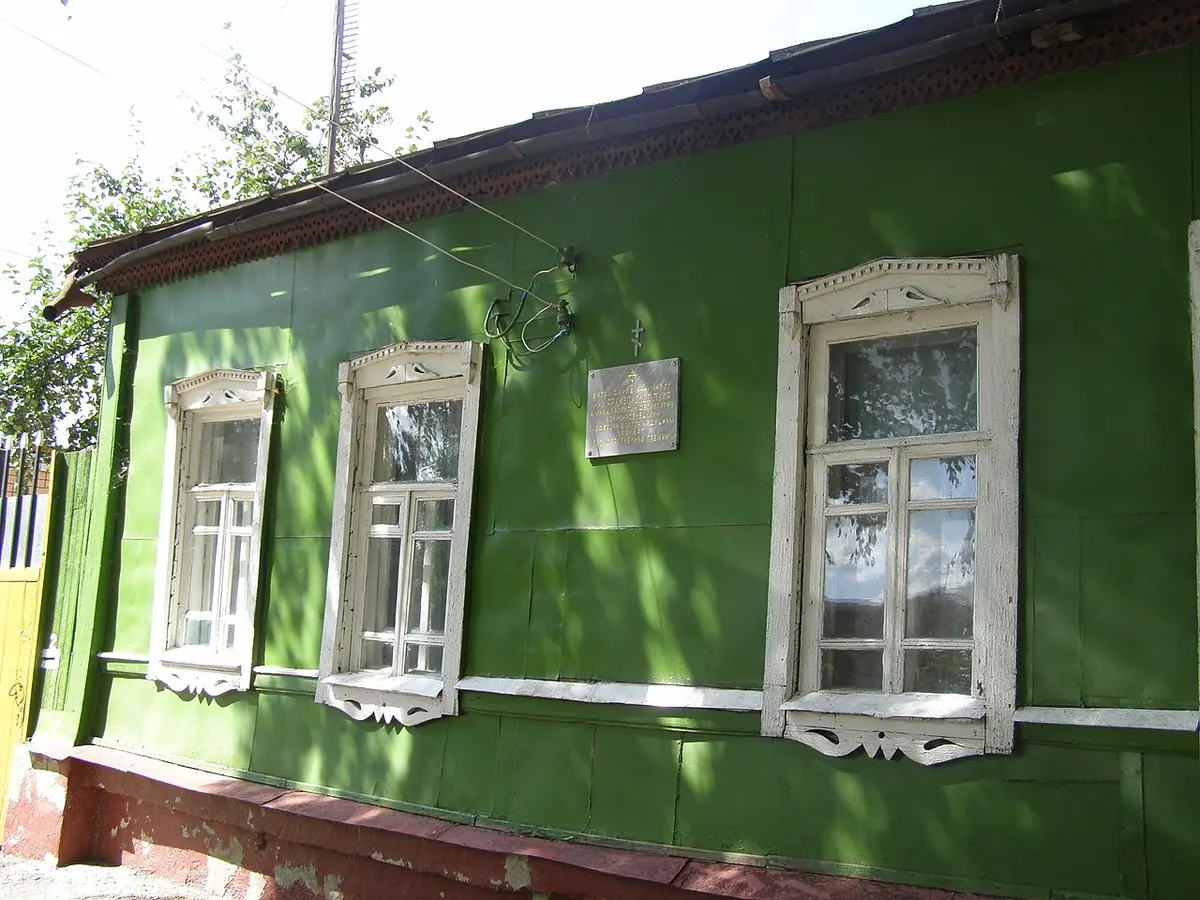
In May 1946 he became Archbishop of Crimea and Simferopol. His sight, damaged years before, failed completely in 1958, but he still came to church and served. He died on June 11, 1961, and was buried in the Simferopol cemetery.
Glorification and miracles
The Church numbered him among the locally venerated saints of Crimea on November 22, 1995. On March 20, 1996, about 40,000 people walked in procession as his relics were carried from his grave to Holy Trinity Cathedral in Simferopol. In 2000 the Jubilee Council of Bishops of the Russian Orthodox Church glorified him for the whole Church among the New Martyrs and Confessors of Russia.
By this encyclopedia's labels:
- The fragrance from his relics and his incorrupt heart, found when his grave was opened in 1996: reported by the OCA life ("it is said").
- Healings through his prayers, especially of the sick facing surgery: reported. The OCA life says that Greek faithful, in thanks for healings, gave 300 kilograms of silver for his reliquary.
The Orthodox Church does not formally approve individual miracles before a glorification, so none is labeled approved.

Symbols of St. Luke of Crimea in art
Because photographs of him exist, icon painters keep close to his real face:
- An old archbishop with a long white beard, often with round glasses, which makes him easy to recognize.
- A white or black monastic hood (klobuk) with a cross, and a bishop's vestments with the omophorion.
- A Gospel book, the sign of a bishop who preached.
- Surgical instruments or an open medical book, sometimes with an anatomical drawing, the sign of the surgeon.
- His right hand raised in blessing.
Feast day and prayer
His feast is June 11. For other saints and their days, see our feast days and patron saints pages.
On his feast the Orthodox Church sings a troparion that praises him as a herald of the way of salvation, a confessor and archpastor of the Crimea, a guardian of the Fathers' teaching and a wise physician, and asks him to pray for firm faith and mercy for the Orthodox. The OCA prints the full text on its website.
Let us ask him to pray for surgeons, nurses and all who are sick: Holy Hierarch Luke, pray to God for us.
Frequently asked questions
When is the feast of St. Luke of Crimea?
June 11, the day he died in 1961 (May 29 on the Old Calendar, which the Russian Church follows, falls on June 11 of the civil calendar). He is also remembered with the New Martyrs and Confessors of Russia and, on December 28, with the saints of Crimea.
Why is St. Luke of Crimea the patron of surgeons?
He was a surgeon all his life: a professor, the author of a standard textbook on the surgery of infections, and a winner of the Stalin Prize for medicine in 1946, even while he was an archbishop. Orthodox doctors and patients facing surgery ask his prayers, and hospital churches, like the one in Saratov pictured on this page, are dedicated to him.
Where are the relics of St. Luke of Crimea?
In Holy Trinity Cathedral in Simferopol, Crimea, where they were carried in procession from his grave on March 20, 1996. A portion was given to the Sagmata Monastery in Greece, and smaller relics are in churches in many countries.
Is St. Luke of Crimea a Catholic saint?
He is a saint of the Orthodox Church, glorified by the Russian Orthodox Church, and is not on the Roman Catholic calendar. His father was a Catholic, and he was raised Orthodox by his mother. Many Catholic doctors admire his life of science and prayer.
Keep exploring
- Patron saint pages
- DoctorsHealing
- Feast-day calendar
- Saints remembered in JuneSaint of the dayWhat saint is my birthday?
- Relics
- Where the relics are kept (map)
- More
- Saints A to ZPatron saints A to ZExplore every section
Sources
- Orthodox Church in America: Saint Luke, Archbishop of Simferopol. His life, arrests and exiles, the Stalin Prize, the 1995 and 2000 glorifications, the relics and the silver reliquary
- Orthodox Church in America: Saint Luke, Archbishop of Simferopol, Troparion and Kontakion