St. Nicholas of Japan, Enlightener of Japan

St. Nicholas of Japan (1836 to 1912), born Ivan Kasatkin in Russia, was the monk, priest and archbishop who brought Orthodox Christianity to Japan. He arrived at Hakodate in 1861, translated the Scriptures and services into Japanese, built the Holy Resurrection Cathedral in Tokyo and left a church of more than 33,000 faithful. The Orthodox Church honors him as Equal of the Apostles and Enlightener of Japan; his feast is February 3.
Who was St. Nicholas of Japan?
St. Nicholas of Japan was a Russian monk who arrived in Japan in 1861, when Christianity was still forbidden there, and spent the next fifty years building a Japanese Orthodox Church. By 1911, the Orthodox Church in America records, the Church in Japan had 266 communities and 33,017 faithful. The Orthodox Church honors him as Equal of the Apostles and Enlightener of Japan, and the Japanese still call the cathedral he built in Tokyo "Nikorai-do," the House of Nicholas.
He was born Ivan Dmitrievich Kasatkin on August 1, 1836, in the village of Berezovsky Pogost in Smolensk Province, the son of a village deacon. His mother died when he was five. A gifted student, he went from the Smolensk seminary to the Theological Academy in St. Petersburg.
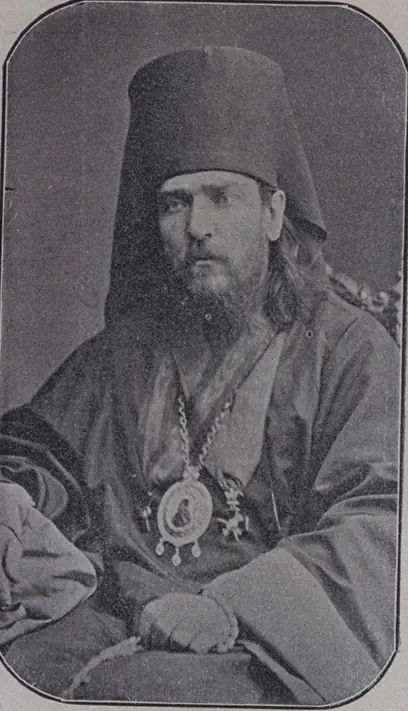
The life of St. Nicholas of Japan
A notice on the bulletin board
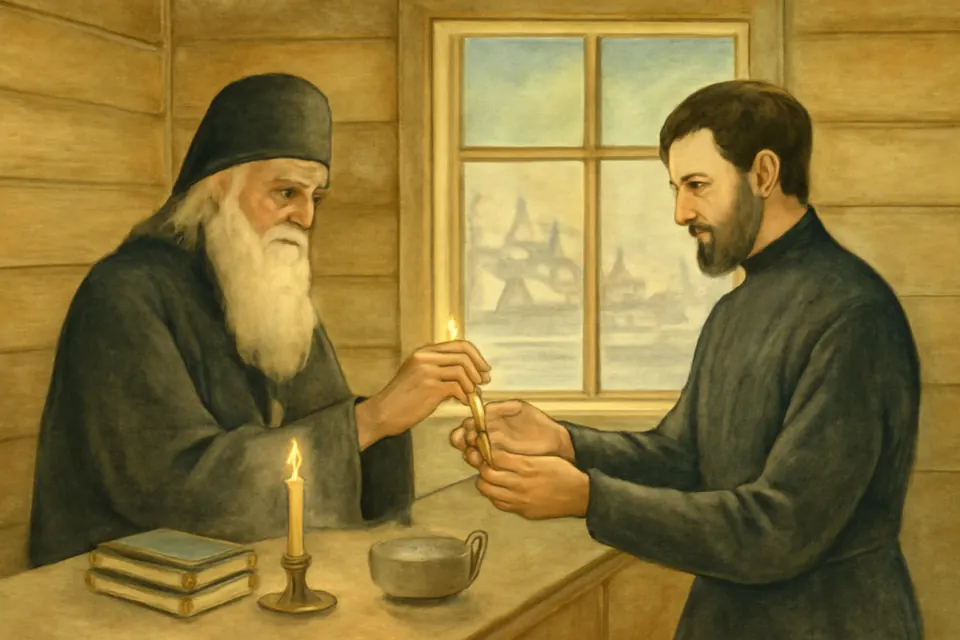
At the Academy, Ivan saw a notice asking for a priest to serve the chapel of the Russian consulate in Hakodate, in Japan. He volunteered. On June 23, 1860, he was tonsured a monk and given the name Nicholas, after St. Nicholas of Myra, and within days he was ordained deacon and priest.
He could not reach Japan before winter and spent it at Nikolaevsk on the Amur. There he met Archbishop Innocent Veniaminov, the great missionary to Alaska, honored today as St. Innocent, Apostle of America. According to the Carpatho-Russian diocese's life of Nicholas, Innocent told him to learn the language first and begin translating the Scriptures, sewed him a new cassock, and gave him the bronze cross he wore.
Hakodate and the first Japanese Christians
Nicholas landed at Hakodate on July 2, 1861. He later admitted his disappointment:
I was young and not devoid of imagination, which painted a picture of crowds of listeners then followers of the word of God coming from all directions. Imagine my disappointment when I arrived in Japan only to be greeted by the exact opposite of what I had dreamed.
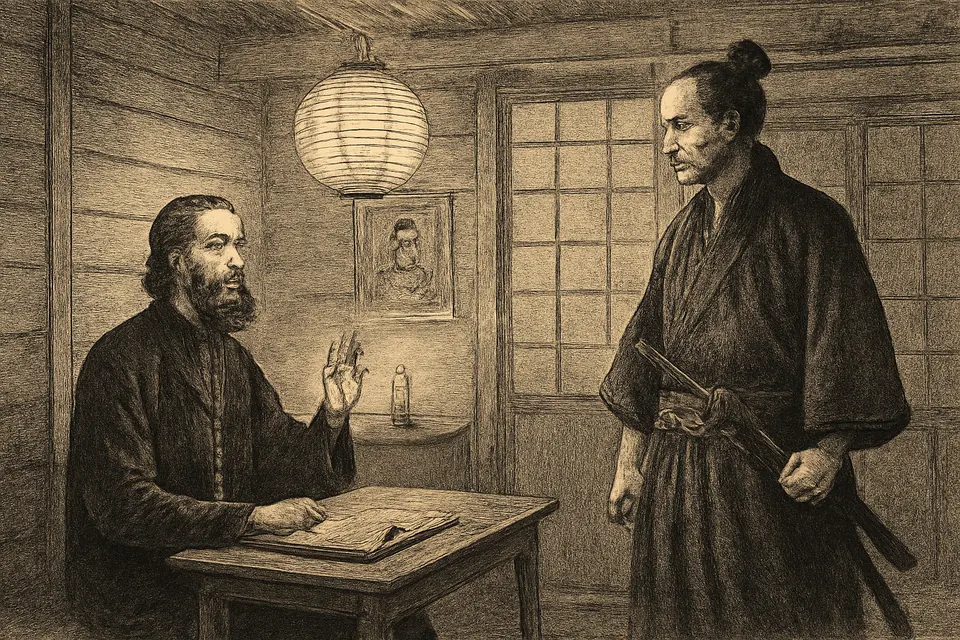
He spent years studying Japanese, its history and its religions. Then came the encounter that began the Church in Japan. Takuma Sawabe, a former samurai and the adopted son of a Shinto priest, came to the priest's house one night meaning to drive him out or kill him: "We must kill all you foreigners." Nicholas asked him to listen first. Sawabe heard him out, and in the spring of 1868, while conversion to Christianity was still against the law, he was baptized with two friends, Sakai and Urano. He later became Father Paul Sawabe, the first Japanese Orthodox priest.
Tokyo, the translations and the cathedral
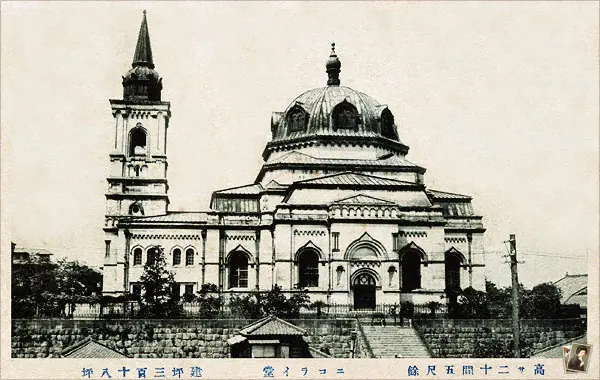
In 1870 a Russian Spiritual Mission was opened in Japan with its center in Tokyo. In Tokyo, on the heights of Kanda Surugadai, Nicholas built schools, a seminary, a library and a shelter. On March 30, 1880, he was consecrated bishop in St. Petersburg.
For some thirty years, his Carpatho-Russian biographer writes, he spent every evening from six to ten translating the Scriptures and the services into Japanese, working with the scholar Paul Nakai. Those translations are still used in Japanese Orthodox worship.
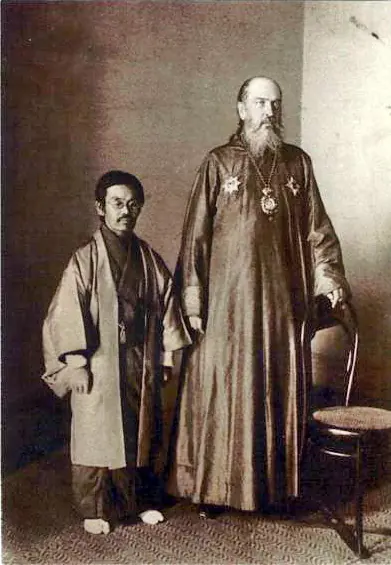
On March 8, 1891, the Cathedral of the Resurrection in Tokyo was consecrated.
War between his two homelands
In 1904 Russia and Japan went to war. Nicholas stayed with his flock. Because the Japanese services asked victory for Japan, he stopped taking part in public worship, and told his people, as the OCA records:
Hitherto I have prayed for the prosperity and peace of the Empire of Japan. Now, since war has been declared between Japan and my country, I, as a Russian subject, cannot pray for Japan's victory over my own homeland. I also have obligations to my country, and that is why I will be happy to see that you fulfill your duty in relation to your country.
With the Japanese government's consent he formed a society to care for the 73,000 Russian prisoners of war held in Japan, and sent five Russian-speaking priests to serve them. In 1906 he was named Archbishop of Tokyo and All Japan.
Death, burial and canonization
Nicholas lived in two small rooms for forty years and wore patched clothes. He served his last Divine Liturgy on Christmas Day, January 7, 1912 by the civil calendar, kept translating from his hospital bed, and died on February 3, 1912 (February 16 by the civil calendar), at 76. Near the end he wrote, "Everything was done by God, and I...what an insignificance!" The Emperor Meiji personally permitted his burial within the city, at Yanaka Cemetery, and a choir of 200 students sang his funeral entirely in Japanese.
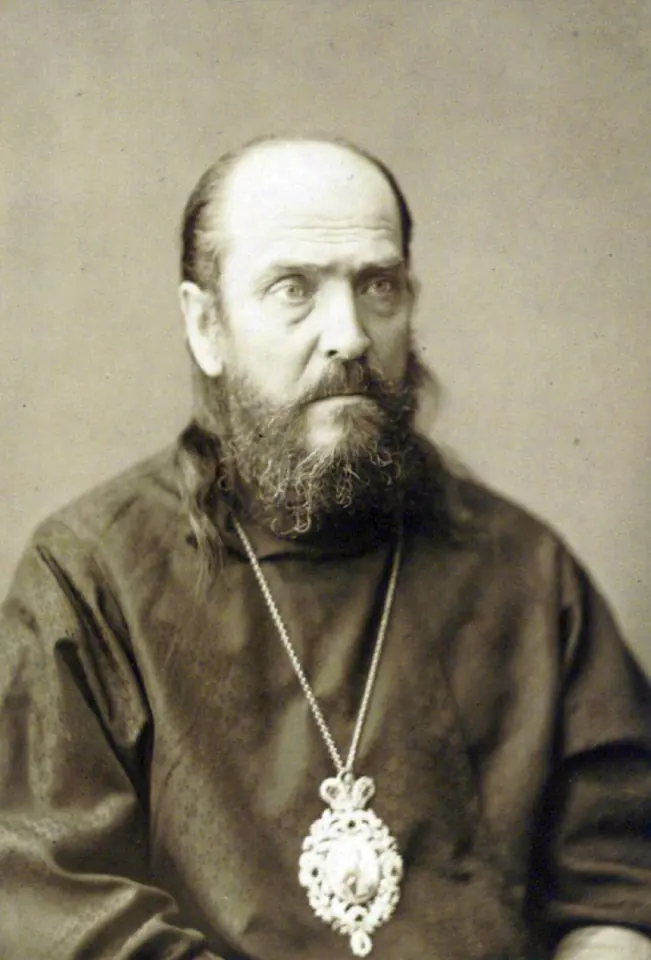
The Holy Synod of the Moscow Patriarchate glorified him on April 10, 1970, as Equal of the Apostles, Archbishop of Japan, the first saint of the Japanese Orthodox Church. His lives tell of no miracles; the Church honors him for his apostolic life. The conversion of Sawabe, told in his lives, is the story Orthodox Christians remember as the first sign of grace in his mission (reported).
Why St. Nicholas is the patron of Japan and of missionaries
The Orthodox Church calls him the Enlightener of Japan, the title it gives to those who brought the Gospel to a whole nation, and Orthodox Christians in Japan regard him as their special intercessor. Missionaries look to him for his method: learn the language and the people first, translate the Scriptures, raise up native clergy. He had baptized his first converts in 1868; by 1874 the first Japanese priests and deacons were ordained.

Symbols of St. Nicholas of Japan in art
Icons of St. Nicholas are recent, and they follow the photographs taken in his lifetime:
- Bishop's vestments and omophorion, or the dark mantle of a monk-bishop, with a panagia, the medallion icon a bishop wears on his breast.
- A full gray beard and broad face, as in the portraits from the 1890s and 1900s.
- A Gospel book and a hand raised in blessing, marks of an apostle and teacher.
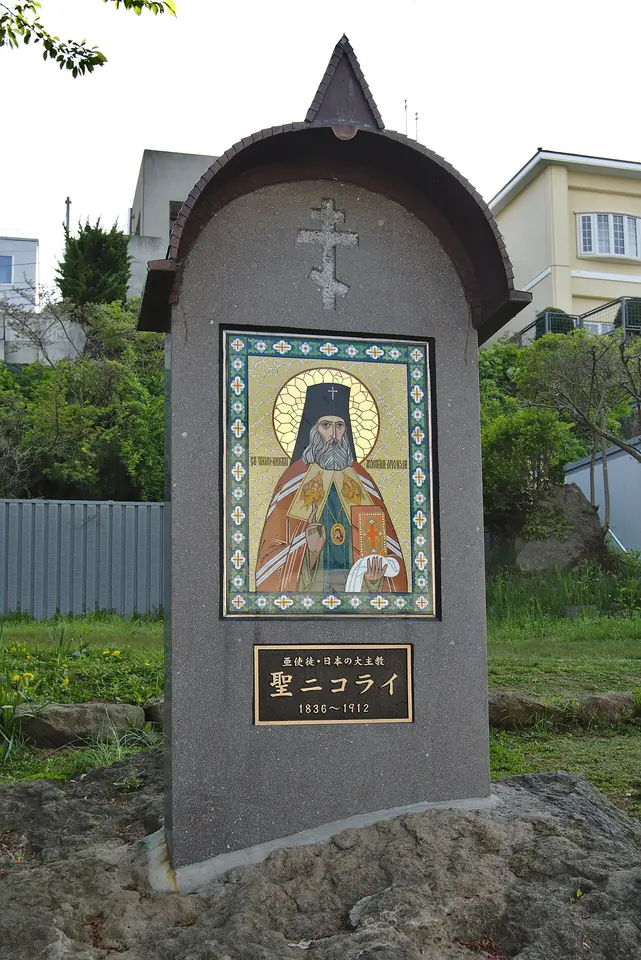
At Hakodate, where his mission began, his icon stands in a small stone memorial beside the church.
Feast day and prayer
We keep the feast of St. Nicholas of Japan on February 3. He is remembered again with the saints of Smolensk on the Sunday before July 28. The troparion of his feast, in the translation printed by the Carpatho-Russian diocese, is a fitting prayer:
O holy Saint Nicholas, the Enlightener of Japan
You share the dignity and the throne of the Apostles;
You are a wise and faithful servant of Christ,
A temple chosen by the Divine Spirit,
A vessel overflowing with the love of Christ.
O hierarch equal to the Apostles,
Pray to the life-creating Trinity
For all your flock and for the whole world.
Let us ask St. Nicholas to pray for the Church in Japan and for all who carry the Gospel into a language and culture not their own. See other saints of early February on our feast days page.
Frequently asked questions
Who was St. Nicholas of Japan?
A Russian Orthodox monk, born Ivan Kasatkin in 1836, who went to Japan in 1861 as chaplain of the Russian consulate in Hakodate and stayed fifty years. He learned the language, baptized the first Japanese Orthodox Christians in 1868, became the first bishop and then archbishop of Japan, and died in Tokyo in 1912.
When is the feast of St. Nicholas of Japan?
February 3, the day of his death by the Julian calendar. Churches on the new calendar keep it on February 3; churches on the old calendar keep it on the same Julian date, February 16 of the civil calendar.
What is Nikolai-do?
The popular Japanese name, "House of Nicholas," for the Holy Resurrection Cathedral in Kanda Surugadai, Tokyo, which he built. It was consecrated on March 8, 1891, and is still the cathedral of the Orthodox Church in Japan.
When was St. Nicholas of Japan canonized?
The Holy Synod of the Moscow Patriarchate glorified him on April 10, 1970, as Equal of the Apostles, Archbishop of Japan. He was the first saint of the Orthodox Church in Japan.