St. Efraim of Nea Makri (St. Ephraim the Great Martyr)
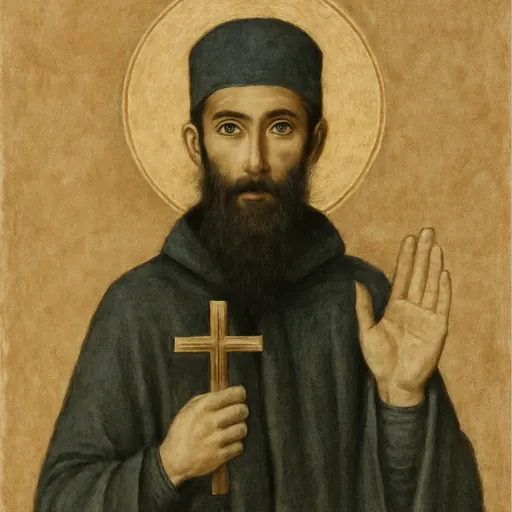
St. Efraim of Nea Makri (1384–1426) was a Greek monk and priest who was tortured and killed by Ottoman raiders at his monastery near Nea Makri, outside Athens, on May 5, 1426. His relics were found there in 1950, and the Ecumenical Patriarchate added him to the list of saints in 2011. He is honored on May 5 and January 3.
Who was St. Efraim?
St. Efraim of Nea Makri (often spelled Ephraim) is one of the most visited saints in Greece today, yet for more than five hundred years no one knew his name. He was a monk of the 15th century who died for Christ at his monastery on Mount Amomon, in the hills above the seaside town of Nea Makri in Attica. His bones lay forgotten in the ruins until 1950. Since then, his monastery has become a place of pilgrimage for Greeks from every walk of life, who come asking his prayers in illness, in family trouble and in every kind of need.
The Orthodox Church calls him "Great Martyr and Wonderworker" and "Newly Revealed" (Neofanis), a title for saints whose holiness was made known long after their deaths. The Ecumenical Patriarchate of Constantinople added him to the list of saints in 2011, after repeated requests from the Church of Greece.
What we know of his life comes almost entirely from Abbess Makaria, the nun who found his relics and who said that the saint himself revealed his story to her. The Orthodox Church received her account, and the monastery tells it today. In this entry we tell it as the Church tells it, and we label it reported.
The life of St. Efraim
A boy on Mount Amomon
He was born on September 14, 1384; most accounts say in Trikala, in Thessaly. His father died when he was small, and his mother raised seven children alone. At fourteen he entered a monastery on Mount Amomon near Nea Makri, dedicated to the Annunciation and to the martyr St. Paraskevi. He lived there for about twenty-seven years, and he was ordained a priest.
Captured by raiders
On September 14, 1425, Ottoman raiders came by sea, sacked the monastery and killed many of the monks. Efraim was taken prisoner. For months his captors kept him in a cell with little food or water and beat him daily, trying to make him deny Christ and become a Muslim. He refused.
The mulberry tree
On Tuesday, May 5, 1426, they brought him out, hung him upside down from a mulberry tree and tortured him. The life the monastery received records his prayer, "O God, do not listen to the words of these men, but may Thy will be done as Thou hast ordained," and his last words, "Lord, I give up my spirit to Thee." He died about nine in the morning. The monastery still shows the mulberry tree, and pilgrims pray beside it.
The finding of his relics
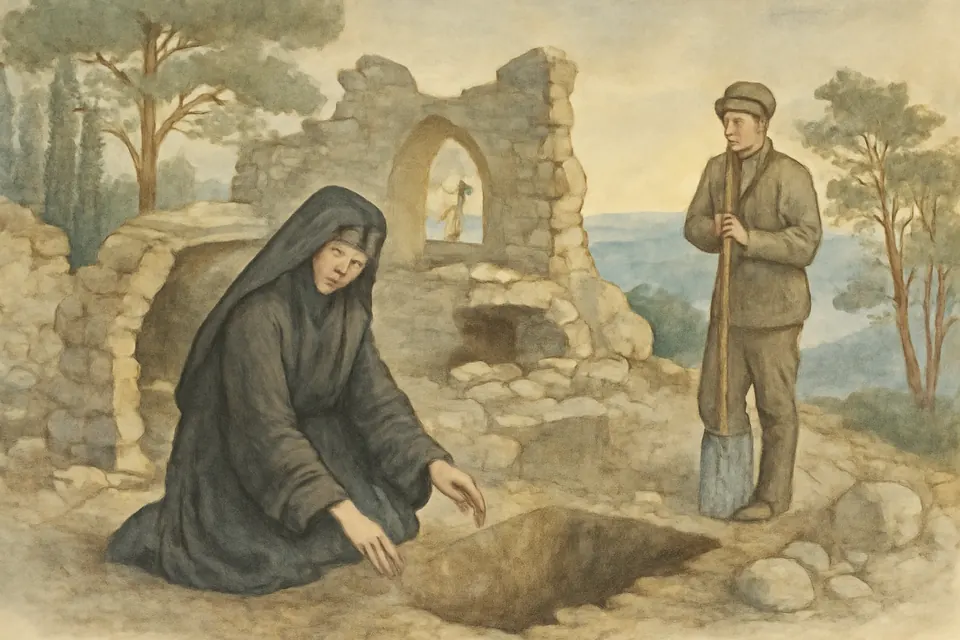
By the 1940s, a small community of nuns was rebuilding the ruined monastery under Mother Makaria Desypri (1911–1999). On January 3, 1950, as she walked among the ruins and prayed to see one of the fathers who had lived there, she sensed an inner voice telling her where to dig. Her workman wanted to dig somewhere else and struck rock in three or four places; finally he dug where she had pointed. About six feet down, in the ruins of a cell, he found a skull, and the account says a sweet fragrance filled the air. Mother Makaria uncovered the rest of the bones, still wrapped in the remains of a thick old cassock.
That evening, she said, she heard firm footsteps cross the courtyard, and the monk appeared to her and asked how long she would leave him there. In a dream that night he told her his name and the story of his martyrdom. Many later visions and healings were reported to her and to pilgrims, and in 1964 the iconographer Photis Kontoglou, after praying that the saint would show himself, painted the icon that became the model for all later icons of St. Efraim. Kontoglou is buried at the monastery.
Miracles of St. Efraim
By this encyclopedia's labels:
- The finding of the relics and the fragrance: reported, by Mother Makaria and the workman.
- His appearances to Mother Makaria and the revelation of his life: reported.
- Healings and help through his prayers since 1950, for illness and trouble of every kind: reported. The monastery receives many such accounts, and pilgrims write their own.
The Orthodox Church does not approve individual miracles the way the Catholic Church does before a canonization, so none of these is labeled approved.
Symbols of St. Efraim in art
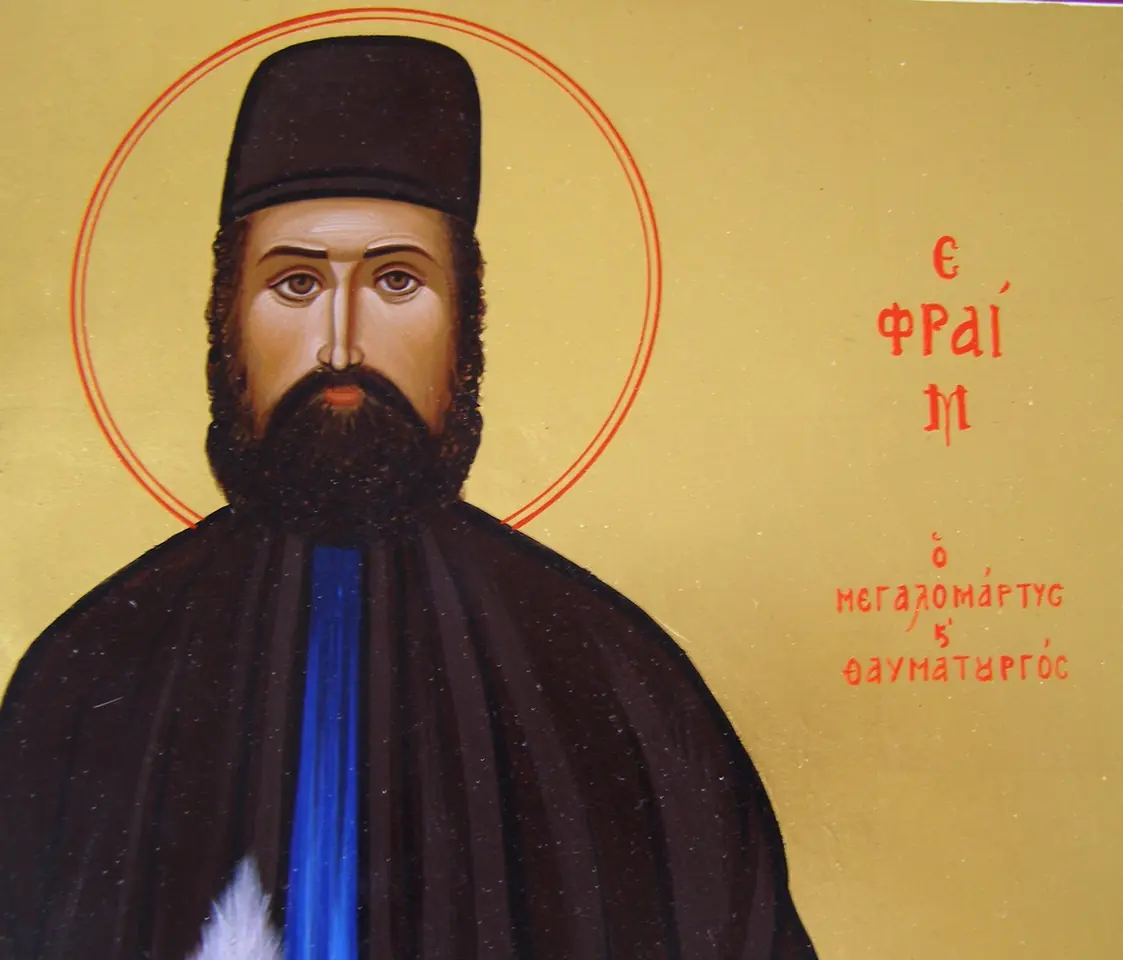
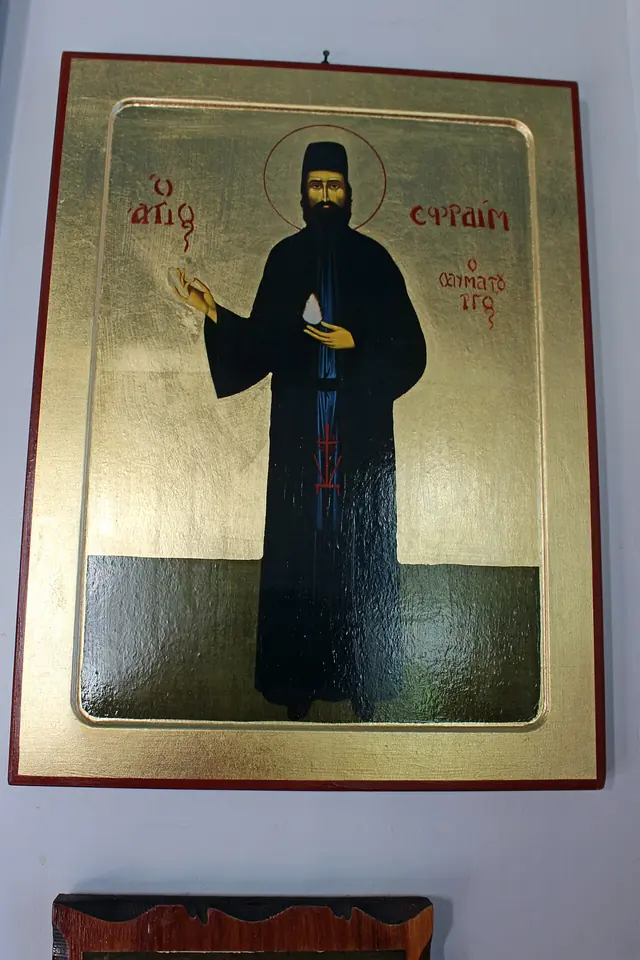
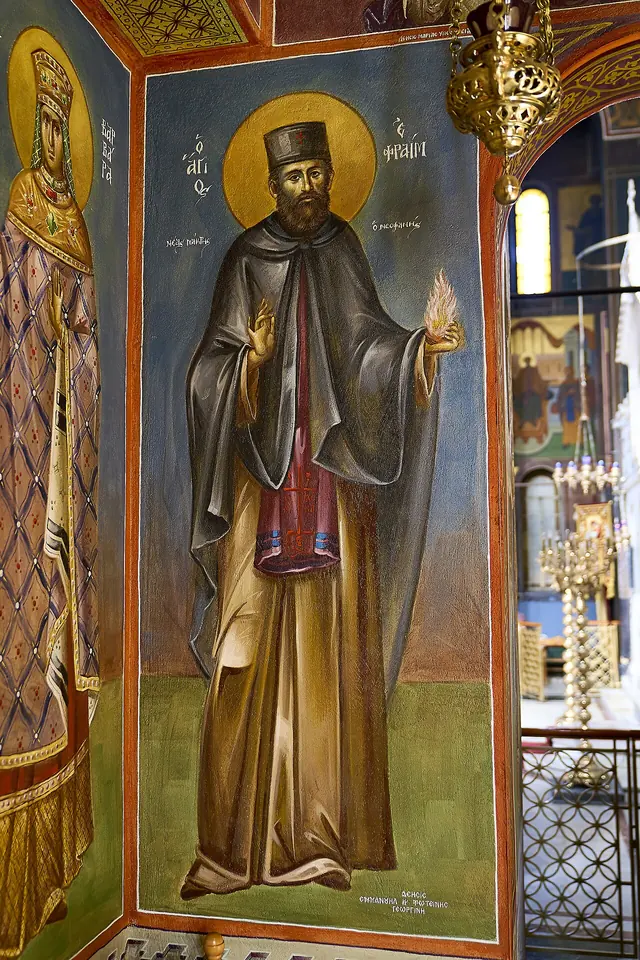
All icons of St. Efraim go back to Kontoglou's icon of 1964, so he looks much the same everywhere:
- A thin monk with a black beard and dark eyes, a man in the prime of life rather than an old elder.
- A black habit and soft black monastic cap, the dress of a Greek monk.
- A small cross in his right hand, the sign of a martyr.
- His left hand raised, often with the palm turned outward in blessing or prayer.
- Sometimes the mulberry tree of his martyrdom, or his monastery, in the background.
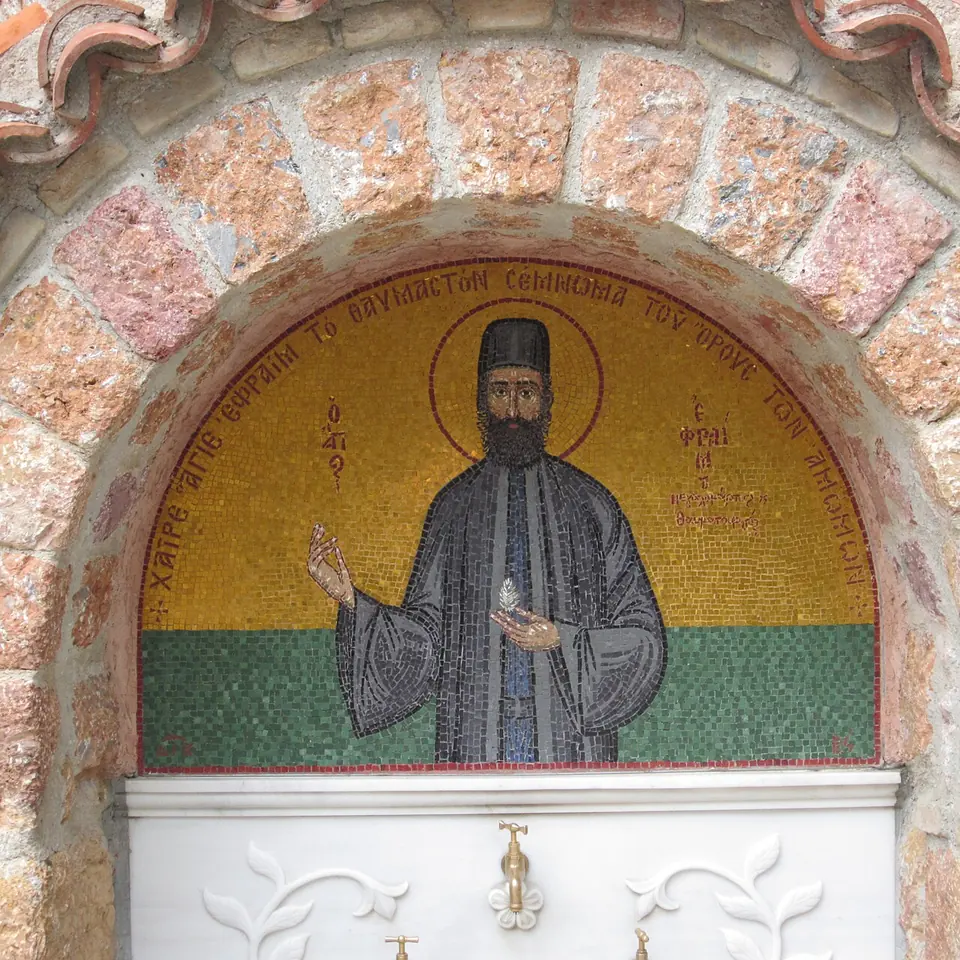
Icons are usually labeled in Greek O Agios Efraim, o Megalomartys kai Thavmatourgos: St. Efraim the Great Martyr and Wonderworker.
Feast days and his monastery
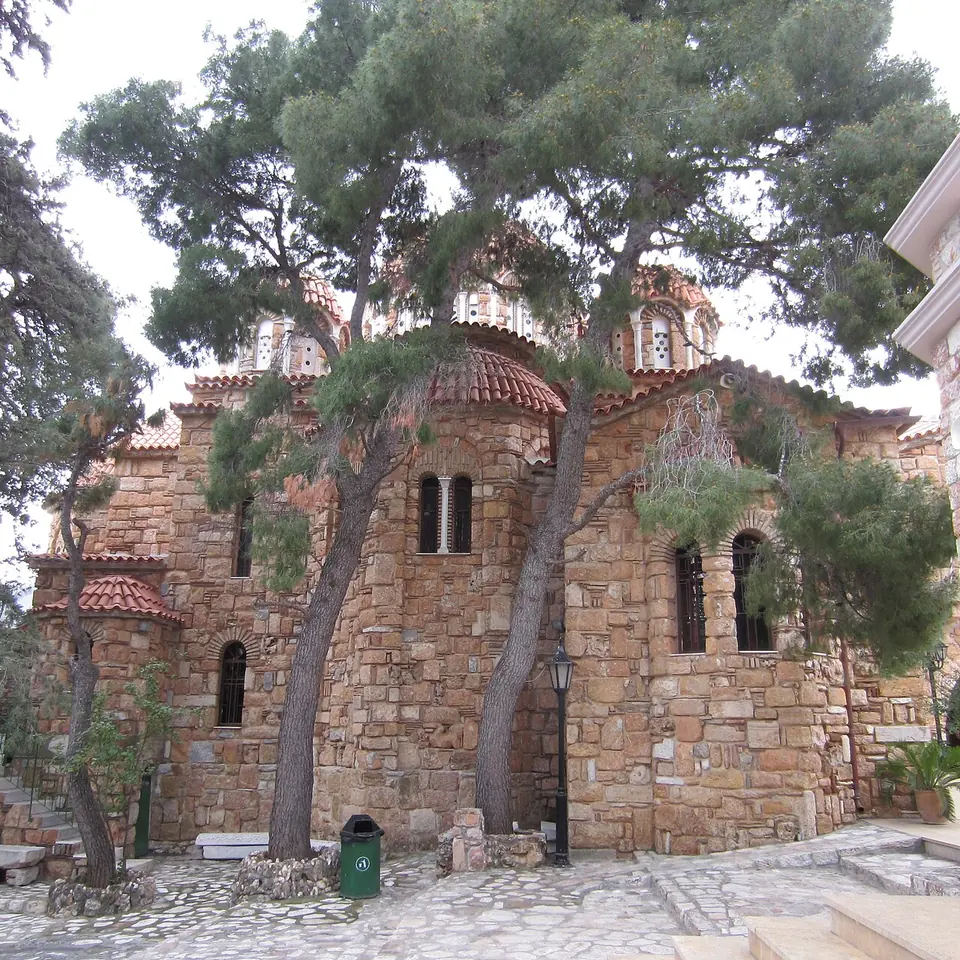
His feasts are May 5, the day of his martyrdom, and January 3, the finding of his relics. On both days, and on many weekends, the road up Mount Amomon fills with pilgrims. The monastery, now the Holy Monastery of the Annunciation, is a women's community about 18 miles (30 km) northeast of Athens. His relics are kept in the church, and visitors venerate them and the mulberry tree.
His icon now hangs in Orthodox churches far beyond Greece, in parishes across North America, Romania, Russia and beyond.
For other saints and their days, see our feast days page.
Prayer to St. Efraim
Orthodox Christians ask his prayers with the apolytikion of his feast, in the translation published by John Sanidopoulos:
On Amomon Mountain, you shown forth like the sun, God-bearer, and you left for God by martyrdom; you endured the attacks of barbarians, Ephraim, O Great-Martyr of Christ, and because of this you ever pour forth grace, to those who piously cry out to you, glory to Him who gave you strength, glory to Him you made you wondrous, glory to Him who grants through you healings for all.
Let us ask him, in our own words, to pray for all who suffer and for all who are held captive for their faith: Holy Great Martyr Efraim, pray to Christ our God for us.
Frequently asked questions
When is the feast of St. Efraim?
He has two feasts: May 5, the day he was martyred in 1426, and January 3, the day his relics were found in 1950. Churches on the Old Calendar keep them on May 18 and January 16. The largest crowds gather at his monastery in Nea Makri on both days.
How was St. Efraim's life discovered?
Nothing was known of him until January 3, 1950, when Abbess Makaria, rebuilding the ruined monastery, felt an inner prompting to dig in a certain spot and found the bones of a monk in an old cell. She said he then appeared to her and told her his name and the story of his martyrdom. His life is known through what she reported, so this encyclopedia labels it reported.
Where are the relics of St. Efraim?
At the Holy Monastery of the Annunciation, also called the Monastery of St. Efraim, on Mount Amomon above Nea Makri, about 18 miles (30 km) northeast of Athens. Pilgrims also venerate the mulberry tree on which, by his life, he was hung and tortured.
Is St. Efraim the same as St. Ephrem the Syrian?
No. St. Ephrem the Syrian was a 4th-century deacon, poet and Doctor of the Church. St. Efraim of Nea Makri was a 15th-century Greek monk and martyr. Their names are the same in Greek.
Keep exploring
Sources
- Orthodox Christianity Then and Now (John Sanidopoulos): Saint Ephraim of Nea Makri, the Wonderworker and Newly-Revealed (2009). The life as received at the monastery, the finding of the relics, the Kontoglou icon and the apolytikion
- Ta Nea: Αυξάνονται και πληθύνονται οι Άγιοι της Ορθοδοξίας (2023). His canonization by the Ecumenical Patriarchate in 2011, at the request of the Church of Greece among others