St. Alexander Svirsky (Alexander of Svir)
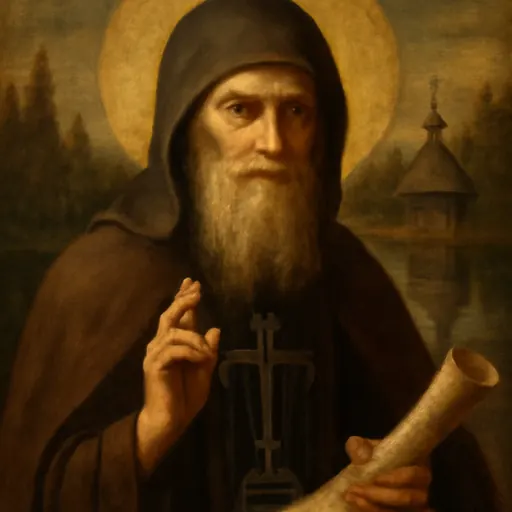
St. Alexander Svirsky (1448–1533) was a Russian monk who lived as a hermit and founded a monastery near the Svir River. In 1508, Orthodox tradition holds, the Holy Trinity appeared to him as three angels, a vision the Russian Church calls unique. We keep his feast on August 30, and he is honored as a model for monks.
Who was St. Alexander Svirsky?
St. Alexander Svirsky, also known as Alexander of Svir, was a Russian monk and abbot of the far north who spent years alone in the forest and then founded a monastery near the Svir River, between Lake Ladoga and Lake Onega. He was born in 1448 and died in 1533. The Russian Church remembers him above all for one night in 1508, when, his Life tells us, the Holy Trinity appeared to him as three angels.
Most of what we know comes from a Life written in 1545 by his disciple and successor, Abbot Herodion, only twelve years after his death. It is close to the events, and like most Russian monastic lives of its time it mixes plain history with visions and wonders. The Orthodox Church in America's life of the saint follows it closely.
The life of St. Alexander Svirsky
The boy who ran away to Valaam
He was born on July 15, 1448, to a peasant family near Lake Ladoga, and baptized Amos after the prophet whose feast fell that day. When he learned that his parents had arranged a marriage for him, he left home in secret at nineteen and made his way to the monastery on the island of Valaam. There he spent seven years as a novice, doing hard labor and keeping long vigils, and in 1474 he was tonsured a monk with the name Alexander.
Seven years alone by Holy Lake
In 1485 he left Valaam for the mainland forest and settled beside a small lake that later came to be called Holy Lake. For seven years he lived there alone. His Life speaks of hunger, cold and temptations, and of an angel who healed a painful stomach illness by making the Sign of the Cross over him.
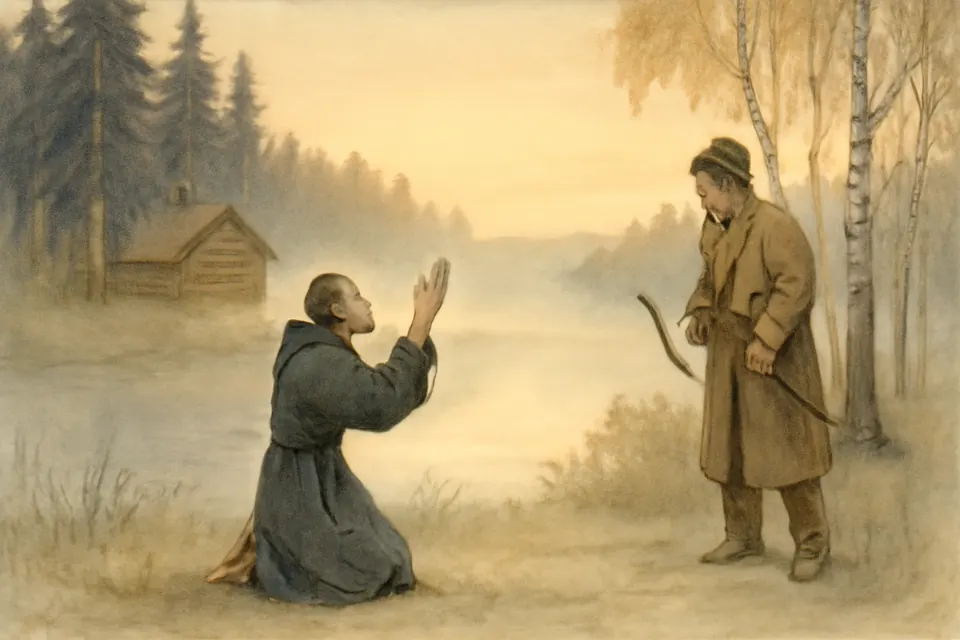
In 1493 a local landowner named Andrew Zavalishin, out hunting deer, came upon the hermit's cell. Andrew told others of the holy man in the woods, and he himself later became a monk at Valaam under the name Adrian and founded a monastery of his own. Once the secret was out, men began to come to Alexander and ask to live beside him.
The appearance of the Holy Trinity
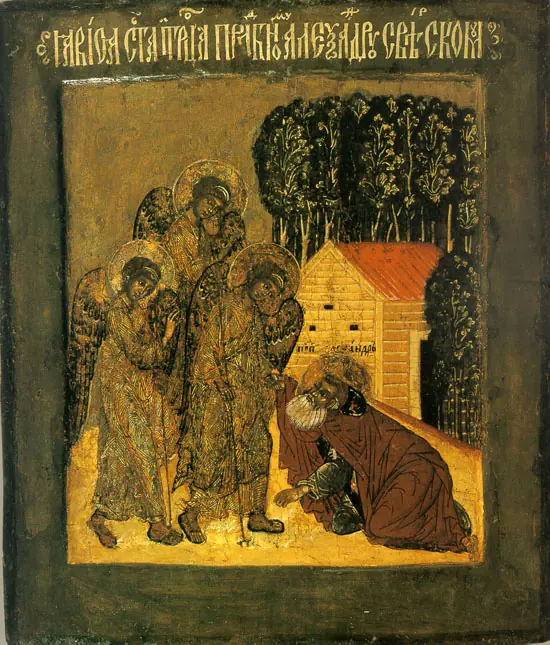
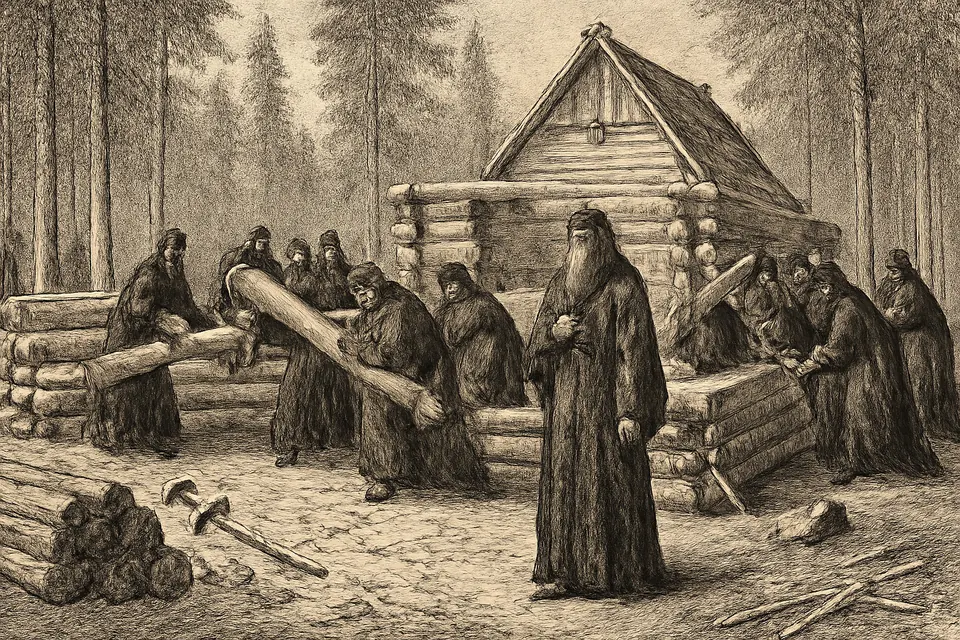
In 1508, as the Life tells it, Alexander was praying at night when three angels in shining white garments appeared to him, each holding a staff, brighter than the sun. They greeted him with the words "Have faith, blessed one, and do not be afraid," and told him to build a church in honor of the Holy Trinity. A wooden church went up that same year, and a stone church followed in 1526. The Orthodox Church in America calls this appearance "unique in history of the Russian Orthodox Church."
Priest and abbot
That same year the brethren sent him to Novgorod, where Archbishop Serapion ordained him a priest, and soon afterward they asked him to become their abbot. Among his disciples were monks who became saints in their own right, such as Therapon of Ostrov. Near the end of his life he began a stone church of the Protection of the Mother of God. His Life records that the Mother of God appeared to him at the site, saying "Arise, chosen one of my Son and God," and promised, "I shall be with your monastery always."
He foresaw his death a year ahead, gave his last instructions to the brethren, and died on August 30, 1533, at eighty-five.
The miracles of St. Alexander Svirsky
All the wonders of his life come from Herodion's Life and the long devotion of the Russian Church; no later inquiry examined them, so we count them as traditional: the angel's healing, the appearance of the Trinity and of the Mother of God, and his foreknowledge of his own death.
His Life also records healings at his grave. In 1641, during the rebuilding of the Transfiguration church, his body was found incorrupt, and myrrh was said to flow from it. Those are reported wonders, recorded by the monastery and honored by the Church in the April 17 feast.
The relics in the twentieth century
The story of his relics did not end in 1641. On December 20, 1918, the Bolsheviks took them from the monastery. For almost eighty years they lay in the Military Medical Academy in Petrograd (later Leningrad). In December 1997 they were found there again, still incorrupt, and in November 1998 they came home to the monastery, where pilgrims venerate them today.
Why St. Alexander Svirsky is honored by monks
The Church has given him no formal patronage, but Orthodox monks look to him as a model of the whole monastic road: novice, hermit, founder and abbot. Pilgrims who come to his relics bring every other need as well, as they have since the first healings at his grave.
Symbols of St. Alexander Svirsky in art
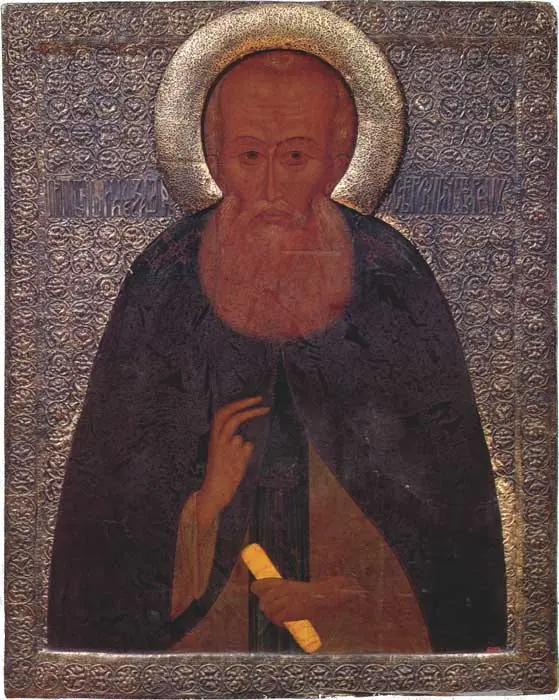
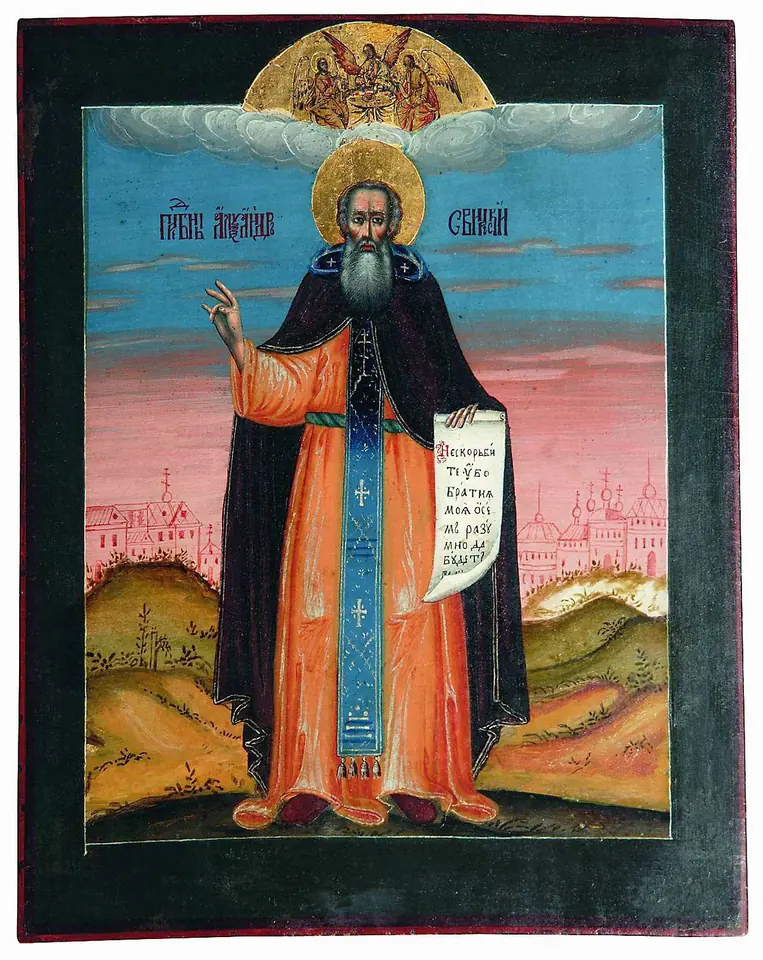
- Old monk in the schema: a thin, gray-bearded elder in the dark mantle and embroidered schema of a great-schema monk.
- Scroll: often unrolled, with words of instruction to his monks.
- Three angels: the scene of the Trinity's appearance, the subject that sets him apart. The angels stand together, as in icons of Abraham's three visitors, while Alexander bows to the ground.
- Wooden church and forest: the hermitage and the first Trinity church by the lake.
- The Trinity above him: in later icons, the three angels or the Trinity appear in the clouds over his head.
To tell him from St. Alexander Nevsky, look at the clothes: the prince wears armor and a crown, while Alexander of Svir is always a monk.
Feast day and his monastery
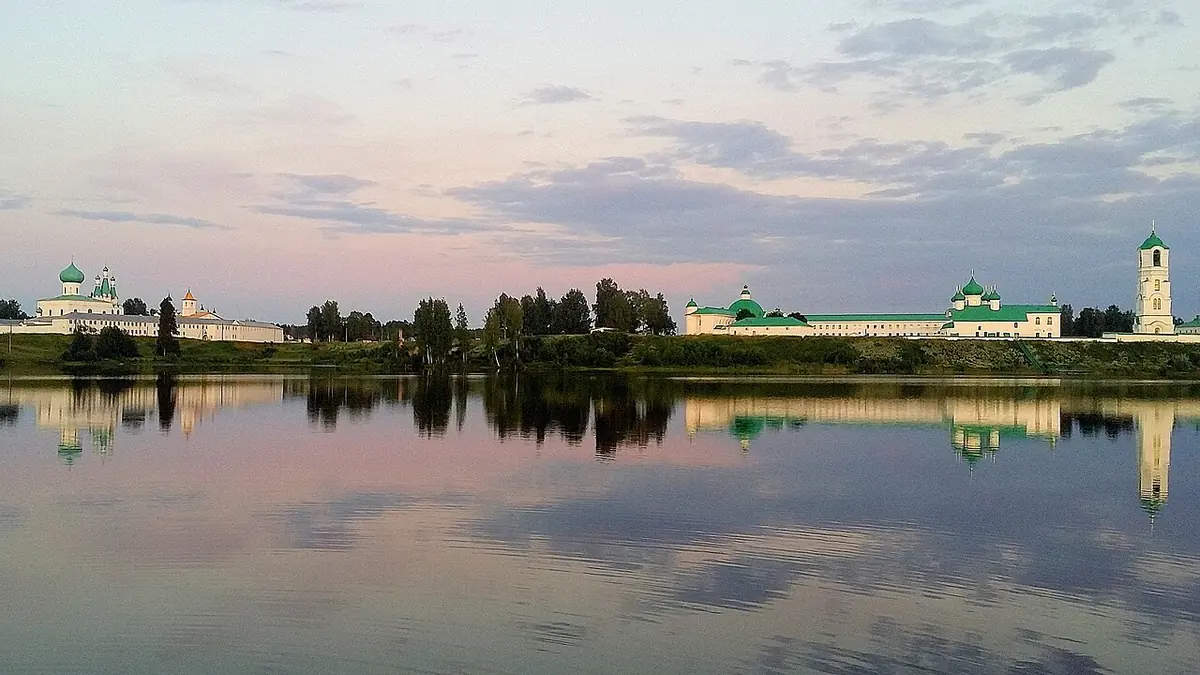
We keep his memory on August 30, the day of his repose (September 12 on the civil calendar in the Russian Church), and the finding of his relics on April 17 (April 30). The Alexander-Svirsky Monastery stands near the village of Staraya Sloboda in the Leningrad Region, with its Trinity and Transfiguration halves on either side of the lake. In Soviet times its buildings held a labor camp and later a hospital; monastic life has returned since the 1990s. See the saints of each day on our feast days page.
Praying with St. Alexander Svirsky
There is no Western prayer to St. Alexander with a known origin; the Russian Orthodox Church sings a troparion, a kontakion and an akathist in his honor. Let us take to heart the words his Life gives the angels, "Have faith, blessed one, and do not be afraid," and ask St. Alexander, who saw the glory of the Holy Trinity in the northern woods, to pray for us, that we may worship the Father, the Son and the Holy Spirit with a quiet and faithful heart.
Frequently asked questions
Who was St. Alexander Svirsky?
A Russian monk, born Amos in 1448 near Lake Ladoga. He became a monk at Valaam, lived alone in the forest near the Svir River, and founded a monastery there that still bears his name. He died on August 30, 1533.
What did St. Alexander Svirsky see?
According to his Life, in 1508 the Holy Trinity appeared to him as three angels in shining white robes and told him to build a church in honor of the Trinity. Icons of the scene look much like the famous Old Testament Trinity of Abraham's three visitors.
When is the feast of St. Alexander Svirsky?
August 30, the day he died, which the Russian Church keeps on September 12 of the civil calendar. The finding of his relics is kept on April 17 (April 30 civil date).
Is the body of St. Alexander Svirsky incorrupt?
His body was found incorrupt in 1641. The Bolsheviks removed it from the monastery in 1918; it was found again in a St. Petersburg medical academy in 1997 and returned to his monastery in 1998, where pilgrims venerate it today.
Keep exploring
Sources
- Venerable Alexander, Abbot of Svir, Orthodox Church in America. The Life, the 1508 vision, the 1641 uncovering and the relics' recovery in 1997–98
- Uncovering of the relics of Venerable Alexander, Abbot of Svir, Orthodox Church in America