St. Irene of Thessalonica, Virgin Martyr Who Hid the Scriptures
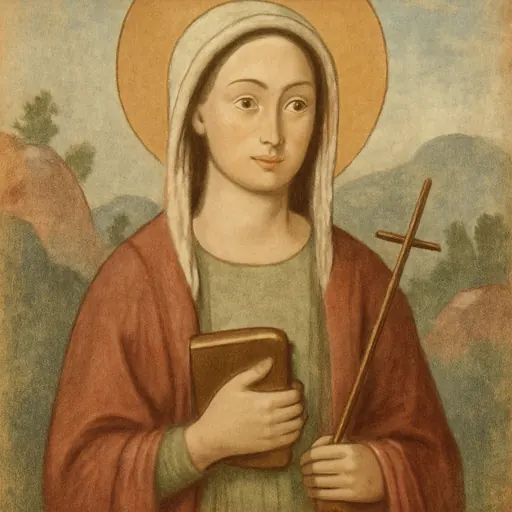
St. Irene of Thessalonica was a young Christian woman burned alive at Thessalonica in 304, during the persecution of Diocletian, for hiding books of the holy Scriptures. Her sisters Agape and Chionia were burned a few days earlier for refusing to eat meat sacrificed to idols. The Roman Martyrology honors her on April 5, and the Orthodox Church keeps the three sisters on April 16.
Who was St. Irene of Thessalonica?
St. Irene of Thessalonica was a young Christian woman who gave her life in 304 rather than hand over the holy Scriptures. She lived in Thessalonica, the chief city of Roman Macedonia, with her sisters Agape and Chionia. When the emperor Diocletian ordered every copy of the Christian Scriptures to be surrendered and burned, the three sisters hid the books and fled to the mountains. All three died in the fire. Their names mean love (Agape), snow (Chionia) and peace (Irene).

What makes Irene unusual is that we can still read her trial. The Acts of Agape, Chionia and Irene are, as Butler puts it, "abridged out of the presidial court registers of Thessalonica." They read like a court transcript, and the historian can trust their core. Later Eastern lives and a medieval Latin play wrapped the story in legend, which we tell separately below.
The trial of St. Irene
Before the governor
In 303 Diocletian issued an edict forbidding, under pain of death, anyone to keep the holy Scriptures. The next spring a local official sent six women and one man to Dulcitius, governor of Macedonia, for refusing to eat meat sacrificed to the gods: Agape, Chionia, Irene, Casia, Philippa, Eutychia and Agatho.
Each answered for herself. Asked why she had not obeyed, Irene said simply: "For fear of offending God." Dulcitius condemned Agape and Chionia to be burned alive. Eutychia, a widow expecting a child, was sent back to prison with the others.

The hidden books
Then the officers found the sisters' books. Irene was brought before Dulcitius a third time. "Who persuaded you to conceal those books and papers so long?" he asked. "Almighty God," she answered, "who has commanded us to love him even unto death."
She told him that when the edict was published the sisters had hidden in the mountains, "sometimes on one mountain, sometimes on another," fed by "God, who gives food to all flesh." They kept the books hidden even from their own household. Their great grief, she said, was "because we could not read them night and day, as we had been accustomed to do."

Martyrdom
Dulcitius ordered Irene to be exposed in a brothel, with one loaf a day from the palace. The record says that God protected her: no man dared approach her. Brought back and still unshaken, she was condemned to the same death as her sisters. The soldiers led her to the rising ground where Agape and Chionia had died. Singing psalms and praising God, she went up onto the pyre. The record dates her death to April 1, 304, in the ninth consulship of Diocletian.
Legends of the three sisters
Later tradition added stories that the court record does not contain. We count these as traditional:
- Aquileia and St. Anastasia: Eastern lives say the sisters came from near Aquileia in Italy, that their priest Zeno foresaw their martyrdom, and that St. Anastasia visited and encouraged them.
- The governor and the pots: the lustful governor creeps into the house at night and, struck blind with delusion, embraces the kitchen pots and pans until he is black with soot. Hrotsvitha of Gandersheim made this the center of her 10th-century comedy Dulcitius.
- The bodies untouched by fire: the OCA life says Agape and Chionia were found after the fire as if asleep, their clothes unburned.
- Rescue by angels and the arrow: in the Eastern life, angels lead Irene from the road to the brothel up a mountain, where a soldier kills her with an arrow, on Pascha. The court record and the Roman Martyrology say she was burned.
Symbols of St. Irene of Thessalonica in art
Irene is almost always shown with her two sisters, three young women side by side:
- Veils and long robes: the dress of virgin martyrs, often in red for martyrdom.
- Small crosses held in the hand: the martyr's cross of Orthodox icons.
- Flames: in Byzantine manuscripts like the Menologion of Basil II, the three stand praying within a wall of fire.
- A book or scroll: for the Scriptures she hid, though older images rarely show it.
To tell her apart from other saints named Irene, look at the company she keeps. The Great Martyr Irene (May 5) is shown alone, often crowned as a princess. St. Irene Chrysovalantou wears a nun's habit and holds apples.

Feast day and devotion
The Roman Martyrology remembers Irene on April 5, after her sisters on April 1. The Orthodox and Eastern Catholic churches honor the three together on April 16. No relics of the sisters are known to survive.
Prayer to St. Irene of Thessalonica
The Orthodox Church sings a troparion and kontakion for the three sisters on April 16. No traditional prayer to St. Irene alone is found in the Latin Church's prayer books, so we turn to her in our own words. She loved the Word of God enough to hide it at the risk of her life, and grieved when she could not read it night and day.
Let us ask St. Irene to pray for us, that we may love the holy Scriptures as she did, and for Christians today who must hide their Bibles. St. Irene, St. Agape and St. Chionia, pray for us.
Frequently asked questions
Why was St. Irene of Thessalonica martyred?
In 303 Diocletian ordered Christians to hand over their sacred books. Irene and her sisters hid many books of the Scriptures and fled to the mountains. When the books were found in their house, the governor Dulcitius condemned Irene, after a brothel failed to break her, to be burned alive. Her court record says she went to the fire singing psalms.
When is the feast of St. Irene of Thessalonica?
The Roman Martyrology names her on April 5 and her sisters Agape and Chionia on April 1. The Orthodox Church honors all three on April 16. Be careful not to confuse her with the Great Martyr Irene, kept on May 5.
Is the story of St. Irene historical?
Yes, its core is. Her trial survives in the Acts of Agape, Chionia and Irene, which Butler describes as abridged from the court registers of Thessalonica. Later Eastern lives add legendary scenes, such as the governor embracing pots in the kitchen and Irene being rescued by angels.
What is the play Dulcitius about?
Dulcitius is a Latin comedy by the 10th-century German canoness Hrotsvitha of Gandersheim, built on the legend of the three sisters. In it the lustful governor embraces the pots and pans in a dark kitchen and comes out black with soot, while the sisters remain untouched.
Keep exploring
Sources
- Alban Butler, Lives of the Saints, vol. IV (1866): SS. Agape, Chionia, and Irene, Sisters, and Their Companions, Martyrs (April 3). English text of the court record, Irene's answers about the hidden books and the mountains, and the date of April 1, 304
- The Roman Martyrology (2004 edition), April 1 and April 5, via GCatholic
- Orthodox Church in America: Virgin Martyrs Agape, Irene and Chionia, in Illyria. The later Eastern life, with the arrow and the April 16 commemoration
- Hrotsvitha of Gandersheim, Dulcitius (Internet Medieval Sourcebook, Fordham University)