St. Gaetano Catanoso
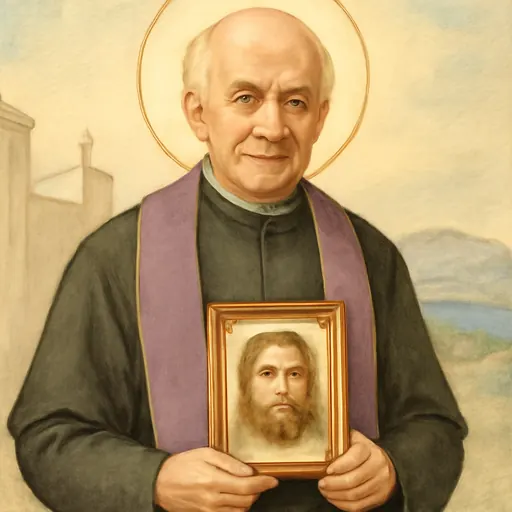
St. Gaetano Catanoso (1879–1963) was a parish priest of Reggio Calabria in southern Italy, first in the poor mountain village of Pentidattilo and then in the city, who spread devotion to the Holy Face of Jesus and founded the Daughters of St. Veronica, Missionaries of the Holy Face. Pope Benedict XVI canonized him in 2005. His feast is April 4, and he rests in the Shrine of the Holy Face in Reggio Calabria.
Who was St. Gaetano Catanoso?
St. Gaetano Catanoso was a parish priest of Reggio Calabria, at the toe of Italy, who spent his life on poor mountain villages, the sick, prisoners, orphans and lonely priests, and on one great love: the Holy Face of Jesus. "The Holy Face is my life," he wrote. "He is my strength." He founded a congregation of sisters, the Daughters of St. Veronica, Missionaries of the Holy Face, and died in 1963.
Pope Benedict XVI canonized him on October 23, 2005, together with St. Alberto Hurtado and three others. We keep his feast on April 4.
The life of St. Gaetano Catanoso
A country boy from Chorio
Gaetano was born on February 14, 1879, at Chorio di San Lorenzo, in the hills above Reggio Calabria. The Vatican biography describes his parents as well-off landowners and model Christians. He was ordained a priest in 1902.

Pentidattilo
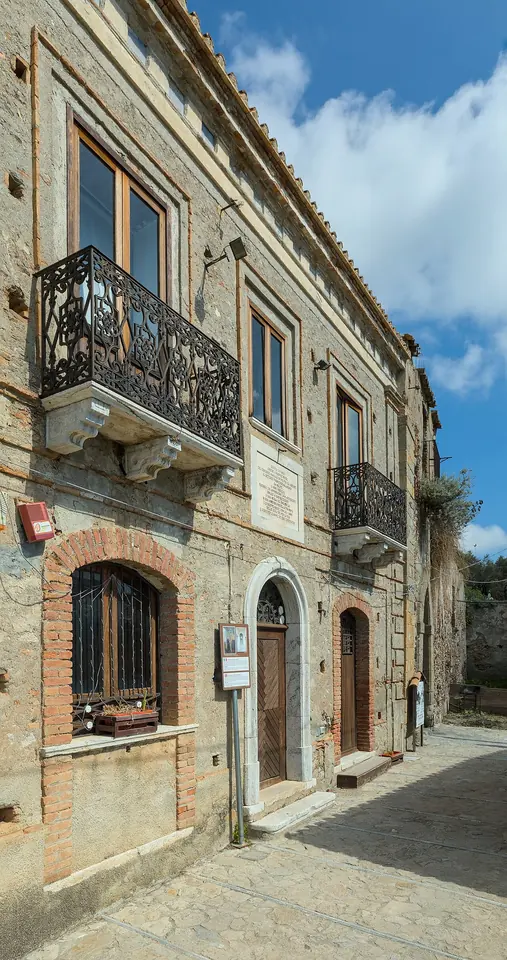
On March 1, 1904, he was sent to Pentidattilo, a village built under a great rock with five spires, whose name means "five fingers." In his day there were no streets, only mule tracks, and the people were poor and mostly unable to read. He stayed until 1921, walking and riding the mountain paths to preach, teach the catechism and visit the sick. The Vatican says this country parish was the post he loved most.

The Holy Face
In 1918 Canon Salvatore De Lorenzo, pastor of the Candelora parish in Reggio, gave him a diploma of membership in the Archconfraternity of the Holy Face of Tours in France. It changed his life. In 1920 he started a bulletin, Il Volto Santo (The Holy Face), and a Confraternity of the Holy Face. He joined the devotion to the Eucharist. As Pope Benedict quoted him:
If we wish to adore the real Face of Jesus..., we can find it in the divine Eucharist, where with the Body and Blood of Jesus Christ, the Face of Our Lord is hidden under the white veil of the Host.
Parish priest in the city
On February 2, 1921, he was moved to the large city parish of Santa Maria della Candelora in Reggio, where he served until 1940. He brought back Eucharistic and Marian devotion, opened charitable works, taught the catechism and set up teams of priests he called "flying squads," who went from parish to parish to preach and hear confessions. He spent hours before the tabernacle. "Let us all work to defend and save the orphans, those who are abandoned," he said. "There are too many dangers and there is too much misery."
From 1921 to 1950 he was confessor to religious communities and to the prisoners of Reggio, hospital chaplain, and spiritual director of the archdiocesan seminary.

The Daughters of St. Veronica
In 1934 he founded the Congregation of the Daughters of St. Veronica, Missionaries of the Holy Face, named for St. Veronica, who by tradition wiped the face of Jesus on the way to Calvary. Their first house was at Riparo. Their work was constant prayer of reparation, humble service in the churches, catechism, and care for children, young people, priests and the elderly. When the archbishop restricted the congregation, he obeyed without complaint; on March 25, 1958, the archdiocese approved the constitutions he had written.
He died on April 4, 1963. His great project, the Shrine of the Holy Face, was completed after his death.
Miracles and canonization
- Healings for his beatification and canonization: approved. Pope John Paul II beatified him on May 4, 1997, and Benedict XVI canonized him on October 23, 2005, after the Church accepted healings through his intercession. We have not been able to verify the details of the two cases from an official source, so we don't repeat them here.
He would have smiled at the question. On one of the scraps of paper where he jotted his thoughts he wrote: "Holiness does not lie in working miracles; it lies in detesting every sin, in doing what pleases God, in keeping the Commandments, in loving God and neighbor for love of the Lord" (our translation from the Italian).
Symbols of St. Gaetano Catanoso in art
He died in 1963, so his images come from photographs: an elderly, bald priest with a gentle smile, in a black cassock. Statues and holy cards add:
- The Holy Face on Veronica's veil: his lifelong devotion and the name of his sisters.
- The Host or a monstrance: his teaching that the Face of Jesus is hidden in the Eucharist.
- A rosary: his Marian piety.

Feast day and shrine
His feast is April 4. His body rests in the crypt of the Shrine of the Holy Face in Reggio Calabria, the mother house church of his sisters. It was finished in 1969, consecrated on January 2, 1972, and declared a shrine on April 4, 1988. See our feast days page for other saints of April, and our page on the Veil of Veronica.
Prayer to St. Gaetano Catanoso
We have not found a traditional prayer to him that we can quote from a published source. His own short motto is a prayer in itself: "Fiat – in Domino – Deo gratias – Ave Maria e avanti!" ("Let it be done – in the Lord – thanks be to God – Hail Mary, and onward!").
Let us ask St. Gaetano Catanoso to pray for parish priests, for abandoned children and the lonely elderly, for prisoners, and for all who seek the Face of Jesus in the Eucharist. St. Gaetano Catanoso, pray for us.
Frequently asked questions
When is the feast day of St. Gaetano Catanoso?
April 4, the day he died in Reggio Calabria in 1963.
What order did St. Gaetano Catanoso found?
The Congregation of the Daughters of St. Veronica, Missionaries of the Holy Face, in 1934. Their work is prayer of reparation, service in worship and catechesis, and care for children, young people, priests and the elderly.
Where is St. Gaetano Catanoso buried?
In the crypt of the Shrine of the Holy Face in Reggio Calabria, the church he planned for his sisters and which was finished in 1969, six years after his death.
What did St. Gaetano Catanoso say about the Holy Face?
"The Holy Face is my life. He is my strength." He also taught that the true Face of Jesus is hidden in the Eucharist, under the white veil of the Host.
Keep exploring
Sources
- Vatican: Gaetano Catanoso (1879-1963), biography. Birth, ordination, parishes, the Confraternity of the Holy Face, the 1934 foundation, the 1958 approval, death and beatification
- Pope Benedict XVI, homily for the canonization of five saints, October 23, 2005. His words on the Holy Face hidden in the Eucharist
- Beatrice Bruno and Orsola Toscano, San Gaetano Catanoso: il parroco della porta accanto (Calabria.Live, December 2024). The 1918 diploma of the Holy Face of Tours, his appointment to Pentidattilo on March 1, 1904, his hospital chaplaincy, the shrine and his tomb in its crypt, and his saying on holiness and miracles
- Justin Catanoso, Our Cousin, the Saint (NPR, October 2005). A relative's account of the canonization, the first of Benedict XVI's pontificate, and of the glass tomb