St. Zosimas of Palestine, the Monk Who Found St. Mary of Egypt

St. Zosimas of Palestine (late 5th century to about 560) was a monk and priest near the Jordan River who, during a Lenten retreat, met St. Mary of Egypt. He heard her story, gave her Holy Communion a year later, and returned to bury her. The Orthodox and Eastern Catholic churches keep his feast on April 4.
Who was St. Zosimas of Palestine?
St. Zosimas of Palestine was a desert monk and priest of the sixth century, and the only witness to one of the most loved stories of repentance in the Church. During a Lenten retreat in the wilderness beyond the Jordan, he met St. Mary of Egypt, the former sinner of Alexandria who had lived alone in the desert for forty-seven years. He heard her confession of her life, brought her Holy Communion, and buried her. It is through his telling, handed down by his monastery, that we know her at all.
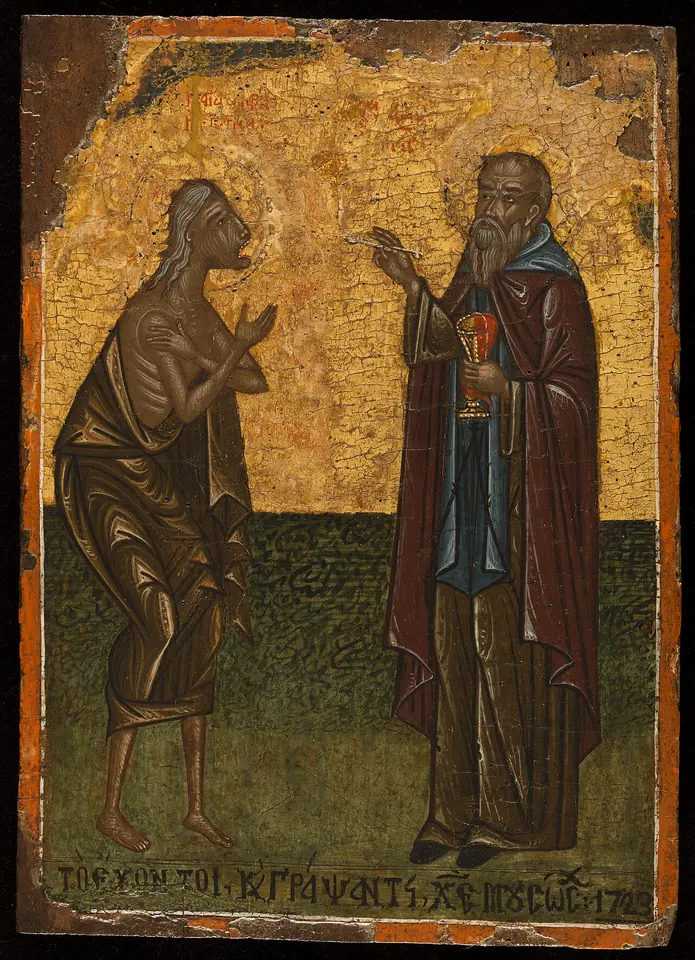
The Orthodox and Eastern Catholic churches keep his feast on April 4, three days after hers. In icons the two are almost always together: the bent old monk with the chalice, and the gaunt, sun-darkened woman who receives it.
The life of St. Zosimas
A monk who thought he had arrived
Zosimas was born in Palestine near the end of the fifth century, and he lived in a monastery from childhood. He became a priest, and by the time he was fifty-three he was known as a model monk. Then, the Life says, a thought began to trouble him: that he had reached perfection and needed no one to teach him. "Is there a monk anywhere," he asked himself, "who can show me some form of asceticism that I have not attained?"
God answered the pride with an invitation. An angel told him to leave his monastery and go to another, near the Jordan River. In the telling the OCA gives, "Abba Zosimas immediately left the monastery, and following the angel, he went to the Jordan monastery and settled in it." There he found monks far ahead of him, and he became a learner again.
Lent in the desert
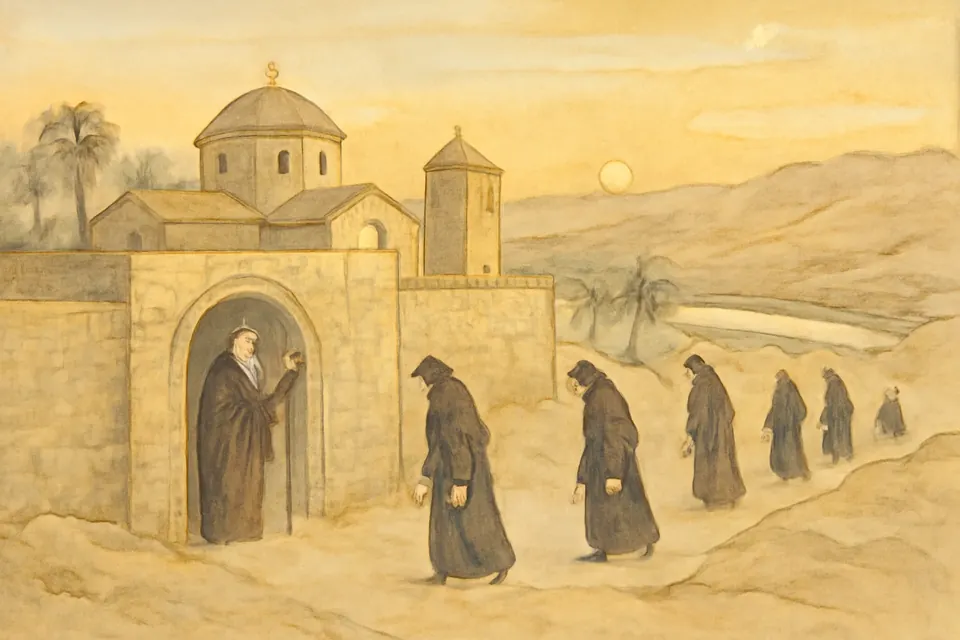
The monks of the Jordan monastery kept a custom. On the first Sunday of Great Lent they received Communion, asked one another's forgiveness, took the abbot's blessing and went out alone into the desert across the river, carrying a little food. They returned on Palm Sunday, and no one asked another how he had spent the fast.
The meeting
In one such Lent, after walking for twenty days, Zosimas saw a figure in the distance, so burned by the sun that he took it for a demon at first. It fled from him. When he called after it, a woman's voice asked him to throw her his cloak, so that she could cover herself before they spoke. She called him by his name and knew he was a priest, though they had never met. She was Mary, and she told him everything: her years of sin in Alexandria, her conversion before the icon of the Mother of God in Jerusalem, her decades alone in the desert. Then she asked him to tell no one while she lived, and to come back the next year.
Communion at the Jordan
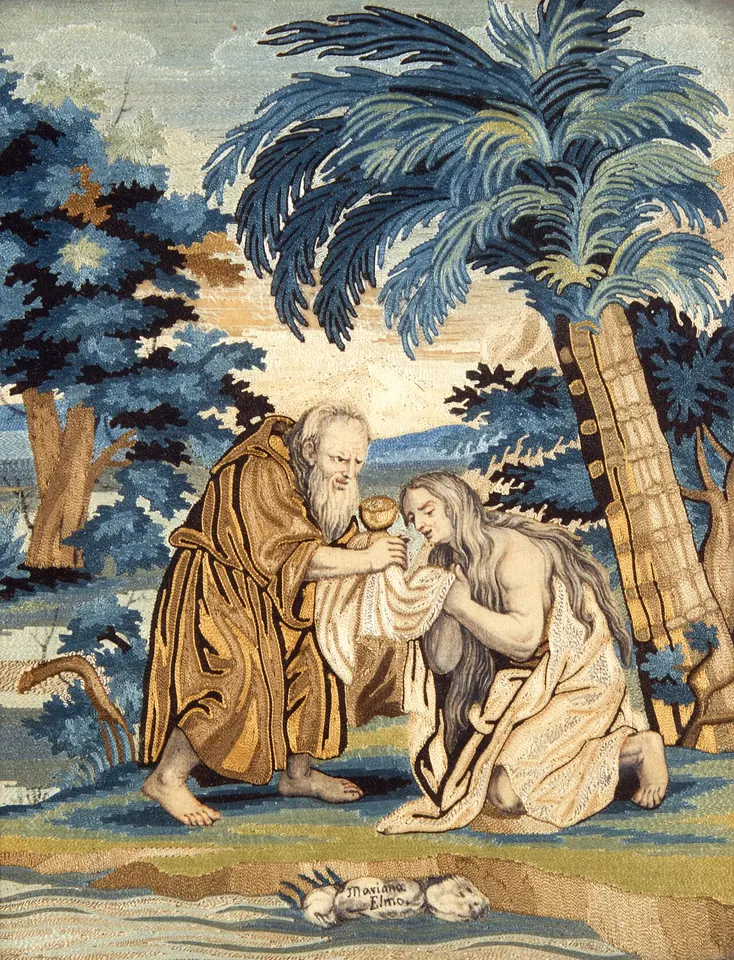
On Holy Thursday of the next year, Zosimas waited on the near bank of the Jordan with the Body and Blood of Christ. She came at nightfall, made the Sign of the Cross over the river, and walked across the water to him. She received the Holy Gifts. She asked him to meet her again a year later at the place where they had first met.
The burial
When Zosimas came back, he found her lying dead, "with arms folded on her bosom, and her face was turned to the east." Written on the ground by her head were the words: "Abba Zosimas, bury on this spot the body of humble Mary." The note added that she had died on the very night she received Communion. Only then did he learn her name. He had nothing to dig with but a small piece of wood, and the ground was hard. Then a lion came out of the desert, dug the grave, and went away.
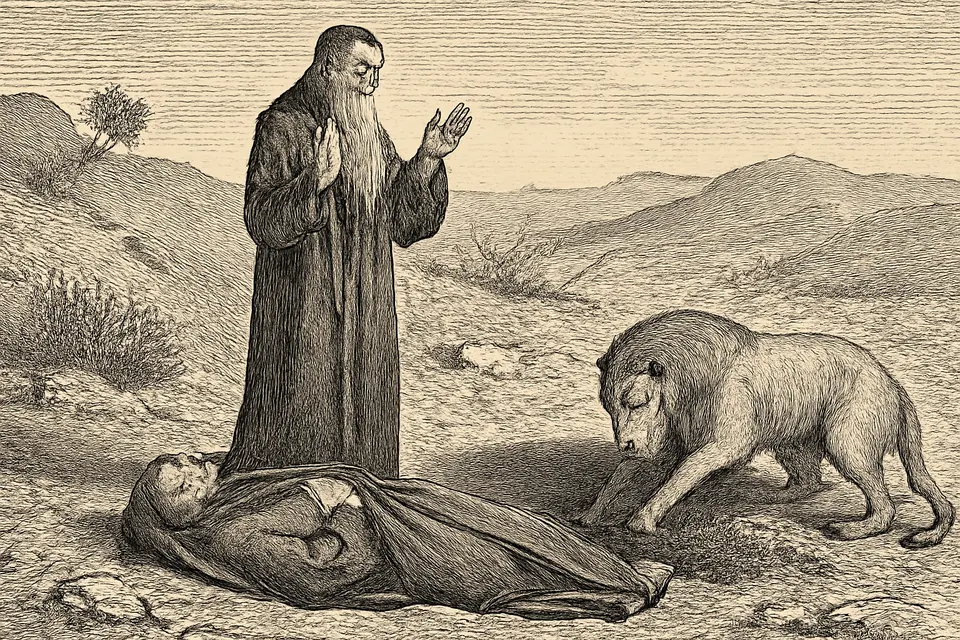
Zosimas went back to his monastery and told the brothers everything. He lived there until he was nearly a hundred and fell asleep in the Lord around 560.
History and tradition
Everything we know of Zosimas comes from the Life of St. Mary of Egypt. Tradition names St. Sophronius of Jerusalem, patriarch from 635, as its author, but the Catholic Encyclopedia notes that the Bollandists gave good reasons for thinking it was written before 500, and so by someone else. The dates themselves are uncertain: the Bollandists placed Mary's death in 421, while many other authorities put it a century later, which is closer to the OCA's dates for Zosimas.
- Traditional: the angel's call, Mary's knowing his name, her walking on the Jordan, and the lion. These come from the Life, a devout and very old account that no other record confirms.
Symbols of St. Zosimas in art
In icons and paintings, look for:
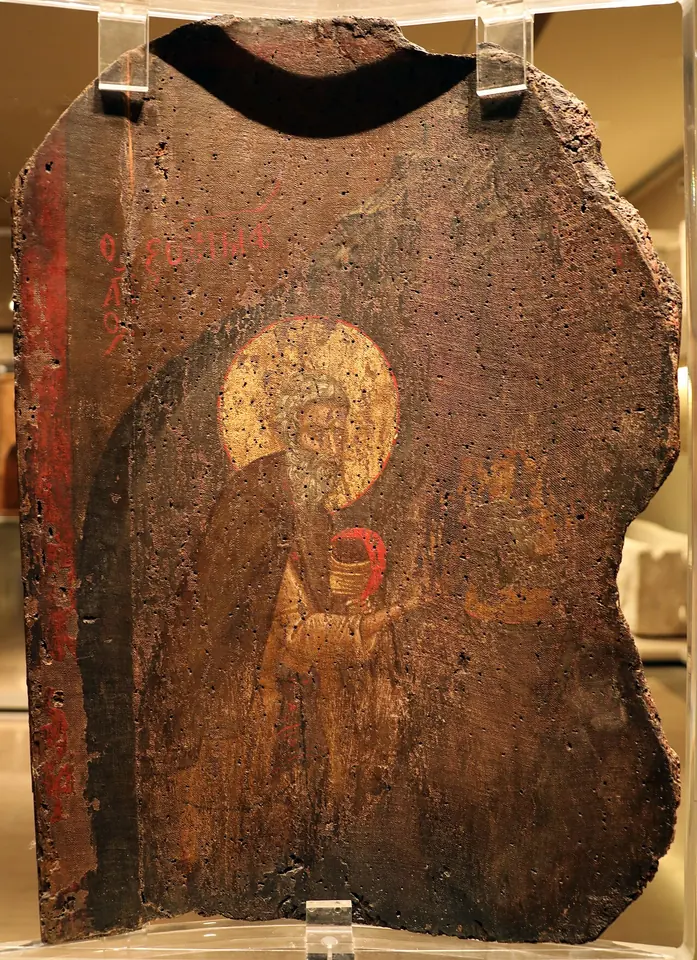
- An old monk with a long white beard, in a dark habit and cloak;
- A chalice, often covered, for the Holy Gifts he carried to the Jordan;
- His cloak, held out or already wrapped around Mary of Egypt;
- A lion, in scenes of her burial.
He is almost never shown alone. Russian "life" icons of Mary show him in the scenes around the border.
Feast day and prayer
We keep the feast of St. Zosimas on April 4 in the Byzantine calendar. His story is heard again in Great Lent, when the Orthodox Church honors St. Mary of Egypt on the fifth Sunday. See the feast day calendar and our page on the Desert Fathers.
We know of no traditional prayer to him in English that we can quote. Let us ask St. Zosimas to pray for us when we think we have nothing left to learn, and for priests who bring the Holy Gifts to the sick and the forgotten. When Mary had received Communion, the Life says, she prayed the words of Simeon: "Lord, now let Your servant depart in peace, for my eyes have seen Your salvation."
Frequently asked questions
Who was St. Zosimas of Palestine?
A monk who lived from childhood in a monastery in Palestine and later moved to a monastery near the Jordan. During the Lenten fast he met St. Mary of Egypt in the desert, and it is through his account that her life is known. He lived to nearly a hundred and died around 560.
How did St. Zosimas meet St. Mary of Egypt?
The monks of his monastery spent each Lent alone in the desert beyond the Jordan. After twenty days of walking, Zosimas saw a figure, burned by the sun, who fled from him. She asked for his cloak to cover herself, called him by name, and told him her life. The next Holy Thursday he brought her Communion at the Jordan, and the year after he found her dead and buried her.
What are St. Zosimas's symbols in icons?
An old monk with a long white beard, usually holding a chalice, for the Communion he gave Mary of Egypt. He often appears with her, offering the chalice or the cloak, and sometimes with the lion that dug her grave.
When is the feast of St. Zosimas of Palestine?
April 4, three days after St. Mary of Egypt's feast on April 1.
Keep exploring
Sources
- Orthodox Church in America: Venerable Zosimas of Palestine (April 4). His dates, the monastery by the Jordan and his death at nearly a hundred about 560
- Orthodox Church in America: Venerable Mary of Egypt (April 1). His fifty-three years in his first monastery, the thought of perfection, the angel, the Lenten custom, the meetings with Mary, the writing by her head and the lion; quotations from this telling of the Life
- Catholic Encyclopedia (1910): St. Mary of Egypt. The question of the Life's author and date (the Bollandists' case for before 500) and the disputed date of Mary's death