St. Catalina Thomás
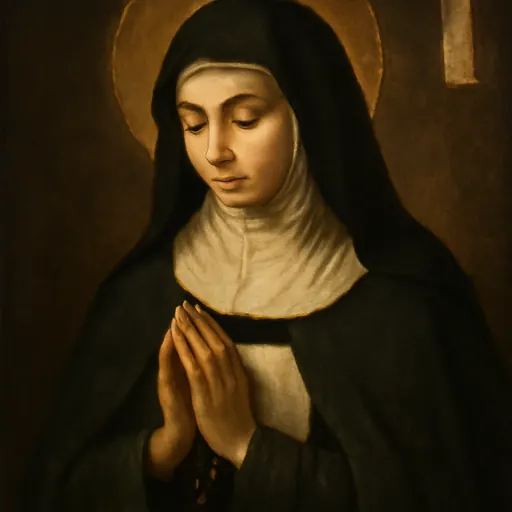
St. Catalina Thomás (1531–1574) was an orphaned farm girl from Valldemossa in Mallorca who, after years of waiting, entered the Augustinian canonesses of St. Mary Magdalene in Palma. She became known for her humility, her ecstasies and her wise counsel, and her incorrupt body is kept in their church. Pius XI canonized her in 1930. Her feast is April 5.
Who was St. Catalina Thomás?
St. Catalina Thomás is Mallorca's own saint, a farm girl from the mountain village of Valldemossa who became a canoness of St. Augustine in Palma and one of the great mystics of sixteenth-century Spain. She was born on May 1, 1531, and died on April 5, 1574, a Monday of Holy Week. Her incorrupt body rests in the church of the canonesses of Santa Magdalena in Palma. Pope Pius XI canonized her in 1930, and we keep her feast on April 5. In Catalan she is Santa Catalina Tomàs, and the people of Mallorca still call her, with affection, la Beateta.
An orphan in the mountains
Her parents, Dunbar's Dictionary of Saintly Women records, were Jacob (Jaume) Tomàs and Marquetta Gallart, "honest peasants" of Valldemossa. Her father died when she was three. In 1541, at ten, she went to live with an uncle and aunt on their estate of Son Gallard. There she worked in the house and the fields and kept the flocks. The neighbors, Dunbar writes, noticed how serious she was and how little she cared for amusements, and nicknamed her "the little old woman."

She wanted to give her life to God, and her family had other plans for her. Those were hard years, and Dunbar records that "divers saints" came to comfort her. She was named for St. Catherine of Alexandria. From 1547 to 1550 a hermit named Father Antonio Castañeda guided her soul, and with his help she left home.
Servant, then canoness
In 1550 she went to Palma as a servant in the house of the Zaforteza family, who, Dunbar says, taught her to read and to embroider. A poor girl with no dowry had little hope of entering a convent, and Dunbar notes how hard it was for her to be accepted. At last the canonesses of St. Augustine at the convent of St. Mary Magdalene took her in on November 13, 1552. She received the white veil on January 25, 1553, and made her solemn profession on August 24, 1555, the feast of St. Bartholomew, patron of her home parish.
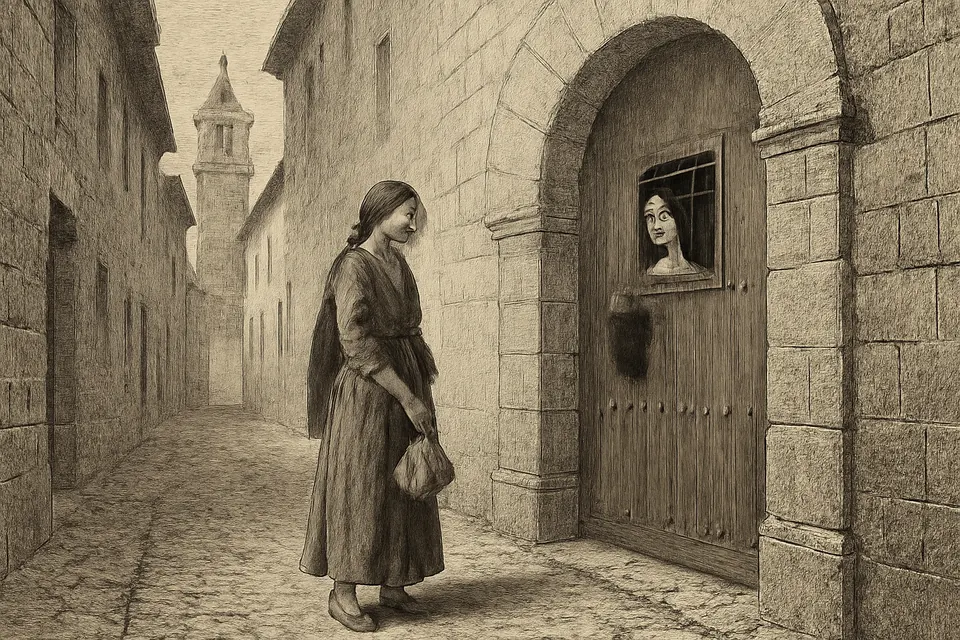
Inside the cloister she sought the lowest place. In 1571 her sisters elected her prioress; that same afternoon, the community's own record says, she gave up the office. Bishop Miquel Tomàs of Mallorca asked for her prayers that year, and people great and small came to her for advice.
The miracles of St. Catalina Thomás
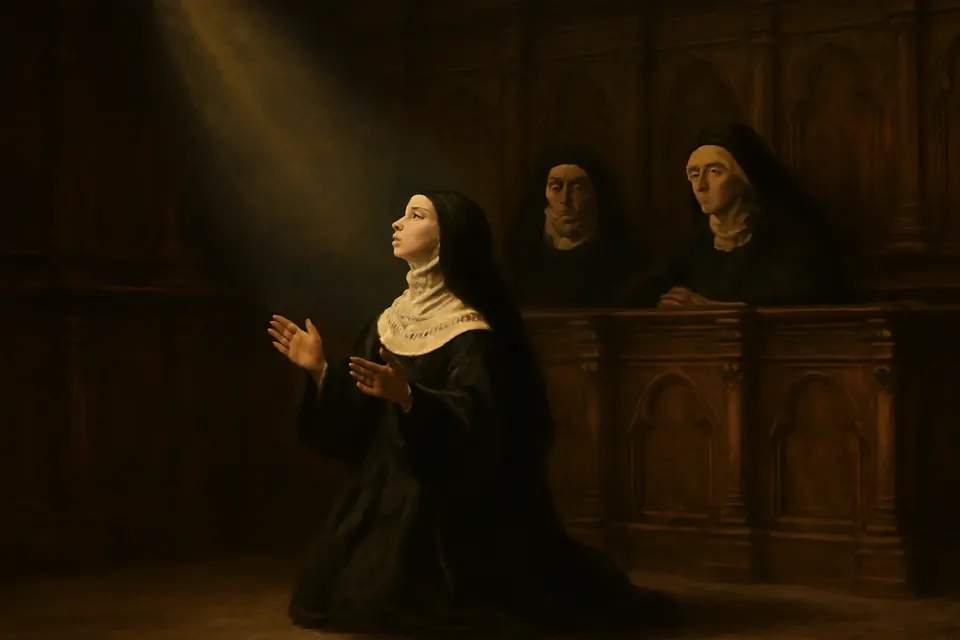
- Visions and spiritual combat (traditional). Dunbar records that Catalina had ecstasies, was attacked by the devil in visible form, was comforted by saints, spoke with souls in purgatory and foretold future events.
- The death of Pius V foretold (reported). Her community's history says that in 1572 she told her confessor, Father Abrines, of the death of Pope St. Pius V before the news reached Mallorca.
- Her incorrupt body (reported). Her body is kept in the church of Santa Magdalena, which her community describes as incorrupt. Dunbar, writing in 1904, describes it lying "in a marble sarcophagus with a glass front," shown by the nuns.
- Miracles for her beatification and canonization (approved). On December 8, 1791, Pius VI approved three miracles for her beatification; on February 26, 1930, Pius XI approved the miracles for her canonization.
From local saint to the altars
When she died, Mallorca honored her as a saint at once. About fifty years later a decree of Pope Urban VIII forbade public cult of anyone the Church had not yet declared blessed, and the island appealed to Rome. The cause moved slowly. Pius VI issued the brief of beatification on August 3, 1792, and the ceremony took place on August 12. Pius XI canonized her in St. Peter's on June 22, 1930.
Only two of her writings survive: two spiritual letters she wrote in 1572 to a priest, Father Vicente Mas.
Symbols of St. Catalina Thomás in art
Mallorca has many images of her, from old altarpieces to ceramic tiles on the houses of Valldemossa. Look for:
- The black habit with a white linen rochet: the dress of the Augustinian canonesses of Santa Magdalena.
- A peasant girl with sheep or a straw hat: her childhood at Son Gallard. In Valldemossa she is often shown this way, young, in a farm dress and hat.
- Angels or saints beside her: the heavenly comfort of her visions.
- A rosary or joined hands: her life of prayer.
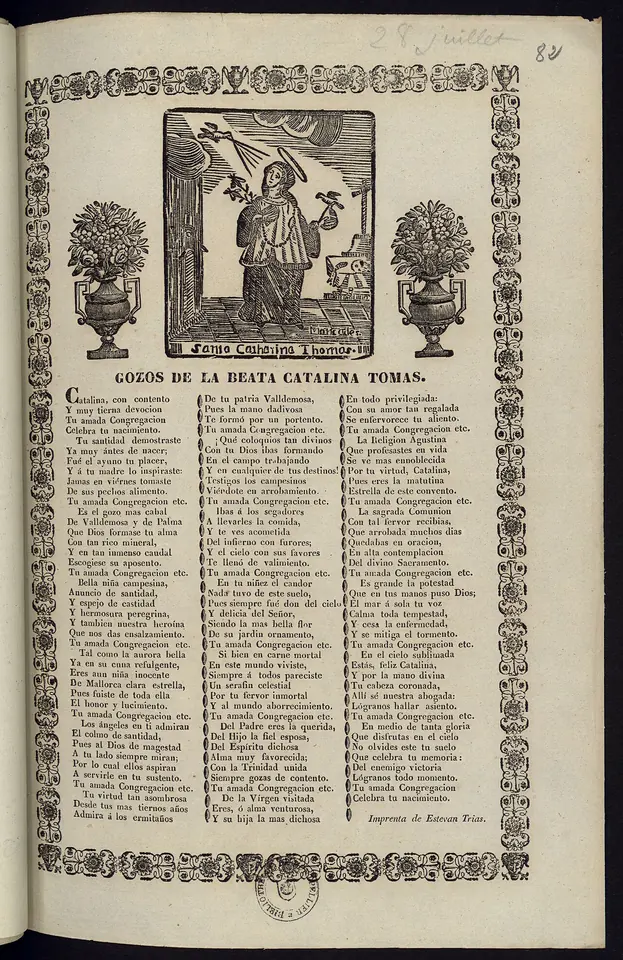
The old Gozos sheets, printed hymns sold for her feast, show her kneeling before a vision in the sky.
Feast day, relics and pilgrimage
We keep the feast of St. Catalina Thomás on April 5. Pilgrims visit her body in the church of Santa Magdalena in Palma, where her community of canonesses still lives, and her birthplace at Carrer de la Rectoria 5 in Valldemossa, now a small shrine. Dunbar mentions her hat and thimble kept as relics by her sisters. See also the feast day calendar.

We know of no traditional English prayer to her; in Mallorca the Gozos are sung in her honor. Let us ask her to pray for the poor, for orphans, and for young people who long to give themselves to God and do not yet see the way: St. Catalina Thomás, pray for us.
Where the relics of St. Catalina Thomás are kept: see them on the relics map →
Frequently asked questions
Who was St. Catalina Thomás?
A Mallorcan peasant girl, born in Valldemossa in 1531, who lost both parents young, worked on her relatives' farm and then as a servant in Palma, and entered the canonesses of St. Mary Magdalene in 1552. She lived there as a humble sister and mystic until her death on April 5, 1574.
Where is St. Catalina Thomás buried?
Her incorrupt body is kept in the church of Santa Magdalena in Palma, the church of the Augustinian canonesses she belonged to. Her birthplace on Carrer de la Rectoria in Valldemossa is a small shrine.
When was St. Catalina Thomás canonized?
Pope Pius VI beatified her on August 12, 1792, and Pope Pius XI canonized her in St. Peter's on June 22, 1930.
When is the feast of St. Catalina Thomás?
April 5, the day of her death.
Keep exploring
Sources
- Canónica de Santa María Magdalena, Palma: Santa Catalina Tomás. Her own community's timeline: dates of entry, profession, the 1571 election, the letters, Pius V, the beatification and canonization, the incorrupt body
- Agnes B. C. Dunbar, A Dictionary of Saintly Women, vol. 1 (1904), "B. Catherine (15) Tomas". Her parents, the nickname, the dowry problem, Urban VIII's decree and her relics