St. Theodosia of Tyre, Virgin Martyr of Caesarea
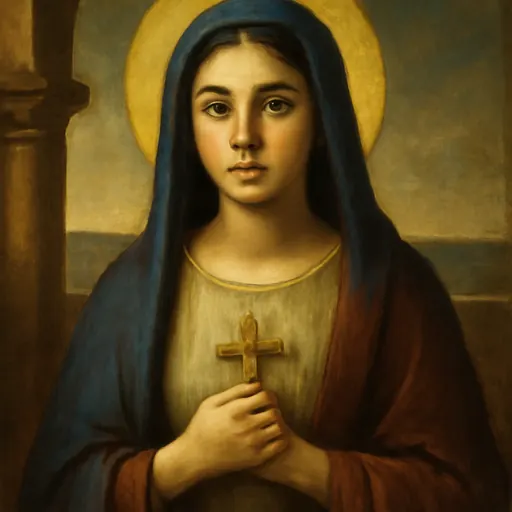
St. Theodosia of Tyre was a Christian girl, not yet eighteen, who on Easter Sunday of 307 greeted confessors on trial at Caesarea in Palestine and asked them to remember her before the Lord. She was arrested, tortured and thrown into the sea. The Roman Martyrology keeps her feast on April 2; the Orthodox Church honors her on April 3.
Who was St. Theodosia of Tyre?
St. Theodosia of Tyre was a young Christian woman who died for a simple act of love. On Easter Sunday in the year 307, at Caesarea in Palestine, she walked up to a group of Christians on trial before the Roman governor, greeted them, and asked them to remember her when they stood before the Lord. For that she was seized, tortured and thrown into the sea. She was not yet eighteen.
What makes her story precious is its witness. Eusebius, the great historian of the early Church, lived in Caesarea and later became its bishop. He wrote The Martyrs of Palestine about the men and women he saw die in his own city during the Great Persecution, and Theodosia is among them.
She is not the same person as St. Theodosia of Constantinople, a nun martyred for the holy icons about 730.
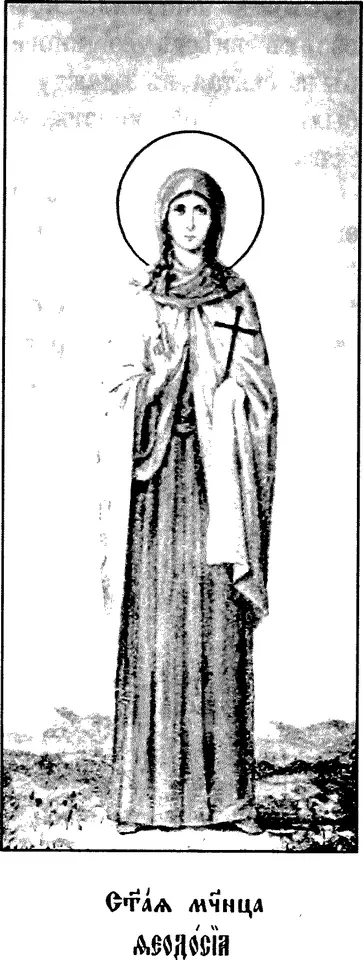
The martyrdom of St. Theodosia
Easter morning at Caesarea
By the spring of 307 the persecution begun by Diocletian had entered its fifth year in Palestine, and the governor Urbanus was hunting down Christians with great cruelty. Eusebius dates what happened to the very day: the second of April, "on the very Lord's day of our Saviour's resurrection." The Orthodox life adds that the prisoners were speaking about the Kingdom of God as they waited.
Eusebius tells it in a few lines:
Theodosia, a virgin from Tyre, a faithful and sedate maiden, not yet eighteen years of age, went up to certain prisoners who were confessing the kingdom of Christ and sitting before the judgment seat, and saluted them, and, as is probable, besought them to remember her when they came before the Lord.
Before the governor
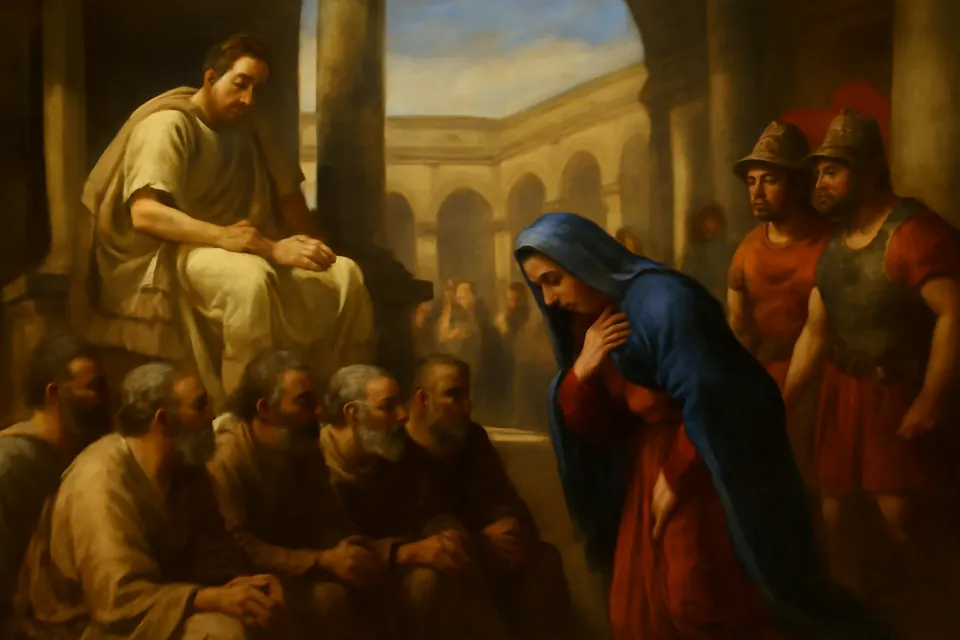
The soldiers treated her greeting, Eusebius says, "as if she had committed a profane and impious act," and took her before Urbanus. He had her tortured savagely. Eusebius notes that through it all she "stood with a joyful and beaming countenance." Then the governor ordered her thrown into the sea. The prisoners she had greeted were sentenced to the copper mines at Phaeno.
The Orthodox life preserves her answer when Urbanus pressed her a second time to sacrifice:
Foolish man, why do you persist? Can you not see that I have received everything I prayed for, and that I am honored to share the fate of these Martyrs for Christ?
History and legend
Eusebius's account ends with Theodosia given to the waves. The later Greek life, which the Orthodox Church reads on her feast, adds more. In it, angels lift her out of the sea, the wild beasts in the arena refuse to touch her, and at last she is beheaded. That night she appears to her parents, who had begged her to save herself, clothed in light with a crown on her head and a gold cross in her hand, and says, "Behold the great glory of which you wished to deprive me!"
We honor both, but they are not the same kind of witness. The death in the sea is history, written down by a man who lived in the city where it happened. The rescue, the beasts and the vision are traditional, the way later generations loved and retold her story.

Why her story matters
Theodosia did not go looking for a fight. She did what Christians had always done for confessors in prison: she greeted them and asked their prayers. Her death shows how far the persecution had gone, when a girl's kind word to prisoners could be treated as a crime. In the same chapter Eusebius goes on to tell how Urbanus imprisoned St. Pamphilus, "my dearest friend," that same year.
Symbols of St. Theodosia in art
- Cross: the sign of a martyr, held in her right hand in Orthodox icons.
- Veil and mantle: she is painted as a young virgin martyr, often in red, the color of martyrdom.
- Crown: from the vision of her in glory.
- Palm: in Western images, the martyr's palm.
- The sea: sometimes waves or a stone appear, for the manner of her death.
Many young virgin martyrs are painted in the same way, so look for her name in the inscription.
Her relics and feast days
The Orthodox life says her relics were later carried to Constantinople and, after that, to Venice; we have not found a reliable record of where in Venice they are kept today. The Roman Martyrology keeps her feast on April 2, the day Eusebius gives. The Orthodox Church honors her on April 3 and keeps May 29 for the transfer of her relics. See more saints of the season on our feast days page.
Prayer to St. Theodosia of Tyre
The Orthodox Church sings a troparion (tone 4) for her feast that praises her as a virgin martyr who gave herself wholly to Christ; the OCA prints the full text on its website.
Let us ask St. Theodosia to pray for Christians in prison for their faith today, and for the young people who visit them and keep them company.
Frequently asked questions
Who was St. Theodosia of Tyre?
A young Christian woman from Tyre who was put to death at Caesarea in Palestine in 307, during the Great Persecution, for greeting Christian prisoners and asking their prayers. Eusebius, the historian and later bishop of Caesarea, wrote down her story.
When is the feast of St. Theodosia of Tyre?
April 2 in the Roman Martyrology. The Orthodox Church keeps her on April 3, and on May 29 it remembers the transfer of her relics.
How old was St. Theodosia when she died?
Eusebius says she was "not yet eighteen years of age." The Orthodox life says seventeen.
Is St. Theodosia of Tyre the same as St. Theodosia of Constantinople?
No. Theodosia of Constantinople was a nun killed about 730 for defending an icon of Christ. The two share May 29 in the Orthodox calendar, which causes some confusion.
Keep exploring
Sources
- Eusebius of Caesarea, The Martyrs of Palestine, chapter 7, in Nicene and Post-Nicene Fathers, series 2, vol. 1, Christian Classics Ethereal Library. The eyewitness account: Easter Sunday, April 2, her age, the greeting of the prisoners, her tortures and death in the sea, with McGiffert's note dating it to 307
- Holy Virgin Martyr Theodosia of Tyre, Orthodox Church in America. The later Orthodox life: her words to Urban, the rescue by angels, the beasts, the beheading, her appearance to her parents and the transfer of her relics
- Holy Virgin Martyr Theodosia of Tyre, Troparion and Kontakion, Orthodox Church in America. Full text of the troparion