St. Hypatius of Gangra

St. Hypatius of Gangra was a fourth-century bishop of Gangra, in today's northern Turkey. The Orthodox Church honors him as a hieromartyr and wonderworker: by tradition he attended the Council of Nicaea in 325 and was killed by schismatics on his way home. The Orthodox keep his feast on March 31; the Roman Martyrology lists him on November 14.
Who was St. Hypatius of Gangra?
St. Hypatius of Gangra was a bishop of the early fourth century in Gangra, a city of Paphlagonia near the Black Sea coast of Asia Minor. Gangra is the Turkish town of Çankırı today. The Orthodox Church honors him as a hieromartyr, a bishop who died for the faith, and as a wonderworker. Orthodox tradition remembers him as one of the bishops at the First Ecumenical Council at Nicaea in 325, and says he was killed on the road home by schismatics who hated the Council's faith. The Orthodox keep his feast on March 31, and the Roman Martyrology lists him on November 14.
Several saints share his name. He is not St. Hypatius of Bithynia, the fifth-century abbot of Rufinianae near Chalcedon, nor St. Hypatius the Healer of the Kiev Caves.
A bishop at Nicaea
The Orthodox Church in America's life of the saint says Hypatius was bishop of Gangra and in 325 took part in the Council at Nicaea, "at which the heresy of Arius was anathematized." That council gave the Church the first form of the Nicene Creed, which we still pray at Mass and the Divine Liturgy.
We know little else about his years as bishop. The troparion sung for him in the Orthodox Church praises a pastor who was "a rule of faith, an image of humility and a teacher of abstinence." The old lives, copied and recopied in Greek and later in Russian, were written long after his time. They are precious witnesses to how the Church remembered him. They are not eyewitness history.
Martyrdom on the road home
The Roman Martyrology of 1916 gives the shortest account:
At Gangres, in Paphlagonia, St. Hypatius, bishop, who on his way home from the great council of Nice, was attacked with stones by the Novatian heretics, and died a martyr.
The Novatians were a rigorist sect that had broken from the Church in the third century. They refused to readmit Christians who had denied the faith under persecution, even after penance.
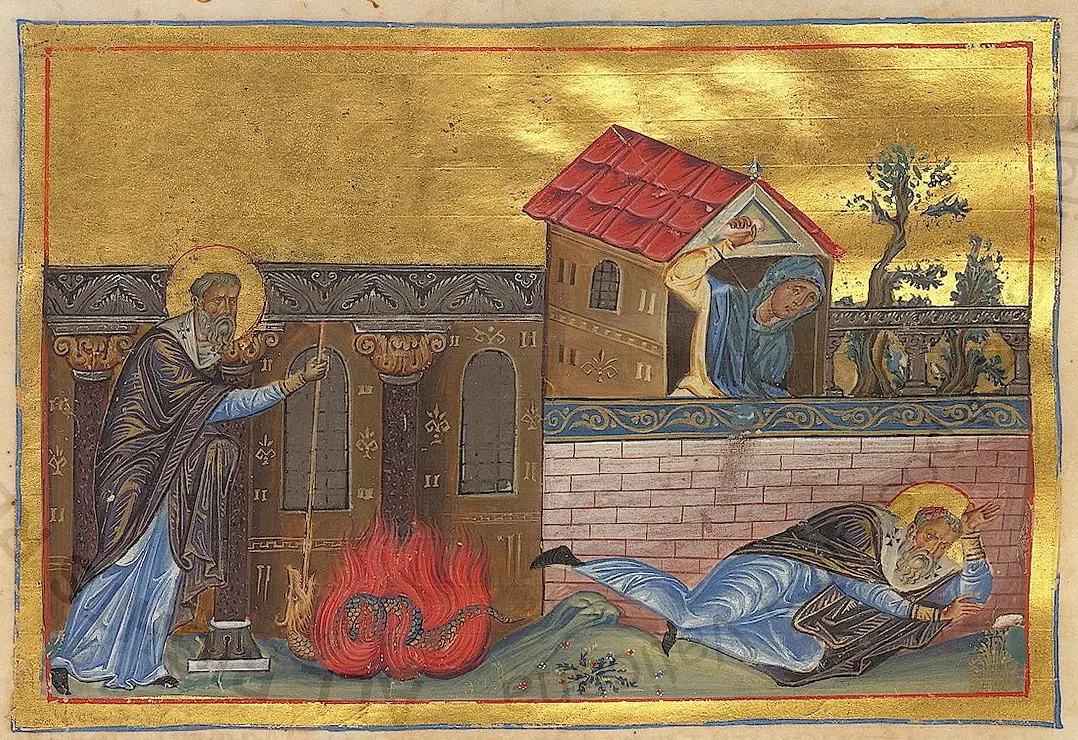
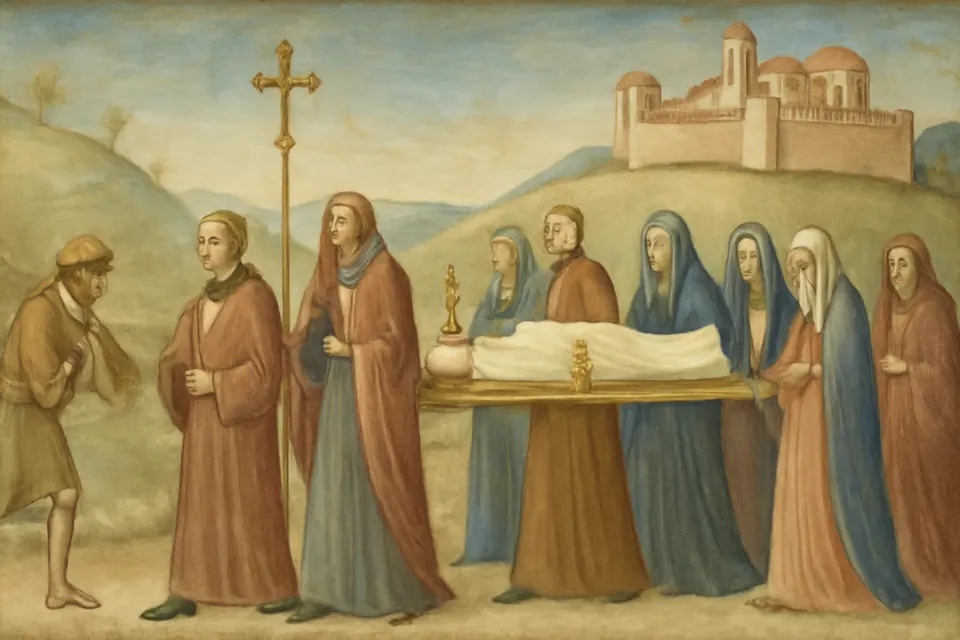
The Orthodox life tells the story at more length. Returning in 326 from Constantinople to Gangra, Hypatius was ambushed "in a desolate place." His attackers wounded him with swords and spears and threw him into a swamp. "Like the Protomartyr Stephen," the life says, he prayed for his murderers, and a woman finished him with a blow from a stone. They hid his body in a cave, where a Christian who kept straw there found it. He ran to the city with the news, and the people of Gangra buried their bishop with love. The details of this account are traditional.
Wonderworker
After his death, the Orthodox life says, his relics "were famous for numerous miracles, particularly for casting out demons and for healing the sick." These healings belong to the traditional memory of the Church, from centuries when no formal inquiry existed. It is why the Orthodox call him "the Wonderworker." Where his relics are today is not known.
The Church has sung his praises for more than a thousand years. The Orthodox life notes that the services for him in the March Menaion were written by St. Joseph the Studite, and that a new service was composed in Russia in the nineteenth century.
St. Hypatius in Russia
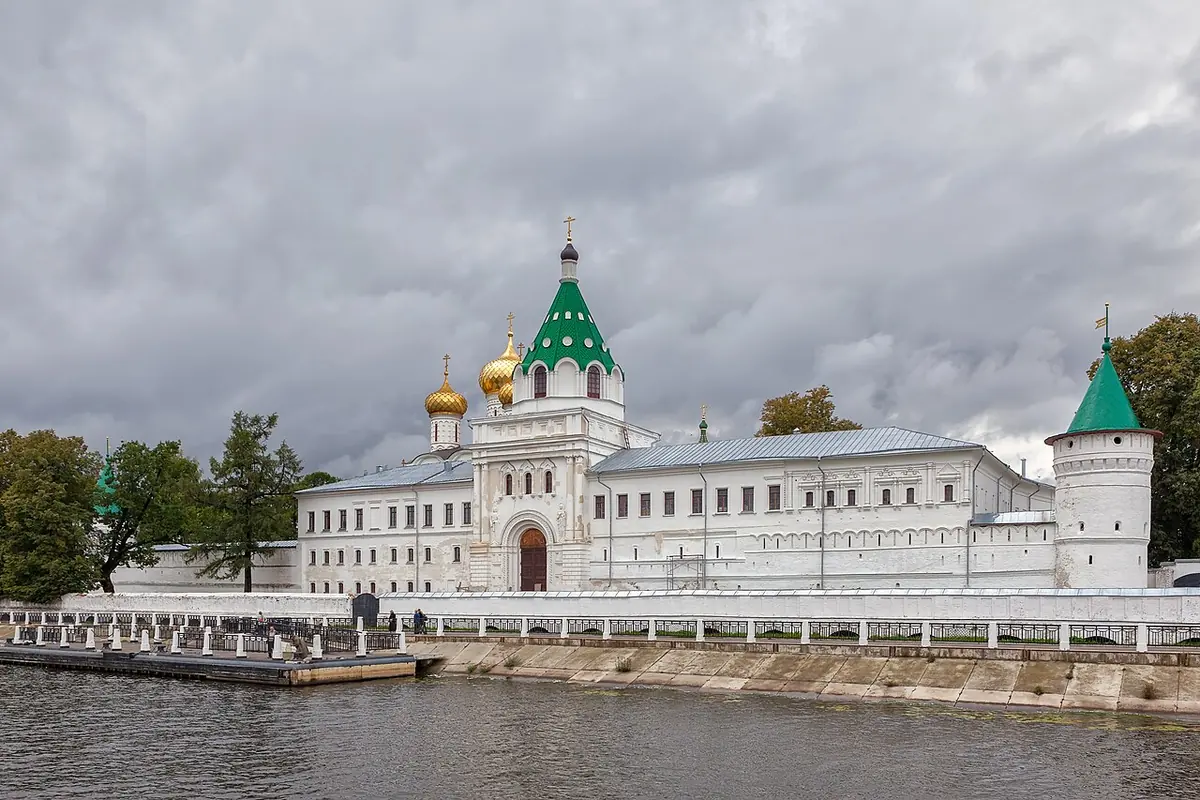
His memory traveled north. The Orthodox life notes that he was "particularly venerated in the Russian land." In 1330, by tradition, the Ipatiev Monastery was built at Kostroma, on the Volga, where the Mother of God had appeared with the Christ Child, the Apostle Philip and the hieromartyr Hypatius. The monastery took his name. It became one of the great houses of Russia and played a part in the nation's life during the Time of Troubles in the early seventeenth century.
A Russian life of the saint was included in the Great Reading Menaion of Metropolitan Macarius in the sixteenth century, with an account of Christ appearing to Hypatius on the eve of his death.
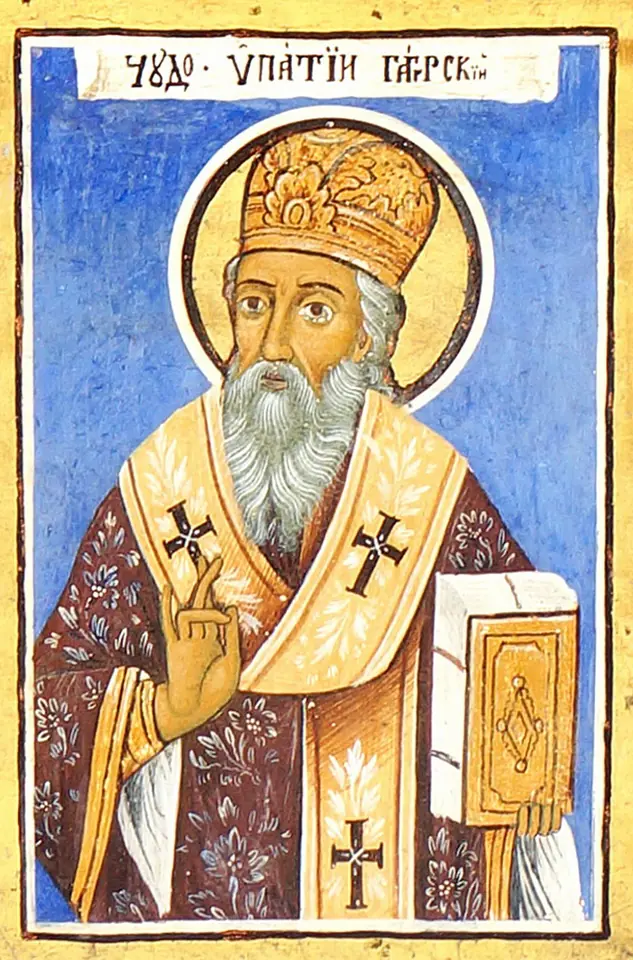
Symbols of St. Hypatius of Gangra in art
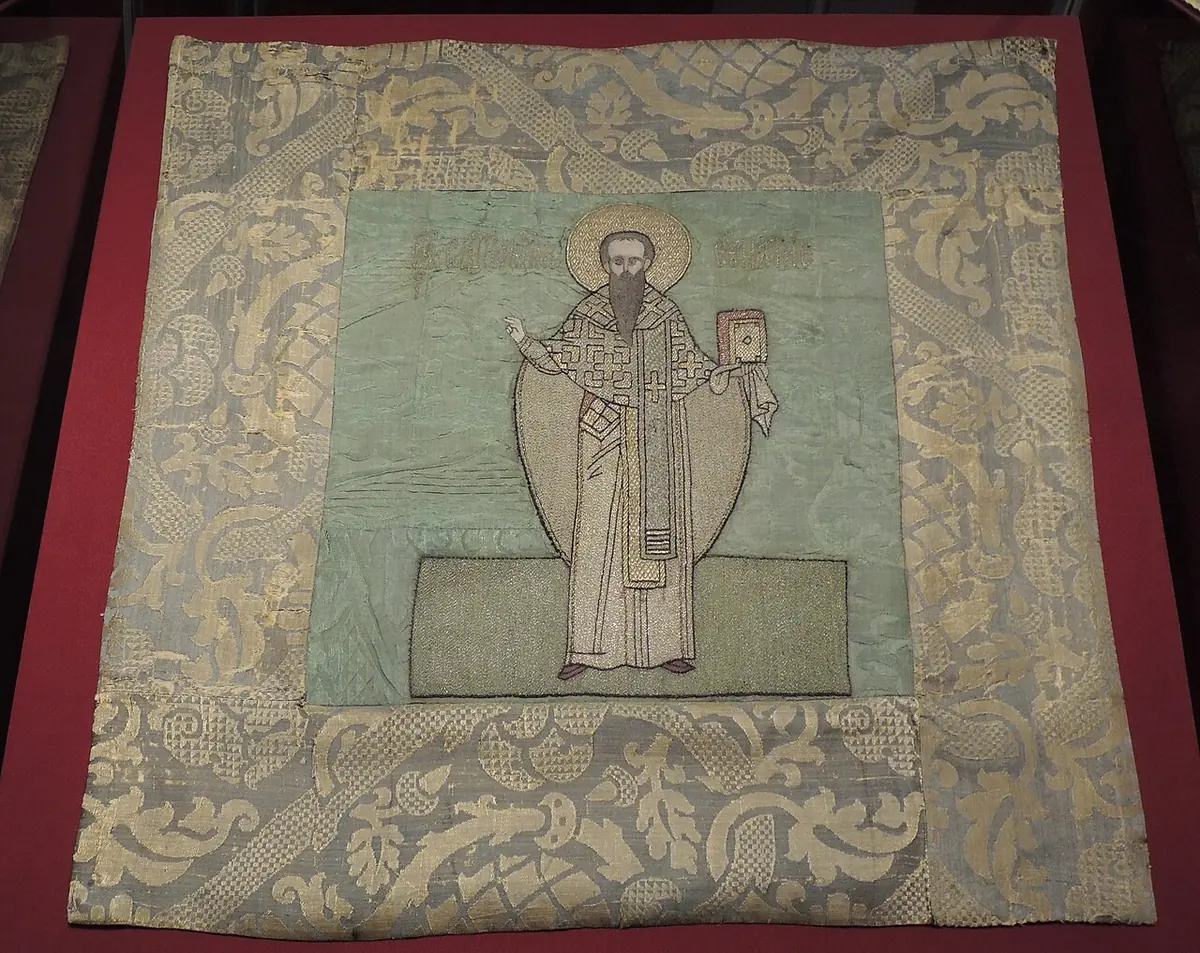
Hypatius is almost always painted as a bishop in Eastern icons and frescoes:
- The omophorion: the long white stole with crosses worn by Eastern bishops, the mark of his office.
- A Gospel book: the faith he defended at Nicaea.
- A raised hand of blessing: his care as a pastor.
- Stones, a swamp or a woman with a raised stone: scenes of his martyrdom in fuller cycles.
Icon painters usually give him a gray or white beard. In Greek and Slavonic icons his name is written beside his head, which is the surest way to tell him from the many other bishops on a church wall.
Feast day and troparion
The Orthodox Church keeps his feast on March 31; the Roman Martyrology names him on November 14. See the feast day calendar and our page on Orthodox saints.
The Orthodox Church sings a troparion for him in tone 4. It praises a pastor who was a rule of faith, an image of humility and a teacher of abstinence, and asks him to entreat Christ for our souls. The OCA prints the full text on its website.
Let us ask him to pray for bishops who defend the faith, for all who are attacked for Christ, and for the grace to forgive those who wrong us: St. Hypatius of Gangra, pray for us.
Frequently asked questions
Who was St. Hypatius of Gangra?
A bishop of Gangra in Paphlagonia, Asia Minor, in the early fourth century. Orthodox tradition says he took part in the First Ecumenical Council at Nicaea in 325, which condemned Arius, and was martyred on the road home about 326.
How did St. Hypatius of Gangra die?
The Roman Martyrology says he was attacked with stones by Novatian heretics on his way home from Nicaea. The Orthodox life adds that his attackers wounded him with swords and spears, that he prayed for them like St. Stephen, and that a blow from a stone killed him.
When is the feast of St. Hypatius of Gangra?
March 31 in the Orthodox Church, and November 14 in the Roman Martyrology.
What is the Ipatiev Monastery named for?
The Ipatiev Monastery in Kostroma, Russia, is named for St. Hypatius of Gangra. The Orthodox tradition says it was built in 1330 where the Mother of God appeared with the Christ Child, the Apostle Philip and St. Hypatius.
Keep exploring
Sources
- Saint Hypatius the Wonderworker, Bishop of Gangra, Orthodox Church in America. His martyrdom, the finding of his body, the Ipatiev Monastery and the Russian lives
- Saint Hypatius the Wonderworker, Bishop of Gangra: Troparion and Kontakion, Orthodox Church in America. Troparion quoted
- The Roman Martyrology (Baltimore, 1916). November 14 (quoted)