Blessed Nicholas Charnetsky, Redemptorist Bishop and Confessor of the Faith
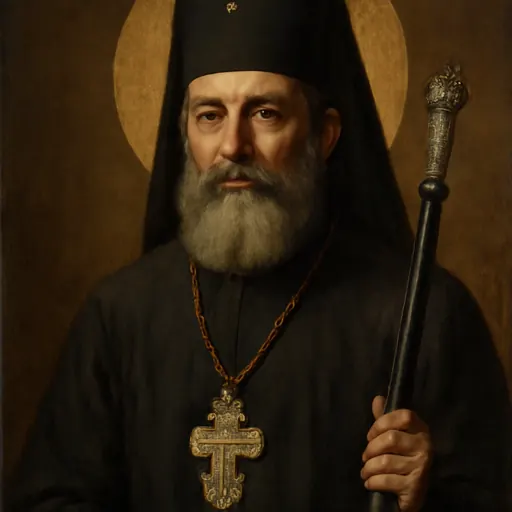
Blessed Nicholas Charnetsky (1884–1959) was a Ukrainian Greek Catholic Redemptorist who became a bishop and apostolic visitor in Volhynia. Arrested by the NKVD in 1945, he spent years in prisons and labor camps, then returned to Lviv in 1956 and secretly served the outlawed Church. John Paul II beatified him in 2001. His feast is April 2.
Who was Blessed Nicholas Charnetsky?
Blessed Nicholas (Mykola) Charnetsky was a bishop of the Ukrainian Greek Catholic Church and a member of the Redemptorist congregation. He spent his early priesthood teaching seminarians, his middle years as a missionary bishop in Volhynia, and his last fourteen years under Soviet persecution: in prisons and camps from 1945 to 1956, and then as a hidden shepherd of an outlawed Church until his death in Lviv in 1959. Pope John Paul II beatified him in Lviv on June 27, 2001, with 24 other Ukrainian Greek Catholic martyrs.
The life of Blessed Nicholas Charnetsky
Galicia and Rome
Mykola was born on December 14, 1884, in Semakivtsi, a village in the Horodenka district of Galicia, then part of Austria-Hungary, into a large and devout peasant family. His bishop sent him to study at the Ukrainian college in Rome, where he was ordained in 1909 and earned a doctorate in theology. For the next nine years he taught at the seminary in Stanislaviv, today Ivano-Frankivsk.
A Redemptorist in Volhynia
In 1919 he entered the Redemptorist novitiate at Zboiska near Lviv. The Redemptorists were founded by St. Alphonsus Liguori; he made his vows as one of them in 1920. In 1926 he was sent to Volhynia, where he was superior of the monasteries at Kostopil and Kovel. The same year Pope Pius XI, at the request of Metropolitan Andrey Sheptytsky, named him apostolic visitor for the Greek Catholics of Volhynia and Polissia. He was consecrated a bishop in Rome on February 2, 1931.

It was a difficult mission. Volhynia lay in interwar Poland, and the Internet Encyclopedia of Ukraine notes that the Polish government's opposition kept him from exercising formal jurisdiction; he worked anyway among the Galician Greek Catholics who had settled there. After the Soviet invasion of 1939 he was barred from the region and taught at the Theological Academy in Lviv. During the first Soviet occupation Metropolitan Andrey named him apostolic exarch for Volhynia and Pidlassia.
Prison and the hidden Church
On April 11, 1945, the NKVD arrested him along with the other Greek Catholic bishops. He was charged with being an agent of the Vatican and sentenced to forced labor. He was held at Mariinsk in Siberia, where Metropolitan Josyf Slipyj was also a prisoner, and the Ukrainian Greek Catholic Church records that he passed through some thirty prisons and camps and endured long interrogations and torture.
In 1956, gravely ill, he was allowed to return to Galicia. The Church he came back to had been officially "dissolved" in 1946 and forced into the Russian Orthodox Church. He went on serving it in secret, an old, sick bishop in a Lviv apartment, and his biographers remember his "evangelical patience and inexhaustible kindness."

He died in Lviv on April 2, 1959. Already in his lifetime people thought of him as a holy man.
Burial, relics and beatification
He was first buried in a Lviv cemetery that was later closed; in the 1960s his remains were moved to Lychakiv Cemetery. Catholics kept coming to the grave to pray. The Congregation for the Causes of Saints recognized his martyrdom, and on June 27, 2001, at the Divine Liturgy in the Lviv Hippodrome, Pope John Paul II beatified him with 24 companions. The Pope said these martyrs "were tested in many ways by the followers of the infamous Nazi and Communist ideologies." Of all of them he said: "The martyrs declared Blessed today followed the Good Shepherd to the end." As a martyr he needed no approved miracle. Many favors have been reported by people who prayed at his grave, but we have found no details we can verify.
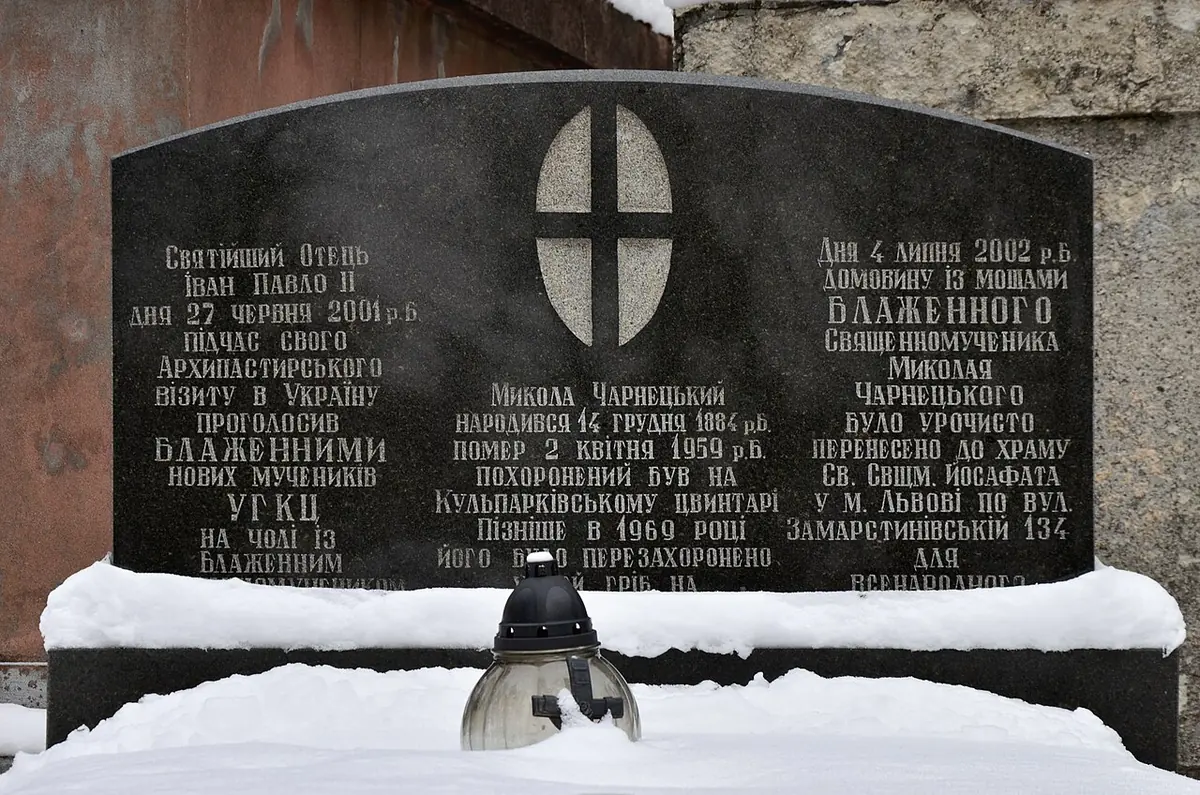
On July 4, 2002, his relics were moved to the Church of St. Josaphat on Zamarstynivska Street in Lviv, where they are venerated today.
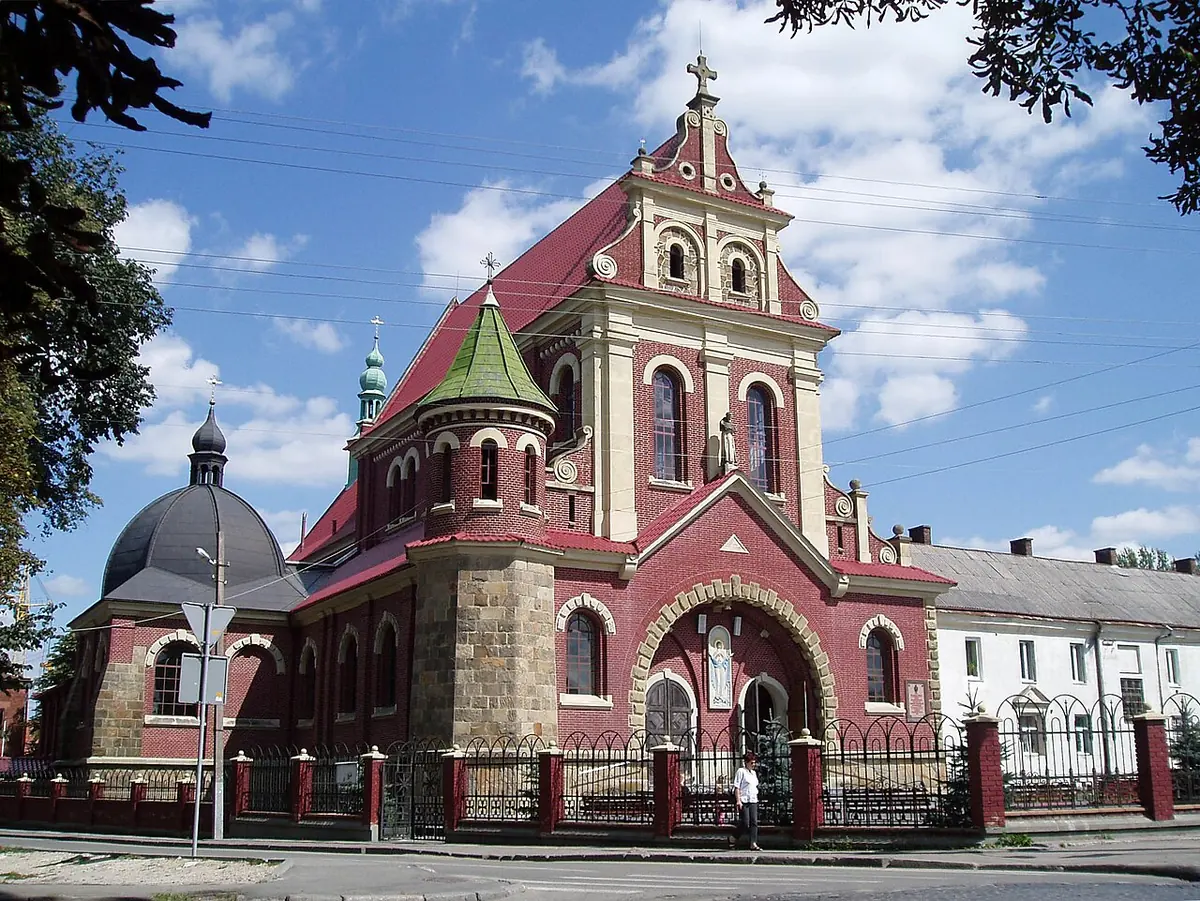
Where the relics of Blessed Nicholas Charnetsky are kept: see them on the relics map →
Symbols of Blessed Nicholas Charnetsky in art
Icons of the New Martyrs of the Ukrainian Greek Catholic Church show him as an Eastern bishop:
- Byzantine vestments and crown-miter, or the black monastic hat: his rank as a bishop of the Eastern rite.
- Pastoral staff: his care for the Greek Catholics of Volhynia and Polissia.
- Pectoral cross and panagia (the oval icon of the Mother of God worn by Eastern bishops).
- Martyr's palm or cross, sometimes with chains: his years in Soviet prisons.
Feast day and prayer
We keep his feast on April 2, the anniversary of his death, and he is honored with all the New Martyrs beatified in Lviv on June 27. See more April saints on our feast days page.
His life is a lesson in patience: a scholar who became a missionary, a bishop who could not govern his own territory, and an old man who came home from the camps only to serve in hiding. He never lost the kindness that his people remembered. We have not found a traditional prayer to Blessed Nicholas that we can cite and reprint. Let us ask him to pray for the Ukrainian Greek Catholic Church, for Ukraine and its suffering people, for prisoners of conscience, and for all who keep the faith in secret where it is forbidden.
Frequently asked questions
Who was Blessed Nicholas Charnetsky?
A priest of the Ukrainian Greek Catholic Church, born in Galicia in 1884, who joined the Redemptorists in 1919, was named apostolic visitor for Greek Catholics in Volhynia and Polissia, and was consecrated a bishop in Rome in 1931. He suffered Soviet imprisonment from 1945 to 1956 and died in Lviv in 1959.
Why is Nicholas Charnetsky counted as a martyr?
He was arrested for his faith and his loyalty to Rome, charged as a 'Vatican agent,' and held in many prisons and camps under harsh interrogation. He died of the effects three years after his release, and the Church recognized his death as martyrdom.
When was Nicholas Charnetsky beatified?
On June 27, 2001, at the Divine Liturgy in the Lviv Hippodrome, when Pope John Paul II beatified him with 24 other martyrs of the Ukrainian Greek Catholic Church.
Where are the relics of Blessed Nicholas Charnetsky?
In the Church of St. Josaphat on Zamarstynivska Street in Lviv, where they were moved from Lychakiv Cemetery on July 4, 2002.
Keep exploring
Sources
- Ukrainian Catholic Church, Blessed Bishop Mykolay Charnetskyi (1884–1959). His arrest on April 11, 1945, the 30 prisons and camps, his secret ministry, and the transfer of his relics on July 4, 2002
- Holy See, Mykola Carneckyj (1884–1959), biographies of the martyrs beatified in Lviv. Apostolic visitor in Volyn and Polissia (1926), consecration in Rome (1931), exarch of Volyn and Pidlassia
- Internet Encyclopedia of Ukraine, Charnetsky, Mykola. Hegumen of the Kostopil and Kovel monasteries; the Polish government's opposition to his jurisdiction
- Pope John Paul II, Divine Liturgy with Beatifications, Lviv, June 27, 2001