St. John Payne, Priest and Martyr of Chelmsford
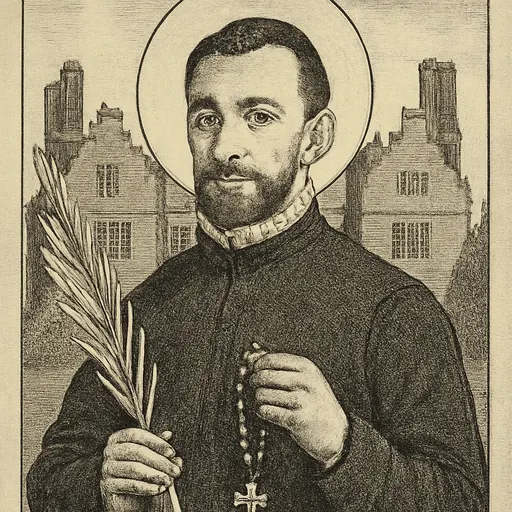
St. John Payne was an English Catholic priest, trained at Douai, who served the Petre family at Ingatestone in Essex and was hanged, drawn and quartered at Chelmsford on April 2, 1582, on a false charge of plotting to kill Queen Elizabeth I. He forgave his accuser from the scaffold and died saying "Jesus, Jesus, Jesus." He is one of the Forty Martyrs of England and Wales, canonized in 1970, and his feast is April 2.
Who was St. John Payne?
St. John Payne was a Catholic priest of Elizabethan England who came home from the seminary at Douai to serve the hidden Catholics of Essex, and who died for it at Chelmsford on April 2, 1582. He was convicted on the sworn word of a single informer, a man of notoriously bad character, who claimed Payne had talked of a plot to kill the queen. Payne denied it to the end. On the scaffold he forgave his accuser by name and prayed for the queen.
He is one of the Forty Martyrs of England and Wales, canonized by Pope Paul VI in 1970. We keep his feast on April 2.
The life of St. John Payne
Douai and the English mission
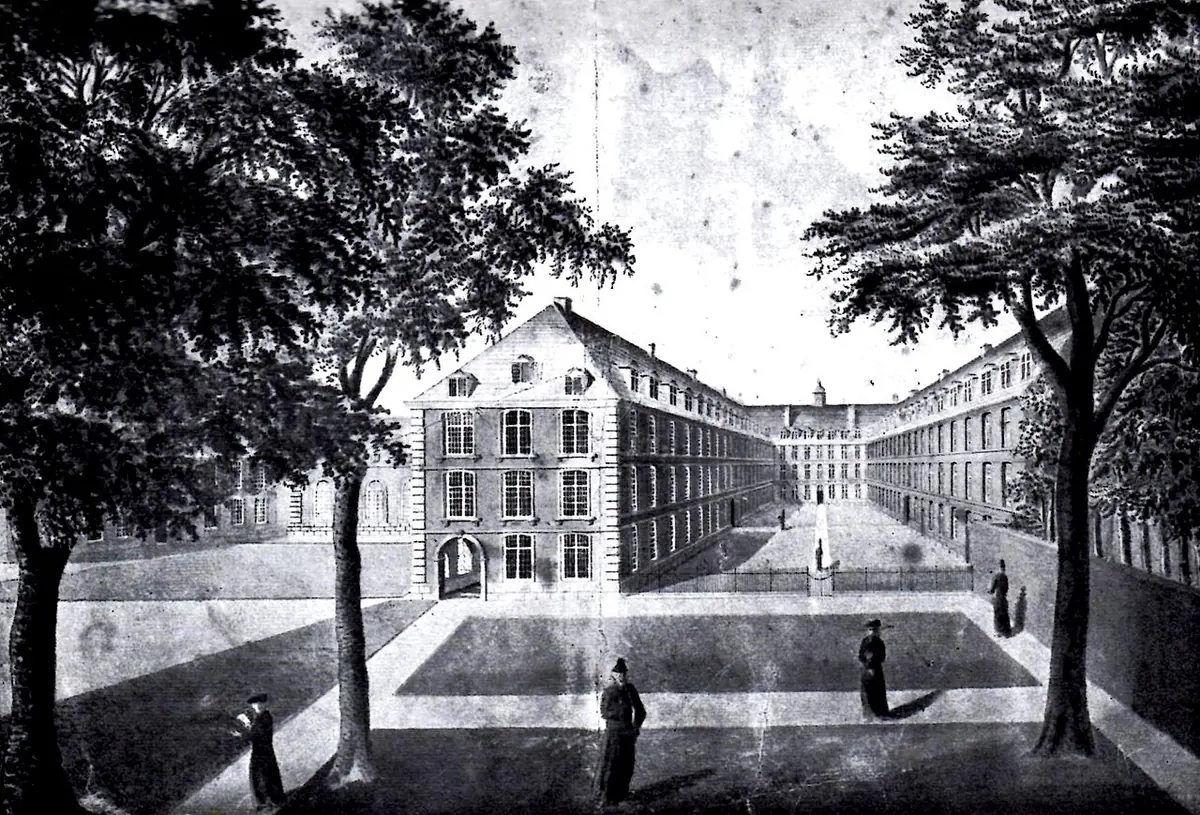
The Catholic Encyclopedia says he was born in the Diocese of Peterborough, and Bishop Challoner, writing in the 1700s, says Northamptonshire. Nothing certain is known of his birth year or his early life. He went to the English College at Douai, in Flanders, in 1574. That college had been founded a few years before by William Allen to train priests for an England where saying Mass was now a crime. He was ordained by the Archbishop of Cambrai on April 7, 1576, and on April 24 he left for England with another young priest, St. Cuthbert Mayne, who would be the first of the Douai priests to die a martyr.
Chaplain at Ingatestone
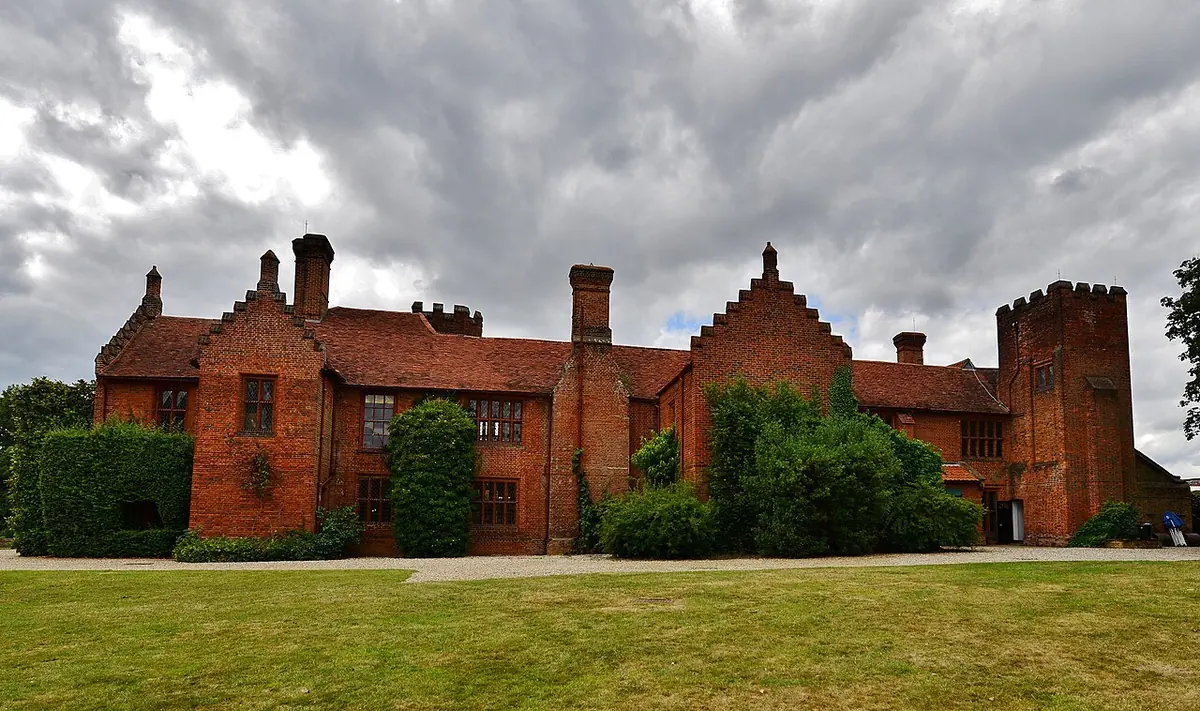
Payne lived mostly at Ingatestone Hall in Essex, the house of Anne, Lady Petre, widow of Sir William Petre, a Secretary of State under four Tudor monarchs. Soon after he arrived he reconciled George Godsalve, a deacon ordained under Queen Mary, and sent him to Douai to become a priest. Payne was arrested early in 1577, released, and went back to Douai for a time before returning to Essex around Christmas 1579.
Betrayal and the rack
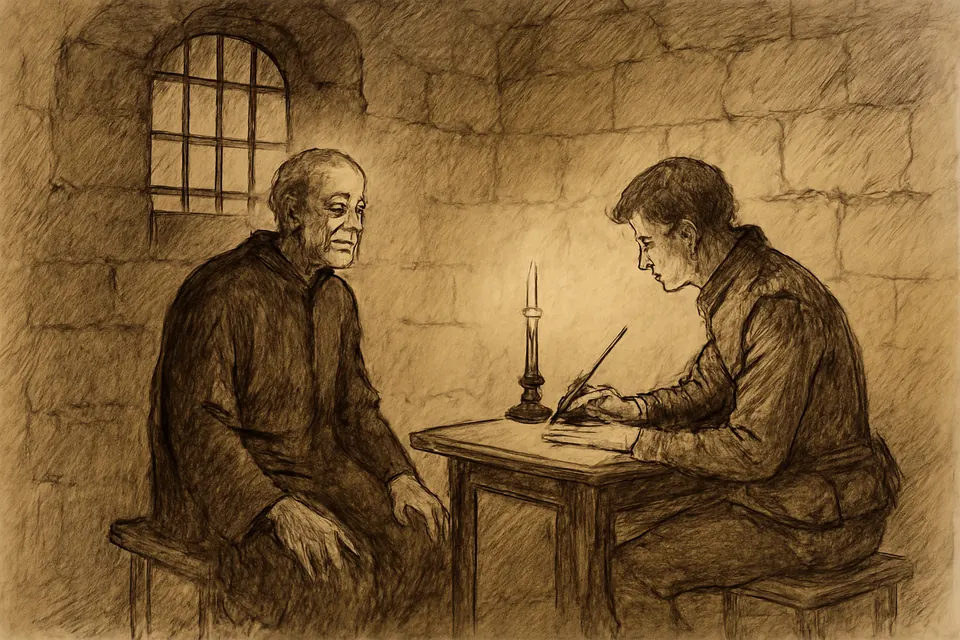
In July 1581 he and Godsalve were arrested in Warwickshire, betrayed by George Eliot, an informer whom Payne would accuse at his trial of cheating Lady Petre of money. The government's spymaster, Sir Francis Walsingham, examined them, and on July 14 they were sent to the Tower of London. That same summer Eliot also betrayed St. Edmund Campion. Payne was racked on August 14 and again on October 31. Afterward the Lieutenant of the Tower sent him pen and paper and ordered him to write down what he had said to Eliot. His hands were too damaged to write, so he dictated his answer to the lieutenant's servant:
I pray God long to preserve her Highness to His honour and her heart's desire... If her pleasure be not that I shall live and serve her as my sovereign prince, then will I willingly die her faithful subject, and, I trust, God's true servant.
He signed himself "Her Majesty's faithful subject, and your worship's humble prisoner, John Paine, Priest."
Trial and martyrdom at Chelmsford
On March 20, 1582, he was taken without warning from the Tower to Chelmsford jail. At his trial he answered the charge point by point. He cited two passages of Scripture and an English statute showing that no man could be condemned without two witnesses, and he listed Eliot's crimes against the poor, against women and against Lady Petre herself. The jury convicted him anyway.
On the morning of April 2 he was drawn on a hurdle to the place of execution. An eyewitness whose account Challoner preserved says he knelt in prayer for almost half an hour, then rose and "kissed" the gallows "with a smiling countenance." From the ladder he professed his faith in the Holy Trinity and the Incarnation. He forgave everyone who had harmed him, Eliot by name, praying that God would make the informer "his companion in heavenly bliss." Lord Rich urged him to confess that he died a traitor. "I confess truly," he answered, "that I die a Christian Catholic priest."
When the ladder was turned he said, "Jesus, Jesus, Jesus." The officials, who had come to respect him, let him hang until he was dead before the butchery that the sentence required. "All the town loved him exceedingly," the witness wrote.

Beatification and canonization
The English martyrs were declared blessed by an "equivalent beatification" under Pope Leo XIII, which confirmed the honor given to them since the 1580s, and John Payne was among them. Pope Paul VI canonized him on October 25, 1970, as one of the Forty Martyrs of England and Wales. The Catholic Encyclopedia notes that Pope Gregory XIII allowed the relics of these martyrs to be used in consecrating altars even in his own lifetime, but no relic of St. John Payne is known today.
Symbols of St. John Payne in art
There is no known portrait of St. John Payne. Modern images show him as a priest in a black cassock, often with the halter or the palm of martyrdom, the usual signs of the Elizabethan martyrs. He sometimes appears in group pictures of the Forty Martyrs, where he is hard to pick out without a name. In Essex he is remembered at Ingatestone, where the Petres' parish church still holds the family's tombs.

Prayer to St. John Payne
No traditional prayer written to St. John Payne alone is found in the standard prayer books. Catholics in England pray to him with the Forty Martyrs and the English Martyrs on their feasts. Let us take his last words as our own prayer, "Jesus, Jesus, Jesus," and ask him to help us forgive those who wrong us, as he forgave the man who sent him to his death. Find other saints of April on our feast days page and other martyrs on our patron saints page.
Frequently asked questions
Who was St. John Payne?
A priest from the Diocese of Peterborough who studied at the English College at Douai, was ordained in 1576 and returned to England as a missionary. He lived mostly with Anne, Lady Petre, at Ingatestone Hall in Essex until he was betrayed, tortured on the rack and executed at Chelmsford in 1582.
Why was St. John Payne executed?
An informer named George Eliot swore that Payne had spoken of a plot to kill the queen. Payne denied it under oath, showed that Eliot was a man of bad character and pointed out that the law required two witnesses, but the jury convicted him on Eliot's word alone. His real offense in the eyes of the state was being a Catholic priest.
When was St. John Payne canonized?
Pope Paul VI canonized him on October 25, 1970, as one of the Forty Martyrs of England and Wales. He had been declared blessed, with other English martyrs, under Pope Leo XIII.
When is the feast of St. John Payne?
April 2, the anniversary of his death. In England he is honored with the English Martyrs on May 4, and the Forty Martyrs are also kept on October 25 in Wales.
Keep exploring
Sources
- Catholic Encyclopedia (1910): Bl. John Payne. His ordination on April 7, 1576, his departure with Cuthbert Mayne, the racking on August 14 and October 31, 1581, and the trial at Chelmsford
- Richard Challoner, Memoirs of Missionary Priests (archive.org). The eyewitness account of his trial and death, his words on the scaffold, and his letter from the Tower
- Catholic Encyclopedia (1909): English Confessors and Martyrs (1534-1729). His place among the beati of the "Catholic Revival" and the equivalent beatification of the English martyrs
- Paul VI, Homily at the canonization of the Forty Martyrs of England and Wales, October 25, 1970 (vatican.va, Italian)