St. Gennadius of Constantinople, Patriarch and Enemy of Simony

St. Gennadius of Constantinople was patriarch of Constantinople from 458 to 471. A gentle and learned bishop, he held a council against simony, would ordain no one who did not know the Psalter by heart, and ordained St. Daniel the Stylite a priest at the foot of his pillar. The Greek Church keeps his feast on November 17, the Russian Church on August 31.
Who was St. Gennadius of Constantinople?
St. Gennadius was patriarch of Constantinople for thirteen years, from 458 to 471, in the reign of Emperor Leo I. He followed St. Anatolius, the patriarch of the Council of Chalcedon, and led the imperial city in years when the quarrels over the person of Christ were still dividing Egypt and Syria. The sources remember him as a mild, pure and learned man; John Moschus calls him very gentle, and Gennadius of Marseilles, a Latin writer of the same century, praised his clear speech and sharp mind.
He should not be confused with Gennadius II Scholarius, the first patriarch after the fall of Constantinople in 1453, or with St. Gennadius of Astorga in Spain.
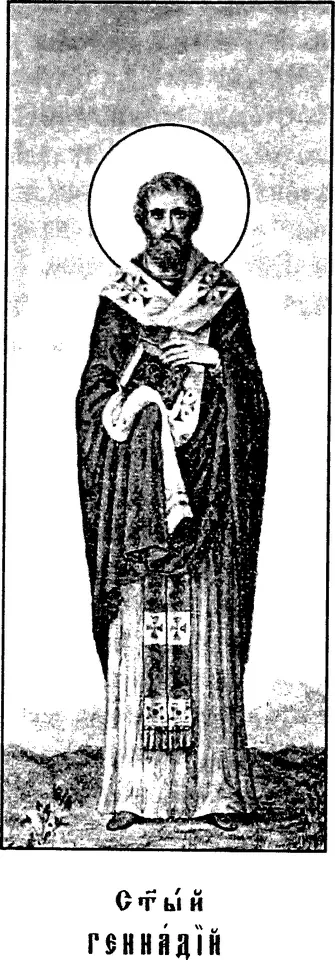
The life of St. Gennadius of Constantinople
A scholar before he was a bishop
Little is known of his early life. He was a priest of Constantinople and a student of Scripture in the literal, historical way of the school of Antioch. According to Gennadius of Marseilles he wrote a commentary on the whole Book of Daniel, and Marcellinus Comes says he commented on all the letters of St. Paul. Only fragments survive, mostly in the catenae, the old chains of comments on Romans and Genesis. The sixth-century writer Facundus claims that as a young man, around 431, Gennadius wrote sharply against St. Cyril of Alexandria; the Catholic Encyclopedia notes that if a friendly letter of Cyril's from 434 was addressed to him, the two were reconciled within a few years.
Patriarch against simony
As patriarch, no later than 459, he gathered a council of eighty-one bishops, many of them from Egypt and the East, some driven from their sees by the Monophysite usurper Timothy Aelurus of Alexandria. The council's letter against simony, the buying and selling of ordinations, still survives. Pope St. Leo the Great wrote to Gennadius on June 17, 460, warning him about Timothy.
Gennadius set a hard rule for his clergy. Theodorus Lector, a church historian of the next century, says he would admit no one to the clergy who did not know the Psalter by heart. He made St. Marcian steward of the great church, and in his time the senator Studius founded the monastery that became the famous Studion.
The stylite and the patriarch
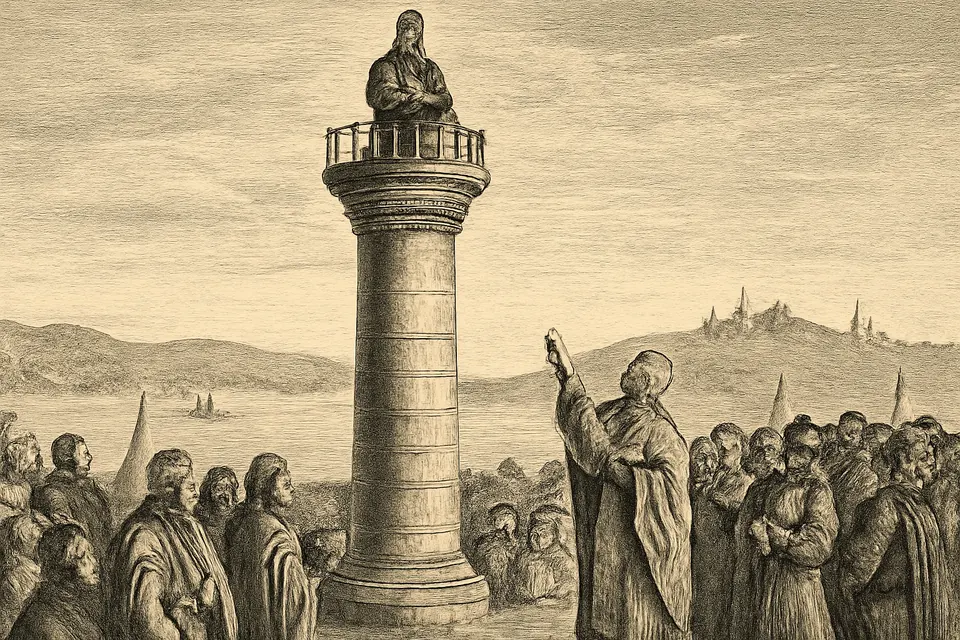
In those same years the monk St. Daniel the Stylite climbed a pillar near Constantinople, apparently without the patriarch's leave. Emperor Leo protected him and sent Gennadius to ordain him. Daniel would not let the bishop climb the ladder, so the rite was performed from the foot of the column; then the patriarch went up, and the two gave each other Holy Communion. The patriarch did not insist on his rights; he went to the saint.
He died peacefully in 471.
The miracles of St. Gennadius
His Life, drawn from The Spiritual Meadow of John Moschus and from Theodorus Lector, keeps two stories, and both are traditional.
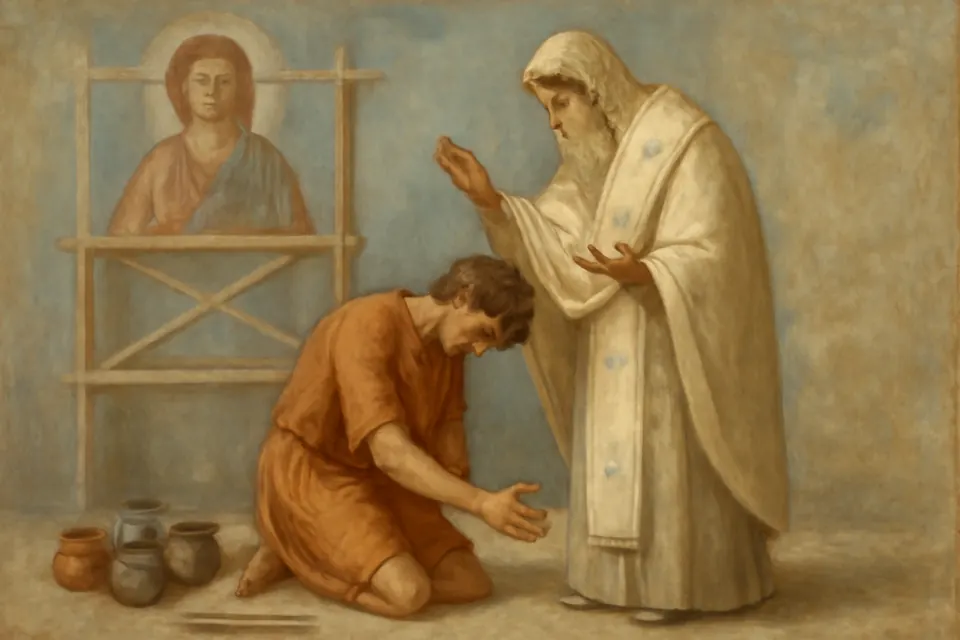
A painter was asked to paint the Savior and gave him the features of the pagan god Zeus. His hand withered. He repented, confessed his sin to the patriarch, and Gennadius prayed over him, and the hand was healed. The story was told as a warning that the face of Christ is not ours to remake as we please.
The second is sterner. Charisius, a reader at the church of the martyr St. Eleutherius, lived in idleness and sin, and the patriarch corrected him patiently for a long time and then severely, with no change. At last Gennadius sent word to the martyr's tomb that Charisius must amend or be cut off. The next morning the reader was found dead.
The OCA also tells that one night, as he prayed, Gennadius was shown that a fierce enemy would attack his flock, and he prayed that the Church would stay "invincible against the gates of Hades."
Why St. Gennadius is honored
He has no traditional patronage. The Church honors him as a pastor who kept holy orders from being bought or sold and asked his priests to carry the Psalms in their hearts. Priests, seminarians and those who choose them can ask his prayers. See our patron saints page for others.
Symbols of St. Gennadius in art
In Orthodox icons and in the frescoes of Athonite monasteries, Gennadius appears as one of the holy hierarchs:
- Omophorion with crosses and phelonion: the vestments of a bishop and patriarch.
- Gospel book: the Word he taught and commented on.
- Hand raised in blessing: his work as a shepherd.
- Long white beard and high forehead: the usual type of an aged, learned hierarch.
Like many hierarchs, he has no personal attribute, so he is recognized by the inscription, "Gennadios of Constantinople," beside his halo.
Feast day
The Greek Church honors him on November 17, and the Russian Church and the OCA on August 31; the older Roman Martyrology placed him on August 25. Find other saints of the season on our feast days page.
Praying with St. Gennadius
The Orthodox services for his feast praise him as a hierarch, but we know of no English prayer to him with a separate origin. Let us ask his help in our own words: holy Gennadius, you guarded the priesthood from greed and prayed for the peace of the Church; pray for our bishops and priests, and for all who are preparing to serve at the altar.
Frequently asked questions
Who was St. Gennadius of Constantinople?
The patriarch of Constantinople from 458 to 471, successor of Anatolius, under Emperor Leo I. He is remembered for his gentleness, his fight against the buying and selling of holy orders, and his commentaries on Scripture.
When is the feast of St. Gennadius of Constantinople?
November 17 in the Greek calendar and August 31 in the Russian Church and the OCA. The older Roman Martyrology listed him on August 25.
What miracle is told of St. Gennadius?
A painter who gave Christ the features of the pagan god Zeus found his hand withered; he repented, confessed to the patriarch, and was healed when Gennadius prayed over him. It is a traditional story from his Life.
Keep exploring
Sources
- St. Gennadius I, Catholic Encyclopedia. His dates, the council of 81 bishops against simony, the Psalter rule, Daniel the Stylite, his writings and his feast days East and West
- Saint Gennadius, Patriarch of Constantinople, Orthodox Church in America. The painter's hand, the reader Charisius and his prayer for the Church