St. Nikola Tavelić, Franciscan Martyr of Jerusalem and First Croatian Saint
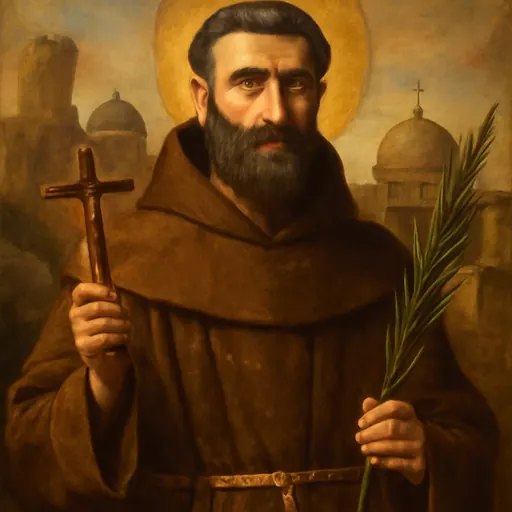
St. Nikola Tavelić (about 1340 to 1391) was a Franciscan friar from Šibenik in Croatia. After openly preaching Christ before the Muslim judge of Jerusalem, he and three companions were put to death on November 14, 1391. Pope St. Paul VI canonized them in 1970; Nikola is the first Croatian saint, and his feast is November 14.
Who was St. Nikola Tavelić?
St. Nikola Tavelić was a Franciscan friar from the Dalmatian city of Šibenik, born about 1340, who gave his life preaching Christ in Jerusalem. With three brother friars, Deodatus of Rodez, Peter of Narbonne and Stephen of Cuneo, he went before the Muslim authorities of the city in November 1391 and proclaimed the Gospel to them openly. All four were put to death on November 14, 1391.
His own people never forgot him. Pope St. Paul VI, canonizing the four in 1970, said the honor confirmed a cult kept since their death, "to Nikola Tavelić in a special way, thanks to his fellow citizens of Šibenik and his countrymen." He was the first Croat raised to the altars, and we keep his feast on November 14.
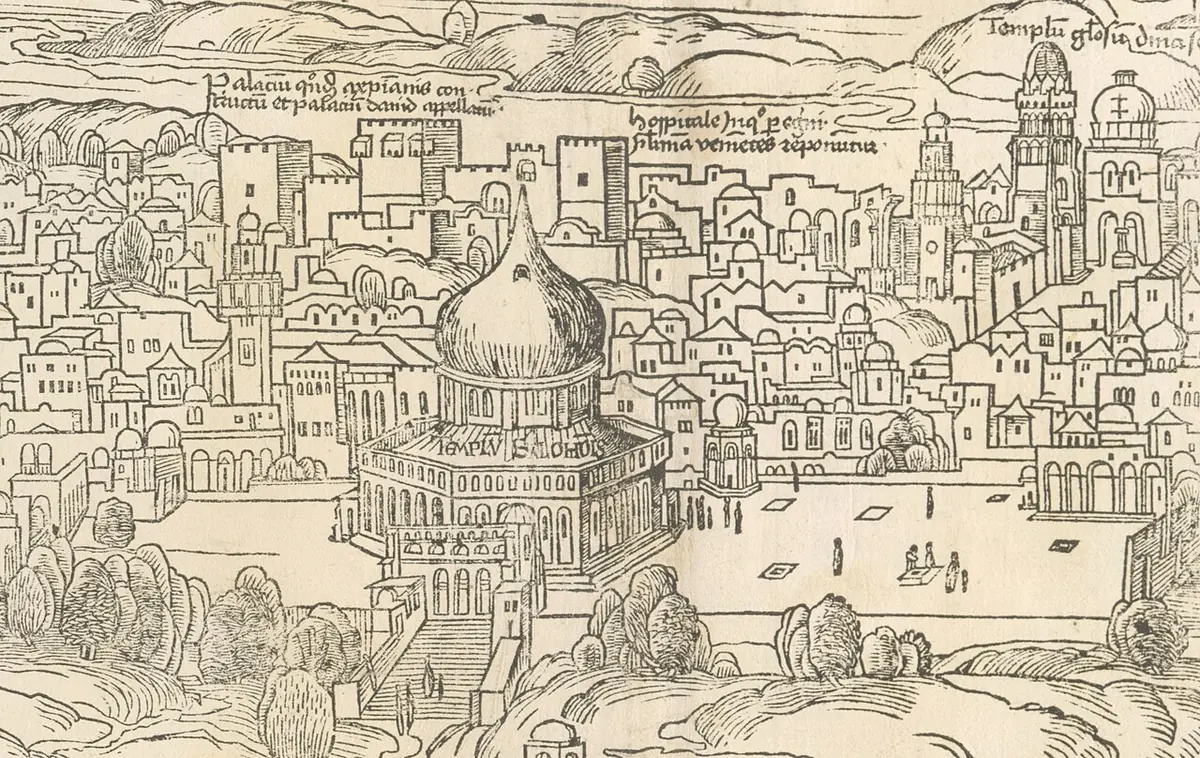
The life of St. Nikola Tavelić
From Šibenik to Bosnia
Franciscan Media says Nikola was born in 1340 to a wealthy, noble family in Croatia. He entered the Order of Friars Minor and was sent with the French friar Deodatus of Rodez to preach in Bosnia.

Servant of pilgrims in the Holy Land
In 1384 Nikola and Deodatus volunteered for the Holy Land. Since 1335 the Franciscans had been the custodians of the holy places, and the friars of Mount Zion lived beside the Cenacle, the room of the Last Supper. There the two of them cared for the shrines and for the Christian pilgrims who reached Jerusalem, and studied Arabic.


Preaching before the judge
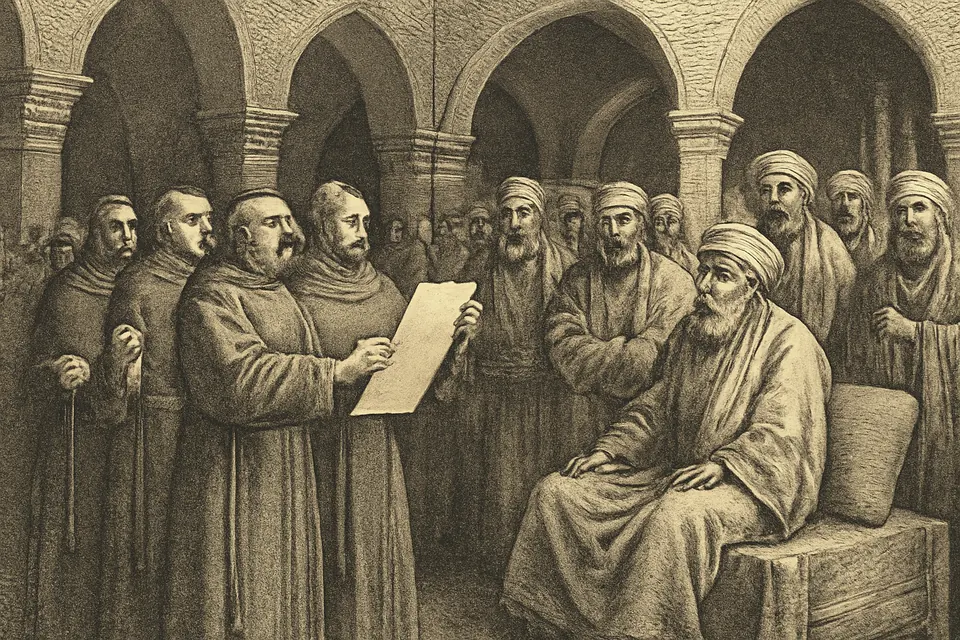
In 1391 Nikola, Deodatus, Peter and Stephen decided to preach to the Muslims of Jerusalem openly. According to Franciscan Media, on November 11 they went to the area of the Mosque of Omar and asked to see the qadi, the judge. Reading from a statement they had prepared, they declared that all people must accept the Gospel of Jesus. Ordered to take it back, they refused. They were beaten and imprisoned, and on November 14 they were executed before a large crowd.
Martyrs who went to meet death
The Church took more than five centuries to canonize them, and Paul VI explained why in his homily. The four were "voluntary martyrs" who, he said, did more than suffer the punishment; they exposed themselves to it. Pope Benedict XIV had held that a provoked death is not true martyrdom. Paul VI answered with the Rule of St. Francis, which allows friars among non-Christians to proclaim the faith openly when they know it is God's will, and to expose themselves to enemies for love of Christ. That, he said, was the path chosen by "the bold disciple, St. Nicholas Tavelić, and his companions."
He spoke frankly about their prudence. It was, in his words, "a mistaken calculation, but mistaken out of a desire to do good." What moved them was love, not hatred: "they did not hate the Muslim world; indeed, in their own way, they loved it." He saw in them the Christian longing for better relations between the Church and Islam (these quotations are our translation of the Italian text).
Franciscan Media counts 158 Franciscans killed in the Holy Land since 1335. These four are the only ones canonized.
To show that the Church has always honored martyrs who went willingly to death, Paul VI pointed to St. Ignatius of Antioch, who begged the Christians of Rome not to save him from the beasts, and to St. Apollonia, who stepped into the fire herself. He also recalled St. Francis, who in 1219 chose the gentler way and preached Christ before the Sultan of Egypt.
Miracles and devotion
- A cult kept for five centuries: traditional. Šibenik and the Croatian people honored Nikola as a martyr from his death onward, long before Rome acted. Paul VI said the canonization "validated before the whole Church" that ancient cult (our translation).
- Confirmation of 1889: in that year the Church confirmed the honor paid to him as Blessed Nikola, and in 1970 his cause was finished with his companions'.
Their canonization rested on martyrdom, the witness of blood. No miracle stories from the early accounts are recorded in our sources.
Symbols of St. Nikola Tavelić in art
Nikola is shown as a Franciscan, in the brown habit and knotted cord, usually bearded. He holds a crucifix or the Gospels, the message he preached, and the palm of a martyr. In group images he stands with three other friars. Croatian churches, above all his altar in the Franciscan church of Šibenik and the churches named for him, show him as a strong, fearless friar holding the cross out before him. See more on our patron saints page.
Feast day
We keep his feast on November 14, the day he died. The Franciscan family honors him with his three companions, and Croatia keeps the day with special devotion, especially in Šibenik. Find other saints of November on our feast days page.
Prayer to St. Nikola Tavelić
There is no well-known traditional English prayer to St. Nikola Tavelić. Croatian Catholics pray to him in their own words, often for courage in professing the faith. We can pray: St. Nikola Tavelić, who gave your life to proclaim Christ in the city where he died and rose, pray for us, that we may speak of him with courage and with love.
Frequently asked questions
Who was St. Nikola Tavelić?
A Croatian Franciscan priest from Šibenik, born about 1340, who served as a missionary in Bosnia and then in the Holy Land. He was martyred in Jerusalem in 1391 with three French and Italian friars after preaching the Gospel publicly before Muslim authorities.
When was Nikola Tavelić canonized?
His cult was confirmed in 1889, and Pope St. Paul VI canonized him and his companions Deodatus of Rodez, Peter of Narbonne and Stephen of Cuneo on June 21, 1970.
What is the feast day of St. Nikola Tavelić?
November 14, the anniversary of his martyrdom in 1391.
Why did Paul VI call them "voluntary martyrs"?
Because they went looking for the confrontation. In his canonization homily Paul VI asked whether such a death is true martyrdom, and answered from the Rule of St. Francis, which allows friars among non-Christians to proclaim the Gospel openly when they see it is God's will.
Keep exploring
Sources
- Paul VI, Homily for the Canonization of Nicholas Tavelić, Deodatus of Rodez, Stephen of Cuneo and Peter of Narbonne (June 21, 1970), Italian text. The date of martyrdom, the confirmation of his cult in 1889, the "voluntary martyrs" question and the Rule of St. Francis; quotations in our translation
- Franciscan Media: Saint Nicholas Tavelic and Companions. His noble family, Bosnia with Deodatus, the Holy Land from 1384, the declaration of November 11, 1391, and the 158 Franciscan martyrs of the Holy Land