St. Benignus of Armagh
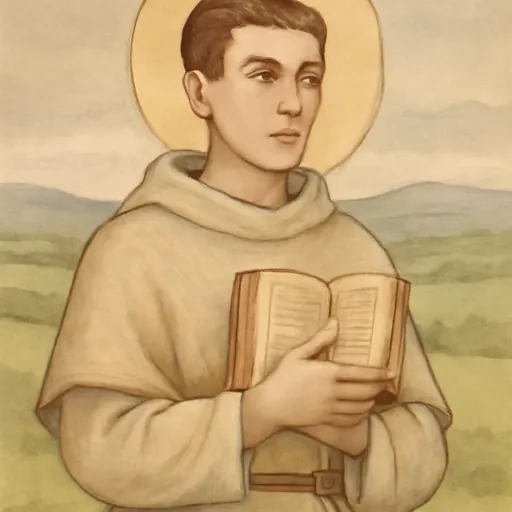
St. Benignus of Armagh (Benen, died 467) was the Irish chieftain's son whom St. Patrick baptized as a boy in County Meath and took into his household. Known as "Patrick's psalm-singer," he followed Patrick on his missions, became his coadjutor at Armagh and is remembered as the first head of its cathedral school. His feast is November 9.
Who was St. Benignus of Armagh?
St. Benignus of Armagh, called Benen in Irish, was the first Irish boy St. Patrick took into his household and the man Patrick chose to carry on his work. He was the son of Sesenen, a chieftain in what is now County Meath. Patrick baptized him, and the Catholic Encyclopedia says his "gentle and lovable disposition" gave him his name: Benen, Latinized as Benignus, "the kind one." He sang the psalms at Patrick's services, followed him on his journeys, became his coadjutor bishop at Armagh around 450 and died in 467. We keep his feast on November 9.
What we know of him comes from the lives of St. Patrick, written centuries after both men died, and from the Irish annals and martyrologies. Some of it is history, and some is the loving legend of a people remembering the first days of their faith. We will try to say which is which.
The boy who scattered flowers
In 433, according to the old lives, Patrick landed at the mouth of the Boyne on his way to Tara for Easter. He and his companions spent a night at the house of Sesenen, who welcomed them so warmly that Patrick baptized him and his whole family. The Tripartite Life of Patrick, a ninth-century Irish text, tells what happened next:
Then came Benen into his service, and Patrick slept among his household, and all the odorous flowers which the gillie (Benén) found he would put into the cleric's bosom. Patrick's household said to Benen: "Do not that," say they, "lest Patrick should awake." Said Patrick: "He will inherit my kingdom."
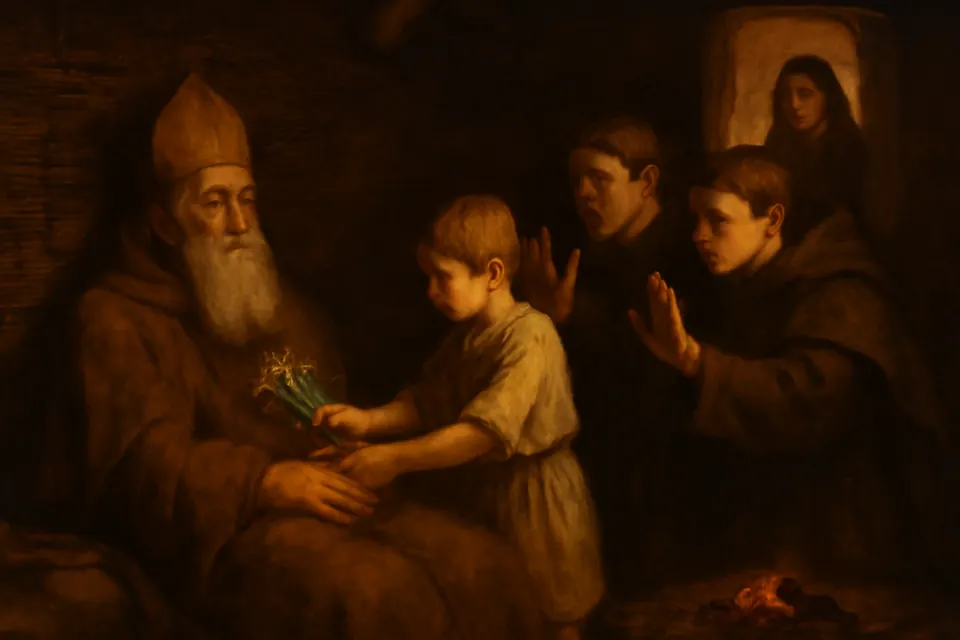
The boy would not be left behind. Patrick took him along, and Benen became one of his closest disciples.
Patrick's psalm-singer
Benen had a gift for music. He led the chant at Patrick's Masses and helped give shape to the sung services of the young Irish Church, and the Catholic Encyclopedia says he "drew thousands of souls to Christ by his sweet voice." The Irish remembered him simply as Patrick's psalm-singer.
He was also learned in the law and lore of his own people. Bishop John Healy, writing on the School of Armagh, says Benen was made secretary to the Commission of Nine, which reviewed the old Brehon laws in the light of the faith. Tradition also credits him with gathering material for the Book of Rights and the Psalter of Cashel, though those attributions cannot be checked today.
Coadjutor at Armagh
Patrick founded his church at Armagh, by Healy's reckoning, around 457. When his first coadjutor, his nephew Sechnall, died, Benen took his place, and Healy concludes that he became the first rector of the cathedral school at Armagh, the oldest of the great Irish schools. Baring-Gould adds that Patrick had earlier set him over a monastery at Druimlias, and that parts of Ireland Patrick never reached, such as Kerry and Clare, first heard the Gospel from Benignus.
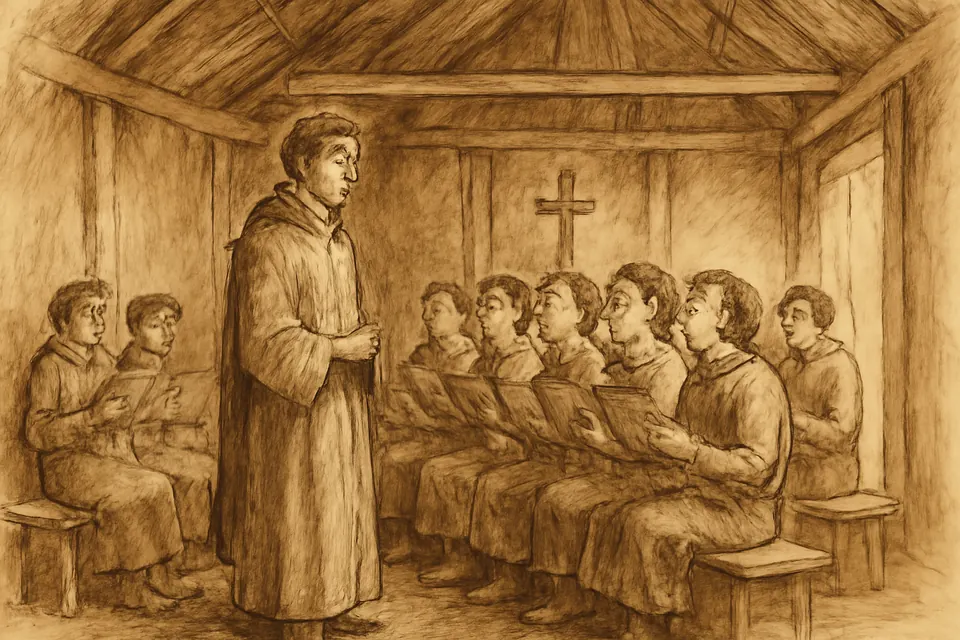
He was present at the synod whose canon, preserved in the Book of Armagh, named "the See of the Apostle Peter" as the final court of appeal in hard cases. He resigned as coadjutor in 467 and died the same year. The Irish annalists, Baring-Gould notes, give 468. He died at Armagh and was buried there.
Miracles and legends of St. Benignus
The stories below are traditional: they come from the Tripartite Life and later lives of Patrick, not from witnesses.
- The deer's cry (traditional). King Lóegaire set ambushes on every road to Tara to kill Patrick. Patrick blessed his eight clerics, and "a cloak of darkness went over them." The men lying in wait "saw eight deer going past them under the mountain, and behind them a fawn with a bundle on its shoulder: (that was) Patrick with his eight, and Benen behind them with his tablets on his back." This is the story behind St. Patrick's Breastplate, also called the Deer's Cry.
- The trial by fire (traditional). The Tripartite Life tells of a contest at Tara: a house was built half of green wood and half of dry. A druid went into the green half wearing Patrick's chasuble, and Benen into the dry half wearing the druid's tunic. The fire consumed the druid but left the chasuble untouched, and Benen came out unharmed while the druid's tunic burned to ashes around him.
- Ercnat raised (traditional). The same life says that Ercnat, daughter of Dáire, loved Benen, for "sweet to her seemed his voice at the chanting." She fell ill and died. Benen brought her relics from Patrick (the Martyrology of Donegal says consecrated water), and she rose alive, "and afterwards she loved him spiritually."

Two saints named Benen
Many writers have treated Patrick's psalm-singer as the same man as St. Benen who founded Kilbennan, near Tuam in County Galway, where St. Jarlath was educated. The Catholic Encyclopedia disagrees. Following Tírechán's notes in the Book of Armagh, it holds that Benen of Armagh was the son of Sesenen of Meath, while Benen of Kilbannon was the son of Lugni of Connacht, two holy men of the same generation with the same name. Kilbennan still honors its Benen with a parish church and the ruins of his old foundation.
A later story says Benignus resigned his see and went to Glastonbury in England. Baring-Gould calls it "without foundation."
Symbols of St. Benignus in art
He is seldom painted, and most images of him are Irish stained glass from the last 150 years. Look for:
- Flowers, often with a sleeping St. Patrick: the boyhood story from the Tripartite Life.
- A bishop's miter and crozier: his office as Patrick's coadjutor at Armagh.
- A psalter or book, or writing tablets: the psalm-singer, the teacher and the "tablets on his back" of the deer legend.
- A church with a round tower: the Kilbennan foundation, when the two Benens are merged.
In the Catholic cathedral of St. Patrick in Armagh, a window shows him in a bishop's vestments beside St. Joseph and St. Malachy.
Feast day and prayer
We keep the feast of St. Benignus on November 9. See the feast day calendar for other saints of the day.

We know of no traditional prayer to St. Benignus. Let us ask him to pray for church musicians and choirs, for teachers of the faith, and for young people who feel drawn to follow Christ as he once followed Patrick: St. Benignus, pray for us.
Frequently asked questions
Who was St. Benignus of Armagh?
He was Benen, son of a Meath chieftain named Sesenen, baptized by St. Patrick around 433. He became Patrick's favorite disciple, his choir leader and his coadjutor bishop at Armagh from about 450, and he died in 467.
Why is he called "Patrick's psalm-singer"?
Because he led the singing at Patrick's services. The Catholic Encyclopedia says his voice drew thousands to Christ and that he helped form the choral services of the early Irish Church.
When is the feast of St. Benignus of Armagh?
November 9.
Is St. Benignus of Armagh the same as St. Benen of Kilbannon?
Many writers have treated them as one man, but the Catholic Encyclopedia, following Tírechán's notes in the Book of Armagh, holds that they were two contemporaries with different fathers. The church and round tower at Kilbennan near Tuam belong to the Connacht Benen.
Keep exploring
Sources
- Catholic Encyclopedia (1907): St. Benignus. His coadjutorship (450), the psalm-singer title, the synod canon and the two-Benignus question
- Catholic Encyclopedia (1907): The School of Armagh. Benignus as first rector of the school and secretary of the Commission of Nine
- Whitley Stokes (ed.), The Tripartite Life of Patrick, vol. 1 (1887). The flowers, the deer and the fawn, and the trial by fire (quoted)
- Sabine Baring-Gould, The Lives of the Saints, vol. 13 (November, part 1), November 9. The visit to Seschnen's house, Druimlias, the annalists' date of 468 and his burial at Armagh