St. Iakovos Tsalikis of Evia

St. Iakovos Tsalikis (1920–1991) was a Greek Orthodox monk-priest, born in Asia Minor and brought to Greece as a two-year-old refugee, who served for nearly forty years at the Monastery of St. David the Elder on the island of Evia, from 1975 as its abbot. Thousands came to him for confession and counsel. The Ecumenical Patriarchate glorified him as a saint in 2017, and his feast day is November 22.
Who was St. Iakovos Tsalikis?
St. Iakovos Tsalikis was a Greek Orthodox monk and priest of the 20th century, abbot of the Monastery of St. David the Elder on the island of Evia, north of Athens. He was born in 1920 in Asia Minor, came to Greece as a refugee child, and lived almost his whole monastic life in one poor mountain monastery. People of every kind climbed the road to see him: farmers and widows, bishops and politicians, professors and doctors. He died on November 21, 1991, and the Orthodox Church glorified him as a saint in 2017. The Orthodox faithful call him simply Agios Iakovos, St. James.
Because he lived so recently, we have the testimony of people who knew him. We tell his story as the Orthodox Church keeps it, with the accounts of his gifts labeled as what they are.
A refugee child of Asia Minor
Iakovos was born in Livisi, near Makri (today's Fethiye), a small Greek town on the coast of Asia Minor roughly opposite the island of Kastellorizo. His parents, Stavros Tsalikis and Theodora, were devout; the family counted seven generations of hieromonks among its ancestors. In 1922, in the catastrophe that ended the Greek presence in Asia Minor, his father was taken prisoner for forced labor, and the two-year-old Iakovos was uprooted with his mother, grandmother, brother and baby sister.

He later remembered landing at Piraeus and hearing, for the first time, Greeks blaspheme. His grandmother said they would rather go back and be killed by the Turks than hear such words. After two hard years in a warehouse near Amfissa, the father escaped and found his family. At the end of 1925 they were resettled in the village of Farakla in northern Evia.
The boy they called "the monk"
His mother taught him to pray. By seven, it was said, he knew the Divine Liturgy by heart. Poverty ended his schooling at thirteen, and he went to work beside his father. He regularly tended the little chapel of St. Paraskevi on a hill outside the village, lighting the lamps and cleaning the icons. As a boy of eight or nine, the biographers write, he saw the saint there more than once. This is his own reported account.
His mother died in 1942. He was drafted in 1947 and kept the fasts even in the army. When his father died in 1949, he stayed to care for his sister Anastasia until she married.
Monk of St. David
In 1952 he was free at last. He went to the Monastery of St. David the Elder, named for the holy monk David who founded it in the mountains above Rovies in the 16th century. He found it nearly in ruins, with three old monks living there. In a vision, his biographers write, St. David showed him the monastery not as it was but as it would be, and he promised to stay. He was ordained deacon on December 18, 1952, at Chalkida, and priest the next day by Metropolitan Gregory of Chalkida.

He lived in great poverty, in a cell with holes in the roof, and his health suffered for the rest of his life. In 1975 the metropolitan of Chalkida made him abbot. Then the gifts he had tried to hide could not stay hidden, and the crowds began.

"It is in need of our love"
However ill he was, he never told anyone he could not see them. He heard confessions for hours and gave counsel and help to everyone who came. To his monks he said:
The world is not in need of something to eat or something to drink – it is in need of our love. If we give it as much as we can, then we will blossom as monks in this life.
His gifts and the miracles after his death
The Orthodox Church honors St. Iakovos as a wonderworker. We give these accounts as reported: they come from the monastery and from witnesses, not from a formal investigation of the Catholic kind.
- Visions of the saints: he spoke of conversing with St. Paraskevi, St. John the Russian and St. David of Evia.
- The guardian angel: Dr. George Papazahos, who treated him in an Athens hospital for heart trouble, recalled that at their first meeting the elder told him, "I can see your guardian angel standing behind you," and warned him never to drive it away.
- Healings: the monastery has recorded more than 300 testimonies of help connected with his prayers, among them the account of a priest of St. John the Russian's shrine at Prokopi, who had a growth on his right hand.
His repose and glorification
On the morning of November 21, 1991, he served at the Divine Liturgy, received Communion and heard confessions. He died that afternoon at 4:17. Thousands came to his funeral, many crying out, "A saint! A saint!" On November 27, 2017, Ecumenical Patriarch Bartholomew and the Holy Synod added him to the calendar of saints.
Symbols of St. Iakovos in art
His new icons follow the pattern of other modern Greek elders, such as his contemporary St. Paisios:
- A black cassock and monastic cap: the habit he wore all his life.
- A priestly stole (epitrachelion): for the Liturgy he loved and the confessions he heard.
- A long white beard and a thin, smiling face: as those who knew him remember him.
- A prayer rope and a scroll: often with words from his teaching.
- The monastery of St. David in the background.
Where to honor him
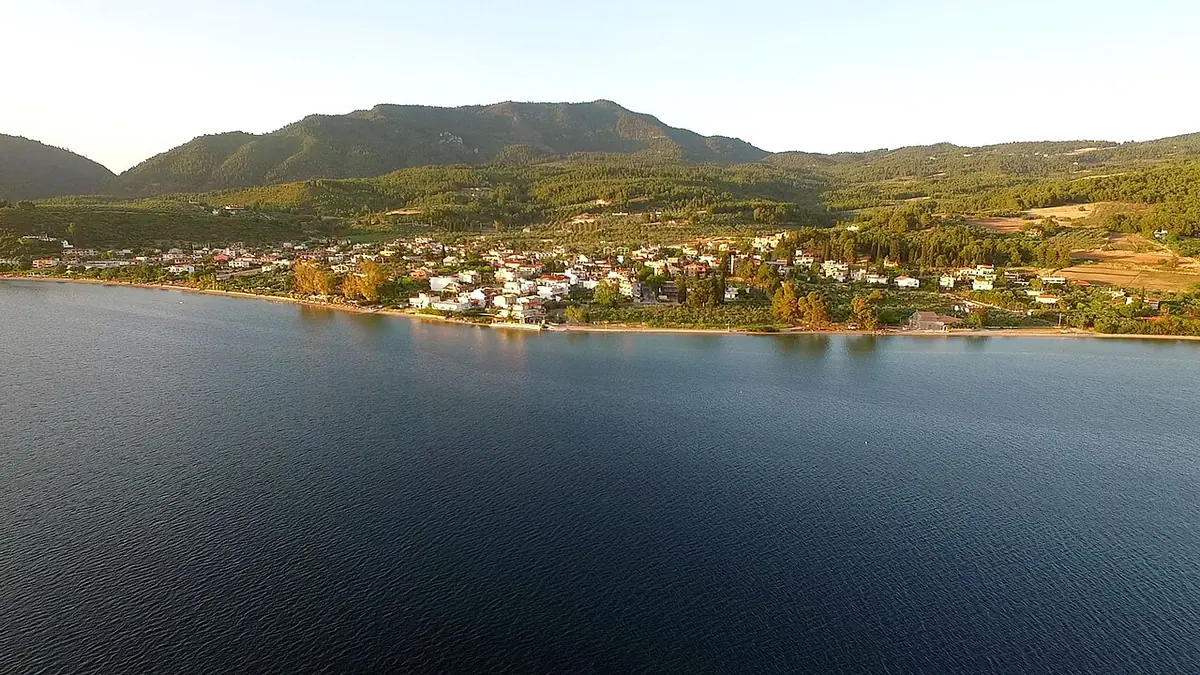
His tomb is at the Monastery of St. David the Elder, in the mountains above the village of Rovies on the northwest coast of Evia. Pilgrims take oil from the lamp at his grave. Nearby, at Prokopi, is the shrine of St. John the Russian.
His feast is November 22. You can find other saints of late November on our feast days page.
Prayer to St. Iakovos
As for every glorified saint, the Orthodox Church sings a service in his honor on his feast; we have not reproduced it here. With all who love him, let us ask his prayers: for refugees and the children of refugees, for the sick, for priests who hear confessions, and for hearts that give the world what it most needs, our love.
Frequently asked questions
Who was St. Iakovos Tsalikis?
A Greek Orthodox hieromonk, born in 1920 in Livisi in Asia Minor, whose family fled to Greece in 1922 and settled in northern Evia. He entered the Monastery of St. David the Elder in 1952, became its abbot in 1975, and received thousands of pilgrims until his death in 1991.
When is the feast of St. Iakovos Tsalikis?
November 22 (December 5 on the Old Calendar). He died on November 21, 1991, which is the feast of the Entry of the Theotokos, so his memory is kept the following day.
When was Elder Iakovos canonized?
On November 27, 2017, Ecumenical Patriarch Bartholomew and the Holy Synod of the Ecumenical Patriarchate added him to the calendar of saints.
Where is St. Iakovos buried?
At the Monastery of St. David the Elder (Osios David), in the mountains near Rovies in northern Evia, Greece, where pilgrims come to venerate his tomb.