St. Didacus of Alcalá (San Diego), Franciscan Brother

St. Didacus of Alcalá (in Spanish San Diego de Alcalá, about 1400–1463) was a Franciscan lay brother from Andalusia who served as a missionary and superior in the Canary Islands, nursed sick friars in Rome and spent his last years in prayer at Alcalá de Henares. Pope Sixtus V canonized him in 1588. The city of San Diego, California, is named for him, and his feast day is November 13.
Who was St. Didacus of Alcalá?
St. Didacus of Alcalá, called San Diego de Alcalá in Spanish, was a Franciscan lay brother of 15th-century Spain. He never became a priest and never learned Latin, yet he was made superior of a mission friary in the Canary Islands, nursed the sick in Rome during the great Jubilee of 1450, and died in such repute for holiness at Alcalá de Henares that kings and popes sought his help. Pope Sixtus V canonized him in 1588. Spanish sailors carried his name across the world, and the city of San Diego, California, still bears it.
The life of St. Didacus
A boy with a hermit
Diego was born around 1400 to poor parents at San Nicolás del Puerto, in the hills north of Seville. Butler says that as a youth he lived with a hermit priest near the town, and that the two of them kept a little garden and made "wooden spoons, trenchers, and such like mean utensils" to support themselves. Later he asked for the habit at the Franciscan friary of Arrizafa near Córdoba and was received as a lay brother, one of the friars who do the manual work of the house rather than sing the choir office.
Missionary in the Canaries
The friars sent him to the Canary Islands, then newly under Castilian rule. In 1445, the Catholic Encyclopedia says, he was made guardian of the Franciscan community on Fuerteventura, an unusual office for a lay brother. He taught the faith to the islanders and stayed until he was recalled to Spain in 1449.
Nurse at Ara Coeli
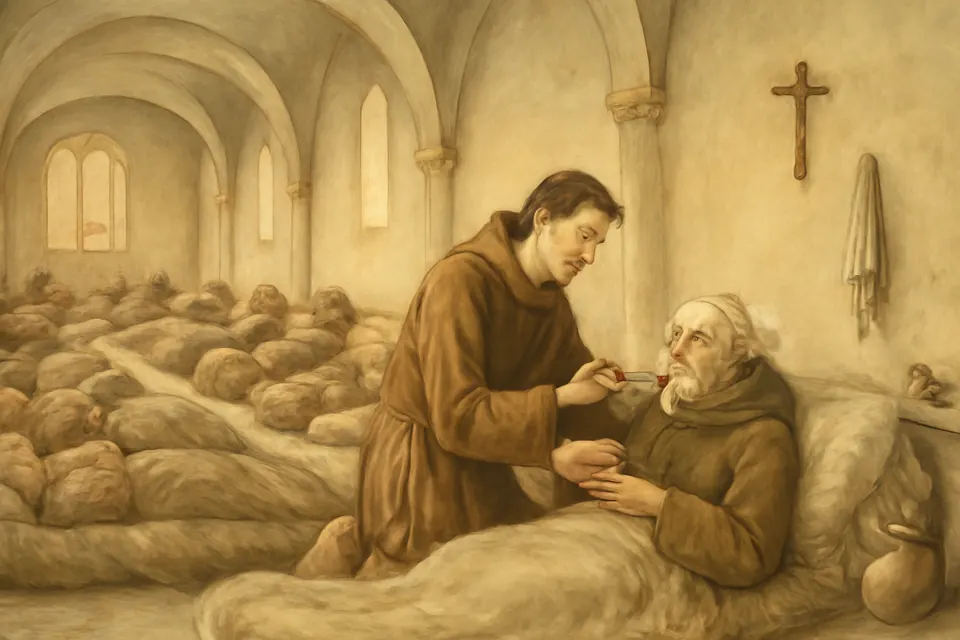
In 1450 he walked to Rome with Fr. Alonso de Castro for the Jubilee and the canonization of St. Bernardine of Siena. Thousands of friars crowded into the convent of Ara Coeli on the Capitoline Hill, and sickness broke out among them. Diego worked in the infirmary for thirteen weeks, and his biographers record that many of the sick recovered through his care and prayers.
The last years at Alcalá
Back in Spain, he spent his last years at the Franciscan friary of Alcalá de Henares. Tradition remembers him at the friary door, giving bread to the poor who came there. Butler describes a man so recollected "as scarcely to be able to speak but to him or of him," that is, to God or of God. In 1463 an abscess in his arm grew worse. Dying, he asked for a friar's cord to put around his neck, begged pardon of his brothers, and with a wooden cross in his hands repeated the words of the hymn of the Holy Cross, Dulce lignum, dulces clavos, "sweet wood, sweet nails." He died on November 12, 1463.

The miracles of St. Didacus
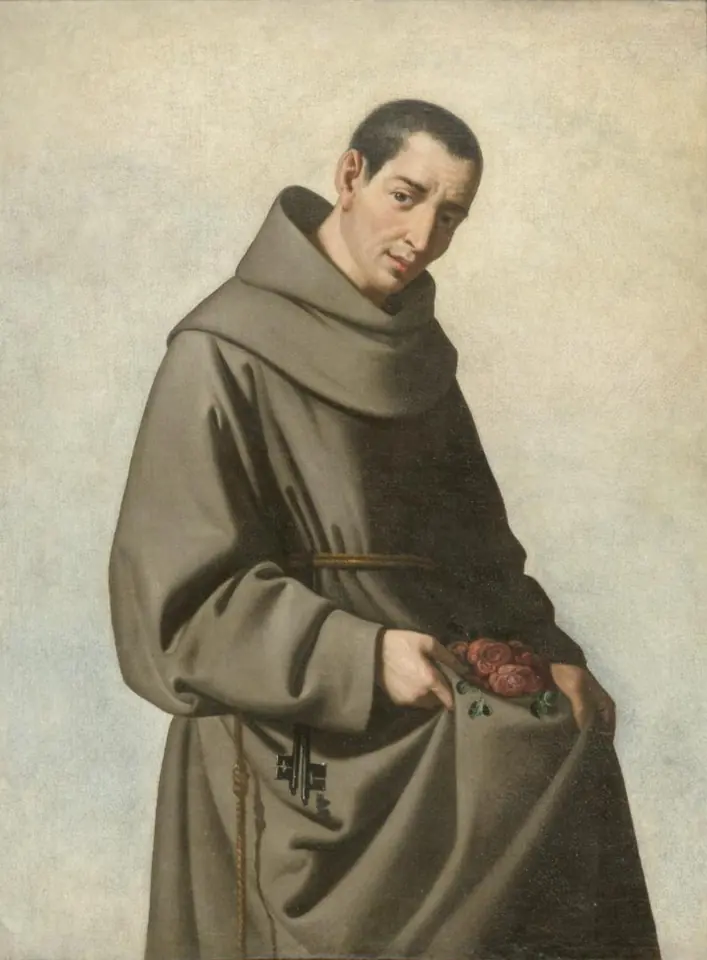
Bread turned to roses (traditional). Spanish tradition says that Diego was carrying bread from the friary to the poor, hidden in his habit, when his superior stopped him and asked what he had there. He opened the fold and it was full of roses. The same story is told of St. Elizabeth of Hungary and others.
The child in the oven (traditional). Another story, painted in Rome by Annibale Carracci's workshop, tells of a boy who hid in a bread oven, fell asleep and was nearly burned when it was lit, until his mother's prayer to St. Didacus brought him out unharmed.

The healing of Don Carlos (reported). In 1562 Don Carlos, the son and heir of King Philip II, fell down a staircase in the palace at Alcalá and suffered a head wound his surgeons judged mortal. Butler writes that because "miracles being then frequently wrought at the tomb of St. Didacus," the king had the saint's body carried in procession into the prince's room, and the wound was healed. Philip II then pressed for his canonization, which Sixtus V granted on July 2, 1588. It was the first canonization in more than sixty years.
Why St. Didacus is the patron of San Diego
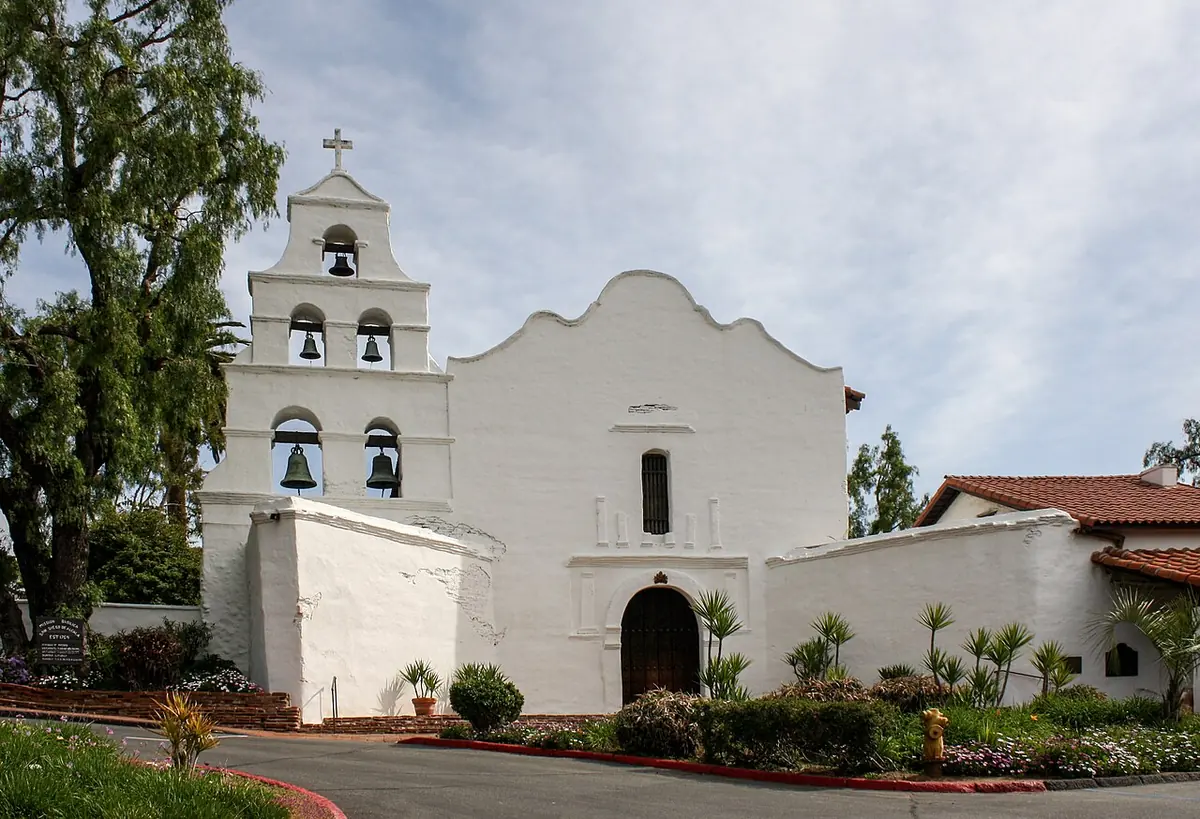
Spanish explorers named places after the saint whose feast was near. Mission San Diego de Alcalá explains that Captain Sebastián Vizcaíno gave the bay and region the name San Diego de Alcalá when he arrived from New Spain in November 1602. On July 16, 1769, St. Junípero Serra founded the first of the California missions there under his patronage. Franciscan brothers honor him as one of their own, and the sick ask the prayers of the brother who nursed the friars at Ara Coeli. See more on our patron saints page.
Symbols of St. Didacus in art
St. Didacus wears the brown or gray Franciscan habit with the knotted cord, and his special sign is roses gathered in the front of his habit, as in Zurbarán's paintings. Murillo and other Spanish painters show him with bread or a pot of food for the poor, or with the keys of the friary as porter. A plain cross recalls his love of the Passion and the hymn he sang as he died. Spanish and Mexican statues often show him with roses and a cross together. A Franciscan friar with roses in his habit, without the Christ Child that marks St. Anthony, is almost always San Diego.
Feast day and where he is honored
We keep his feast on November 13. His body rests in a casket in the Catedral Magistral of Alcalá de Henares, and each year on his feast the casket is opened and the incorrupt body is shown to the faithful. In California, Mission Basilica San Diego de Alcalá and the University of San Diego's Alcalá Park carry his name. Find other November saints on our feast days page.

Prayer to St. Didacus
We have no well-known traditional prayer to St. Didacus in common English use. His own last prayer was the hymn of the Holy Cross, Dulce lignum, dulces clavos, sung in the Church's liturgy of the Passion. Let us ask St. Didacus, the humble brother who fed the poor at the friary door and nursed the sick in Rome, to pray for the sick, for all who serve in hidden and ordinary work, and for the city that bears his name. St. Didacus of Alcalá, pray for us.
Frequently asked questions
Is San Diego named after St. Didacus?
Yes. Sebastián Vizcaíno, arriving in November 1602, named the bay and region San Diego de Alcalá, after the saint whose feast was near; his flagship was also named San Diego. St. Junípero Serra founded Mission San Diego de Alcalá there on July 16, 1769, the first of the California missions.
When is the feast of St. Didacus of Alcalá?
November 13. He died on November 12, 1463, and the Franciscans at first kept that day; Pope Innocent XI moved his feast to November 13 when he added it to the Roman Breviary.
Why is St. Didacus shown with roses?
A traditional story says that he was carrying bread from the friary to the poor in the fold of his habit when his superior stopped him, and the bread turned into roses. The same story is told of St. Elizabeth of Hungary. Zurbarán and other Spanish painters made it his usual sign.
Is St. Didacus incorrupt?
His body is kept in the cathedral of Alcalá de Henares and venerated as incorrupt. Each year on his feast, November 13, the casket is opened and exposed to the faithful.
Sources
- Stephen Donovan, "St. Didacus," The Catholic Encyclopedia, vol. 4 (1908). Guardian at Fuerteventura from 1445, infirmarian at Ara Coeli in 1450, canonized by Sixtus V in 1588
- Alban Butler, The Lives of the Saints (1866), vol. XI: St. Didacus, Confessor. His death, the healing of Don Carlos and Innocent XI's move of the feast to November 13
- Mission Basilica San Diego de Alcalá: Early History. Vizcaíno's naming of San Diego in November 1602 and the founding of the mission on July 16, 1769
- Incorrupt body of St. Diego of Alcalá exposed on his feast, Alcalá de Henares cathedral (Wikimedia Commons photo, 2008)
