Blessed Richard Whiting, Last Abbot of Glastonbury and Martyr

Blessed Richard Whiting was the last abbot of Glastonbury, the richest and most venerable abbey in England. Arrested when Henry VIII moved to seize the abbey, he was sent to the Tower, condemned without any recorded trial, and hanged on Glastonbury Tor with two of his monks, John Thorne and Roger James, on November 15, 1539. Pope Leo XIII beatified him in 1895.
Who was Blessed Richard Whiting?
Blessed Richard Whiting was the last abbot of Glastonbury, the oldest and grandest monastery in England, the house of St. Dunstan and of the legends of St. Joseph of Arimathea. An old and frail man, he was arrested in 1539 when Henry VIII set out to take the abbey, sent to the Tower of London, and then dragged on a hurdle to the top of Glastonbury Tor and hanged there with two of his monks. We keep his feast on November 15.
The life of Blessed Richard Whiting
Monk, scholar and chamberlain
Richard Whiting was born around the middle of the 15th century, probably into a family that held land from the abbey in the valley of Wrington in Somerset. He was most likely schooled in the cloister at Glastonbury. He went on to Cambridge, where he took his M.A. in 1483 and his doctorate in theology in 1505. He was ordained deacon in 1500 and priest in 1501, and for years he served as the abbey's chamberlain, in charge of the dormitory, wardrobe and the servants of that great household.
Abbot of Glastonbury
When Abbot Richard Bere died in February 1525, the monks agreed to leave the choice of his successor to Cardinal Wolsey. On March 3, 1525, Wolsey named Richard Whiting. For about ten years he ruled in peace. The State papers show him as a careful steward in spiritual and temporal matters alike.
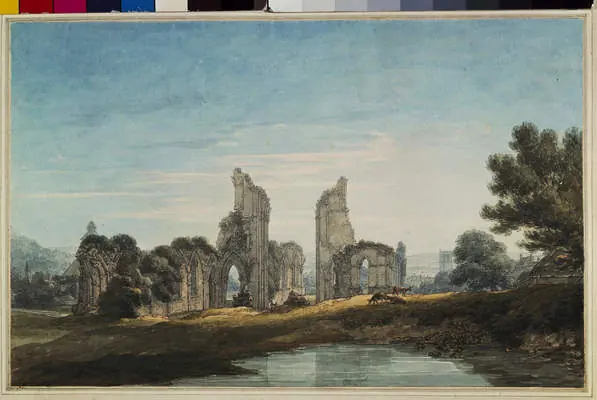
The antiquary John Leland, touring England's libraries for the king, was shown the Glastonbury library by the abbot himself. He called Whiting "a man truly upright and of spotless life and my sincere friend," and wrote that on crossing the threshold he was "struck with awe and astonishment at the mere sight of so many remains of antiquity."

The gathering storm
In September 1534, under heavy pressure, the abbot and fifty-one of his monks signed the declaration acknowledging the king as head of the Church, as nearly every religious house in England did. Gasquet, his biographer and a monk himself, does not hide it; he notes how few, besides St. John Fisher, St. Thomas More and the Observant Franciscans, refused from the start.
In August 1535 Cromwell's visitor, Dr. Richard Layton, came and could find nothing wrong. He wrote to Cromwell that "the brethren be so straight kept that they cannot offend." Still, the abbot's jurisdiction over the town was suspended and he was loaded with rules about running the abbey's lands, though he was told more than once that Glastonbury would not be suppressed.
The martyrdom of Richard Whiting
By January 1539 Glastonbury was the last religious house left standing in Somerset. On September 19 the royal commissioners arrived without warning. The abbot was at his manor of Sharpham. They examined him there, searched his study, and sent him to the Tower, describing him as "a very weak man and sickly." The monks were turned out and the abbey stripped.

What the abbot was charged with was never made public. The French ambassador heard that a book of arguments in favor of Queen Catherine had been found. Cromwell wrote in his private memoranda, "Item. The Abbot of Glaston to be tried at Glaston, and also executed there." The Catholic Encyclopedia notes that as a peer he should have been attainted by Parliament, but he was dead before Parliament met.
He was brought back to Wells on Friday, November 14. The next morning, Saturday, November 15, 1539, he and two of his monks, John Thorne, the treasurer, and Roger James, the youngest monk of the house, were tied to hurdles at the edge of Glastonbury and dragged by horses through the town and up the steep sides of the Tor. He was, Gasquet writes, "well nigh fourscore years" old. On the summit, beside St. Michael's tower, he asked forgiveness of God and of men. His monks did the same. Even Richard Pollard, who carried out the sentence, added to his report, "whose souls God pardon."

The three were hanged, and their bodies divided. The abbot's head was set over the abbey gate, and his quarters were sent to Wells, Bath, Ilchester and Bridgwater. No relic is known to survive.

Beatification
Richard Whiting, John Thorne and Roger James were beatified by Pope Leo XIII in the decree of May 13, 1895, which confirmed the honor long given to a group of the earliest English martyrs.
- Approved: as martyrs they were beatified without a miracle. No miracle has yet been approved for canonization.
- Traditional: the people of Glastonbury kept the memory of "good Abbot Whiting" for centuries after the abbey fell, even when, as Gasquet found, the old folk could no longer say why he had died.
Symbols of Blessed Richard Whiting in art
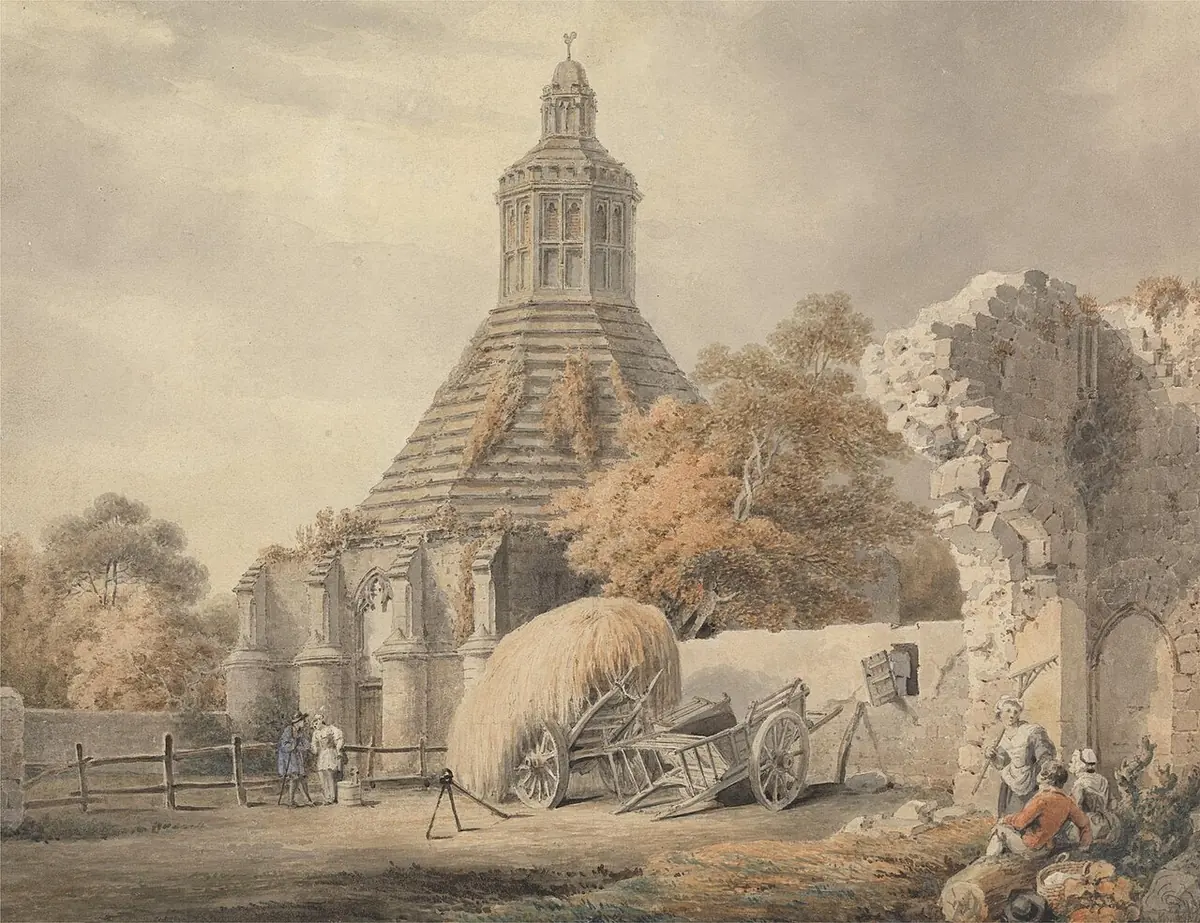
He is shown in the black habit of a Benedictine with an abbot's crozier, sometimes with a rope and the martyr's palm. The best-known emblem of his story is Glastonbury Tor with its lone tower, often shown behind him. His own watch and seal are still kept at Glastonbury, as the Catholic Encyclopedia noted in 1912.
Feast day and prayer
We keep his feast on November 15, with Blessed John Thorne and Blessed Roger James. In England and Wales they are also honored with all the martyrs of the Reformation on May 4. See the feast day calendar.
We know of no traditional prayer to Blessed Richard Whiting. Let us ask him to pray for monks and nuns, for the aged and the frail, and for all who are condemned without justice. Blessed Richard Whiting, Blessed John Thorne and Blessed Roger James, pray for us.
Frequently asked questions
Who was Blessed Richard Whiting?
A Benedictine monk of Glastonbury who studied at Cambridge, became the abbey's chamberlain and in 1525 was named abbot. He ruled peacefully for about ten years until Henry VIII's suppression of the monasteries. He was executed on Glastonbury Tor on November 15, 1539, at nearly eighty years of age.
Why was Richard Whiting executed?
The exact charge was never made public. His examiners wrote of "divers and sundry treasons," and Thomas Cromwell noted in his own hand, "The Abbot of Glaston to be tried at Glaston, and also executed there." The Catholic Encyclopedia and his biographer Francis Aidan Gasquet found no trace of a real trial.
Who died with Richard Whiting?
Two of his monks, John Thorne, the abbey's treasurer, and Roger James, the youngest monk of the house. They were beatified with him in 1895.
When is the feast of Blessed Richard Whiting?
November 15, the day of his martyrdom. He is also honored with all the martyrs of England and Wales on May 4.
Keep exploring
Sources
- Catholic Encyclopedia (1912): Blessed Richard Whiting. Cambridge degrees (M.A. 1483, D.D. 1505), ordination as deacon (1500) and priest (1501), Wolsey's nomination on March 3, 1525, the 1539 commissioners, Cromwell's "Remembrances," Marillac's reports, Wells on November 14, the Tor on November 15, the quarters sent to Wells, Bath, Ilchester and Bridgwater, beatification by Leo XIII on May 13, 1895, and the watch and seal in Glastonbury's museum
- Francis Aidan Gasquet, The Last Abbot of Glastonbury and His Companions (London, 1895). The 1534 oath signed by the abbot and 51 monks, Leland's praise of the abbot and the library, Pollard's letters, the age of "well nigh fourscore," the identity of John Thorne and Roger James, and the dating of the martyrdom to Saturday, November 15
- Catholic Encyclopedia (1909): Glastonbury Abbey. Layton's visitation report of 1535 and the plunder recorded in Cromwell's notes