St. Conrad of Constance, Bishop and Pilgrim to Jerusalem
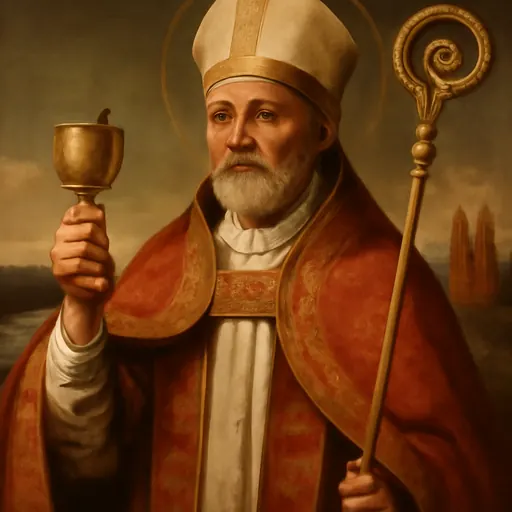
St. Conrad of Constance (about 900–975) was a nobleman of the Welf family who served as bishop of Constance on Lake Constance for forty-one years. A friend of the poor and a great builder of churches, he made three pilgrimages to Jerusalem and was canonized in 1123. His feast is November 26.
Who was St. Conrad of Constance?
St. Conrad of Constance (in German, Konrad von Konstanz) was bishop of Constance, on the shore of Lake Constance in southern Germany, for forty-one years in the tenth century. He came from one of the most powerful families of the empire, the Welfs, yet he is remembered for his love of the poor, his churches, and three long pilgrimages to Jerusalem. The Church canonized him in 1123, and we keep his feast on November 26.
The life of St. Conrad
A Welf son at the cathedral school
Conrad was born around 900 at the castle of his father, Count Henry of Altdorf, in what is now Weingarten in Swabia. At about eight he was sent to the cathedral school at Constance. He studied there, became a canon of the cathedral and then its provost. In 934 he was chosen bishop and was consecrated by St. Ulrich of Augsburg, the great bishop who became his lifelong friend. He kept close ties with the Ottonian imperial house of Otto the Great.
Three pilgrimages to Jerusalem
The Catholic Encyclopedia notes that Conrad made three pilgrimages to the Holy Land, a hard and dangerous journey in his century. The Ökumenisches Heiligenlexikon adds that he brought back relics of the Cross of Christ.

A little Rome on the lake
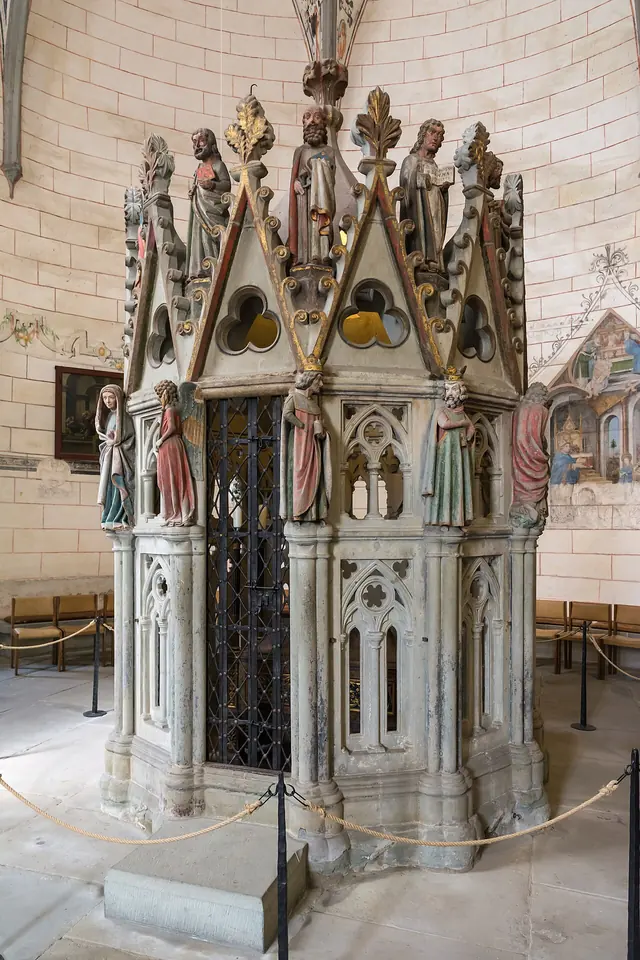
Conrad gave a large part of his fortune to building churches and a hospital. He wanted Constance to look like Rome, so he ringed his cathedral with churches named for the great Roman basilicas: alongside the minster of Our Lady stood St. Paul's, St. John's, and a St. Peter's, on whose site the abbey of Petershausen was later founded. Around 960 he built a round chapel beside the minster, modeled on the Holy Sepulchre in Jerusalem, and dedicated it to St. Maurice and his companions, whose relics he had brought home. The rotunda still stands. The Gothic Holy Sepulchre inside it was added about three centuries after his death.
Death and canonization
Conrad died on November 26, 975, and was buried in his rotunda. Around 1120 Udalschalk, a monk of the abbey of Sts. Ulrich and Afra in Augsburg, wrote his life. He was canonized in 1123, at the time of the First Lateran Council, and became patron of the diocese. The minster has been dedicated to him since the twelfth century, together with Our Lady and St. Pelagius.

The legend of the spider
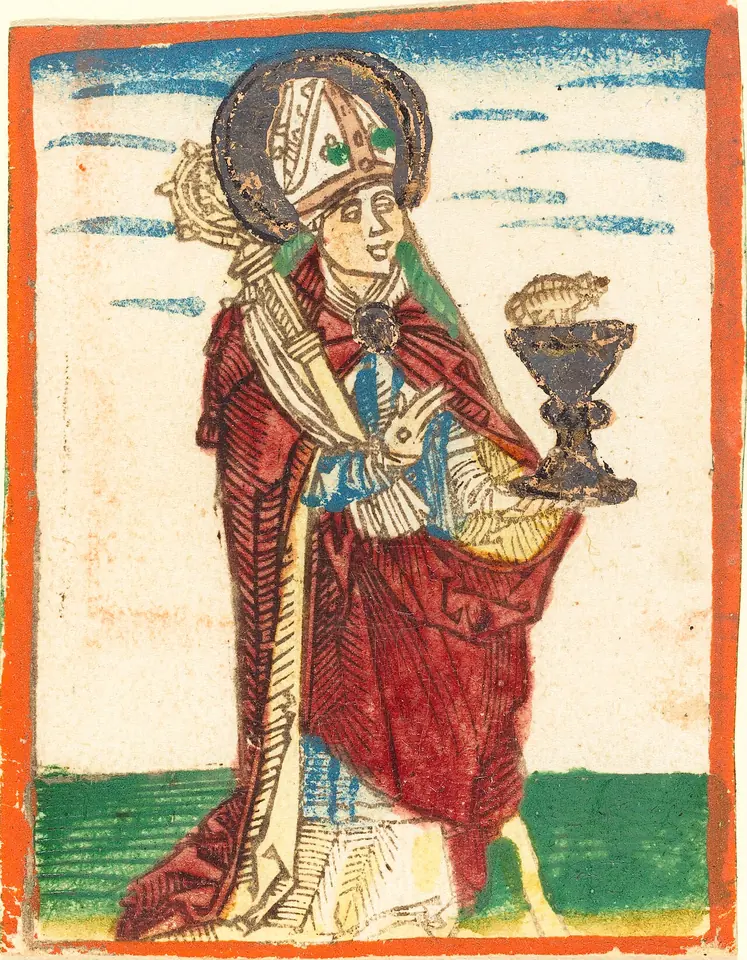
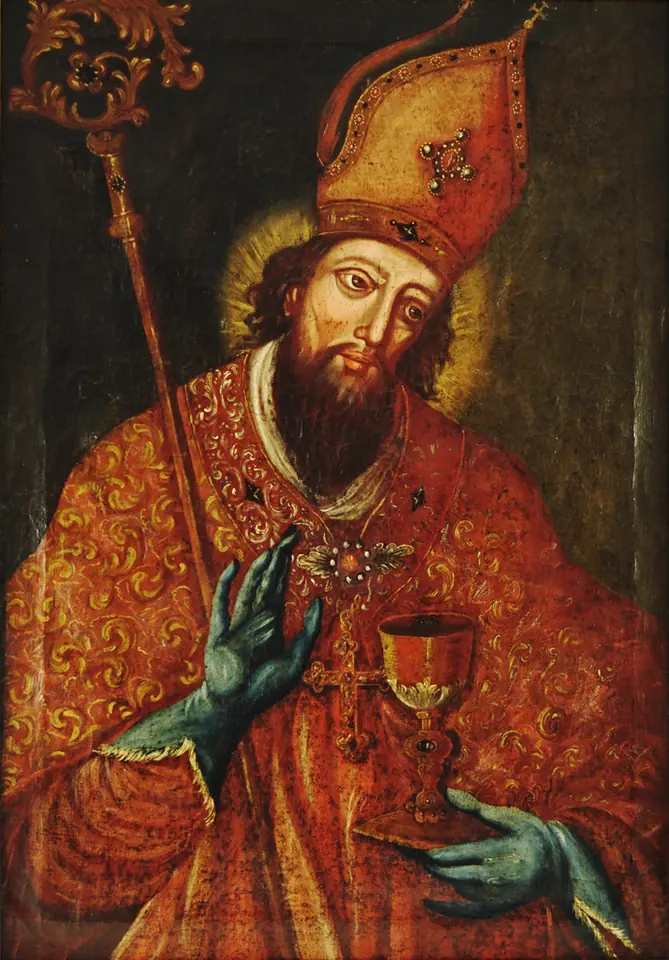
The story everyone remembers about St. Conrad comes from Udalschalk's life and is traditional. While Conrad was celebrating Mass on Easter, a spider fell into the chalice after the consecration. He would not pour out the Precious Blood, and he drank it. Later, as he sat down to the midday meal, the spider crawled out of his mouth, and he was unharmed. The legend praises his reverence for the Eucharist and his self-mastery. Another tradition shows him walking on the water of the lake. No miracle of his has been examined in a modern process; his cult is far older than that.
Symbols of St. Conrad in art
- Bishop's vestments and crozier: the shepherd of Constance.
- Chalice with a spider: the Easter Mass of his legend and his reverence for the Blood of Christ.
- Walking on water: a rarer image, from the lake legends.
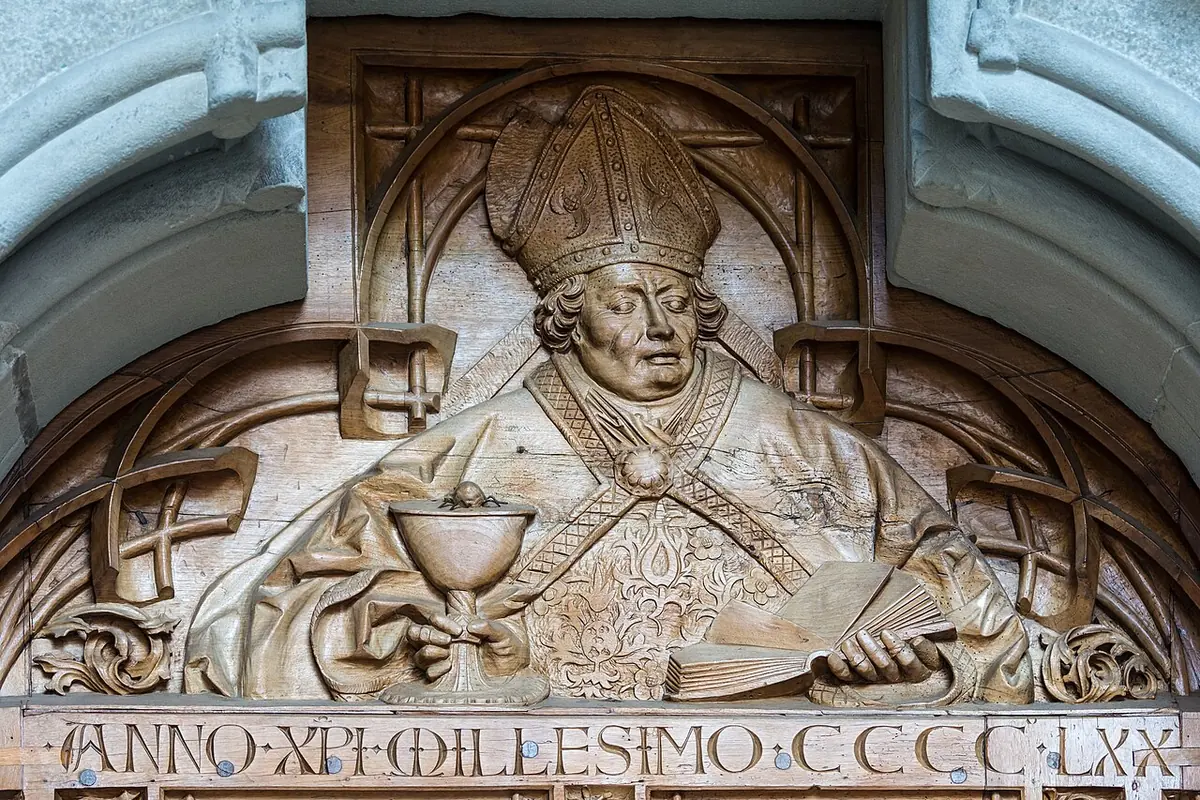
If you see a medieval bishop holding a chalice with a small creature on the rim, especially in southwest Germany or Switzerland, it is almost always Conrad. In 1470 the carver Simon Haider placed him over the west portal of Konstanz Minster with his chalice before him.
Feast day and where he is honored
We keep his feast on November 26. It is an optional memorial in German-speaking countries and a feast in the Archdiocese of Freiburg, which received what remained of the old Diocese of Constance when Pope Pius VII dissolved it in 1821, and keeps him as its second patron. Augsburg, Rottenburg, Feldkirch and St. Gall keep him on their calendars too, and Einsiedeln remembers him on August 27.
Constance also kept July 5 as the feast of the translation of his relics. His name lives on in the farmers' calendar of the region, which links his November feast with the season's rains. One old rhyme says that no mill wheel has ever stood still on St. Conrad's day, because he always brings water: Noch niemals stand ein Mühlenrad an Konrad, weil er Wasser hat. The Ökumenisches Heiligenlexikon also lists him on November 26 in the Protestant and Orthodox calendars it surveys, a sign of how widely this tenth-century pastor is still remembered.
His relics did not fare well. They were moved into the minster, but during the Reformation they were thrown into Lake Constance, and only his head is said to have been saved. It rests in a reliquary in the Conrad chapel of Konstanz Minster. See the other saints of late November on our feast days page.
Praying with St. Conrad
We have not found a traditional English prayer to St. Conrad with a source we can cite, so we ask his help simply: "St. Conrad of Constance, pray for us."
Let us ask him to pray for bishops and pastors, for pilgrims on the road to the holy places, for the poor and the sick in our hospitals, and for all of us, that we may receive the Body and Blood of Christ with the reverence he showed at the altar.
Frequently asked questions
Who was St. Conrad of Constance?
The bishop of Constance in southern Germany from 934 to 975. Born into the Welf family, he was educated at the cathedral school, consecrated by St. Ulrich of Augsburg, gave much of his fortune to churches and a hospital, and made three pilgrimages to the Holy Land.
Why is St. Conrad shown with a spider in a chalice?
Because of a legend in his twelfth-century life: a spider fell into the chalice during his Easter Mass, and rather than waste the Precious Blood he drank it. Later, at table, the spider came out of his mouth unharmed.
When is the feast of St. Conrad of Constance?
November 26, the day he died in 975.
Where are St. Conrad's relics?
In Konstanz Minster. His bones were thrown into the lake during the Reformation, but his head is said to have been saved, and it rests in a reliquary in the minster's Conrad chapel.
Keep exploring
Sources
- Constance, Catholic Encyclopedia (1908), New Advent. His years as bishop (934–975), his three pilgrimages, the churches he built, his canonization in 1123 and his place as patron of the diocese
- Konrad von Konstanz, Ökumenisches Heiligenlexikon. His family and education, consecration by Ulrich, the churches modeled on Rome, the rotunda of St. Maurice, the life by Udalschalk, the spider legend, the fate of his relics and his feast days (in German)