St. Albert of Louvain, Bishop of Liège and Martyr
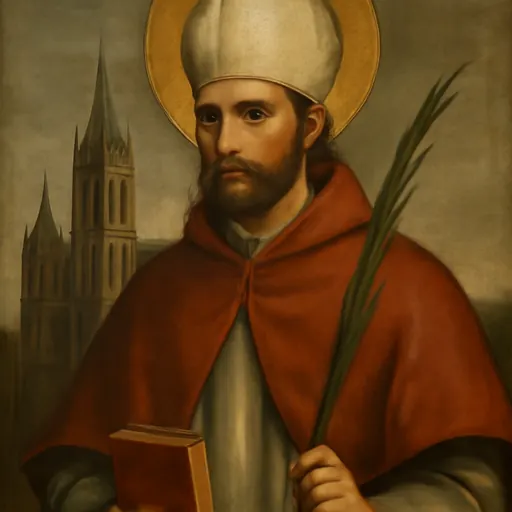
St. Albert of Louvain, a young prince of Brabant elected bishop of Liège in 1191, appealed to the pope when Emperor Henry VI forced another man into his see. He was murdered outside Reims by three German knights in 1192 and is honored as a martyr for the freedom of the Church. We keep his feast on November 24.
Who was St. Albert of Louvain?
St. Albert of Louvain was a young nobleman of Brabant who became bishop of Liège and died for it. Chosen by his cathedral chapter in 1191, he refused to step aside when Emperor Henry VI handed the see to a candidate of his own. He took his case to Rome, won it, and was consecrated at Reims in September 1192. Two months later, on November 24, three German knights who had gained his trust lured him out of the city on a ride and killed him. The Church honors him as a martyr for its freedom, the same cause for which St. Thomas Becket had died at Canterbury a generation before.
A prince, a canon and a crusader
Albert was born around 1166, the second son of Godfrey III, Count of Louvain and Duke of Lower Lorraine, and the brother of the future Duke Henry I of Brabant. As a boy he was given to the Church and schooled at the cathedral of St. Lambert in Liège, where he became a canon. In 1187, when news reached Liège that Jerusalem had fallen, he gave up his church offices, took the crusader's cross and was knighted. A year later the papal crusade preacher, Cardinal Henry of Albano, restored him to the clerical state. He became archdeacon of Liège and provost of two of its collegiate churches.
The contested election
On September 8, 1191, most of the Liège chapter elected him bishop, though he was still short of the canonical age of thirty. A small party backing the Count of Hainaut chose another Albert, the provost Albert of Rethel. At the diet of Worms in January 1192 the emperor ruled that a disputed see was his to fill and named Lothair of Hochstaden, provost of Bonn.
Albert protested and went to Rome. He arrived on April 5, 1192, and Pope Celestine III, after hearing the case with the cardinals, confirmed his election. In May the Pope created him a cardinal deacon and on May 30 ordained him deacon with his own hands. The Archbishop of Cologne, Albert's metropolitan, feared the emperor too much to consecrate him, so the Pope allowed the Archbishop of Reims to do it instead.
Consecration and murder at Reims
Cardinal William of the White Hands, Archbishop of Reims, ordained Albert a priest on September 19, 1192, and consecrated him bishop the next day. On September 21 he offered his first Mass in Reims Cathedral. He could not safely enter his own diocese, so he stayed on in Reims.
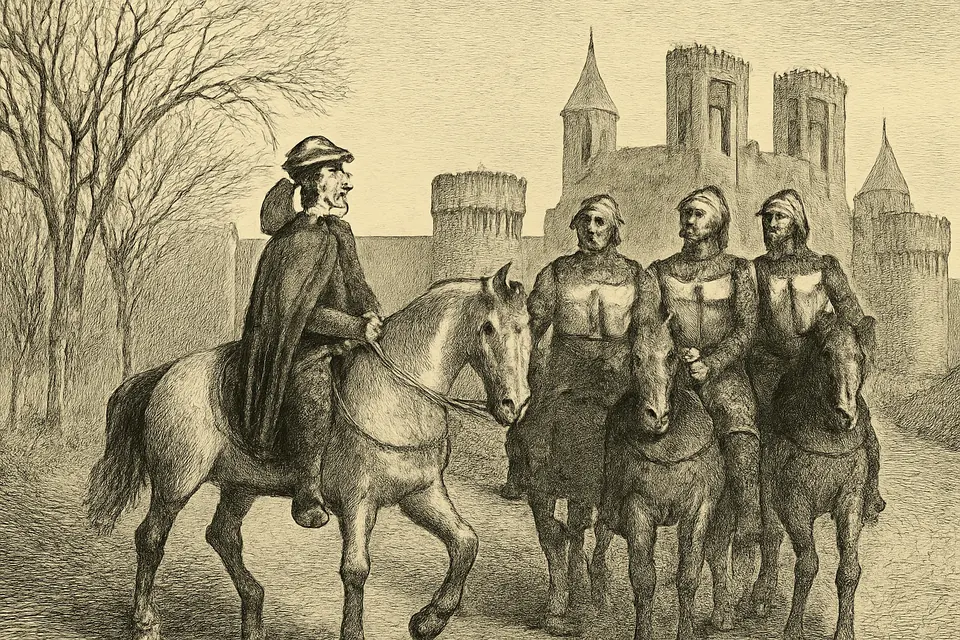
In October three German knights arrived and made friends with the exiled bishop. On November 24 they asked him to ride out with them beyond the walls. On the road toward Nogent-l'Abbesse they drew their swords, struck him on the head, and when he fell they struck again to make sure he was dead. Then they fled to the imperial court. Who finally ordered the killing has never been settled, though suspicion fell on the emperor's circle.
Albert was buried in Reims Cathedral, and people soon called him a martyr. Within two or three years a monk of Lobbes, secretary to his abbot, wrote his Life, the Vita Alberti, from close knowledge of the events.
Cult, canonization and the lost relics
Four centuries later another Albert, the Archduke Albert of Austria who ruled the Spanish Netherlands with his wife Isabella, wanted his patron saint near him. In 1612 the King of France and the Archbishop of Reims allowed the bishop's remains to be taken to Brussels, where they were laid in the church of the Carmelite convent the archduke had founded. On August 9, 1613, Pope Paul V approved Albert's cult and entered him in the Roman Martyrology as a martyr who died defending the Church. In 1822 the relics were shared with Liège.
The story has a strange ending. During the rebuilding of Reims Cathedral after the First World War, the architect Henri Deneux found Albert's real tomb under the nave on September 26, 1919. The canons of 1612 had made a mistake, and the body venerated in Brussels for three centuries was that of Odalric, a tenth-century Archbishop of Reims. A commission named by Cardinal Luçon examined the remains in 1920 and 1921. On November 17, 1921, Odalric went home to Reims, and two days later St. Albert's body was taken to Brussels and given to Cardinal Mercier, Archbishop of Malines. Mercier gave an arm to King Albert I of the Belgians and, in 1925, a relic back to Reims.
Where the relics of St. Albert of Louvain are kept: see them on the relics map →
Miracles
No approved miracles are on record for him. Albert was honored as a martyr, and the Church does not ask for miracles from martyrs. His cult was approved in 1613 by the older, "equivalent" path, which confirmed a veneration already long in place.
Symbols of St. Albert of Louvain in art
- Red robes of a cardinal, sometimes with the broad cardinal's hat. Pope Celestine made him a cardinal months before he died.
- The miter and crozier of the bishop of Liège.
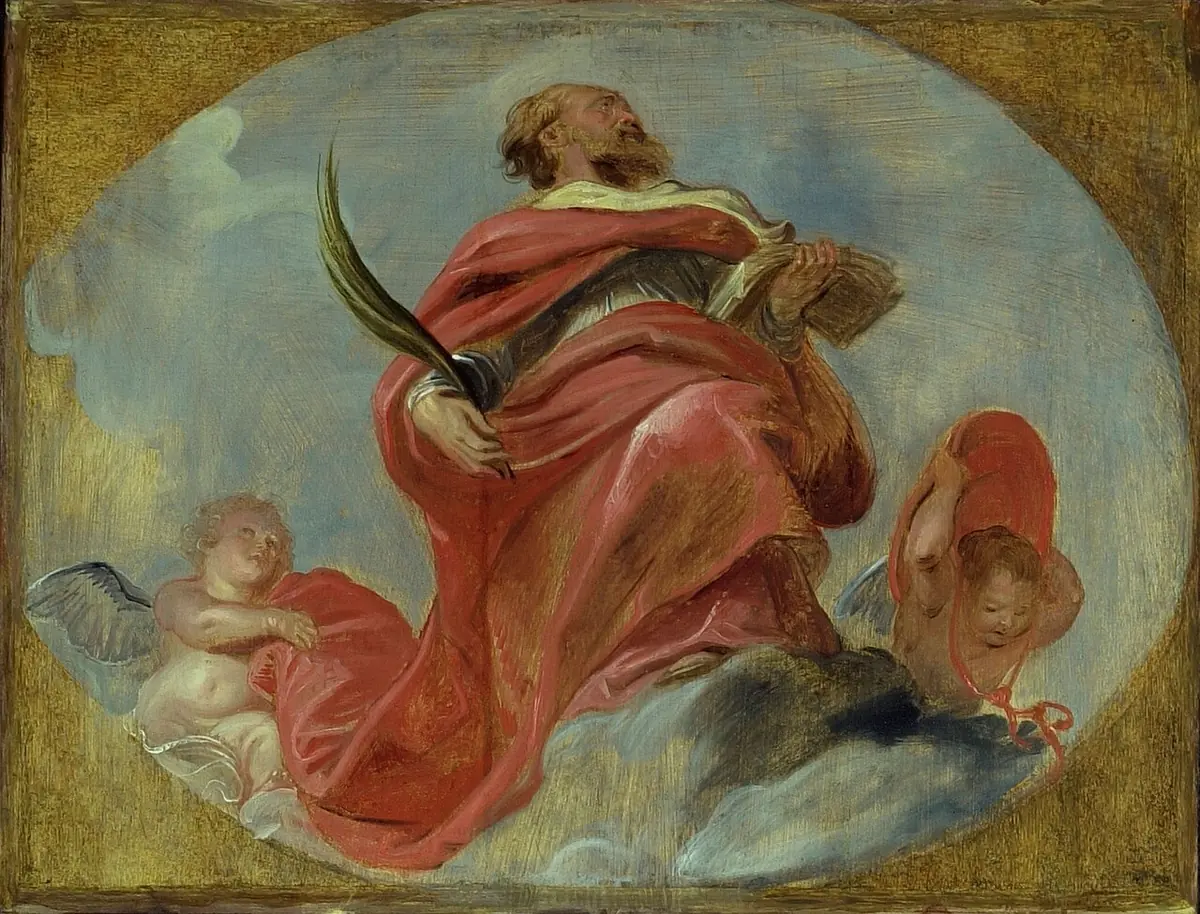
- The martyr's palm, for his death in 1192.
- A sword, sometimes, for the knights' weapons.
- A book, for his office as a teacher of the faith.
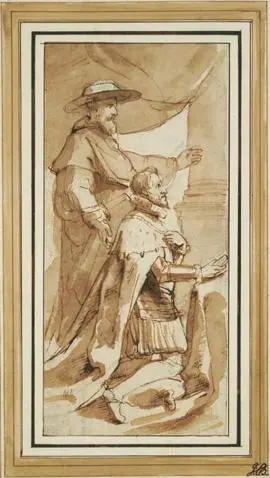
Most images of him date from the seventeenth century, when the archdukes revived his cult. Rubens painted and drew him more than once. In Brussels Cathedral a stained-glass window of 1663 shows him behind the kneeling archduke. In Liège he appears with the other saints of the diocese.
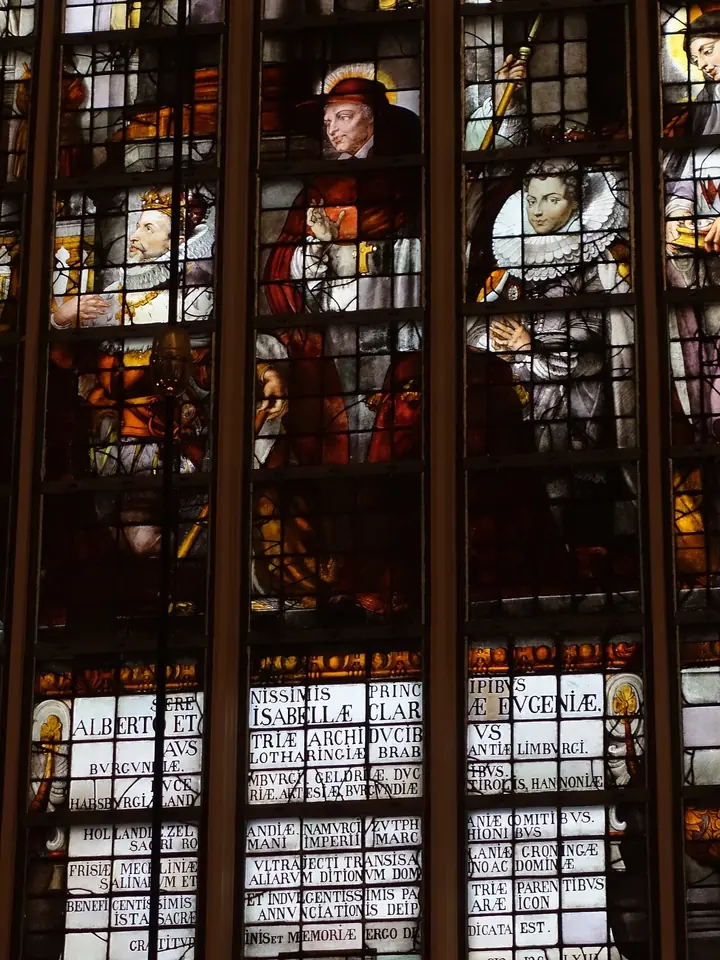
Feast day and where he is honored
Belgium keeps his feast on November 24, the day he died. Older Roman books place him on November 21, the date assigned in 1613. Brussels holds his body, Reims the place of his first tomb, and Liège the memory of the bishop it never received. The Canadian city of St. Albert, Alberta, takes its name from him. See the feast day calendar.

Praying with St. Albert of Louvain
No traditional prayer to St. Albert of Louvain is in wide use. Let us ask him, who would not hand over his flock to a ruler's choice, to pray for bishops under pressure from governments, for the Church in Belgium, and for all who are betrayed by people they trusted.
Frequently asked questions
Who was St. Albert of Louvain?
A son of Duke Godfrey III of Louvain, elected bishop of Liège in 1191 at about twenty-five. When the emperor gave the see to his own candidate, Albert went to Rome, where Pope Celestine III upheld him and made him a cardinal. He was consecrated at Reims and murdered there by imperial knights in November 1192.
When is the feast of St. Albert of Louvain?
November 24, the day he died, kept in Belgium. When Pope Paul V approved his cult in 1613 he was placed in the Roman Martyrology on November 21, so many older books give that date.
Why is St. Albert of Louvain a martyr?
He was killed because he would not give up a see the Church had confirmed to him in favor of the emperor's nominee. The Church honors him as a martyr who died defending its freedom from lay control.
Where are the relics of St. Albert of Louvain?
In 1612 relics thought to be his were taken from Reims to Brussels, but they turned out to be another bishop's. His real tomb was found in Reims Cathedral in 1919, and in 1921 his body was brought to Brussels; a relic was given back to Reims in 1925.
Keep exploring
Sources
- Thomas Shahan, "St. Albert," Catholic Encyclopedia, vol. 1 (1907). The appeal to Celestine III, ordination at Reims, the knights, the 1612 translation to the Carmelites of Brussels
- Salvador Miranda, The Cardinals of the Holy Roman Church: Consistory of May 1192, Albert de Louvain. Election of September 8, 1191; diet of Worms; ordinations of May 30 and September 19–20, 1192; death November 24, 1192; the 1613 approval by Paul V; the 1612 mix-up with Archbishop Odalric; the 1919 discovery and 1921 translation; the relics given in 1925
- GCatholic: Saints and Blesseds AL–ALE (Albert de Louvain). Canonized August 9, 1613 (equipollently); feast November 24