Blessed Anacleto González Flores, Cristero Martyr of Guadalajara
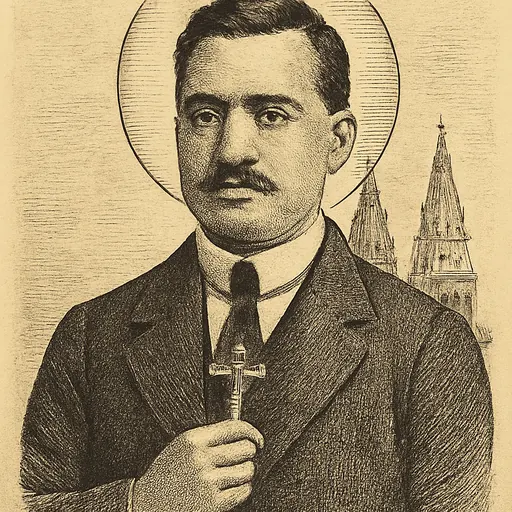
Blessed Anacleto González Flores (1888–1927) was a Mexican lawyer, teacher, writer and husband who led Catholic laymen in Jalisco in peaceful resistance to the persecution of the Church. Arrested, tortured and shot in Guadalajara on April 1, 1927, he forgave his killers and cried out ¡Viva Cristo Rey! Benedict XVI beatified him as a martyr in 2005; his feast is November 20.
Who was Blessed Anacleto González Flores?
Blessed Anacleto González Flores was a Mexican layman: a lawyer, a teacher, a journalist, a husband and the father of two. In the 1920s, when the Mexican government closed churches and drove priests into hiding, he led the Catholics of Jalisco in organized, peaceful resistance. On April 1, 1927, soldiers arrested him in Guadalajara, tortured him and shot him. He died forgiving his killers, and the Church honors him as a martyr.
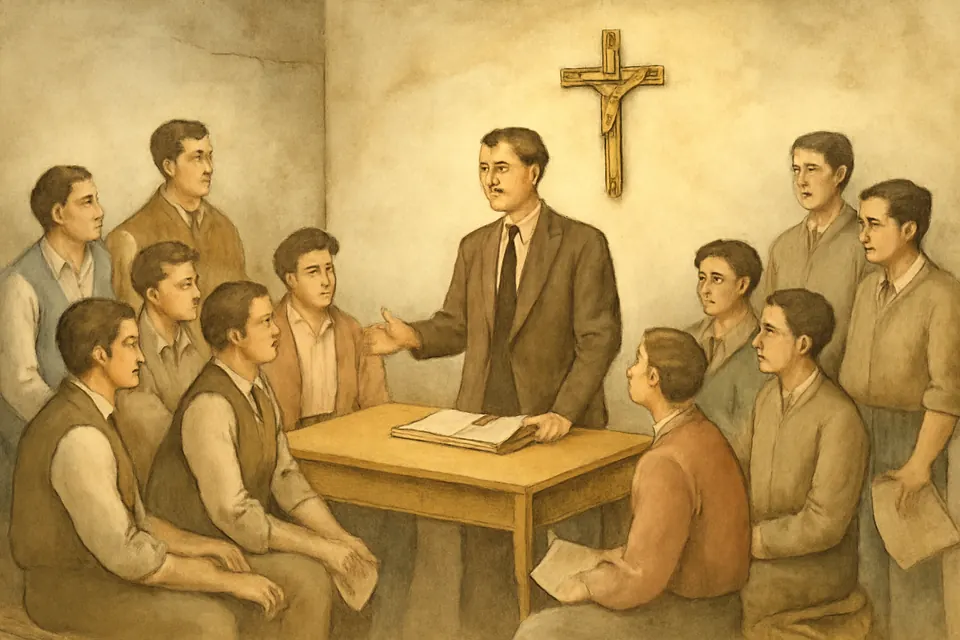
His life
"Maistro Cleto"
José Anacleto González Flores was born on July 13, 1888, in Tepatitlán, Jalisco, the second of twelve children in a poor family. He entered the minor seminary and did so well that he often filled in for absent teachers; the other students nicknamed him "Maistro Cleto," Master Cleto, and the name stayed with him. He discerned that he was not called to the priesthood and went on to study law in Guadalajara, qualifying as a lawyer in 1922. That same year he married María Concepción Guerrero. They had two children.
A lay apostle
Anacleto went to Mass every day, taught catechism and visited prisoners. He led the Catholic Association of Mexican Youth (ACJM) in Guadalajara, founded the magazine La Palabra, and founded and led the Popular Union, which organized Catholics across Jalisco. He wrote constantly: a book of speeches, Ensayos (1917), a study of the religious question in Jalisco (1920), and articles later gathered as Tú serás rey and El plebiscito de los mártires. His biographer Antonio Gómez Robledo called him the "Socrates of Guadalajara."
Because he urged peaceful, passive resistance rather than arms, he was called "the Mexican Gandhi." After four members of the ACJM were murdered in 1926, he joined the National League for the Defense of Religious Liberty. When the Cristero rising broke out in January 1927, he did not take up arms himself, but he supported the cause with his speeches and writing.
Arrest and martyrdom
Early on April 1, 1927, police seized him at the home of the Vargas González family, who had sheltered him. He was taken to the Colorado barracks. There, according to the University of Guadalajara's historical encyclopedia, he was hung by his thumbs and whipped to make him reveal where Archbishop Francisco Orozco y Jiménez and other priests were hiding. He told them nothing.
He was shot that same day with the brothers Jorge and Ramón Vargas González and with Luis Padilla Gómez. When young Luis asked to make his confession, Anacleto told him, as the Vatican's biography records: "No, brother, now is not the hour to confess, but to request pardon and to pardon our enemies." He asked to die last so that he could encourage the others.
To the officer in charge he said (our translation from the Vatican's Spanish text):
I forgive you with all my heart; very soon we will see each other before the divine tribunal. The same judge who is going to judge me will be your judge; then you will have in me an intercessor with God.
The officer had him run through with a bayonet. His final cry, as the Guadalajara encyclopedia gives it, echoed the dying words of the Ecuadorian president Gabriel García Moreno:
Por segunda vez oigan las Américas este grito: yo muero pero Dios no muere. ¡Viva Cristo Rey!
"Let the Americas hear this cry a second time: I die, but God does not die. Long live Christ the King!"

His body was returned to his family that evening. On April 2 a great crowd followed him to burial in Mezquitán cemetery.
Beatification
Anacleto's death was examined as martyrdom: killed out of hatred for the faith. For a martyr the Church does not require a miracle for beatification, and no approved miracle is attributed to him; the favors his devotees ask and receive are reported graces, not formally examined. Pope Benedict XVI beatified him with eight companions on November 20, 2005, in Guadalajara, with Cardinal José Saraiva Martins presiding. Among the companions were the Vargas González brothers, Luis Padilla, the Huerta Gutiérrez brothers and the fourteen-year-old José Sánchez del Río, since canonized.
Symbols of Blessed Anacleto in art
- Suit and tie: he was a layman, a lawyer and a father, and images show him as one.
- Crucifix and martyr's palm: his death for Christ.
- Book or newspaper: his teaching and his writing for the Catholic press.
Images of him are based on photographs from his lifetime. He died the same year as another martyr of the persecution, Blessed Miguel Pro, who was shot in Mexico City in November 1927.
Feast day and where he is honored
His feast is November 20. On April 1, 1947, twenty years after his death, his remains were placed in the north wall of the Santuario de Nuestra Señora de Guadalupe in Guadalajara, and on April 1, 2006, they were moved to a side chapel there. Read more about the Mexican saints and martyrs and the feast of Christ the King, whose name he died proclaiming.

Prayer to Blessed Anacleto González Flores
We have not found a widely used traditional prayer to him in English, so we won't invent one. Let us ask Blessed Anacleto, in our own words, to pray for lay Catholics who defend the faith in public life, for lawyers and teachers, for persecuted Christians, and for the grace to forgive those who hurt us. Blessed Anacleto, pray for us. ¡Viva Cristo Rey!
Frequently asked questions
Who was Anacleto González Flores?
A lawyer and lay Catholic leader from Jalisco, Mexico. He led the Catholic Association of Mexican Youth (ACJM) in Guadalajara, founded the Popular Union, and wrote and taught tirelessly. He was killed for the faith on April 1, 1927.
What were Anacleto González Flores's last words?
According to the University of Guadalajara's historical encyclopedia, he said: "Por segunda vez oigan las Américas este grito: yo muero pero Dios no muere. ¡Viva Cristo Rey!" ("Let the Americas hear this cry a second time: I die, but God does not die. Long live Christ the King!")
When is the feast of Blessed Anacleto González Flores?
November 20, the date set in the apostolic letter for his beatification in 2005.
Where is Anacleto González Flores buried?
In a side chapel of the Santuario de Nuestra Señora de Guadalupe in Guadalajara, where his remains were moved from Mezquitán cemetery.
Keep exploring
Sources
- "José Anacleto González Flores and eight Companions," biographies, Vatican News Services (2005). His arrest at the Vargas González home, torture at the Colorado barracks, his words to Luis Padilla, and the lives of his companions
- "José Anacleto González Flores y ocho compañeros, biografías," Vatican News Services (2005). His words of forgiveness to the officer, as translated on this page
- Benedict XVI, Apostolic Letter for the beatification of Anacleto González Flores and eight companions (2005). The November 20 memorial
- "González Flores, Anacleto," Enciclopedia histórica y biográfica de la Universidad de Guadalajara. His nicknames, his books, the torture, his last words, his burial at Mezquitán and the transfers of his remains in 1947 and 2006