St. Odo of Cluny, the Abbot Who Spread the Cluniac Reform

St. Odo of Cluny (878–942) was the second abbot of Cluny in Burgundy. With papal backing he reformed monasteries in France and Italy, including Monte Cassino and Subiaco, and made Cluny the heart of a reform that renewed Western monastic life. He wrote the Life of St. Gerald of Aurillac, moral treatises and hymns, and he is honored as a patron of musicians. His feast is November 18.
Who was St. Odo of Cluny?
St. Odo of Cluny was the second abbot of the great Benedictine abbey of Cluny in Burgundy, and the man who first carried its reform beyond its own walls. In the tenth century, when many monasteries had fallen into the hands of lay lords and lost their discipline, Odo went from house to house restoring the Rule of St. Benedict: common prayer, silence, poverty and obedience. Popes trusted him, princes asked him to make peace, and monks remembered him as a gentle father with a sharp tongue for sin.
We keep his feast on November 18, the day he died at Tours in 942.

The life of St. Odo
A son of St. Martin
Odo was born in 878 or 879, probably near Le Mans. His father, a nobleman, had dedicated him as a child to St. Martin of Tours, and the boy was brought up at the court of Duke William of Aquitaine, the man who later founded Cluny. At nineteen he became a canon of St. Martin's church in Tours and studied there and in Paris. All his life he kept a son's love for St. Martin; he wrote twelve antiphons in his honor, and he went back to Tours to die.
Monk at Baume and Cluny
Around 909 Odo left the canons to become a monk at Baume, in the Jura, under Abbot Berno. The Ökumenisches Heiligenlexikon says he brought about a hundred books with him, which became the core of the monastery's library. Berno put him in charge of the school. In 910 Duke William founded Cluny and gave it to Berno, and Odo followed. He was ordained priest and, on Berno's death in 927, became Cluny's second abbot.
The reformer
Cluny was free of any lay lord and answered directly to the pope, and Odo used that freedom well. In 931 Pope John XI granted him a privilege to unite abbeys under his guidance and to receive monks from monasteries that were not yet reformed. He reformed houses in Aquitaine, northern France and Italy. Between 936 and 942 he went to Rome several times. There he founded the monastery of Our Lady on the Aventine and reformed Subiaco, where St. Benedict had first lived as a hermit, and Monte Cassino, where he wrote his Rule. Most of the houses he reformed stayed independent, and several became centers of reform in their turn.
He was also a peacemaker. The Catholic Encyclopedia records that he helped arrange peace between King Hugh of Italy and Alberic, the ruler of Rome.
Writer and musician
Odo wrote the Life of St. Gerald of Aurillac, a nobleman who lived a holy life in the world; it is one of the first portraits of a lay saint in the Middle Ages. His three books of Collationes are stern meditations on the sins of the age. His Occupatio is a long poem on the Redemption. He loved music and wrote antiphons and hymns, and later writers attributed treatises on music theory to him.
He died at Tours on November 18, 942, on the octave day of St. Martin's feast.

Why St. Odo is the patron of musicians
Odo's love of the chant, his antiphons for St. Martin and his reputation as a writer on music made him a patron of musicians. In some regions he is also invoked for rain in time of drought. See more causes on our patron saints page.
Symbols of St. Odo in art
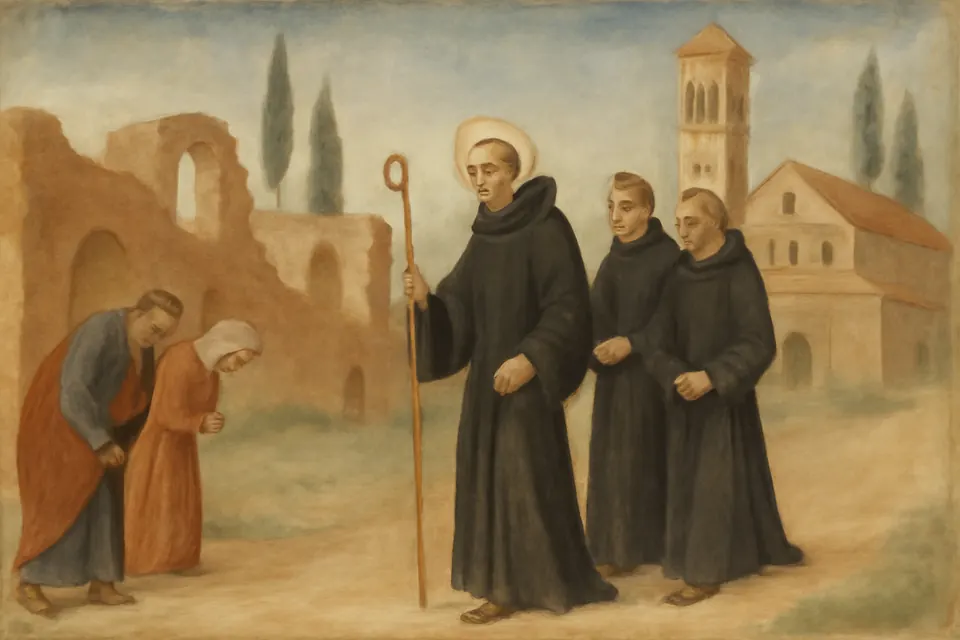
Images of St. Odo are fairly rare. He appears as a Benedictine abbot in a black habit and cowl with an abbot's crozier and a book. Some show him reading; a Baroque ceiling at Meppen in Germany shows him with a volume of Virgil, recalling the story, told by his disciple and biographer John of Salerno, of how he gave up his love of the pagan poets for Scripture. In groups of Cluniac saints he stands beside St. Odilo, St. Majolus and St. Hugh, the other holy abbots of Cluny.
Where St. Odo is honored
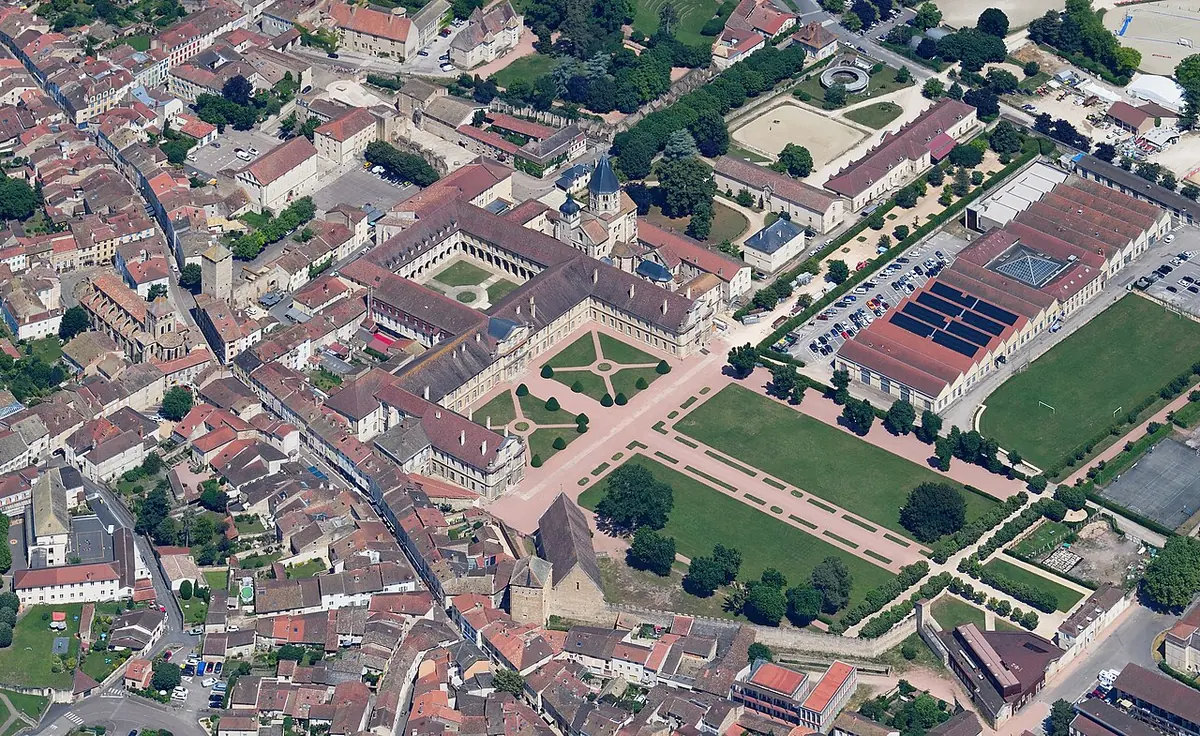
Odo was buried at Tours. The Ökumenisches Heiligenlexikon reports that relics of him are now kept at L'Isle-Jourdain near Toulouse, and that a reliquary for his bones made around 1675 is preserved at Cluny. The abbey he led became the largest church in Christendom under his successors, though only part of it survived the French Revolution.
Prayer to St. Odo
There is no well-known traditional prayer to St. Odo of Cluny. Benedictine communities honor him in the Liturgy of the Hours on his feast. Let us ask St. Odo, who loved the chant and the Rule, to pray for monks and nuns, for church musicians, and for all who work to renew the Church from within. Find other saints of November on our feast days page.
Frequently asked questions
Who was St. Odo of Cluny?
The second abbot of the Benedictine abbey of Cluny, from 927 until his death in 942. He spread Cluny's strict observance of the Rule of St. Benedict to monasteries across France and Italy and was trusted by popes and princes as a peacemaker.
What did St. Odo of Cluny write?
A Life of St. Gerald of Aurillac, three books of Collationes (moral essays), sermons, a long poem on the Redemption called the Occupatio, and twelve antiphons in honor of St. Martin of Tours.
Why is St. Odo the patron of musicians?
He loved the chant, wrote antiphons for St. Martin and is remembered as a writer on music; some later treatises on music theory were attributed to him. Musicians honor him for that reason.
When is the feast of St. Odo of Cluny?
November 18, the anniversary of his death at Tours in 942. Benedictine houses also remember him on May 11 with the other holy abbots of Cluny.
Keep exploring
Sources
- Catholic Encyclopedia (1911): St. Odo. His dates, the privilege of Pope John XI in 931, the reform of Subiaco and Monte Cassino, the Aventine monastery, his writings
- Catholic Encyclopedia (1908): Congregation of Cluny
- Ökumenisches Heiligenlexikon: Odo von Cluny. The 100 books he brought to Baume, his relics at L'Isle-Jourdain, the May 11 memorial, his patronages