St. Raphael Kalinowski, Carmelite Priest
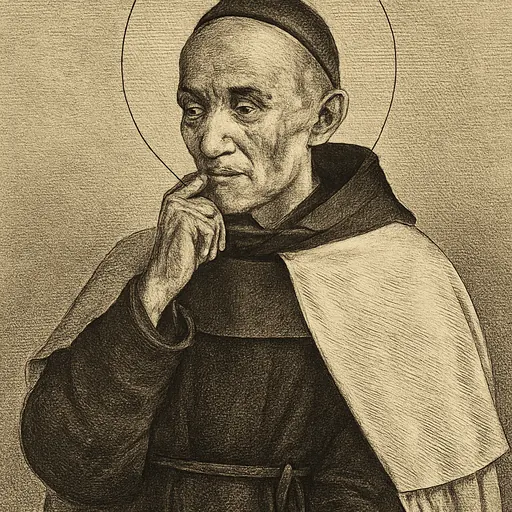
St. Raphael Kalinowski (1835–1907) was a Polish-Lithuanian military engineer from Vilnius who joined the January Uprising of 1863, was sentenced to death, and served ten years of hard labor in Siberia instead. He became a Discalced Carmelite at 42, a priest and a tireless confessor, and worked for unity with the Orthodox. John Paul II canonized him in 1991. His feast is November 19.
Who was St. Raphael Kalinowski?
St. Raphael Kalinowski was a soldier, an engineer, a political prisoner and finally a Carmelite friar. Born Józef Kalinowski in Vilnius in 1835, he took part in the Polish and Lithuanian rising of 1863 against the tsar, survived ten years of forced labor in Siberia, and entered the Discalced Carmelites at 42. As Father Raphael of St. Joseph he spent his last decades in the confessional, guiding souls and praying for the unity of Catholics and Orthodox.
Pope John Paul II, who had prayed at his tomb at Czerna as archbishop of Kraków in 1966, canonized him in Rome on November 17, 1991. Delegations from a newly free Poland and a newly free Lithuania stood together in St. Peter's for him.

The life of St. Raphael Kalinowski
Engineer of the tsar
His father, Andrew, taught mathematics at the Institute for Nobles in Vilnius, and Józef studied there with distinction. According to the Vatican's biography, he then went to the agricultural school at Hory-Horki and, from 1853 to 1857, to the Academy of Military Engineering in St. Petersburg, where he earned his engineering degree, the rank of lieutenant and a post teaching mathematics. In 1859 he worked on the design of the Kursk–Kiev–Odessa railway.
The rising of 1863
When the January Uprising broke out in 1863, he did not think it could succeed. John Paul II quoted his words at the canonization: "the homeland needs sweat, not blood." Yet when he saw others ready to give their lives, he felt bound to give his. He resigned his Russian commission and became head of the rebels' war department for the Vilnius region.
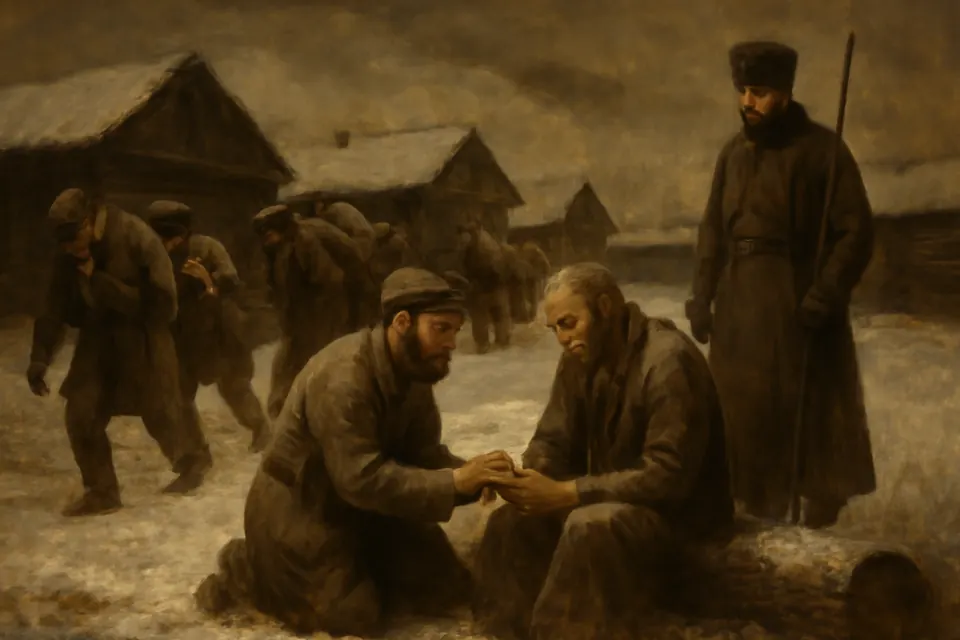
He was arrested on March 24, 1864, and condemned to death. The sentence was changed to ten years of hard labor in Siberia, in the region of Irkutsk in eastern Siberia. The Vatican biography says he taught his fellow exiles "the spirit of prayer, serenity and hope," and shared what little he had.
Tutor to a prince
Allowed home in 1874, he became tutor to the young Prince August Czartoryski, living mostly in Paris. His influence helped the prince find his own vocation; August joined the Salesians under St. John Bosco and is now Blessed August Czartoryski.
Carmelite and confessor
In 1877 Kalinowski entered the Discalced Carmelites at Graz, in Austria, and took the name Raphael of St. Joseph. He studied theology in Hungary and was ordained a priest at Czerna, near Kraków, on January 15, 1882. Over the next 25 years his superiors gave him one important office after another, and he founded the monastery at Wadowice, the hometown of the future John Paul II.
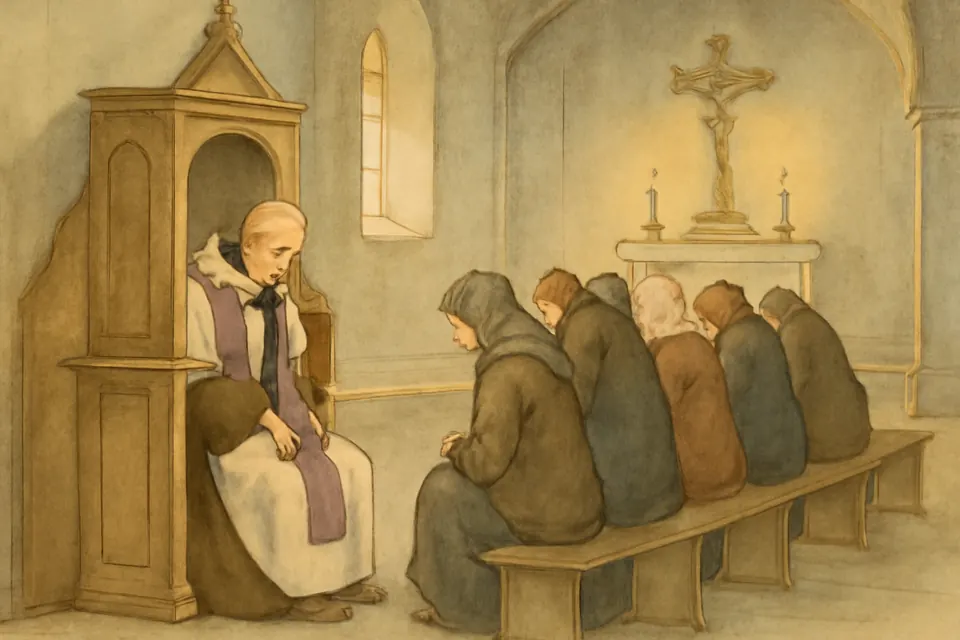
People came to him above all for confession. "Dedicava molte ore a questo umile apostolato," the pope said in his homily: he gave many hours to this humble apostolate. He also longed to see the Orthodox and Catholics reunited, trusting in the prayers of the Virgin Mary whom both honor, and he left that mission to his brothers and sisters in Carmel.
He died, worn out, at Wadowice on November 15, 1907, and was buried at Czerna.
At the canonization John Paul II recalled what he had said at that grave in 1966: Raphael "loved his earthly homeland so much that he exposed himself to death for its cause," and then gave his life again "for love of the eternal Homeland" by his vows in Carmel. The pope saw one road running through the whole life, from the barricades to the confessional, and compared it to the prophet Elijah's journey to the mountain of God.
Miracles and canonization
Both miracles in his cause are approved. The Vatican biography records that the healing of a priest, Father Mis, was approved before Pope John Paul II beatified Raphael at Kraków on June 22, 1983, together with Brother Albert Chmielowski, another veteran of 1863. In 1989 the Archdiocese of Kraków examined the extraordinary healing of a young child; the pope approved it as a miracle on July 10, 1990, and canonized Raphael the next year.
Why St. Raphael Kalinowski is a patron saint
Poles and Lithuanians invoke him for soldiers and officers, for exiles and prisoners of conscience, and for engineers, all of which he was. Carmelites honor him as one of their own, a son of St. Teresa and St. John of the Cross. See more on our patron saints page.
Symbols of St. Raphael Kalinowski in art
- Discalced Carmelite habit: brown habit and scapular, with the white mantle.
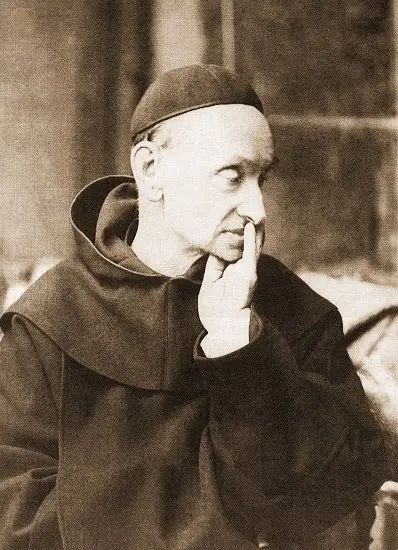
- Hand to the chin: taken from the well-known photograph of him lost in thought.
- Stole or confessional: his long hours hearing confessions.
- Rosary: his love for the Mother of God.
Because he lived in the age of photography, most paintings of him follow his photographs closely.
Feast day and shrine
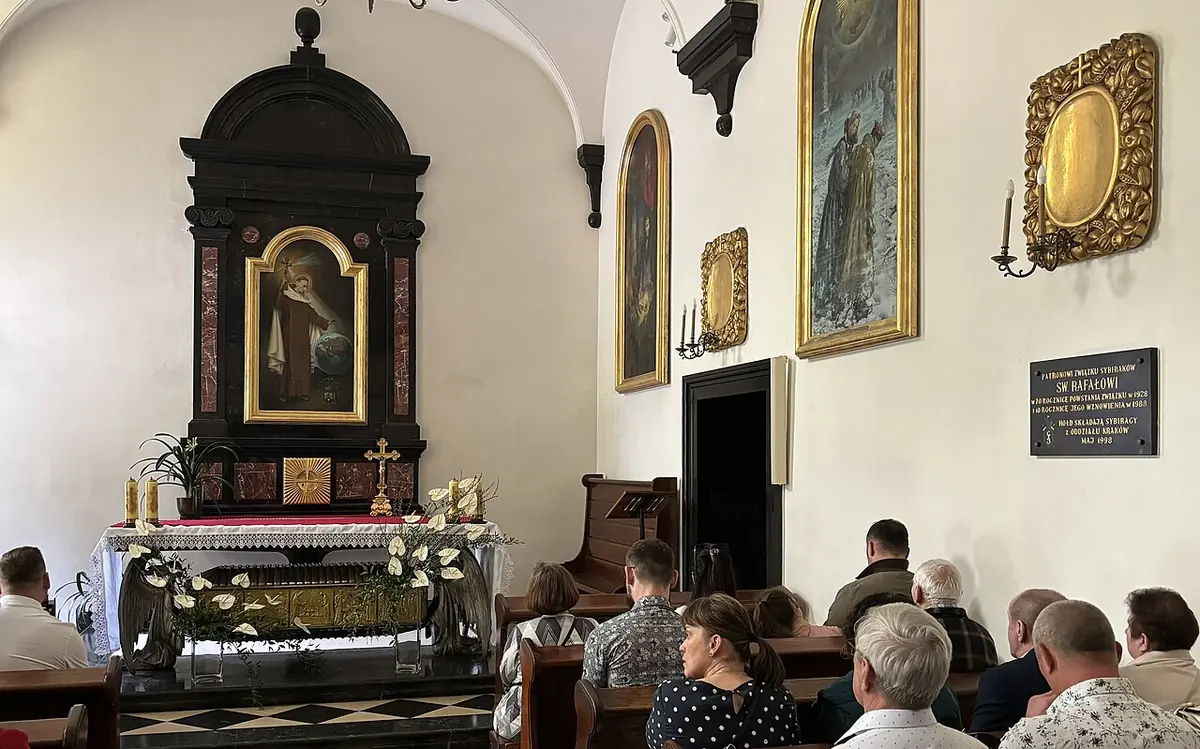
We keep his memorial on November 19. His relics rest in his chapel beside the Church of St. Elijah at the Carmelite monastery of Czerna, near Kraków. See other saints of November on our feast days page.
Prayer to St. Raphael Kalinowski
We know of no single traditional prayer to him in English. Let us ask him: St. Raphael Kalinowski, you served your country, bore prison and exile, and found Christ in all of it; pray for soldiers and prisoners, for all who hear confessions, and for the unity of Christ's Church.
Frequently asked questions
Who was St. Raphael Kalinowski?
Born Józef Kalinowski in Vilnius in 1835, he was an engineer and officer in the Russian army who led the insurgents' war department for the Vilnius region in 1863. After ten years of forced labor in Siberia he entered the Discalced Carmelites, taking the name Raphael of St. Joseph, and spent his last 25 years as a priest in Galicia.
When is the feast of St. Raphael Kalinowski?
The Discalced Carmelites keep his memorial on November 19. He died on November 15, 1907, at Wadowice.
What miracles were approved for St. Raphael Kalinowski?
The healing of a priest, Father Mis, was approved for his beatification in 1983. For his canonization, John Paul II approved the extraordinary healing of a young child on July 10, 1990, after an inquiry opened in Kraków in 1989.
Where is St. Raphael Kalinowski buried?
At the Carmelite monastery of Czerna, near Kraków. He was first buried in the monastery cemetery; his relics are now in a chapel dedicated to him beside the Church of St. Elijah.
Keep exploring
- Patron saint pages
- Soldiers
- Feast-day calendar
- Saints remembered in NovemberSaint of the day
- More
- Saints A to ZPatron saints A to ZExplore every section
Sources
- Raphael Kalinowski, O.C.D. (1835–1907): biography, Office of Liturgical Celebrations, vatican.va. Dates, studies, arrest of March 24, 1864, ordination at Czerna on January 15, 1882, burial, and the miracles approved for beatification and canonization
- 17 novembre 1991, Solenne rito di Canonizzazione del carmelitano scalzo Padre Raffaele Kalinowski, homily of John Paul II, vatican.va. "The homeland needs sweat, not blood"; his work for unity with the Orthodox; John Paul II at his tomb in 1966