St. Peter of Alexandria, Bishop and Martyr
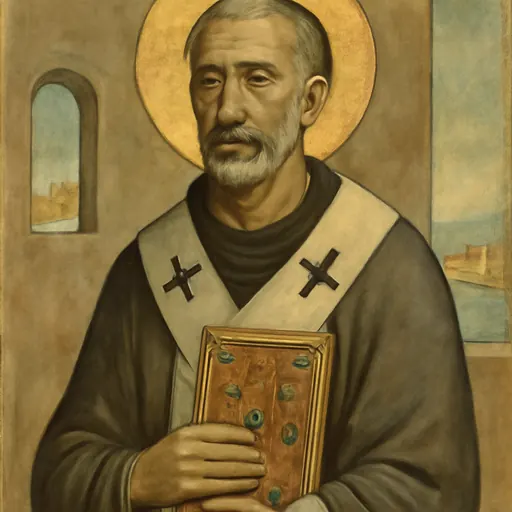
St. Peter of Alexandria was bishop of Alexandria in Egypt from 300 until he was beheaded in November 311, one of the last victims of the Great Persecution. He guided his people from hiding, wrote rules for welcoming back Christians who had lapsed, and excommunicated Arius. The Byzantine churches keep his feast on November 25, and the Roman Martyrology on November 26.
Who was St. Peter of Alexandria?
St. Peter of Alexandria was the bishop of Alexandria in Egypt from the year 300 until his martyrdom in November 311. He governed the second city of the Roman world through the worst persecution the early Church ever suffered, much of the time from hiding. Eusebius of Caesarea, who lived through the same years, called him "a divine example of a bishop on account of the excellence of his life and his study of the sacred Scriptures."
Three things are remembered of him. He wrote gentle but firm rules for receiving back Christians who had denied the faith under torture. He was the first bishop to excommunicate Arius. And he died as a martyr, so late in the persecution that the Coptic Church calls him the Seal of the Martyrs, the last of the great company of Alexandria.
The Byzantine churches keep his feast on November 25; the Roman Martyrology names him on November 26.
The life of St. Peter of Alexandria
Teacher and bishop
Peter was an Alexandrian. According to Philip of Side, a 5th-century historian quoted in the Catholic Encyclopedia, he once headed the famous catechetical school of the city, the school of Clement and Origen. He became bishop in 300, succeeding his teacher Theonas. As a theologian he pushed back against the more extreme ideas of Origen: fragments of his books defend the true resurrection of the body and teach that the soul does not exist before it is joined to the body. St. Cyril of Alexandria quoted his work on the divinity of Christ at the Council of Ephesus in 431.
The Great Persecution
In 303 the emperor Diocletian began the last and harshest persecution. Churches were destroyed, Scriptures burned, clergy jailed, and many Christians gave way under torture. Peter left Alexandria and went into hiding, writing to his people from wherever he was.
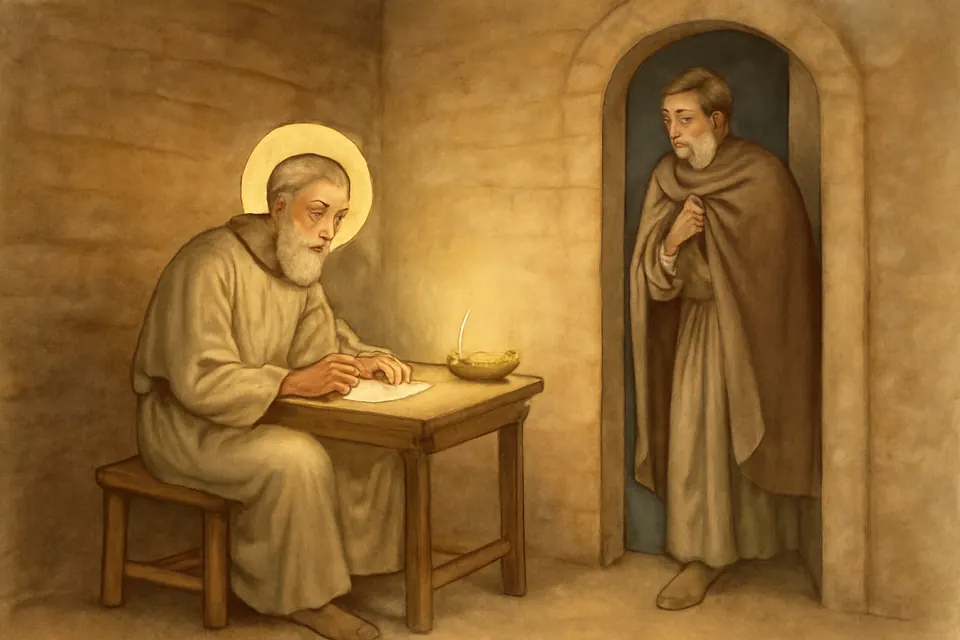
While he was away, Meletius, bishop of Lycopolis, began ordaining bishops and priests in Peter's territory without his leave. The three surviving accounts of the quarrel disagree in their details, but they agree that Peter excommunicated him. The Meletian schism troubled Egypt for decades and was still alive in the time of St. Athanasius.
The canons on the lapsed
In the third year of the persecution, probably at Easter of 306, Peter wrote the fourteen canons that are his best-known work. They deal with Christians who had sacrificed to the gods, sorting each case with care: those who gave in after long torture, those who gave in from fear before any torture, those who bribed their way out or sent a slave to sacrifice in their place. Each has its own penance and path back to Communion. The canons are merciful without pretending that nothing happened. The Council in Trullo of 692 made them part of the canon law of the Eastern Church, and they are still read there.
Arius
Arius, a priest of Alexandria, first sided with Meletius. Peter excommunicated him. The Orthodox life tells that Arius later sent friends to beg for his pardon and that Peter refused, seeing that the repentance was false. His teaching that the Son of God is a creature broke out in full a few years later, under Peter's successors, until the Council of Nicaea condemned it in 325.
Martyrdom
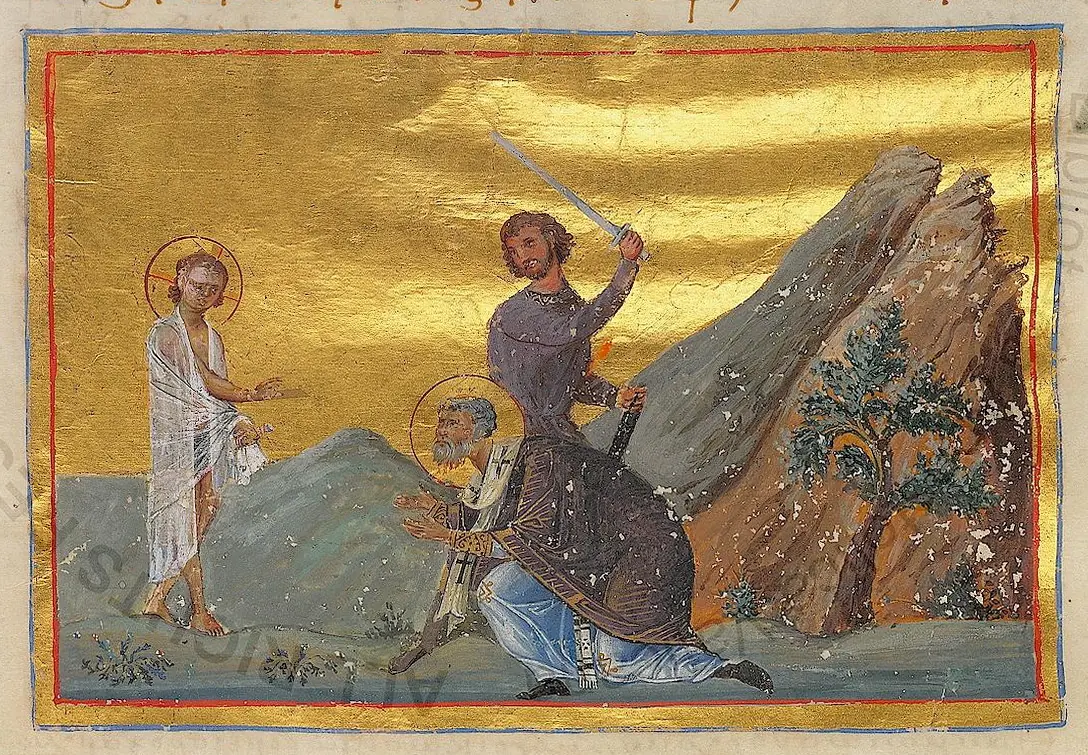
In 311 the persecution flared again under Maximinus Daia. Eusebius writes that Peter was "seized for no cause and quite unexpectedly" and beheaded at once, and that many bishops of Egypt died with him. The Roman Martyrology names four of them on the same day: Phileas, Hesychius, Pachomius and Theodore.
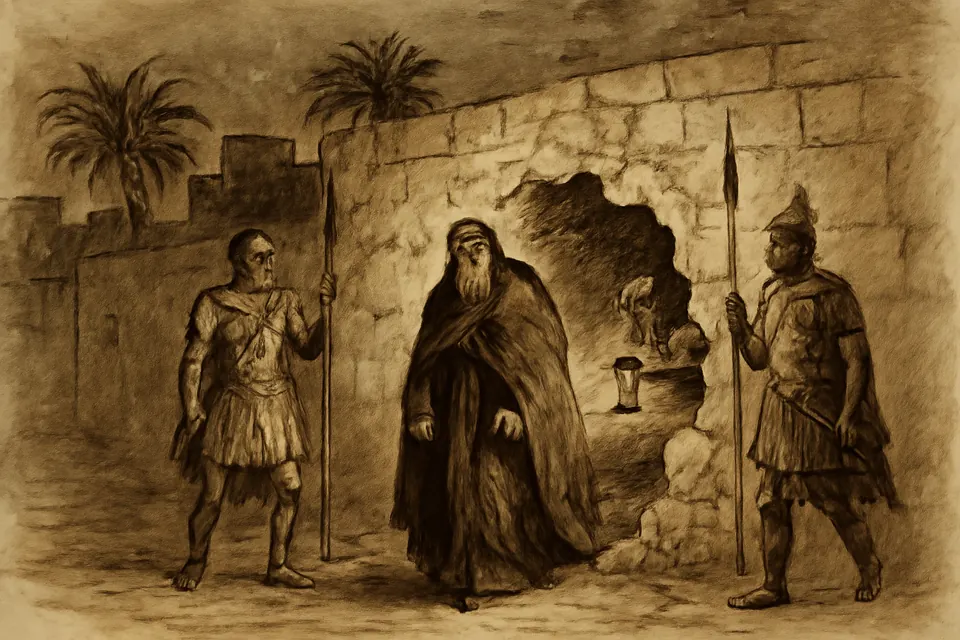
The Orthodox life adds the details Alexandrians remembered. A crowd gathered at the prison to protect their bishop. To spare them bloodshed, Peter asked the soldiers to break an opening in the back wall and take him out secretly by night. He was beheaded outside the city, at the place where tradition says St. Mark had been martyred.
In the morning the faithful carried his body to the church, dressed it in the bishop's vestments, and set it on the bishop's throne. Peter had never sat there in life; he used a footstool instead. He once explained, the story goes, that he saw a heavenly light resting on the throne and did not dare to sit in it.
The vision of St. Peter of Alexandria
The most famous story about him comes from his Acts, a much later text that the Catholic Encyclopedia says has no historical value. Christ appeared to Peter as a child of about twelve, wearing a tunic torn from top to bottom. "Lord, who has torn your garment?" Peter asked. Christ answered that Arius had torn it by dividing the people he had redeemed, and warned Peter not to receive him back.
This is a traditional story. History and legend agree on the point it makes: Peter saw early how much harm Arius would do to the unity of the Church.
Miracles
No miracles from Peter's life are recorded by contemporary writers. The vision of Christ and the light on the bishop's throne are traditional, found in later lives and in the Orthodox synaxarion. We honor Peter above all for his martyrdom and his care for the fallen.
Symbols of St. Peter of Alexandria in art
In Byzantine icons Peter is a bishop with a gray beard, wearing the white omophorion marked with black crosses and holding a Gospel book or scroll. His most common scene is the vision: Peter with raised hands before the child Christ, who stands on an altar in a tunic torn down the middle. Often Arius appears in a corner, falling or swallowed by a dark pit. Western prints show the same meeting more simply, as in Jacques Callot's little etching of 1636. In the Menologion of Basil II he kneels for the executioner's sword.

Feast day and prayer
The Orthodox and Byzantine Catholic churches keep his feast on November 25, together with St. Clement of Rome. The Roman Martyrology lists him on November 26: "At Alexandria, the birthday of St. Peter, bishop of that city, adorned with all virtues." See the other saints of these days on our feast days calendar.
The troparion sung for both hierarchs on November 25, in the translation of the Orthodox Church in America, is a fitting prayer:
O God of our Fathers, / always act with kindness towards us; / take not Your mercy from us, / but guide our lives in peace / through the prayers of the hierarchs Clement and Peter.
Let us ask St. Peter of Alexandria to pray for every bishop who must guard his people in a time of persecution, and for all who have fallen and want to come home to the Church. Holy hieromartyr Peter, pray to God for us.
Frequently asked questions
Who was St. Peter of Alexandria?
The bishop of Alexandria from 300 to 311, earlier a teacher in the city's catechetical school. He led the Church through the persecution of Diocletian and his successors and was beheaded in 311. Eusebius, who lived at the same time, called him "a divine example of a bishop."
When is the feast of St. Peter of Alexandria?
November 25 in the Byzantine calendar (shared with St. Clement of Rome) and November 26 in the Roman Martyrology. The Coptic Orthodox Church keeps him in its own calendar in early December.
What did St. Peter of Alexandria have to do with Arius?
He excommunicated Arius, the priest whose later teaching denied that Christ is fully God. Arius's heresy broke out in full under Peter's successors, and the Council of Nicaea condemned it in 325.
What is the vision of St. Peter of Alexandria?
A story in his late Acts tells that Christ appeared to him as a child in a torn robe and said Arius had torn it by dividing his people. The Catholic Encyclopedia notes that the Acts are too late to be historical, but the vision became a favorite subject of Byzantine icons.
Keep exploring
Sources
- Eusebius, Church History, Book IX, chapter 6 (New Advent). A contemporary on his sudden arrest and beheading, and the words quoted on this page
- Peter of Alexandria, Catholic Encyclopedia (1911), New Advent. The Meletian schism, the fourteen canons ratified in Trullo, the late date of the Acts and the fragments of his writings
- Hieromartyr Peter, Archbishop of Alexandria, Orthodox Church in America. The Orthodox life: the prison wall, his death where St. Mark died, the empty throne
- Hieromartyr Peter, Archbishop of Alexandria: Troparion and Kontakion, Orthodox Church in America. Text of the troparion quoted on this page
- The Roman Martyrology (Baltimore: John Murphy, 1897), Internet Archive. November 26: "At Alexandria, the birthday of St. Peter, bishop of that city, adorned with all virtues"