Blessed Isaac of Stella
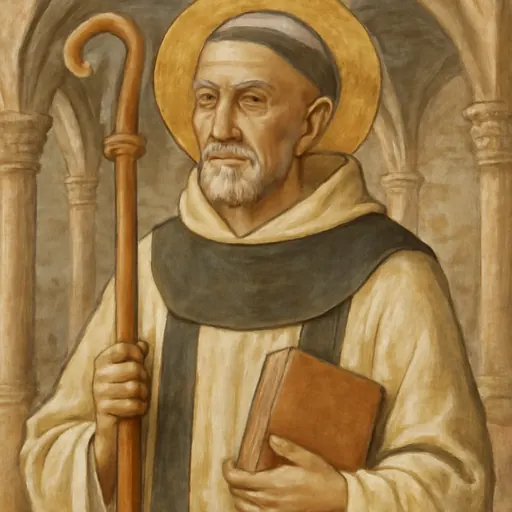
Blessed Isaac of Stella (about 1100–about 1169) was an English-born monk who studied in the schools of France, became a Cistercian in the age of St. Bernard, and from 1147 was abbot of L'Étoile (Stella), a small abbey near Poitiers. His 55 sermons and his letter on the soul make him one of the great spiritual writers of the twelfth century, and the Church reads his sermon on Mary and the Church in the Liturgy of the Hours. We remember him on November 13, the feast of all Cistercian saints.
Who was Blessed Isaac of Stella?
Blessed Isaac of Stella was a twelfth-century Cistercian abbot and one of the finest minds of the monastic golden age that produced St. Bernard of Clairvaux and St. Aelred of Rievaulx. Born in England, trained in the new schools of France, he gave up the academic life for the cloister and spent more than twenty years as abbot of L'Étoile, in Latin Stella, a small abbey near Poitiers. We know little of his life, but we have his sermons, and the Church still prays with them. The Liturgy of the Hours calls him "Blessed Isaac of Stella, abbot." We remember him on November 13, the feast of all the saints of the Cistercian Order.
He was born in England around 1100 and came to France to study in one of the cathedral schools that were then giving birth to scholastic theology; which one is not known. He then became a monk, perhaps at Pontigny, one of the four eldest daughters of Cîteaux, perhaps at L'Étoile itself.

Abbot of L'Étoile
L'Étoile had been a little-known Benedictine house until it joined the Cistercian family in 1145. About two years later the monks elected Isaac abbot, and he held the office for more than two decades. As abbot he preached to his monks on the great feasts, as the statutes of the Order required, and those sermons are what he left us.
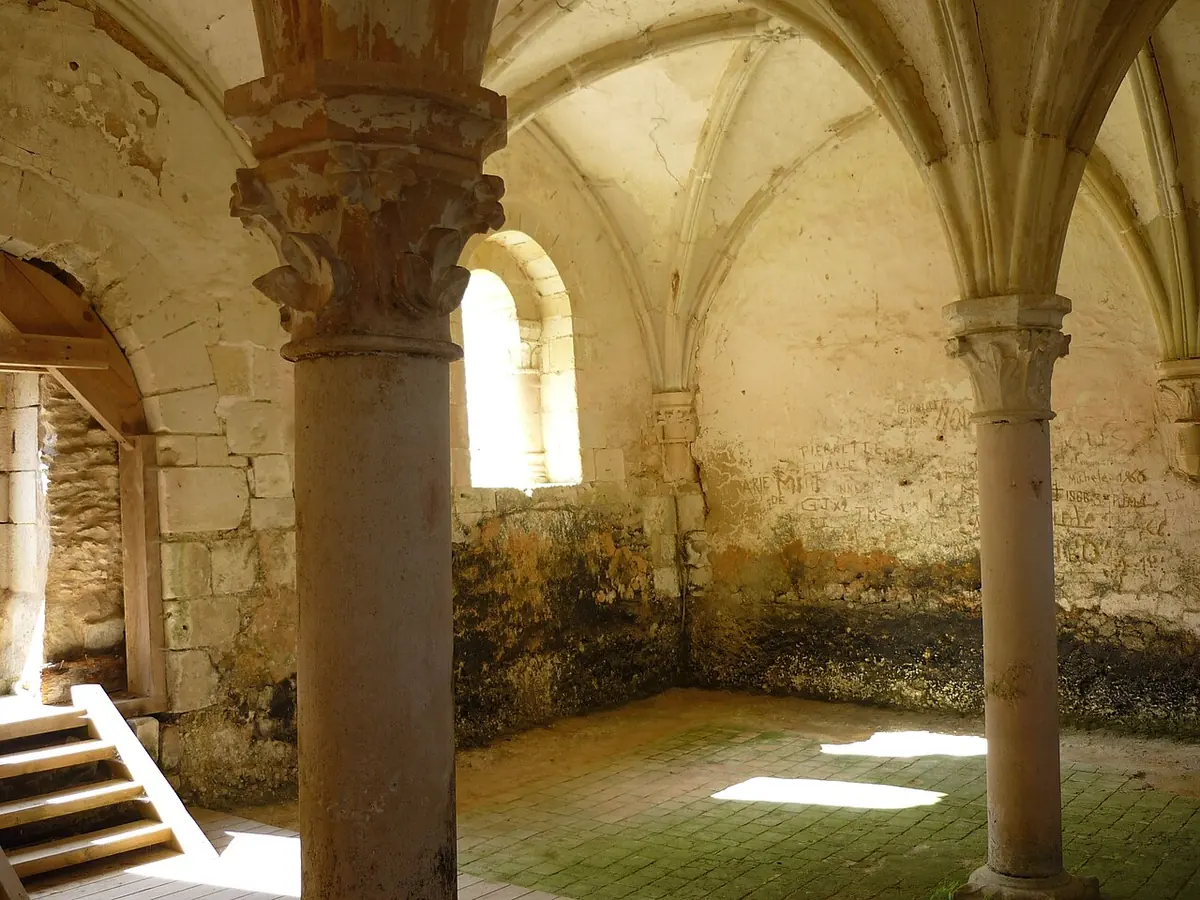
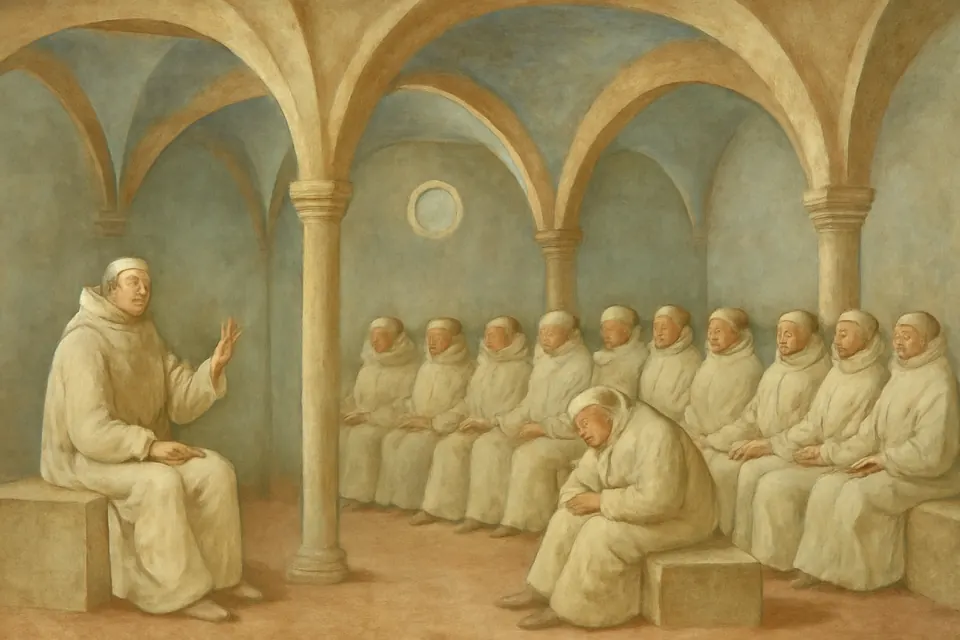
His preaching shows a man who had read deeply in St. Augustine, and who could lead his monks from the parable of the sower to a vision of God beyond all being, then turn and challenge monks whose renunciation of self-will had stayed on the surface. Patrick O'Connell notes the vivid touches: the monks' weariness after a day of work, or the promise of a short sermon to make up for yesterday's long one. The French theologian Louis Bouyer wrote that Isaac, "more than any of his contemporaries, gives us the impression of being remarkably alive."
The island of Ré
At some point, most likely in the late 1160s, Isaac left L'Étoile with a few companions to found a new house on the Île de Ré, off the Atlantic coast near La Rochelle, together with the abbot of nearby Trizay. They lived there in great poverty. The new house did not stay under his direction for long, and the details are uncertain. One of his sermon fragments, describing his return from a journey he calls an exile, may refer to this time. He seems to have come back to L'Étoile, and he probably died around 1169, the year a new abbot of Stella is first mentioned.

His writings
Isaac left 55 sermons and fragments of three more, a letter on the soul addressed to Alcher of Clairvaux, and a letter on the meaning of the canon of the Mass to the bishop of Poitiers. His sermons begin, unusually, with a series for All Saints on the Beatitudes, a map of the whole spiritual life. Others treat Christ's temptation in the desert, the Canaanite woman, Easter, and the Assumption, where he praised Bernard of Clairvaux, whose presence "sprinkled everyone with the delights with which he always abounded."

His best-known page is the one the Church reads in Advent, from his Sermon 51 for the Assumption:
The whole Christ and the unique Christ – the body and the head – are one: one because born of the same God in heaven, and of the same mother on earth. They are many sons, yet one son. Head and members are one son, yet many sons; in the same way, Mary and the Church are one mother, yet more than one mother; one virgin, yet more than one virgin.
Is Isaac of Stella "Blessed"?
No formal beatification process is recorded for him. The title is one of honor given him in Cistercian tradition, and the Church's own Liturgy of the Hours uses it when it reads his sermon on Saturday of the second week of Advent.
Symbols of Blessed Isaac of Stella in art
No old portrait of Isaac survives, and he is rarely painted. When he is shown, it is as a Cistercian abbot. Look for:
- The white Cistercian habit: the undyed wool of the monks of Cîteaux.
- An abbot's staff: his office at L'Étoile.
- A book: his sermons and letters.
Feast day and prayer
He has no feast of his own; we remember him on November 13, with all the saints of the Cistercian Order, and the Church hears his voice every year on Saturday of the second week of Advent. See also the feast day calendar.
We know of no traditional prayer to Blessed Isaac. Let us pray with his own words of Advent, asking that every Christian, like Mary and like the Church, may bear Christ into the world. Blessed Isaac of Stella, pray for us.
Frequently asked questions
Who was Isaac of Stella?
An English-born theologian and Cistercian monk of the twelfth century who became abbot of L'Étoile, near Poitiers, in 1147. He left 55 sermons, a letter on the soul to Alcher of Clairvaux and a letter on the Mass to the bishop of Poitiers. He spent some years founding a poor hermitage-monastery on the Île de Ré and died around 1169.
Is Isaac of Stella a saint?
He has never been beatified by a formal process, but the Church's Liturgy of the Hours calls him "Blessed Isaac of Stella, abbot" when it reads his sermons, and Cistercian tradition honors him as blessed.
Where is Isaac of Stella read in the Liturgy of the Hours?
His Sermon 51, on Mary and the Church, is the second reading of the Office of Readings on Saturday of the second week of Advent.
When is the feast of Blessed Isaac of Stella?
He has no feast of his own. We list him on November 13, when the Cistercian Order keeps the feast of all its saints.
Keep exploring
Sources
- Office of Readings, Saturday of the Second Week of Advent: from a sermon by Blessed Isaac of Stella, abbot (Sermo 51). The text quoted here and the title "Blessed" in the Liturgy of the Hours
- Patrick F. O'Connell, review of Isaac of Stella, Sermons on the Christian Year, vol. 2 (Catholic Books Review). His life, the date of his death, the Île de Ré foundation, the structure and themes of the sermons, and Bouyer's judgment of him