St. Nilus the Myrrh-streamer, Hermit of Mount Athos

St. Nilus the Myrrh-streamer was a hieromonk who lived as a hermit in a cave on Mount Athos and died in 1651. After his death myrrh flowed from his grave and healed the sick, which gave him his name. His relics, found in 1815, rest at the Great Lavra. He is honored on November 12 and May 7.
Who was St. Nilus the Myrrh-streamer?
St. Nilus the Myrrh-streamer (or Myrrh-gusher) was a Greek hieromonk and hermit of Mount Athos who died in 1651. He spent his last years alone in a cave on the cliffs of the Holy Mountain, in a place, as the Orthodox Church in America's life puts it, "almost inaccessible for any living thing." After his death, a fragrant, healing myrrh flowed from his grave, and that gave him his name.
He is not the 5th-century St. Nilus of Sinai, although the Orthodox commemorate both on November 12. The finding of his relics in 1815 is kept on May 7.
The life of St. Nilus
From the Peloponnese to the Holy Mountain
The OCA life says Nilus was born in Greece, in a village named for St. Peter in the diocese of Zakonia (Tsakonia), in the eastern Peloponnese. He was raised by his uncle, the hieromonk Macarius. When he came of age he was tonsured a monk and ordained, first a deacon and then a priest.
Wanting a harder struggle, uncle and nephew went together to Mount Athos and lived as ascetics at a place called the Holy Rocks. When Macarius died, Nilus, "aflame with zeal for even more intense spiritual efforts," went off alone to a still more remote spot on the cliffs. There he prayed until his death in 1651.
The miracles of St. Nilus
- The myrrh from his grave: traditional. Before he died, Nilus told his disciples to bury him in a small cave below his cell and forbade anyone to disturb his body. The OCA life says a fragrant myrrh then began to flow through a small opening in the rock, down the cliff and into the sea. Word spread, ships came to collect it, and "many people were healed of their illnesses."
- The monk who tried to dig him up: traditional. Two monks went looking for his relics without permission. A falling rock crushed one monk's foot, and while his companion went for help, St. Nilus appeared, rebuked him gently and healed his leg. In the OCA's telling he said: "Take care in future that you do not attempt a task beyond your ability, and without the will of God." After that no one dared disturb the grave.
- The appearances of 1815: reported. A monk known as "Prisoner," troubled by a demon and by a hernia, said St. Nilus appeared to him several times and healed him. The saint told him to make a path to the cave and to celebrate the Liturgy in the cave church Nilus had built.

The finding of the relics
When the monks began digging foundations for a new church in his honor, they found his grave. "An ineffable fragrance came forth" from the relics, says the OCA, on May 7, 1815. The fathers of the Great Lavra took the relics to their monastery and left a portion of his jaw at the cave for pilgrims to venerate.

The prophecy of St. Nilus
During the appearances of 1815, the monk reported, St. Nilus also spoke about the future. He foretold the Greek Revolution of 1821 and dangers for the Holy Mountain, and he described a later age in detail. The OCA summarizes it: he warned that people's minds "would be clouded by carnal passions," that "dishonor and lawlessness will grow stronger," and that pastors would grow vain while few would remain to guide the faithful. Readers have also found in it hints of the telephone, the airplane and the submarine.
These words come down to us through the monk's account of his visions. Many Orthodox read them with great seriousness. They are a private revelation; we take from them what agrees with the Gospel, a call to watchfulness and repentance, and leave the rest to God.
Symbols of St. Nilus in icons
St. Nilus is painted as an aged hermit with a long white beard, in the black monastic schema and cowl of an Athonite great-schema monk. He usually holds an unrolled scroll with words of counsel. Some icons show the cave in the cliff and myrrh running from it to the sea, or a small flask of myrrh. To tell him apart from St. Nilus of Sinai, look for the setting: Athonite cliffs and sea, not the Sinai desert. See more on our patron saints page.
Feast day and relics
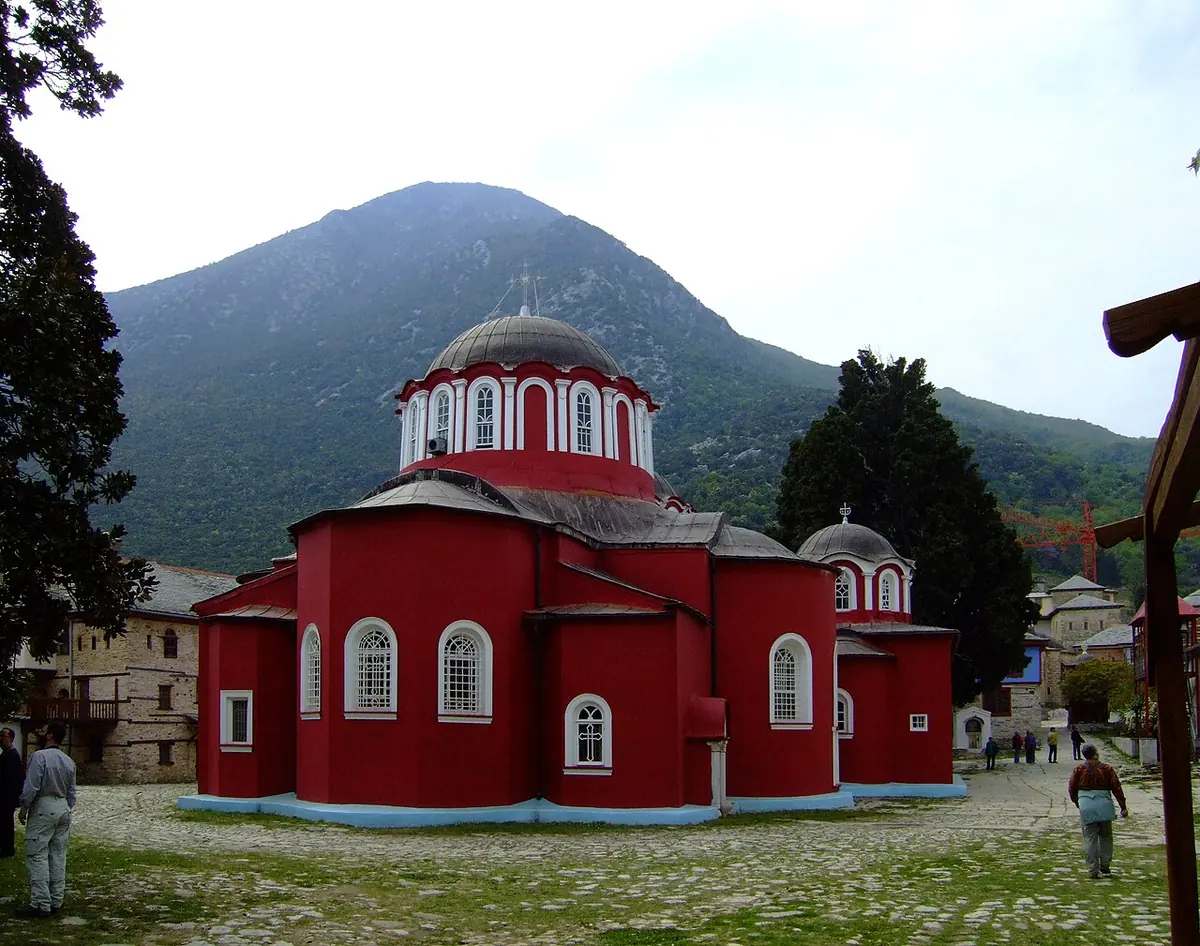
The Orthodox Church honors him on November 12, and Mount Athos, on the old calendar, on November 25. The finding of his relics is kept on May 7. His relics rest at the Great Lavra, founded by St. Athanasius the Athonite. See more saints of November on our feast days page.
Where the relics of St. Nilus the Myrrh-streamer are kept: see them on the relics map →
Troparion of St. Nilus
For both of his feasts the Orthodox Church sings the troparion for holy monastic fathers (Tone 8), which praises the monk's tears and longing for God and the miracles that lit up the whole world, and asks him to pray for our souls. The OCA prints the full text on its website.
Frequently asked questions
Who was St. Nilus the Myrrh-streamer?
A Greek Orthodox priest-monk from the Peloponnese who, after years of monastic life with his uncle, lived alone in a nearly inaccessible place on the cliffs of Mount Athos. He died in 1651, and the myrrh that flowed from his grave made him famous.
Is he the same as St. Nilus of Sinai?
No. St. Nilus of Sinai was a 5th-century ascetic and writer. The Orthodox commemorate both on November 12, which often causes confusion. St. Nilus of Sora and St. Nilus the Younger are also different saints.
What is the prophecy of St. Nilus?
In 1815 the monk said St. Nilus appeared to him and spoke about the future of the world and the Church. The texts describe a time of moral decline, careless pastors and strange inventions. They are a private revelation, not doctrine.
When is the feast of St. Nilus the Myrrh-streamer?
November 12 (November 25 on Mount Athos, which keeps the old calendar), and May 7 for the uncovering of his relics in 1815.
Keep exploring
Sources
- Orthodox Church in America: Venerable Nilus the Myrrhgusher of Mount Athos, November 12. His birth, his uncle Macarius, the Holy Rocks, his death in 1651 and the prophecy
- Orthodox Church in America: Uncovering of the Relics of Venerable Nilus the Myrrhgusher, May 7. The myrrh and the ships, the healed monk, the appearances of 1815, the finding of the relics and their transfer to the Lavra
- Orthodox Church in America: Venerable Nilus the Myrrhgusher, Troparion and Kontakion