Blessed Maria Corsini Beltrame Quattrocchi, Wife, Mother and Writer
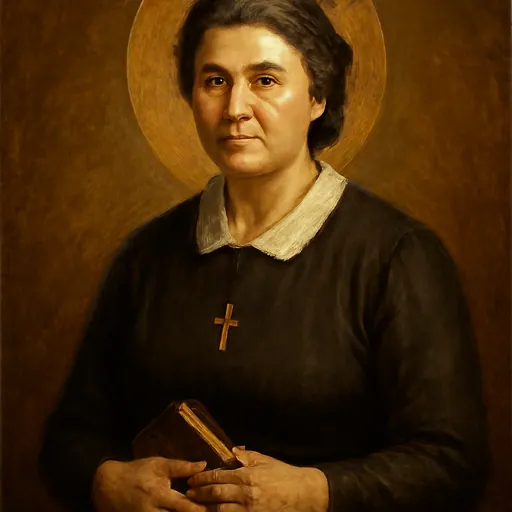
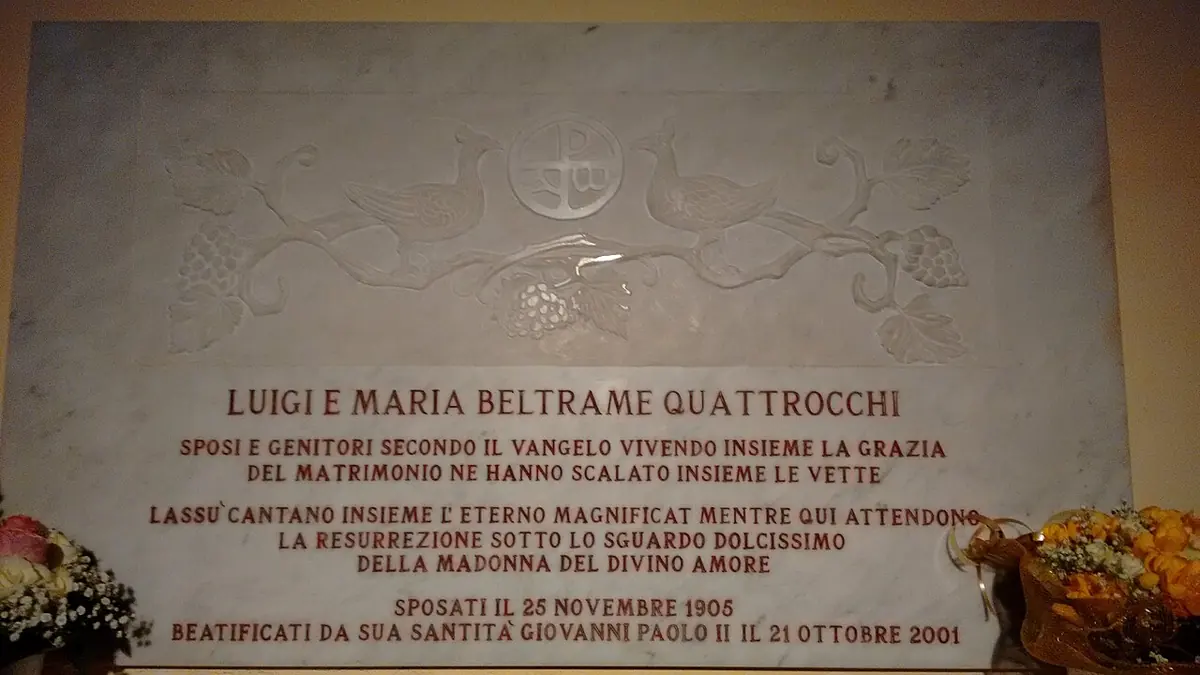
Blessed Maria Corsini (1884–1965) was a Roman wife, mother of four, writer on education and volunteer Red Cross nurse. With her husband Luigi Beltrame Quattrocchi she was beatified by Pope John Paul II on October 21, 2001, the first married couple ever beatified together. Their shared feast is November 25, their wedding anniversary.
Who was Blessed Maria Corsini?
Blessed Maria Corsini was a wife and mother in Rome who, with her husband Luigi Beltrame Quattrocchi, became the first married couple the Church ever beatified together. She raised four children, nursed wounded soldiers, wrote books for Catholic mothers and young women, and prayed the rosary with her family every evening. Pope John Paul II beatified Maria and Luigi in St. Peter's Basilica on October 21, 2001, and said of them that they "lived an ordinary life in an extraordinary way."
The life of Blessed Maria Corsini
A girl from Florence
Maria Corsini was born in Florence on June 24, 1884, to Angiolo Corsini, an army officer, and Giulia Salvi. Her father's postings moved the family to Pistoia, back to Florence, then to Arezzo, where she was confirmed, and finally to Rome in 1893. She studied at a commercial school for women, though her real love was literature; she read widely in Italian, French and English.
Marriage to Luigi
In 1901 she met Luigi Beltrame Quattrocchi, a young lawyer from Catania raised in Rome. Their friendship grew through letters about books, and they were married on November 25, 1905, in the Basilica of St. Mary Major. Luigi rose to become an honorary deputy attorney general of the Italian state.

Three children came quickly: Filippo in 1906, Stefania in 1908 and Cesare in 1909. In 1913 Maria was pregnant again when a leading gynecologist found a complete placenta previa. He told the couple that unless the pregnancy were ended, Maria had only a slim chance of living. Together they said no. For three months her condition worsened. In the eighth month the director of the gynecological clinic at Rome's Policlinico took over, and on April 6, 1914, their daughter Enrichetta was born. Mother and child both lived.
A home of prayer and open doors
Their home was ordinary and full. Luigi and Maria went to Mass every morning, and the family prayed the rosary together at night. John Paul II quoted Maria's own memoir at the beatification: "We brought them up in the faith, so that they might know and love God."
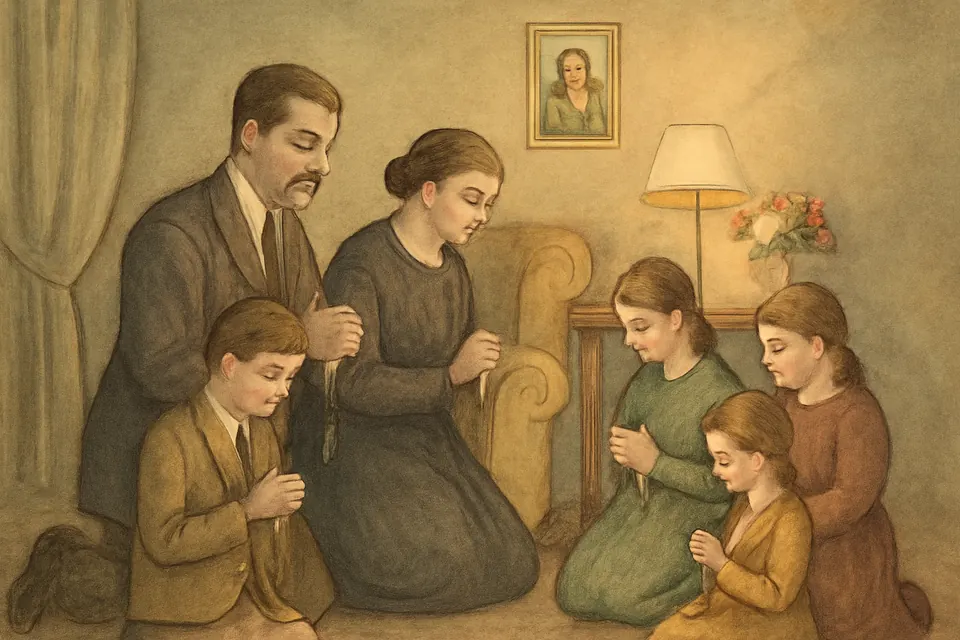
They kept an open door. In 1918 they took in a newborn girl orphaned by the Spanish flu, and Luigi did the night feedings. During the German occupation of Rome in World War II, their apartment sheltered Jews, partisans and others in hiding, sometimes for days.
In 1922 their three oldest children each felt God's call. Filippo became Don Tarcisio, a priest; Stefania became Sister Cecilia, a Benedictine nun; Cesare became Father Paolino, a Trappist monk. The parents gave them up with grief and gratitude, and Maria later wrote that their absence drew husband and wife even closer.
Nurse, teacher and writer
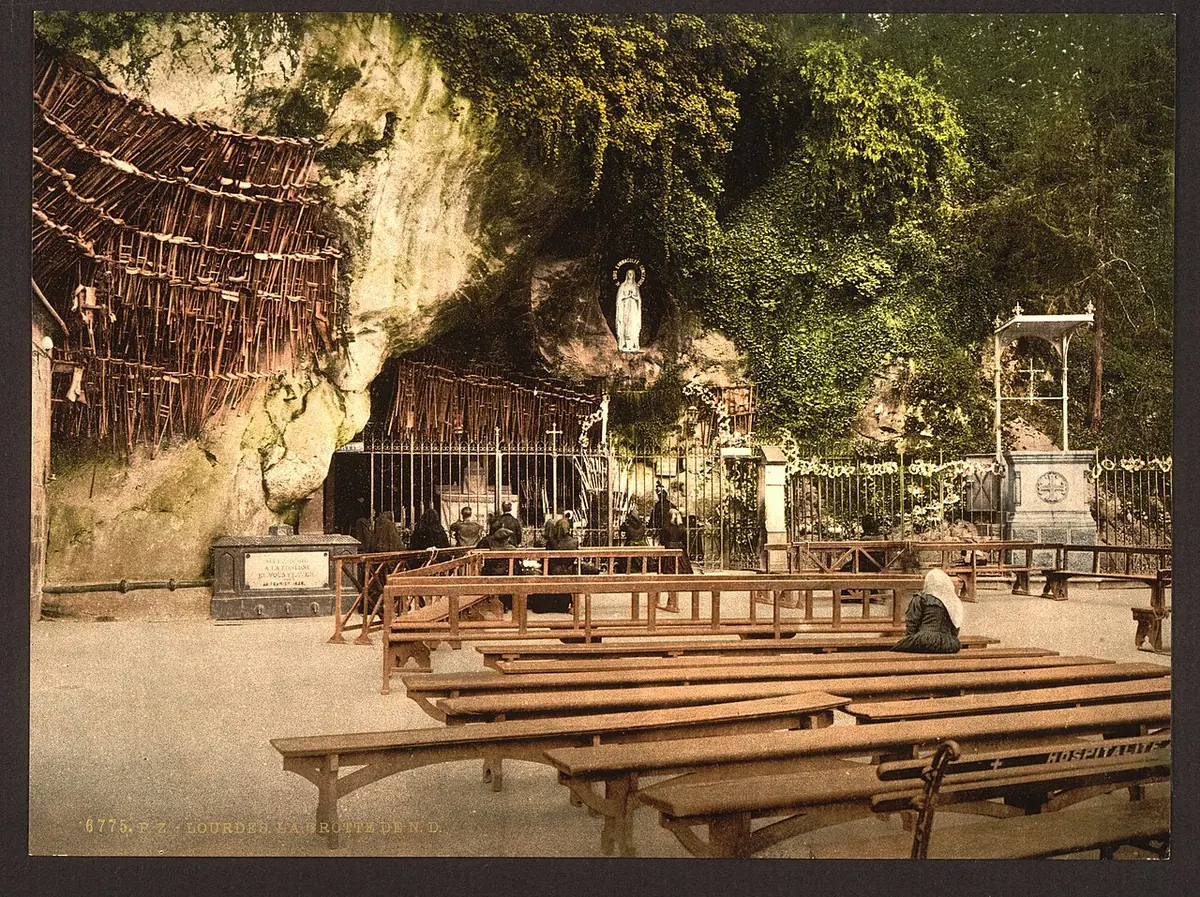
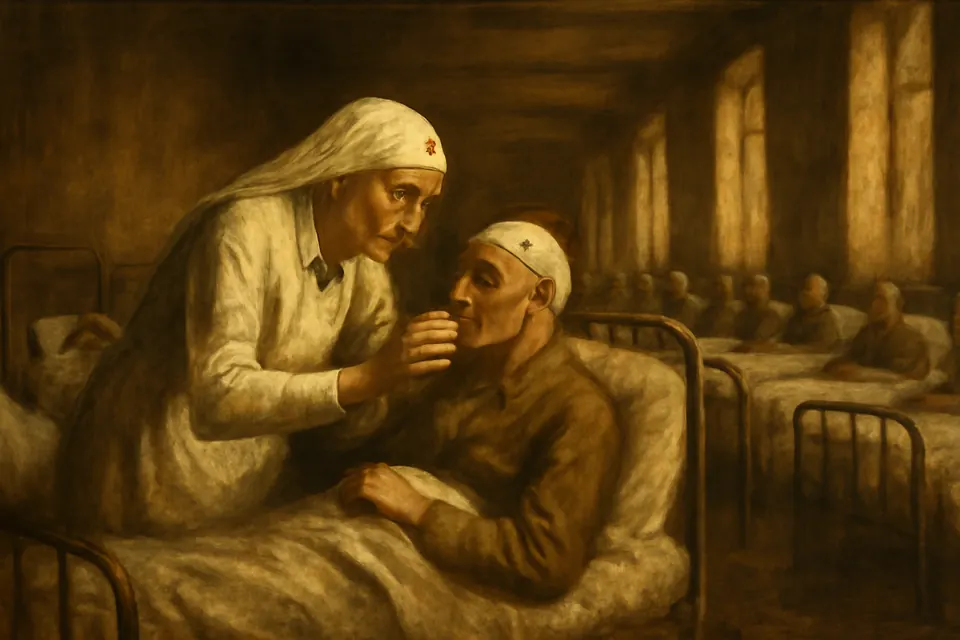
After Enrichetta's birth Maria threw herself into the apostolate. She taught catechism to women who had fled the Avezzano earthquake, became a Franciscan tertiary in 1917, and from 1920 served on the central council of the women's branch of Catholic Action. From 1936 she rode the UNITALSI trains as a nurse, caring for the sick on pilgrimage to Lourdes and Loreto. She finished a Red Cross nursing course in 1937 and served in Rome's military hospitals through the war. In 1945 she worked at the relief post at Termini station, welcoming refugees.
She also wrote. Her books include Voce di madre (1924), drawn from letters with her children, Il libro della giovane (1936) for young women, Mamma vera (1940), and L'ordito e la trama (1953), a memoir of her marriage written after Luigi's death. The title means "The warp and the weft," the two sets of threads that make one cloth.
Widow and grandmother in faith
Luigi died of a heart attack on November 9, 1951. Maria lived fourteen more years, writing and praying. She died on August 26, 1965, at eighty-one, at "La Madonnina," the little villa Luigi had built for her at Serravalle di Bibbiena in the Tuscan hills.
Beatification and miracles
The cause of Luigi and Maria opened in Rome in 1994. On July 7, 2001, decrees recognized their heroic virtues and a miracle, an approved healing attributed to their joint intercession. The beatification on October 21, 2001, fell on the twentieth anniversary of Familiaris consortio, John Paul II's letter on the family, and three of their children, by then old men and women, were present in the basilica. A diocesan inquiry into a possible second miracle for their canonization was held in 2014; until the Church rules on it, favors attributed to them are reported graces.
Symbols of Blessed Maria Corsini in art
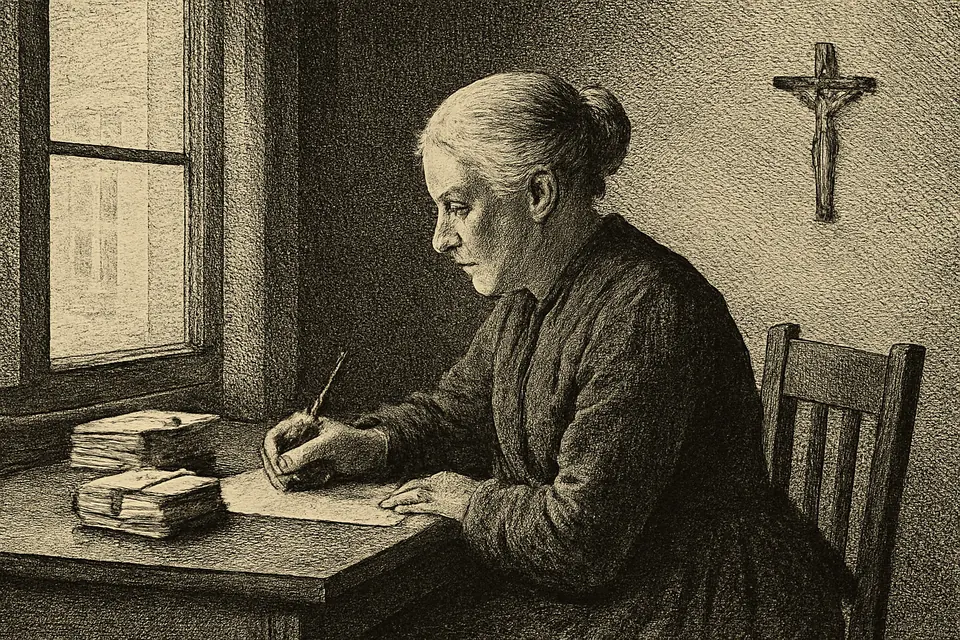
Maria lived in the age of photography, and her images show her as photographs did: a dignified Italian woman in the plain clothes of the early 1900s, often beside Luigi. Common attributes:
- Her husband at her side: she is almost always shown with Luigi, because the Church raised them up together.
- Children: four children, sometimes in priestly or religious dress, for the vocations that grew in their home.
- Rosary: for the family rosary every evening.
- Red Cross veil: for her years as a volunteer nurse.
- Book and pen: for her writing on education and family life.
Feast day and where she is honored
We keep the memorial of Blesseds Luigi and Maria on November 25, the day they married. The Pope chose their wedding day rather than the days they died, so the feast honors their marriage itself. They are buried together in the crypt of the Sanctuary of Our Lady of Divine Love in Rome, a shrine much loved by Roman families. See our pages on the patron saints of marriage and the patron saints of families.

Praying with Blessed Maria Corsini
We have not found an official English prayer to Blessed Maria, so we do not print one. Her way of prayer was simple: Mass together in the morning, the rosary together at night. Let us ask her intercession for husbands and wives, for mothers facing a frightening pregnancy, for parents whose children are discerning a vocation, and for families that open their doors to strangers. Blessed Maria Corsini and Blessed Luigi, pray for us.
Frequently asked questions
Who was Blessed Maria Corsini?
Maria Corsini, born in Florence in 1884, married the lawyer Luigi Beltrame Quattrocchi in Rome in 1905. They raised four children, two of whom became priests and one a nun, and she wrote books on Christian family life, nursed with the Red Cross and worked in Catholic Action. She died in 1965.
When is the feast of Blessed Maria Corsini?
November 25, the anniversary of her wedding in 1905. She shares the memorial with her husband, Blessed Luigi Beltrame Quattrocchi.
Why were Luigi and Maria Beltrame Quattrocchi beatified together?
Because the Church recognized their holiness as a couple. John Paul II said they 'lived an ordinary life in an extraordinary way' and proposed their marriage itself as a path to holiness.
Where are Luigi and Maria Beltrame Quattrocchi buried?
Together, in the crypt of the Sanctuary of Our Lady of Divine Love on the southern edge of Rome.
Keep exploring
Sources
- 21 October 2001: Beatification of Luigi Beltrame Quattrocchi and Maria Corsini, Homily of John Paul II. Maria's line from L'Ordito e la trama, daily Mass and the evening rosary, and 'an ordinary life in an extraordinary way'
- La Biografia di Maria, AMarLui – Associazione Luigi e Maria Beltrame Quattrocchi. Her family and moves, the 1913–1914 pregnancy, her Franciscan profession, Red Cross and UNITALSI service, her books, and her death on August 26, 1965
- Una Storia Insieme, AMarLui – Associazione Luigi e Maria Beltrame Quattrocchi. The orphan they took in in 1918, the refugees they hid in wartime, and the choice of the wedding day as their feast
- Luigi Beltrame Quattrocchi e Maria Corsini, biografia (Holy See, Italian). Engagement and wedding dates, her nursing course in 1937 and the post at Termini station in 1945
- Hagiography Circle: 1965. Dates of the cause: opened 1994, heroic virtues and miracle decrees July 7, 2001, inquiry into a second miracle in 2014