St. Philaret Drozdov, Metropolitan of Moscow
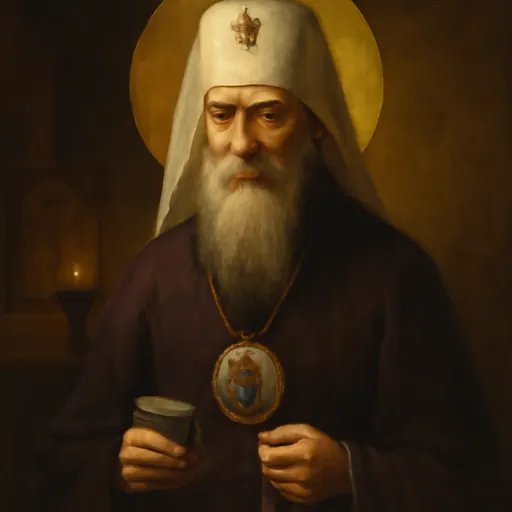
St. Philaret Drozdov (1782–1867) was Metropolitan of Moscow for forty-one years and the most learned Russian bishop of the nineteenth century. He wrote the Catechism that taught generations of Orthodox Christians and guided the first translation of the Gospels into modern Russian. The Russian Orthodox Church glorified him in 1994 and keeps his feast on November 19 (December 2).
Who was St. Philaret Drozdov?
St. Philaret Drozdov was Metropolitan of Moscow from 1826 until his death in 1867, the most learned bishop the Russian Church had in the nineteenth century and, for many of the faithful, its conscience. He wrote the Catechism from which Russian Orthodox children learned their faith for nearly two centuries, he set the rules for the first translation of the Gospels into modern Russian, and he preached sermons that are still read. In his old age he was a man of quiet prayer who kept company with the disciples of St. Seraphim of Sarov.
The Russian Orthodox Church glorified him in 1994. We keep his feast on November 19, the day he died, which is December 2 on the civil calendar for those who follow the Julian reckoning.
His life
A deacon's son from Kolomna
He was born Vasily (Basil) Drozdov on December 26, 1782, in Kolomna, near Moscow, where his father was a deacon and later a priest. He studied at the seminary of Kolomna, where lessons were still given in Latin, and then at the seminary of the Trinity Lavra of St. Sergius. In 1808 he was tonsured a monk and given the name Philaret, after St. Philaret the Merciful, and was ordained a deacon soon after.
Teacher and translator
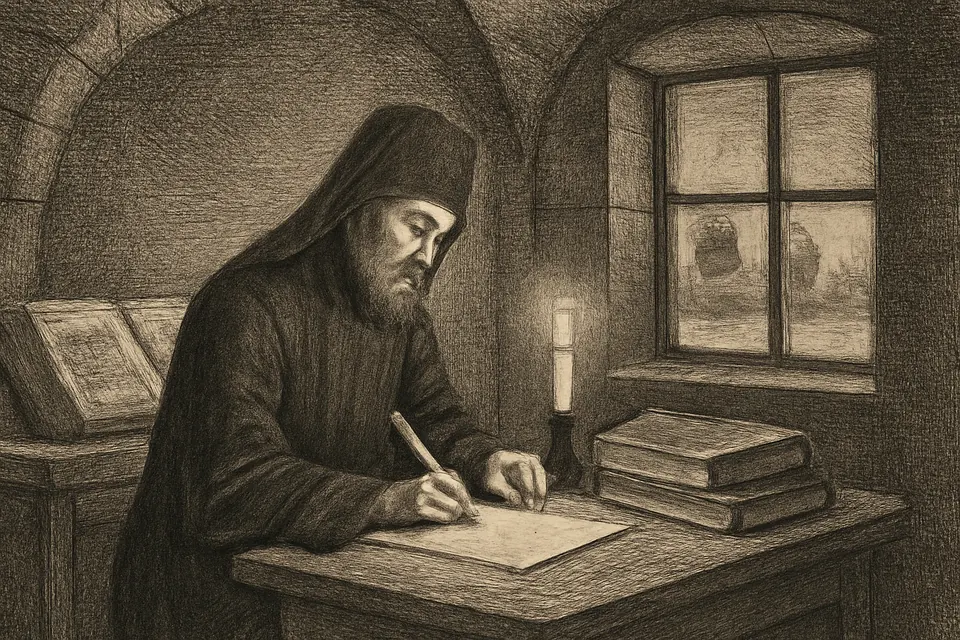
In 1809 he was called to the Theological Academy in St. Petersburg. There he pressed for lessons to be taught in Russian rather than Latin, so that the students could think and pray in their own tongue. The Holy Synod put him in charge of translating the Scriptures into Russian. According to the life on Azbyka.ru, he chose the translators, wrote their rules and translated the Gospel of John himself; the Four Gospels were finished and printed in 1819. The complete Russian Bible appeared only in 1876, nine years after his death, but it grew out of the work he began.
The Catechism
In May 1823 he published his Christian Catechism of the Orthodox Catholic Eastern Greco-Russian Church. A second printing was needed before the year was out, and the book was translated into Greek, English and other languages. In its longer form it became the official catechism of the Russian Church, the book from which priests taught and seminarians studied.
Metropolitan of Moscow
He was consecrated a bishop in 1817 and served in Tver and Yaroslavl before coming to Moscow, where he became Metropolitan in 1826. He held that see for forty-one years. He was demanding of his clergy and of himself, and he was not afraid of the court. The OCA's life tells that he refused to bless Moscow's Triumphal Gate because of the pagan statues on it, and that St. Sergius of Radonezh appeared to him in a vision and told him the trouble would pass.
He took as his elder Archimandrite Anthony (Medvedev), a disciple of St. Seraphim of Sarov, and made him abbot of the Trinity Lavra. At the request of Tsar Alexander II he wrote the final text of the manifesto of February 1861 that freed the serfs.
"Not in vain, not by chance"
In 1828 the young poet Alexander Pushkin wrote a bitter little poem that begins, in Russian, "Дар напрасный, дар случайный" ("Gift in vain, gift by chance, / Life, why were you given to me?"). The Metropolitan answered it with a poem of his own that turns Pushkin's words around: "Не напрасно, не случайно / Жизнь от Бога нам дана" ("Not in vain, not by chance / Has life been given us by God"). Pushkin replied in January 1830 with the poem "В часы забав иль праздной скуки," thanking the hierarch whose voice had reached him. Fr. Ioann Malinin's study on Pravoslavie.ru gives all three texts.
His death
Two months before he died, Philaret dreamed of his father, who warned him to take care on the nineteenth day of the month. On November 19, 1867, he served the Divine Liturgy, and that afternoon he was found dead in his cell at the Trinity Lavra. He was buried there, and his successor was St. Innocent of Alaska.
Wonders and the glorification of St. Philaret
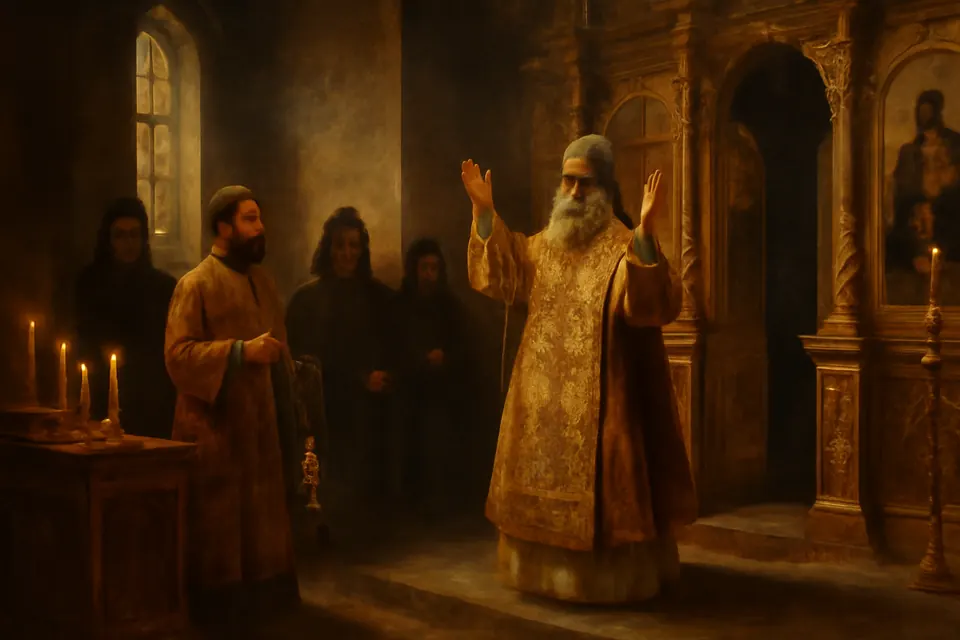
The Church glorified Philaret for the holiness of his life and teaching rather than for a list of miracles. The wonders told of him are reported ones, handed down in his Russian lives: the vision of St. Sergius over the Triumphal Gate and the dream that told him the day of his death. The Bishops' Council of the Russian Orthodox Church numbered him among the saints in 1994; the OCA's life gives 1995. On June 9, 2004, his relics were carried from the Trinity Lavra to the Cathedral of Christ the Savior in Moscow.
Symbols of St. Philaret Drozdov in art
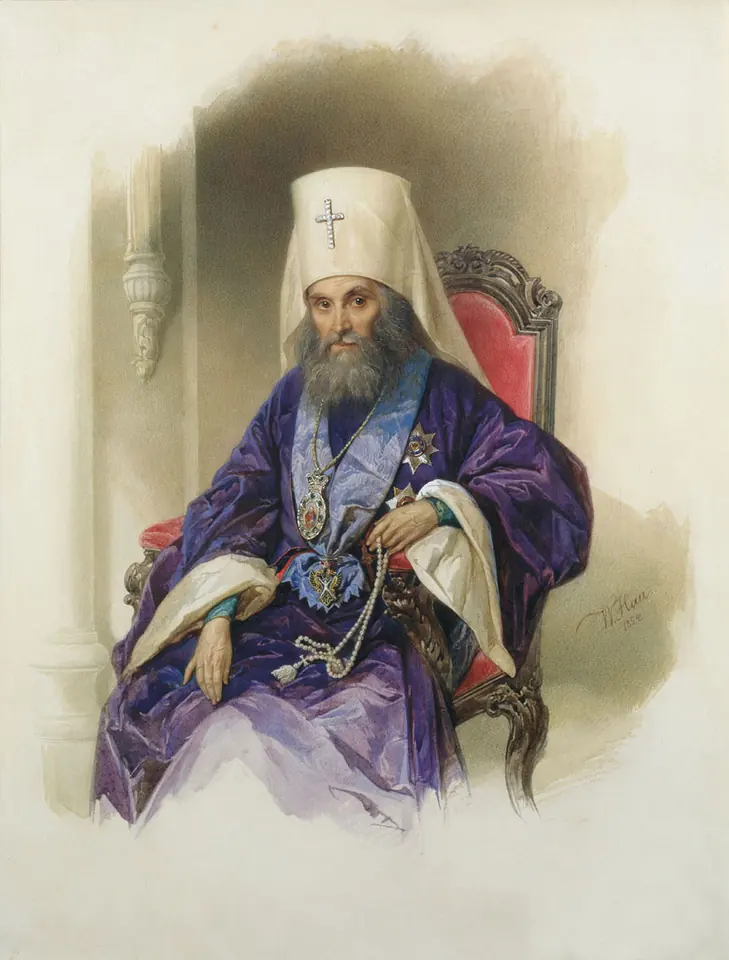
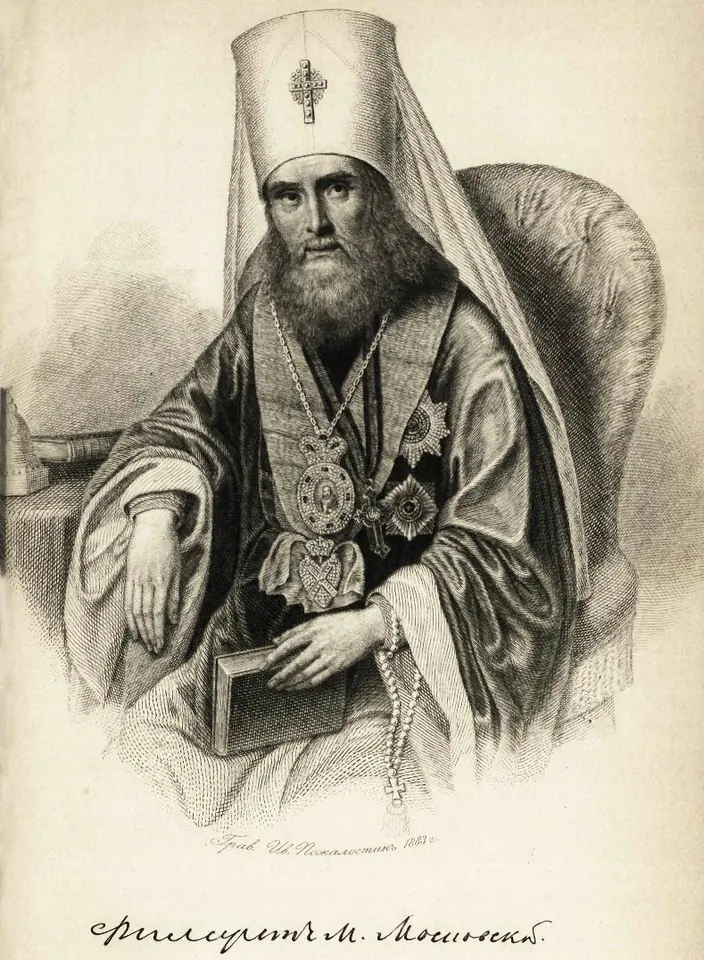
Icons show him as a lean old man with a gray beard in the white klobuk of a Metropolitan of Moscow, topped with a small cross, and a bishop's mantle with the panagia, the small round icon of the Mother of God that bishops wear on the chest. He usually holds a Gospel book or a scroll, or blesses with his right hand. Because the Russian Church remembers him as a teacher, some icons place a book in his hands for his Catechism. His portraits from life, like the watercolor and engraving on this page, show the same thin, attentive face. In Moscow he is often painted among the Council of Moscow Hierarchs with Sts. Peter, Alexis, Jonah and Philip.
Feast day and where he is honored
The Russian Church keeps his feast on November 19 / December 2. He is also remembered on October 5 (Old Style) with the Council of Moscow Hierarchs, and with the saints of Rostov and Yaroslavl and of Radonezh. His relics rest in a shrine in the upper church of the Cathedral of Christ the Savior. See our feast days calendar for other saints of the season.
Prayer to St. Philaret
The Russian Church has a troparion and kontakion for his feast. A short prayer beginning "O Lord, I know not what to ask of Thee" is printed in many Orthodox prayer books as the daily prayer of Metropolitan Philaret. Let us ask his prayers for teachers of the faith, for translators of Scripture, for bishops and for all who doubt that their life has meaning. Holy Hierarch Philaret, pray to God for us.
Frequently asked questions
Who was St. Philaret Drozdov?
Vasily Drozdov, a deacon's son from Kolomna who became a monk, a professor at the St. Petersburg Theological Academy and, from 1826 until his death in 1867, Metropolitan of Moscow. The Orthodox Church honors him as St. Philaret of Moscow.
What is St. Philaret of Moscow known for?
Above all for his Catechism of 1823, which became the standard catechism of the Russian Church, and for directing the translation of the Gospels into Russian. He was also a great preacher and, at the Tsar's request, wrote the final text of the 1861 manifesto that freed the serfs.
When is the feast of St. Philaret Drozdov?
November 19, the day he died in 1867. In the Russian Church, which keeps the Julian calendar, that day falls on December 2 of the civil calendar.
Where are the relics of St. Philaret of Moscow?
He was buried at the Trinity Lavra of St. Sergius. In 2004 his relics were carried to the Cathedral of Christ the Savior in Moscow, where they rest today.
Keep exploring
Sources
- Orthodox Church in America: Repose of Saint Philaret (Drozdov), Metropolitan of Moscow. His elder Archimandrite Anthony, the Triumphal Gate and the vision of St. Sergius, the dream of his father and his death after his last Liturgy
- Azbyka.ru: Svyatitel Filaret (Drozdov), mitropolit Moskovsky. The Catechism of May 1823, the Gospel of John he translated himself, the 1819 Gospels, his glorification in 1994 and his relics in the Cathedral of Christ the Savior
- Priest Ioann Malinin, "On the Literary Correspondence of Metropolitan Philaret and A. S. Pushkin" (Pravoslavie.ru). The texts and dates of the poems exchanged with Pushkin