Blessed Maria Assunta Pallotta
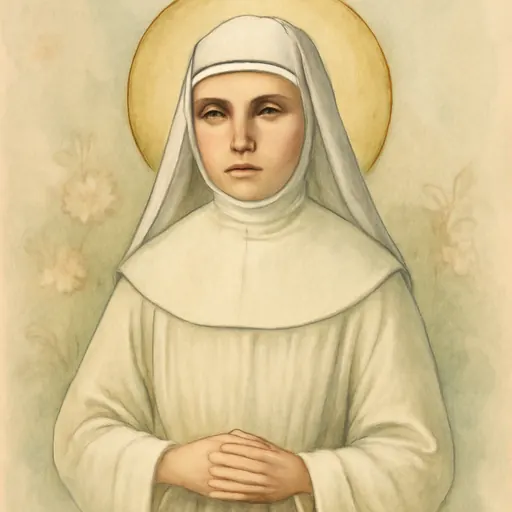
Blessed Maria Assunta Pallotta (1878–1905) was a peasant girl from the Marche in Italy who became a Franciscan Missionary of Mary and died of typhus in a mission in Shanxi, China, at twenty-six. A strong fragrance filled the house after her death, so the Chinese Christians called her "the saint of perfumes." Pope Pius XII beatified her in 1954. Her feast is November 7.
Who was Blessed Maria Assunta Pallotta?
Blessed Maria Assunta Pallotta was a young Italian sister of the Franciscan Missionaries of Mary who died of typhus in a mission in northern China in 1905, less than a year after she arrived. She had no schooling to speak of and did nothing the world would call great. She cooked, she served, she prayed, and she offered every ordinary task to God. When she died, a sweet fragrance filled the house for three days, and the Chinese Christians called her "the saint of perfumes." Pope Pius XII beatified her on November 7, 1954, and we keep her feast on that day.
Her life
A child who carried stones
Assunta Maria Liberata Pallotta was born on August 20, 1878, at Force in the Marche, the hill country of central Italy, the daughter of Luigi Pallotta and Eufrasia Casali. Her family's home village was Castel di Croce nearby. The family was poor. According to the Ökumenisches Heiligenlexikon, she had only about two years of school, and as a child she worked on building sites carrying heavy stones, and later for a tailor. She grew up helping her parents keep the household going.
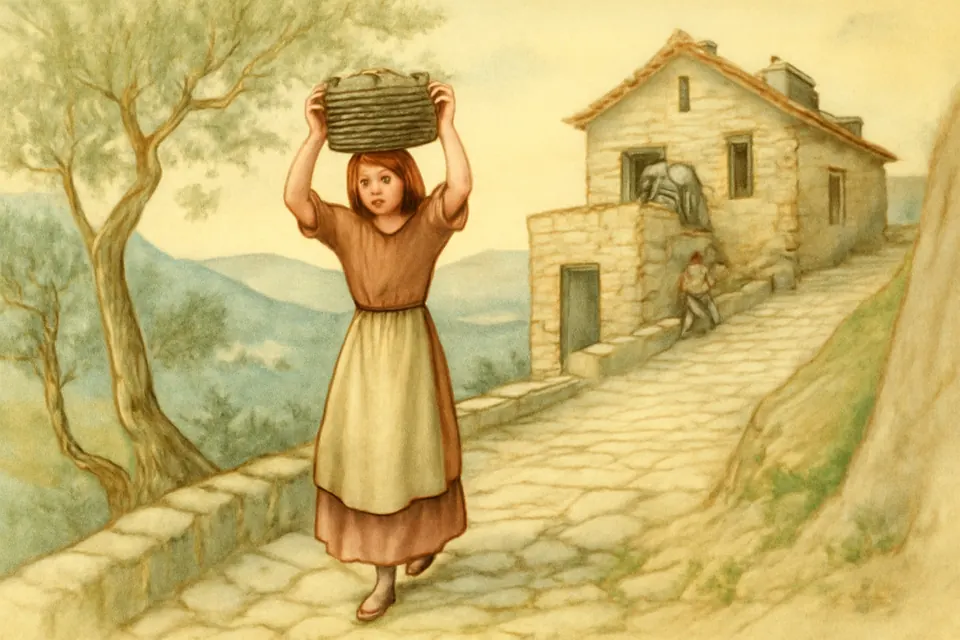
Even then she spent hours each day in adoration, fasted three days a week and slept on stones. After a carnival dance in 1897, the Heiligenlexikon says, her resolve to give herself wholly to God grew firm.
A Franciscan Missionary of Mary
On May 5, 1898, she entered the Franciscan Missionaries of Mary, the institute founded by Mother Mary of the Passion, as a postulant. She received the habit on October 9, 1898, made her first vows in Rome on December 8, 1900, and served in the kitchens, the fields and the olive groves at Grottaferrata and later in Florence. She made her perpetual profession in Florence on February 13, 1904.
Her letters show what she was after. "Do everything for the love of God," she wrote. "I would like to write this with my blood." And in January 1904 she asked "the Lord for the grace to make the purity of intention known to the world."
To China
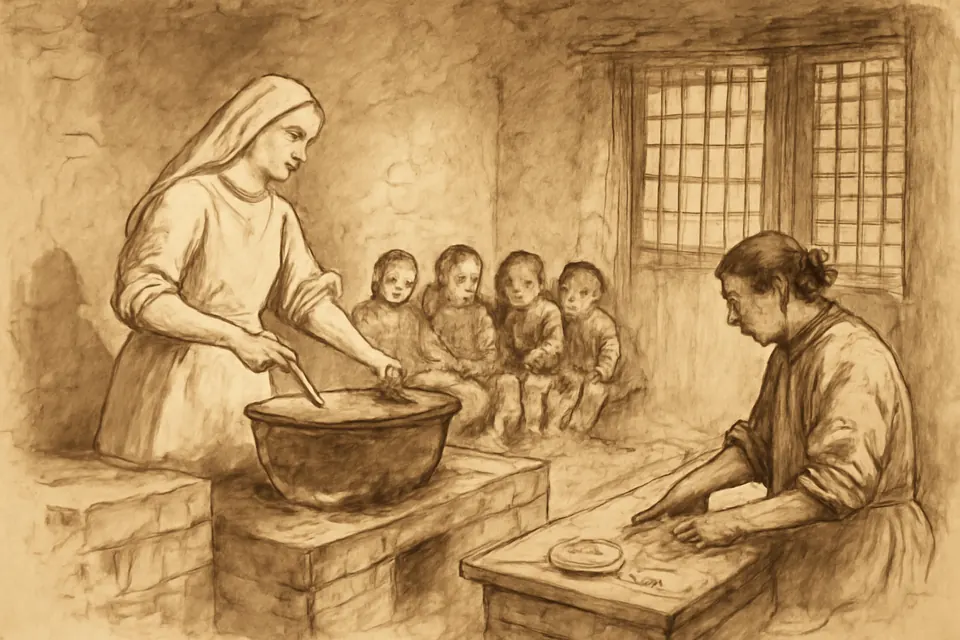
The Boxer Rising of 1900 had taken the lives of Franciscan Missionaries of Mary in China, and Sister Maria Assunta asked to go and follow them. On March 19, 1904, she sailed for China, and in June she reached the mission of Tong-eul-keou (Dongergou) in the north of Shanxi, about 46 kilometers from the provincial capital, Taiyuan, where she would be buried. There she worked as a cook in the orphanage and learned the language. "Wherever Jesus wants," she had said. "The will is no longer mine."
Her death and the fragrance
In the spring of 1905 typhus swept through the mission. Sister Maria Assunta fell ill and died on April 7, 1905, at twenty-six. The Franciscan Missionaries of Mary record what happened next: a strong scent, hard to describe, filled her room and then spread through the house and the places she had worked, and it lasted three days. The Chinese Christians called her "the saint of perfumes," and the news traveled far beyond the mission.

The miracles of Blessed Maria Assunta
- The fragrance at her death: reported. Witnesses at the mission described it, and it is part of the record of her cause.
- Her body found intact: reported. When she was exhumed in April 1913, eight years after her death, her body was found incorrupt, according to the Franciscan Missionaries of Mary.
- Cures in Shanxi: reported. Historian Henrietta Harrison found that fragments of her first coffin were treasured by Chinese Catholics as a source of cures and were mailed as far as America, Italy and Egypt, and that cures were still reported during the Cultural Revolution, when her body was dug up and destroyed.
- Two miracles for her beatification: approved. Pope Pius XII confirmed them on October 19, 1954.
Her cause and beatification
The first steps toward her cause were taken under Pope St. Pius X. It was formally introduced in 1923, and Pope Pius XI declared her Venerable on February 28, 1932. Pius XII beatified her in St. Peter's Basilica on November 7, 1954. Her home diocese of Ascoli Piceno has chosen her as a secondary patron.
Symbols of Blessed Maria Assunta in art
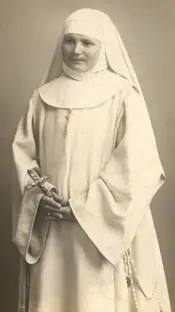
Images of her are simple and close to her photograph:
- The white habit and veil of the Franciscan Missionaries of Mary, the dress of her short religious life.
- Flowers, sometimes shown around her, recall the fragrance at her death.
There is no long artistic tradition to learn here. If you see a young sister in white with a gentle, serious face on an Italian holy card, with "Beata Assunta" beneath it, that is our saint of perfumes.
Where she is honored
Her family's village, Castel di Croce, has a church dedicated to her, and each August the village keeps a feast in her honor at the family home. The Franciscan Missionaries of Mary keep her memorial on November 7 in their houses around the world. See more saints of November on our feast days page.

Praying with Blessed Maria Assunta
We have not found a traditional prayer to her in English with a source we could verify, so we don't print one. She left us something better than a formula, in a line the Franciscan Missionaries of Mary love to quote: "it is not the things we do that count, but the intensity of the love that accompanies them." Let us ask Blessed Maria Assunta to pray for us, that we may do our ordinary work today for the love of God alone, and for missionaries far from home.
Frequently asked questions
When is the feast day of Blessed Maria Assunta Pallotta?
November 7, the anniversary of her beatification in 1954. The Franciscan Missionaries of Mary moved her feast there from April 7, the day she died, because April 7 often falls in Lent or Holy Week. The Roman Martyrology still lists her on April 7.
Why is she called the saint of perfumes?
When she died on April 7, 1905, a strong fragrance, hard to describe, filled her room and then the whole mission house, and it lasted three days. The Chinese at the mission called her "the saint of perfumes," and the story spread far beyond Shanxi.
What miracles led to her beatification?
The Congregation of Rites approved two miracles attributed to her intercession, and Pope Pius XII confirmed them on October 19, 1954, before beatifying her on November 7 that year. Those are approved miracles.
Where is Blessed Maria Assunta Pallotta buried?
She was buried in Shanxi in 1905, and when her body was exhumed in 1913 it was found intact. Historian Henrietta Harrison reports that her body was dug up and destroyed during China's Cultural Revolution. Her birthplace, Force, and her family's village, Castel di Croce, honor her memory.
Keep exploring
Sources
- Franciscan Missionaries of Mary: April 7, Passover of Blessed Maria Assunta Pallotta. Her dates, the voyage of 1904, the fragrance, the 1913 exhumation and the beatification
- Franciscan Missionaries of Mary: November 7, Feast of Blessed Mary Assunta Pallotta. Why the feast is kept on November 7; her sayings
- Hagiography Circle: Maria Assunta Pallotta (newsaints, 1905). Decree on heroic virtues, February 28, 1932; miracles approved October 19, 1954
- Henrietta Harrison, Catholic Missions, Medicine, and Miracles in Rural North China: The Story of the Blessed Assunta Maria Pallotta (American Historical Association, 2009). The coffin fragments used for cures and the destruction of her body in the Cultural Revolution
- Ökumenisches Heiligenlexikon: Maria Assunta Pallotta. Her childhood at Castel di Croce and Force, the mission at Tong-eul-keou and her burial