St. Vitalis of Milan

St. Vitalis of Milan is an early Christian martyr honored as the principal patron of Ravenna. Tradition makes him a Milanese officer, husband of St. Valeria and father of Sts. Gervasius and Protasius, who saw a Christian about to deny Christ at Ravenna, gave him courage to die faithful, and was then racked and buried alive. We keep his feast on April 28.
Who was St. Vitalis of Milan?
St. Vitalis of Milan is the martyr whose name stands over one of the most beautiful churches in Christendom, the Basilica of San Vitale in Ravenna. Ancient tradition calls him a citizen of Milan, the husband of St. Valeria, and the father of the twin martyrs Gervasius and Protasius, whose relics St. Ambrose found in 386. Alban Butler calls him "the principal patron of the city of Ravenna."
His whole story turns on one act of courage. At Ravenna he saw a fellow Christian about to deny Christ out of fear, and he would not let him fall. That brotherly word cost Vitalis his life.
We should be honest about our sources. The cult of Vitalis is very old, and the Ravenna mosaics prove it was flourishing by the sixth century. But the narrative of his life comes from Acts that, in Butler's words, "were written only in the ninth age," bound up with a letter falsely ascribed to St. Ambrose. The Catholic Encyclopedia notes that the history of the whole family has drawn "a great deal of adverse criticism." What follows is the story as the Church has handed it down.
The story of St. Vitalis
A soldier of Milan
The Golden Legend, the thirteenth-century collection of saints' lives by Jacobus de Voragine, opens simply: "S. Vital was a knight and a consul, and of Valeria his wife he gat S. Gervase and S. Prothase." He went to Ravenna in the company of Paulinus, a judge of the province. Butler places these events about the year 62, under Nero. The Golden Legend gives the year 57, and others have preferred the second century.
The word to Ursicinus
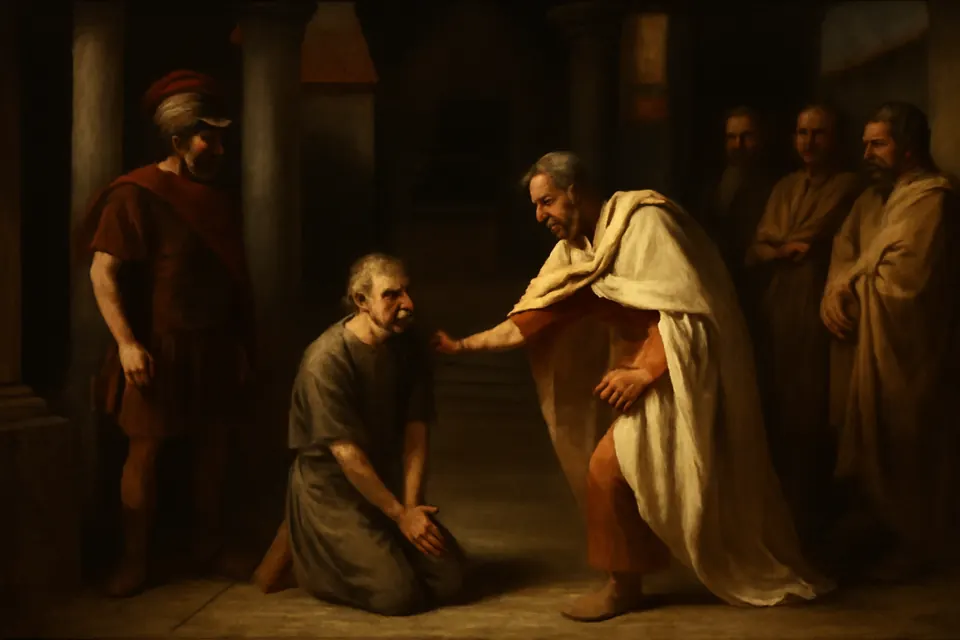
At Ravenna, Paulinus had a Christian physician named Ursicinus tortured for his faith. When the moment came to behead him, Ursicinus lost his nerve and was ready to deny Christ. Vitalis spoke up. In Caxton's old English translation of the Golden Legend, he says:
Ha! Ursian, do not so, thou wert wont to heal other and now wilt deliver thyself to perdurable death. Thou wert come to the victory, now thou art in peril to lose thy crown which was ready for thee.
The physician took heart, repented of his weakness, and died a martyr. Vitalis then buried him with honor and refused to keep company with the judge any longer.
Buried alive
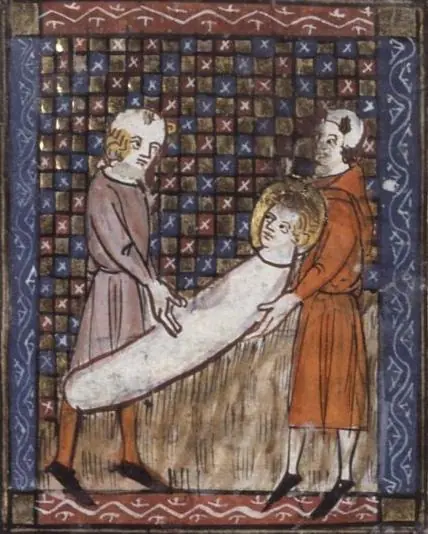
Paulinus was furious. He had Vitalis seized, stretched on the rack and tortured. Then, the Acts say, he was thrown into a deep pit and buried alive under earth and stones, at a place in Ravenna called the Palm-tree. Butler adds a short reflection worth keeping: Vitalis did not rush to the combat, but when the honor of God and a brother's soul were at stake, he counted his own life as less.
Soon after, the story goes on, his wife Valeria was beaten to death near Milan for refusing to eat food offered to idols. Their sons, Gervasius and Protasius, were remembered as martyrs of Milan.
Miracles and legends of St. Vitalis
Only one wonder is told in the Golden Legend, and it is traditional: the pagan priest who had urged Vitalis's death was seized by a demon and "cried seven days continually and said: S. Vital thou burnest me," until he threw himself into the river and died. No miracles of Vitalis have been formally examined by the Church. His witness is the miracle the old writers cared about: a man who gave a wavering brother back his courage.
Why St. Vitalis is the patron saint of Ravenna
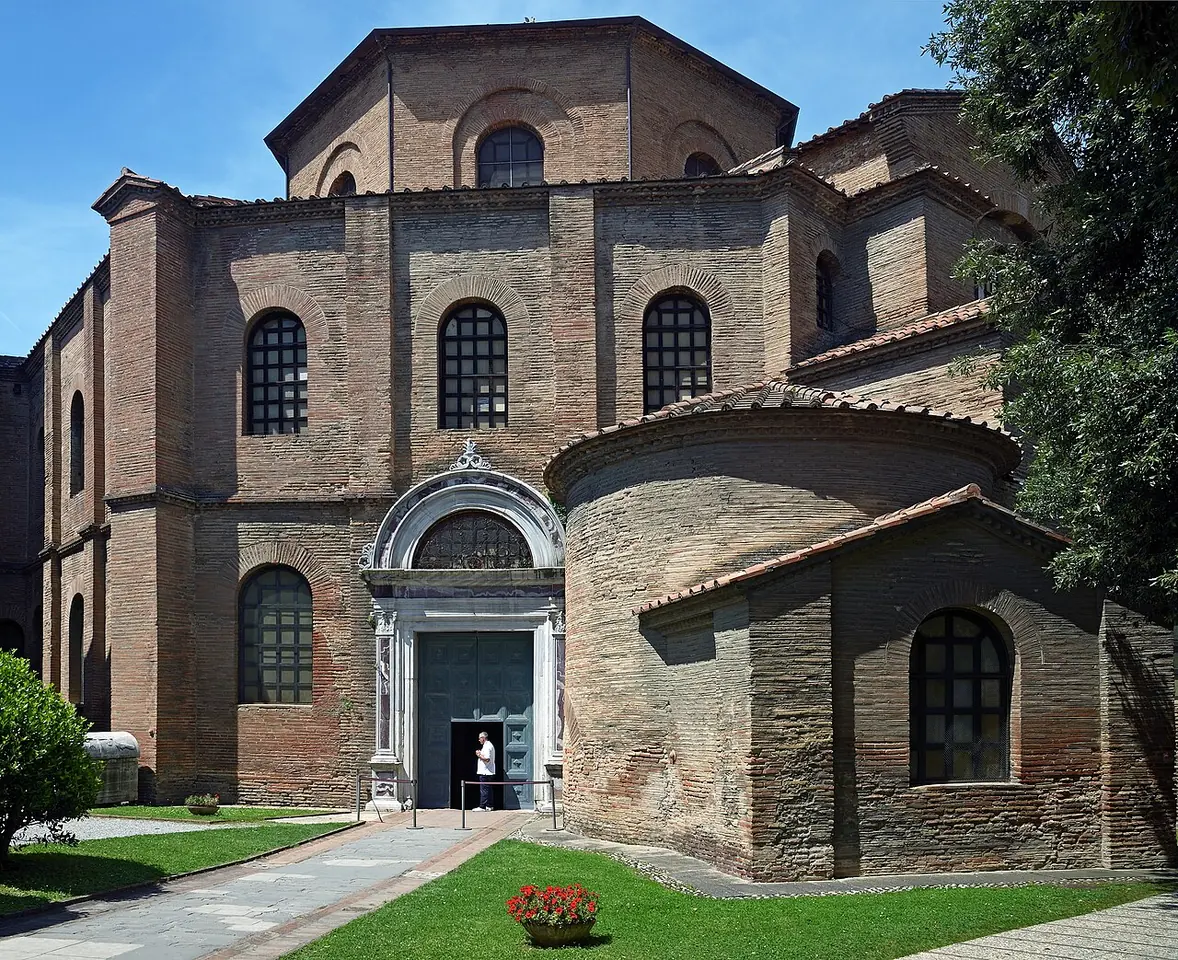
Ravenna claims him because, by tradition, he shed his blood there. In the sixth century the city raised a great octagonal church in his honor. Butler says it was "magnificently built by the emperor Justinian, in 547," and that the relics of St. Vitalis rest there. San Vitale is now a UNESCO World Heritage site, famous for its mosaics of Justinian and Theodora. Ravenna's other great patron is its first bishop, St. Apollinaris.
The Golden Legend records a different tradition, that "the body of S. Vital lieth now at Cologne." Relics were often divided and shared in the Middle Ages, so both claims may hold a piece of the truth.

Symbols of St. Vitalis in art
St. Vitalis has no single fixed attribute, so look for these clues:
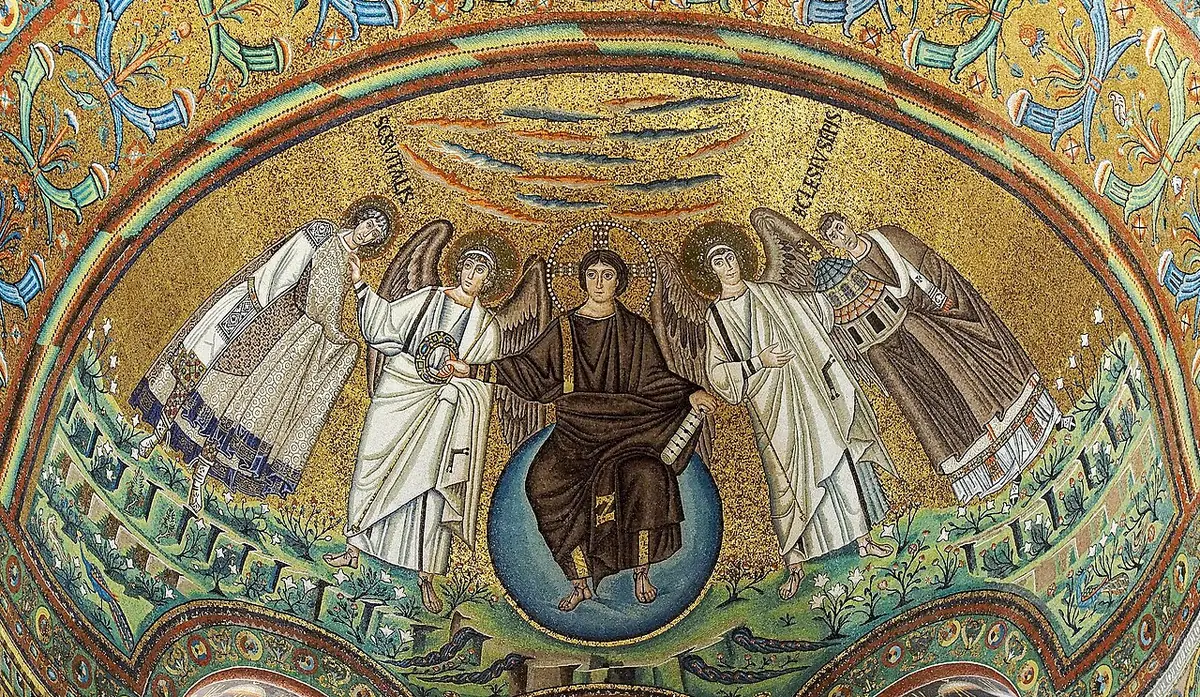
- The crown of martyrdom. In the San Vitale apse mosaic Christ hands it to him; at Sant'Apollinare Nuovo he carries it in veiled hands in the long white procession of martyrs.
- The palm. The martyr's sign, often in his hand or growing beside him.
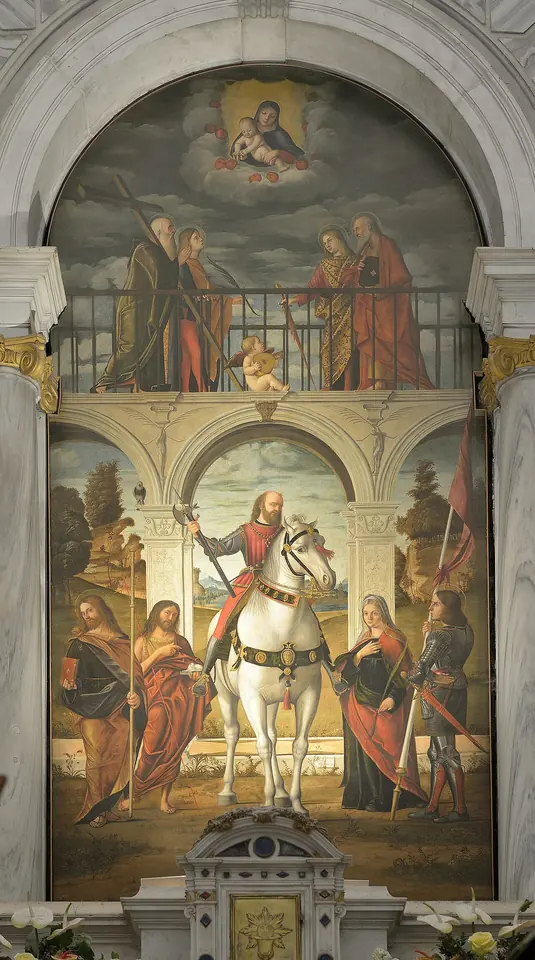
- Armor and a white horse. Because the Golden Legend calls him a knight, Renaissance painters show him as a mounted soldier. Carpaccio's 1514 altarpiece in Venice puts him on a white horse at the center, with St. Valeria among the saints beside him.
- His wife at his side. Calendars and prints often show the couple together, each with a palm.
- The pit. Narrative scenes show him being lowered or thrown into the earth.
Feast day and where he is honored
We keep the feast of St. Vitalis on April 28. The Roman Martyrology's entry for that day remembers him as husband of St. Valeria and father of Sts. Gervasius and Protasius, who buried blessed Ursicinus, was racked, and was "cast into a deep pit and buried under earth and stones." In Venice he is San Vidal, and his church on the Grand Canal keeps Carpaccio's altarpiece. Many parish churches in Italy bear his name as San Vitale. You can find other saints of late April on our feast days page.
Praying with St. Vitalis
There is no well-known traditional prayer to St. Vitalis. We ask his help simply: "St. Vitalis, pray for us." He is a good saint to turn to for anyone who must encourage a friend who is losing heart in the faith, and for anyone afraid of what fidelity will cost.
Let us ask St. Vitalis to give us his courage and his words, so that we never leave a brother or sister alone in the hour of trial.
Frequently asked questions
Who was St. Vitalis of Milan?
An early martyr, by tradition a citizen of Milan of consular or knightly rank. At Ravenna he encouraged a Christian physician, Ursicinus, who was wavering before execution, then buried him with honor. For this the judge Paulinus had him tortured and buried alive.
When is the feast of St. Vitalis of Milan?
April 28. The Roman Martyrology names him on that day as husband of St. Valeria and father of Sts. Gervasius and Protasius.
Is the Basilica of San Vitale in Ravenna named for him?
Yes. The famous sixth-century church in Ravenna is dedicated to St. Vitalis, whom the city honors as its principal patron. Its apse mosaic shows Christ handing him the crown of martyrdom.
Is the story of St. Vitalis historical?
His cult is very old, but the details come from Acts that Alban Butler dates to the ninth century, written together with a letter falsely ascribed to St. Ambrose. We honor him with the Church's ancient tradition while saying plainly that the story itself is legend.
Keep exploring
Sources
- Alban Butler, The Lives of the Fathers, Martyrs, and Other Principal Saints, vol. 2 (New York: Kenedy, 1903), April 28, Internet Archive. Vitalis as principal patron of Ravenna, the ninth-century date of his Acts, his burial alive at 'the Palm-tree,' and his relics in the church built by Justinian
- Jacobus de Voragine, The Golden Legend (trans. William Caxton, 1483), vol. 3: Of S. Vital, Internet Medieval Sourcebook, Fordham University. His words to Ursicinus, the year 57, the punishment of the pagan priest, and the claim that his body lay at Cologne, quoted on this page
- Sts. Gervasius and Protasius, Catholic Encyclopedia (1909), New Advent. The Acts naming Vitalis and Valeria as parents of the twin martyrs, and the criticism of that story
- Saints Vitalis and Valeria of Milan: The Iconography, Christian Iconography (Richard Stracke). The Roman Martyrology for April 28 and how artists have shown him