St. Jutta of Kulmsee (Blessed Jutta of Chełmża), Widow and Hermit

St. Jutta of Kulmsee, also called Jutta of Sangerhausen, was a 13th-century German widow who gave away her wealth, nursed lepers and the poor, and ended her life as a hermit near Kulmsee (Chełmża) in Prussia, praying for the land's conversion. She is honored as a patroness of Prussia, and we keep her feast on May 5.
Who was St. Jutta of Kulmsee?
St. Jutta of Kulmsee was a noble widow from Sangerhausen in Thuringia who gave away everything she owned, cared for lepers and the poor, and spent her last years as a hermit near Kulmsee, the town now called Chełmża in northern Poland. She died there in 1260 and has been honored ever since as a patroness of Prussia. English books have long called her St. Jutta. Rome never completed her canonization, and in Poland she is honored as Blessed Juta of Chełmża.
Her life is known from a few medieval notices and from a later Polish life used by the Bollandists for the Acta Sanctorum. As Agnes Dunbar sets it out in her Dictionary of Saintly Women (1904), the outline is clear, and some of the stories around it are plainly legend.
A widow in Thuringia
Jutta was born around the beginning of the 13th century into a noble family of Sangerhausen. She married young and had several children. Her husband set out on pilgrimage to the Holy Land and died on the way, leaving her a widow. When her children were grown, Dunbar writes, they all entered religious life, in various orders.
Jutta then gave her life to the sick, "especially lepers." She took as her model St. Elizabeth of Hungary, the Thuringian landgravine who had died in 1231 after spending herself for the poor of Marburg. Like Elizabeth, Jutta gave away her property and wore plain clothes. Later Franciscan writers counted her among the tertiaries of St. Francis, though the German sources describe her as living in apostolic poverty without entering a religious order. The German mystic Mechthild of Magdeburg knew and admired her, and wrote of a woman she had known who taught the faith to the heathen by word and example.

A hermit in Prussia
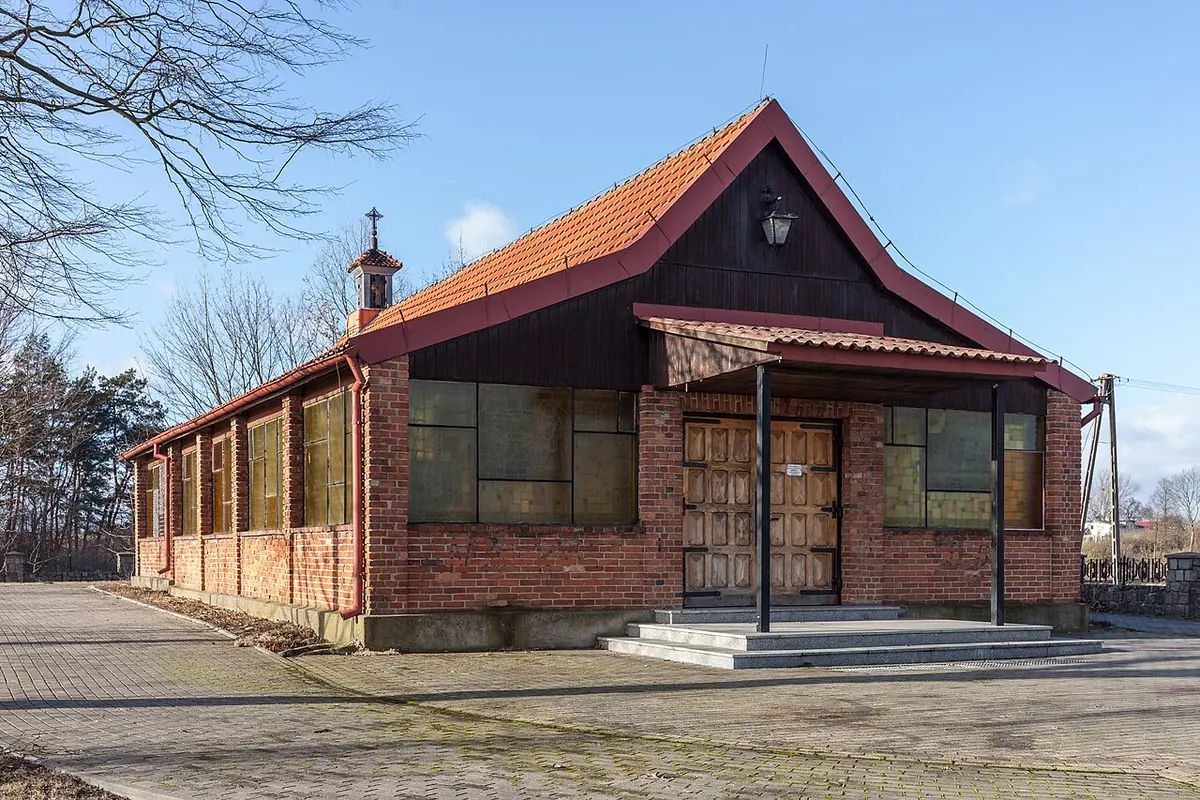
Around 1256 her kinsman Anno von Sangerhausen became Grand Master of the Teutonic Order, which was then trying to hold and evangelize Prussia. The land was in turmoil. Dunbar describes raids that burned Polish cities and newly baptized Prussians who turned back to paganism and killed the priests among them. Jutta went there, not to fight but to pray. She settled near Kulmsee, at a place called Bildschön, today Bielczyny, by a lake in the forest. Her confessors were the Dominican bishop Heidenreich of Kulm and the priest John of Lobdau.
She lived there about four years in prayer and penance, praying for the conversion of the pagans and for the young Church of Prussia. The local people told stories about her:
- Traditional: neighbors said they saw her lifted from the ground as she prayed.
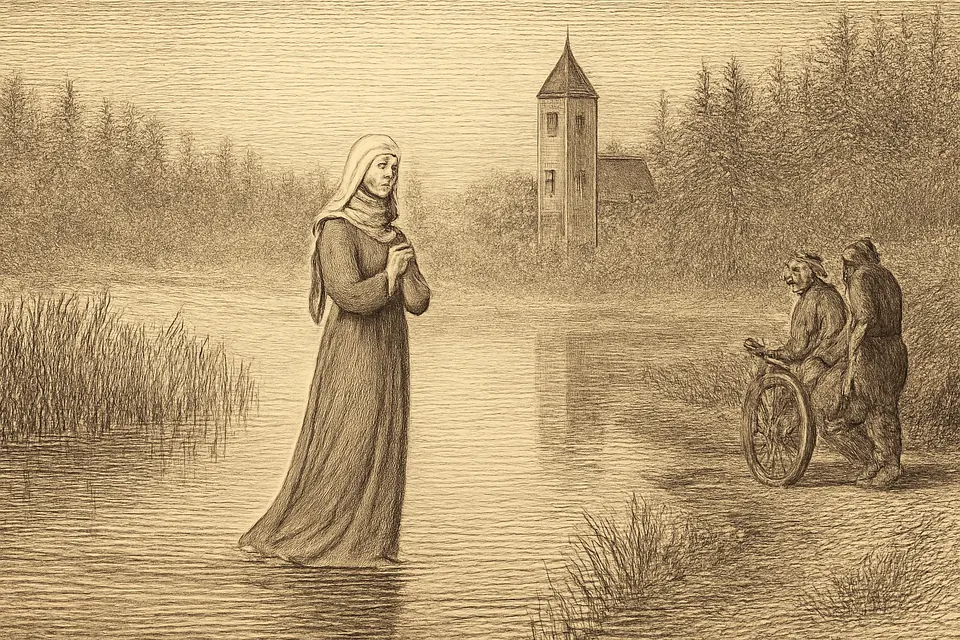
- Traditional: to reach the church she sometimes went the long way round the lake, and sometimes walked straight across the water by a path that could still be seen after her death.
- Traditional: in one of her visions she was given to drink from the wound in the Savior's side.
Death and burial
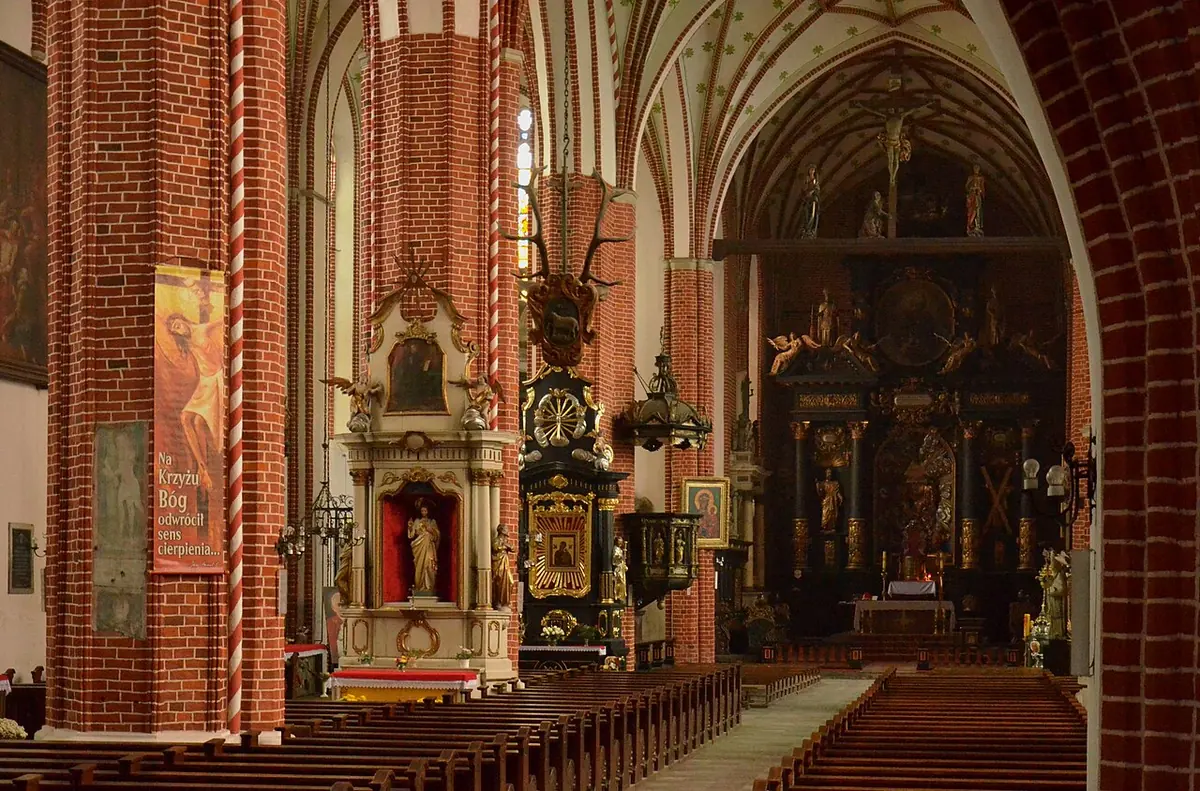
Jutta died on May 5, 1260. (Dunbar gives 1264, but the date 1260 is more widely accepted.) Bishop Heidenreich wanted to bury her quietly, as she had asked. He could not: people came from all the country around, more than Kulmsee had ever seen, and thirteen priests attended the funeral, a great number in a mission land where many priests had been killed. She was buried in the cathedral of the Holy Trinity at Kulmsee.
Miracles were reported at her tomb, and about fifteen years after her death steps were taken toward her canonization because of "her great renown for sanctity and the numerous miracles wrought at her tomb." The process never reached its end in Rome. When her remains were to be raised in 1637, they could not be found, so no relics of her are known today. Her chapel at Bielczyny became a place of pilgrimage and still is.
Symbols of St. Jutta in art
Dunbar describes the classic image: Jutta in a gray habit with long sleeves, tied with a black cord or strap at the waist and around the neck, the dress of a penitent. She may wear a widow's veil. Sometimes she is shown in her vision at the side of Christ, or walking on the water of the lake. She often appears beside Blessed Dorothy of Montau, the other patroness of Prussia, so when you see two women in plain habits in an old church of northern Poland, one of them may well be Jutta.
Feast day and prayer
We keep her feast on May 5, the day she died; the Diocese of Toruń celebrates Blessed Juta on May 12. We know of no traditional prayer to her in English. Let us ask Blessed Jutta to pray for widows, for those who nurse the sick and the outcast, and for the conversion of hearts in lands where faith has grown cold. Blessed Jutta, pray for us.
Frequently asked questions
Is Jutta of Kulmsee a saint or a blessed?
She has never been formally canonized. A canonization process began about fifteen years after her death but was never completed in Rome. Older English books call her St. Jutta; the Church in Poland honors her as Blessed Juta, with a memorial on May 12 in the Diocese of Toruń.
Who was St. Jutta of Kulmsee?
A noblewoman of Sangerhausen in Thuringia, widowed when her husband died on pilgrimage to the Holy Land. She followed the example of St. Elizabeth of Hungary, nursed the sick and lepers, and around 1256 went to the Teutonic Order's lands in Prussia, where she lived as a hermit near Kulmsee until her death in 1260.
What is St. Jutta the patroness of?
Prussia; Agnes Dunbar adds Masovia. She is often paired with Blessed Dorothy of Montau as the patronesses of Prussia. Because of her life of nursing, she is also invoked for widows and the sick.
When is the feast of St. Jutta?
May 5, the day of her death. In the Diocese of Toruń, Poland, her memorial is kept on May 12.
Keep exploring
- Patron saint pages
- Healing
- Feast-day calendar
- Saints remembered in MaySaint of the dayWhat saint is my birthday?
- Relics
- Where the relics are kept (map)
- More
- Saints A to ZPatron saints A to ZExplore every section
Sources
- Agnes B. C. Dunbar, A Dictionary of Saintly Women, vol. 1 (1904), St. Jutta (5). Her habit and attributes in art, the levitation and the walk across the lake, the thirteen priests at her funeral, the canonization process, the Bollandists' sources, and Mechthild of Magdeburg's admiration for her
- Ökumenisches Heiligenlexikon: Jutta von Sangerhausen. Feast days (May 5; May 12 in Toruń), death on May 5, 1260, Anno von Sangerhausen, her confessors, the lost bones in 1637, and her status as blessed