Blessed Hanna Chrzanowska, the Nurse of Kraków
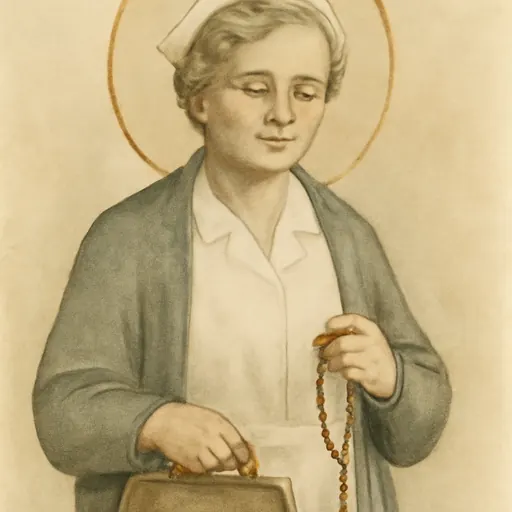
Blessed Hanna Chrzanowska (1902–1973) was a Polish nurse who, with the support of Karol Wojtyła, built a network of parish home nursing for the sick, poor and lonely of Kraków. Her funeral homily was preached by the future John Paul II. She was beatified in Kraków on April 28, 2018. Her feast is April 28.
Who was Blessed Hanna Chrzanowska?
Blessed Hanna Chrzanowska was a nurse. She came from a wealthy and cultured family, and could have lived comfortably among Kraków's professors. Instead she spent her life among the sick, the lonely and the abandoned, first as a teacher of nurses and then, in retirement, as the organizer of a home-nursing network run through the parishes of Kraków. The day after her beatification Pope Francis said of her: "She dedicated her life to taking care of the sick in whom she saw the suffering face of Jesus."
The life of Blessed Hanna
A professor's daughter who chose nursing
Hanna was born in Warsaw on October 7, 1902. Her father, Ignacy Chrzanowski, was a well-known professor of Polish literature from a Catholic landowning family. Her mother, Wanda Szlenkier, came from a Lutheran family of Warsaw industrialists. Her aunt Zofia Szlenkierówna founded a children's hospital and directed the Warsaw School of Nursing. In 1910 the family moved to Kraków, where her father took a chair at the Jagiellonian University.
After school with the Ursuline sisters she took a short nursing course to help the wounded of the Polish-Soviet war of 1920. She began Polish studies at the university that December but left them for the new Warsaw School of Nursing, and graduated in 1924. Scholarships took her to France and Belgium. From 1929 to 1939 she edited Pielęgniarka Polska, Poland's first professional journal for nurses, and helped prepare the nursing law passed by the Sejm in 1935. In 1932, Cardinal Amato said at her beatification, she went through a conversion that turned her philanthropy into an apostolate.
War and loss
The Second World War took nearly everyone she loved. Her aunt died in the bombing of Warsaw on October 2, 1939. Her father was arrested on November 6, 1939, with the other Kraków professors in the Sonderaktion Krakau and died at Sachsenhausen on January 19, 1940. Her only brother, Bohdan, was murdered by the Soviets at Katyń that spring.
She did not give up. Back in Kraków she volunteered with the Polish Welfare Committee, caring for refugees, prisoners and displaced people, and especially for orphaned children, among them Jewish children, for whom she looked for foster families and safe places.
Nursing the sick at home
After the war she headed the social-nursing department at the university nursing school and studied home nursing in the United States in 1946–1947. In 1957 she became director of the School of Psychiatric Nursing at Kobierzyn; when the school was suddenly closed a year later, she took early retirement. Her faith was never hidden, and the communist authorities resented it.
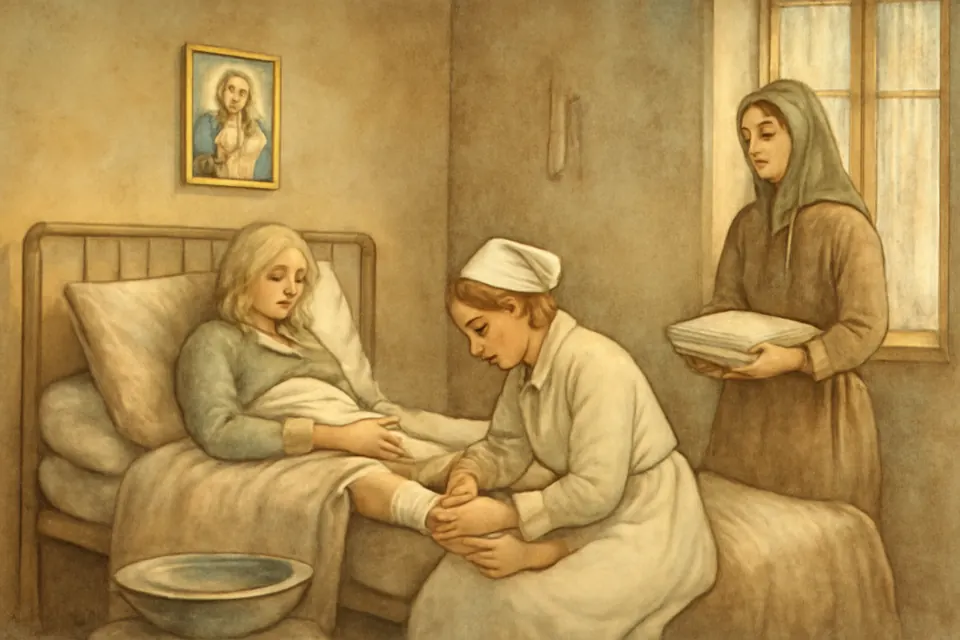
Retirement freed her for her real work. She knew how many chronically sick people lay alone in Kraków's apartments with no care at all. In 1957 her former pupil Zofia Szlendak-Cholewińska introduced her to a young priest, Karol Wojtyła, who gave her plans his full support. With the Church's help she organized parish nursing in Kraków and across the archdiocese. Nurses, sisters, seminarians, priests, doctors and students joined her. She took the sick on retreats, and through her efforts it became common to celebrate Mass in a sick person's home. She also wrote a much-copied "Nurse's Examination of Conscience." At Cardinal Wojtyła's request, Pope Paul VI gave her the Pro Ecclesia et Pontifice medal.
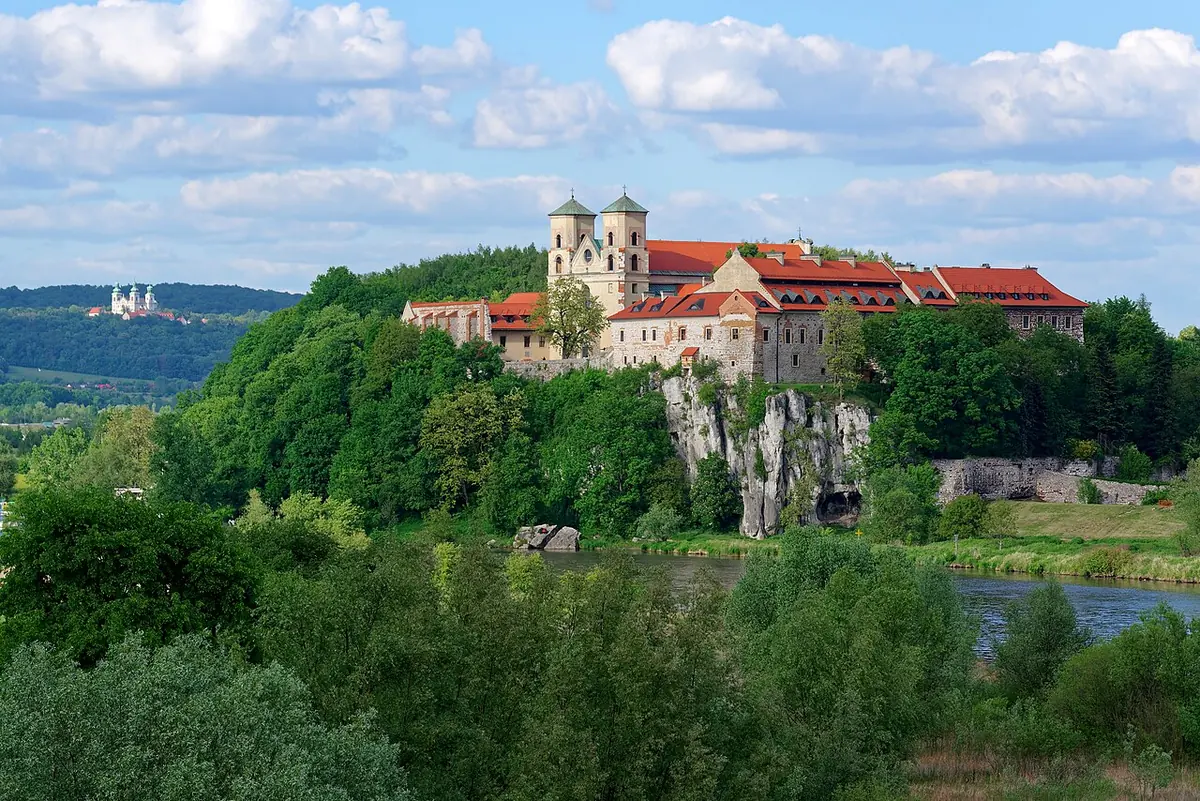
Her inner life was Benedictine. From 1956 she was an oblate of the Abbey of Tyniec, on its cliff above the Vistula.
Death and the cardinal's farewell
She died in Kraków on April 29, 1973. Cardinal Wojtyła led her funeral at Rakowicki Cemetery and said: "We thank you, Mrs. Hanna, that you were among us... a kind of incarnation of Christ's beatitudes from the Sermon on the Mount, especially the one that says: blessed are the merciful" (our translation).

Beatification and the approved miracle
The nurses of the Catholic Association of Polish Nurses and Midwives asked for her cause in 1995, and it opened on November 3, 1998. The approved miracle was the healing of Zofia Szlendak-Cholewińska, the same pupil who had introduced her to Wojtyła. In 2001 she suffered a massive cerebral hemorrhage, with paralysis and a heart attack; doctors told the family she would not survive, or would be permanently disabled. The nurses began a novena to Hanna at St. Nicholas and St. Mark's churches. One night the patient dreamed that Hanna smiled and told her everything would be fine. She recovered fully and lived ten more years. Pope Francis approved the miracle on July 7, 2017.
Cardinal Angelo Amato beatified her on April 28, 2018, at the Divine Mercy Basilica in Kraków-Łagiewniki, calling her "a lantern of light in the darkness of human pain."
Symbols of Blessed Hanna in art
- Nurse's cap: the sign of her profession. Her beatification portrait by Zbigniew Juszczak was painted from a photograph taken when she was thirty, and her reliquary is a small heart with a fragment of bone under a miniature nurse's cap.
- The sick person's bedside: she is best pictured where she worked, in the homes of the sick.
Feast day and where she is honored
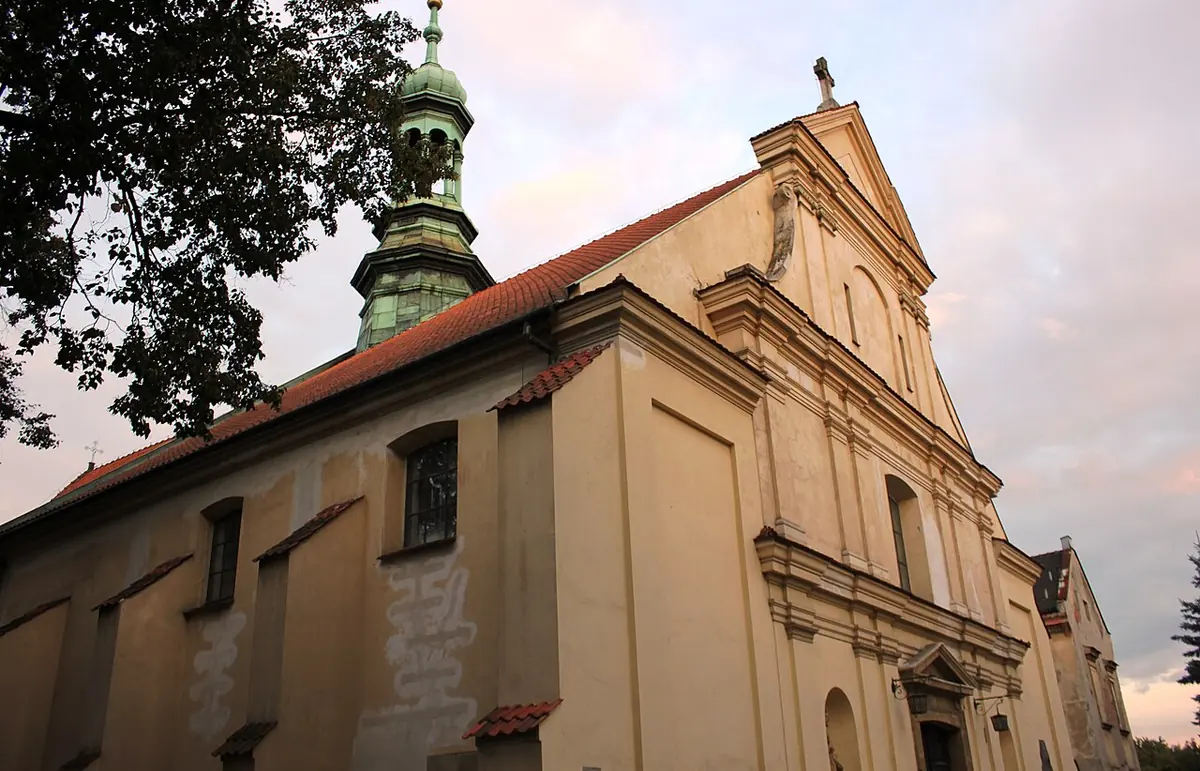
Her feast is April 28, as Pope Francis set it. In April 2016 her remains were brought from Rakowicki Cemetery to the crypt of St. Nicholas Church, and on April 4, 2018, they were placed in an alabaster sarcophagus in the south nave, beneath a late-Gothic altarpiece of the Coronation of Mary. The parish holds an hour of adoration with Blessed Hanna every Thursday and a Mass for the sick on the 28th of each month. See others honored in April on our feast days page.
Praying with Blessed Hanna
The Catholic nurses of Kraków have published a litany to Blessed Hanna Chrzanowska, which is prayed at St. Nicholas after the monthly Mass for the sick; you can find it on their prayer page in Polish. We do not reprint it here.
Let us ask Blessed Hanna to pray for nurses and caregivers, for the chronically sick who are alone at home, and for all of us, that we may see the face of Jesus in those who suffer.
Frequently asked questions
Who was Blessed Hanna Chrzanowska?
A Kraków nurse, teacher and editor, born in Warsaw in 1902. After a long career in nursing education she retired in 1958 and, with Karol Wojtyła's support, organized parish nursing for the chronically sick at home across the Archdiocese of Kraków. She died on April 29, 1973.
When is the feast of Blessed Hanna Chrzanowska?
April 28, the date Pope Francis set in the apostolic letter read at her beatification in 2018.
What miracle was approved for her beatification?
The healing of Zofia Szlendak-Cholewińska, a nurse and former pupil of Hanna, from a massive cerebral hemorrhage in 2001. Pope Francis approved the decree on July 7, 2017.
Where are the relics of Blessed Hanna Chrzanowska?
Her remains rest in an alabaster sarcophagus in the south nave of St. Nicholas Church, ul. Kopernika 9, in Kraków, near the University Hospital clinics.
Keep exploring
Sources
- Życiorys (Biography), Błogosławiona Hanna Chrzanowska, Catholic Association of Polish Nurses and Midwives, Kraków. Family, training, the 1935 nursing law, the deaths of her aunt, father and brother in 1939–1940, wartime work, Kobierzyn, Tyniec oblate, parish nursing with Wojtyła, the funeral homily and the cause (our translations from the Polish)
- Promulgation of Decrees of the Congregation for the Causes of Saints, Holy See Press Office, 7 July 2017
- Hanna Chrzanowska błogosławioną po 20 latach od wszczęcia procesu, dzieje.pl (PAP), 27 April 2018. The approved healing of Zofia Szlendak-Cholewińska and the stages of the cause
- Hanna Chrzanowska, prekursorka domowej opieki nad chorymi - beatyfikowana, dzieje.pl (PAP), 28 April 2018. Pope Francis's letter setting the feast on April 28, Cardinal Amato's homily and the heart-shaped reliquary
- Szczątki Hanny Chrzanowskiej przeniesione do kaplicy przyszłej błogosławionej, dzieje.pl (PAP), 4 April 2018. Exhumation and transfer to St. Nicholas in 2016 and 2018
- Pope Francis, Regina Caeli, 29 April 2018, Vatican