St. Judas Cyriacus, Patron of Ancona
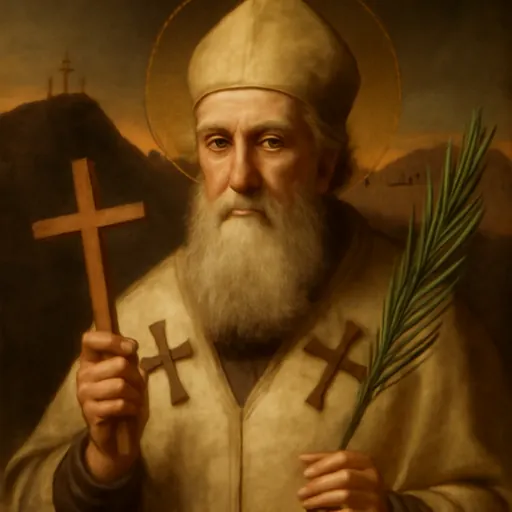
St. Judas Cyriacus is honored as the Jewish man of Jerusalem who, by an ancient tradition, showed St. Helena where the Cross of Christ lay buried, was baptized with the name Cyriacus, became bishop of Jerusalem and died a martyr under Julian the Apostate. His body is venerated in Ancona, Italy, whose patron he is, and his feast is May 4.
Who was St. Judas Cyriacus?
St. Judas Cyriacus is the saint whose story is joined to the most precious relic in Christendom. An ancient tradition says that when the Empress St. Helena came to Jerusalem in the 320s to search for the Cross of Christ, a learned Jewish man named Judas knew where it lay buried. He led her to the place, saw the Cross found and recognized by a miracle, and asked for baptism. He took the name Cyriacus, which means "belonging to the Lord" in Greek, became bishop of Jerusalem and, by the same tradition, died a martyr under the Emperor Julian the Apostate in 363.
His body has been venerated for many centuries in Ancona, the port city on Italy's Adriatic coast, where the cathedral bears his name and he is the city's patron. We keep his feast on May 4, the day after the old feast of the Finding of the Holy Cross.

The finding of the Cross
That the Cross was found in Jerusalem in Constantine's reign is early history. The emperor ordered the pagan temple built over Golgotha to be torn down, and in the excavations the wood was uncovered and honored. Soon a great basilica rose over the place, and pilgrims were venerating the relic there before the century was out. You can read the whole story on our page about the True Cross.
How the spot was known is another question. Writing in the fifth century, the historian Sozomen passed on a report that "some say that the facts were first disclosed by a Hebrew who dwelt in the East," who had learned the place from documents handed down in his family. Sozomen himself preferred to think that God revealed the place "by means of signs and dreams." This is the seed of the story of Judas.

The legend of Judas
Over the next centuries the report grew into a full narrative, told in Greek, Syriac and Latin and known as the Acts of Judas Cyriacus. In its best-known form, Helena gathers the learned men of Jerusalem and asks where Christ was crucified. Judas alone knows, from his father Simon, and at first will not tell. When at last he prays at Golgotha, the ground trembles and a sweet fragrance rises. The diggers find three crosses, and the true one is known when it raises a dead man to life. Judas believes, is baptized, and later finds the nails of the Passion as well. The legend even makes him a grandnephew of St. Stephen, the first martyr.
Some medieval retellings color this story with hostility toward the Jewish people. We set that aside. The heart of the tradition is a man of Israel who came to faith in Christ at the foot of the Cross.
The Church has always known that these Acts are legend. In the decree on books attributed to Pope Gelasius (late fifth century), the writing on the finding of the Cross is listed among works to be read with caution, and Sabine Baring-Gould in 1898 pointed out the plain problems of chronology. Yet the story entered the Western liturgy and the Golden Legend, and it shaped how painters showed the scene for a thousand years.

Bishop and martyr
The tradition continues with Cyriacus as bishop of Jerusalem. When the Emperor Julian tried to restore paganism in the 360s, he is said to have had the old bishop tortured and put to death in 363. The Orthodox Church honors him as the Hieromartyr Cyriacus, Patriarch of Jerusalem, on October 28. The lists of the bishops of Jerusalem do not name a bishop Cyriacus in that century, and Baring-Gould noted that the earlier martyrologies mixed him up with Judas, a second-century bishop of the city, and with other martyrs called Cyriacus or Quiriacus. What the details of his martyrdom were, we cannot say with certainty. That he has been honored as a martyr from very early times, we can.
The miracles of St. Judas Cyriacus
- The finding of the Cross (traditional): the trembling ground, the fragrance at Golgotha and the dead man raised by the touch of the true Cross belong to the legend of his conversion. Sozomen already mentions a dead person restored by the Cross, without naming Judas.
- The finding of the nails (traditional): the Acts say his prayer made the nails of the Passion shine out from the earth so they could be given to Helena.
- Protection of Ancona (traditional): the people of Ancona have turned to their patron for centuries in times of war, plague and danger at sea, and the archdiocese still asks him to defend the city "da ogni pericolo," from every danger.
Why St. Judas Cyriacus is the patron saint of Ancona
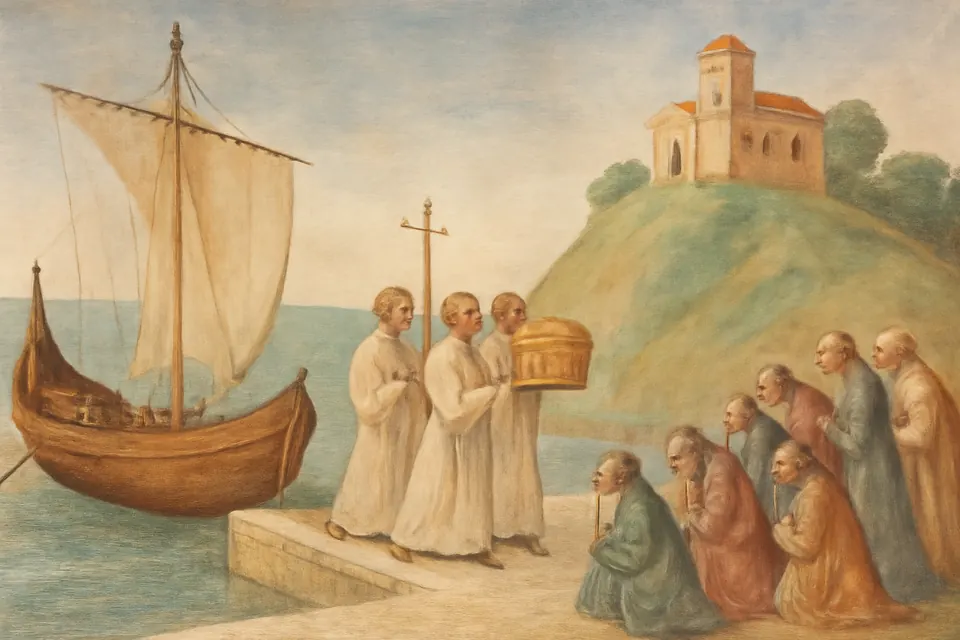
The archdiocese of Ancona-Osimo teaches that his relics were brought to the city in the fifth century through the Empress Galla Placidia, the daughter of Theodosius the Great. The town took him as its protector, and his body now rests in the crypt of the cathedral of San Ciriaco, the Romanesque church on the Guasco hill above the harbor. Ancona also kept a feast for the translation of his relics on August 8, and the old coins of the city show him in the vestments of a patriarch.

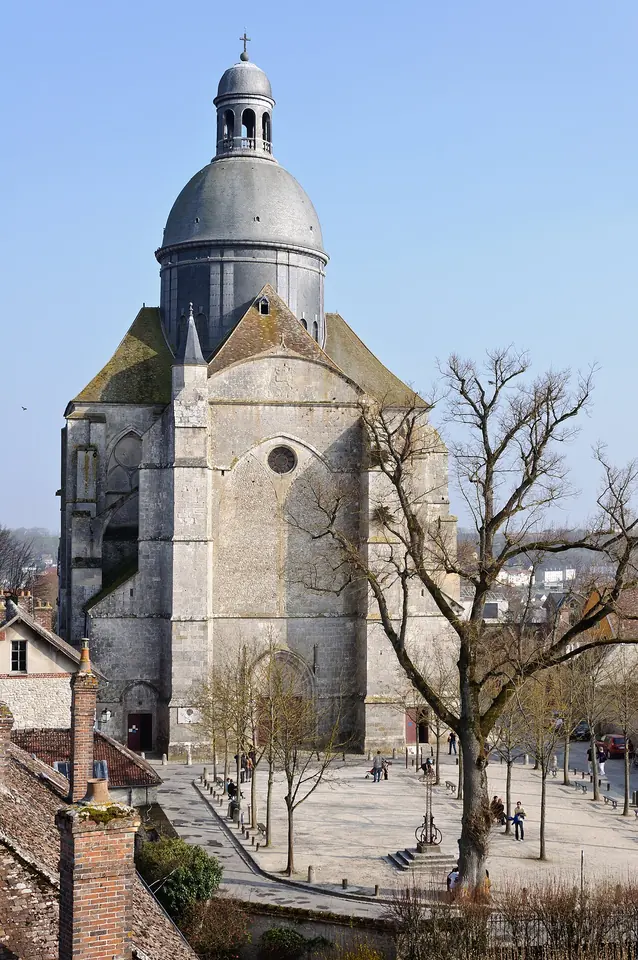
A second relic center grew up in France. Count Henry I of Champagne brought part of his skull from the East in the twelfth century to the town of Provins, where he built the collegiate church of Saint-Quiriace in his honor. A portion of the skull was still shown there when Baring-Gould wrote.
Symbols of St. Judas Cyriacus in art
In Western art St. Judas Cyriacus usually appears as an elderly bishop in miter and cope, with a crozier, as in Palma il Giovane's painting in Venice. Like other martyrs, he often holds a palm branch. Because his fame rests on the finding of the Cross, many images give him a cross, and some show him with a spade or point to the hole where the crosses were found. In scenes of Helena's discovery he is the man in Jewish dress who kneels, digs or holds up the Cross, as in the drawing from Vercelli. Ancona's old coins and seals show him in the robes of an Eastern patriarch, which helps you recognize him in the city.
Prayer to St. Judas Cyriacus
The Archdiocese of Ancona-Osimo prays a triduum before his feast each year with a prayer signed by its archbishop. It recalls that "Egli sapeva dove era nascosta la Croce di Cristo, ma ne ignorava la potenza salvifica" ("He knew where the Cross of Christ was hidden, but did not know its saving power"), and asks his intercession for spouses, families, children, the young, the old and the sick. Let us join the Church of Ancona in asking St. Cyriacus to pray for us, that like him we may come to know the saving power of the Cross. St. Judas Cyriacus, pray for us.
Frequently asked questions
Who was St. Judas Cyriacus?
By tradition, a learned Jew of Jerusalem named Judas who helped St. Helena find the True Cross in the fourth century, was converted by the miracle that identified it, took the baptismal name Cyriacus ("belonging to the Lord"), became bishop of Jerusalem and was martyred under Julian the Apostate in 363. His story comes from legend, but his cult is very old.
When is the feast of St. Judas Cyriacus?
May 4 in the West and in Ancona, the day after the old feast of the Finding of the Holy Cross on May 3. The Orthodox Church keeps him on October 28 as the Hieromartyr Cyriacus, Patriarch of Jerusalem.
What is St. Judas Cyriacus the patron saint of?
The city and archdiocese of Ancona on Italy's Adriatic coast, whose cathedral is named for him and keeps his body in its crypt.
Is the story of Judas Cyriacus historical?
The finding of the Cross under Constantine is early history, but the story of Judas is a later legend. Sozomen, writing in the fifth century, already knew the report of a Hebrew who learned the place from family documents and doubted it. We honor St. Cyriacus as a martyr venerated for many centuries, while being honest that the details of his life come from tradition.
Keep exploring
Sources
- Archdiocese of Ancona-Osimo: Triduo in preparazione alla solennità di San Ciriaco (in Italian). The archdiocese's prayer to St. Cyriacus, its summary of his life, the arrival of his relics in Ancona and their place in the cathedral crypt
- Sozomen, Ecclesiastical History, Book II (New Advent). The fifth-century report of "a Hebrew who dwelt in the East" who learned the place of the Cross from family documents, and Sozomen's doubts about it
- S. Baring-Gould, The Lives of the Saints, vol. 5: May (1898), May 3 and May 4. The legend of Judas Quiriacus, Pope Gelasius and the apocryphal Acts, the old coins of Ancona, the August 8 translation feast and the skull relic at Provins
- Orthodox Church in America: Hieromartyr Cyriacus the Patriarch of Jerusalem. The Orthodox life and the October 28 commemoration
- Catholic Encyclopedia: The True Cross. The history of the May 3 feast of the Finding of the Cross