St. Torpes of Pisa: First-Century Martyr and Namesake of Saint-Tropez
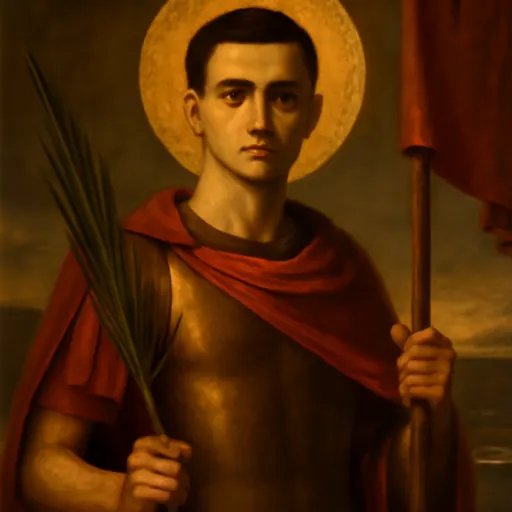
St. Torpes of Pisa (San Torpè) was, by tradition, an officer at Nero's court who became a Christian and was beheaded at Pisa about the year 65. Legend says his body drifted in a boat to the coast of Provence, where the town of Saint-Tropez takes its name from him. Pisa keeps his feast on April 29.
Who was St. Torpes of Pisa?
St. Torpes of Pisa, San Torpè in Italian, is an early martyr of Tuscany honored on April 29. He is also the saint behind a famous name on the French Riviera: Saint-Tropez, the old fishing port in Provence, is named for him. Tropez is simply the Provençal form of Torpes.
What we know of him comes from tradition, not from documents of his own time. The Book of Saints compiled by the Benedictines of Ramsgate in 1921 calls him "a Christian of Pisa, an early convert made by the Apostles," who "suffered martyrdom under Nero, probably about A.D. 65," and adds honestly: "the legends we have about him are very unreliable." Pisa has honored him for many centuries all the same, and we can honor him with the Church as a witness to Christ from the first Christian generation.
The story of St. Torpes
An officer of Caesar's household
The old Roman Martyrology tells his story in one long sentence. Torpes "filled a high office in the court of Nero, and was one of those of whom the apostle St. Paul wrote from Rome to the Philippians: 'All the saints salute you, especially those that are of the house of Caesar.'" Later tellings make him a knight or a captain of the emperor's guard, born in Pisa, who heard the faith from St. Paul himself.
When he would not deny Christ, the Martyrology continues, he was "by order of Satellicus, buffeted, cruelly scourged and delivered to the beasts to be devoured, but being uninjured, he at last terminated his martyrdom by decapitation on the 29th of April." Pisa remembers that he was beheaded in litore pisano, on the shore at Pisa, about the year 68 by its own tradition. These details are traditional.
The boat, the rooster and the dog
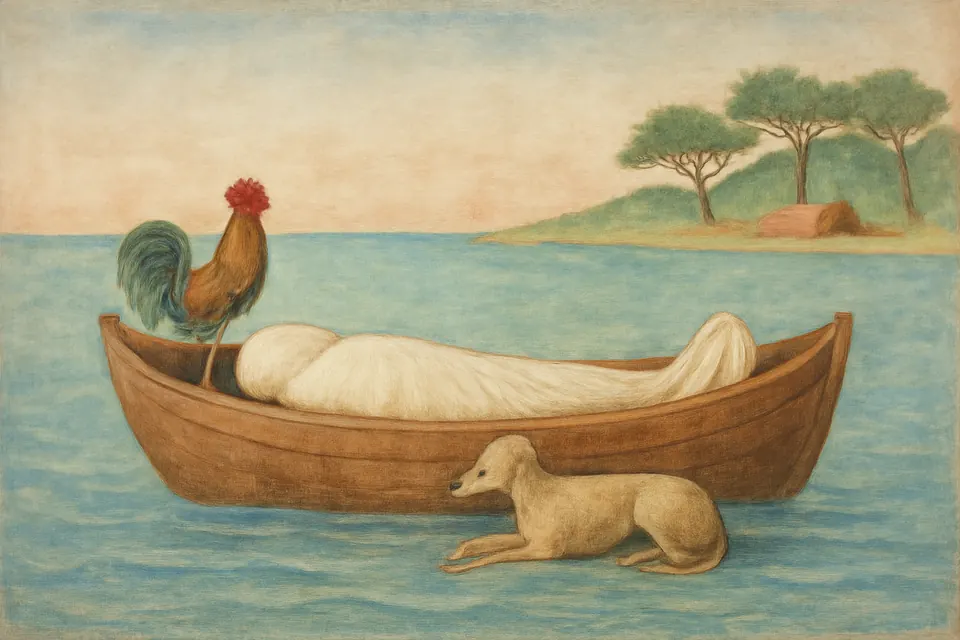
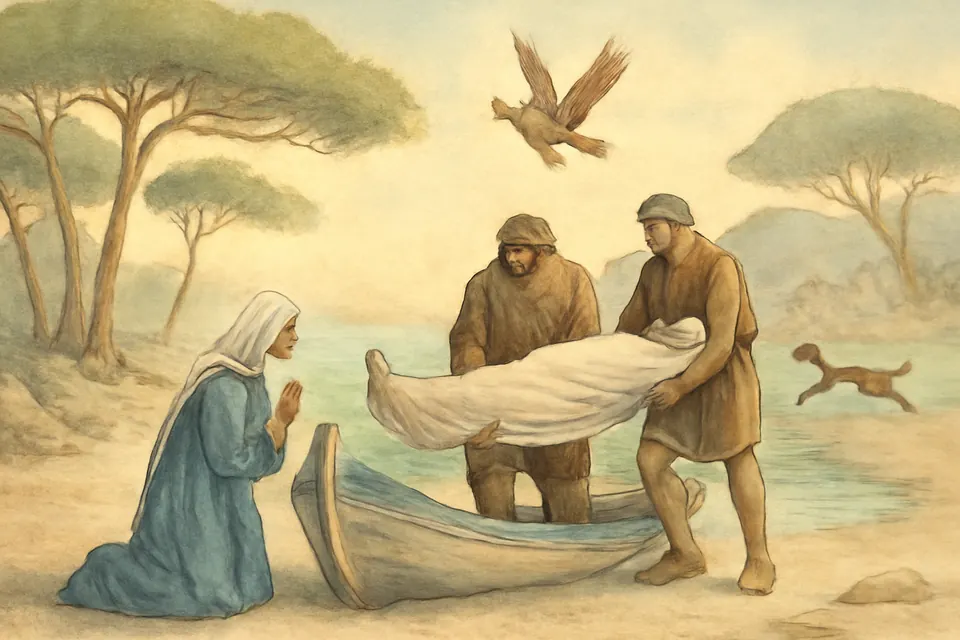
The most loved part of the story begins after his death. His head stayed in Pisa. His body, the legend says, was placed in an old boat with a rooster and a dog, meant to devour it, and pushed out to sea. The animals did not touch it. The boat drifted west along the coast and came ashore in Provence, where a holy woman named Celerina had been told in a dream to wait for it. She gave the martyr burial, and the place took his name.
All of this is traditional legend, and the story of a martyr's body arriving by sea is told of other saints of that coast too, such as St. Reparata at Nice. It is a story about God guarding the bodies of his witnesses, and the people of Provence have told it with joy for centuries.
Saint-Tropez and the Bravade
Saint-Tropez kept his body until it was lost in later centuries. Its love for the saint never was. Every year in mid-May the town holds the Bravade: the bust of Saint Tropez is carried through the streets on the shoulders of bearers, escorted by musketeers, sailors and bravadeurs who greet him with volleys of gunfire. Since 1953, when a man from Saint-Tropez happened upon the church of San Torpè, pilgrims from the town have also come to Pisa every April 29 to pray before the martyr's head, welcomed by the mayor and the Carmelite friars.
The miracles of St. Torpes
Pisa credits him with many wonders. The best remembered is the end of the plague that struck the city in 1633, which Pisans attributed to his intercession on his feast, April 29. These are reported favors from the city's tradition; none was examined by a formal process.
His relics in Pisa
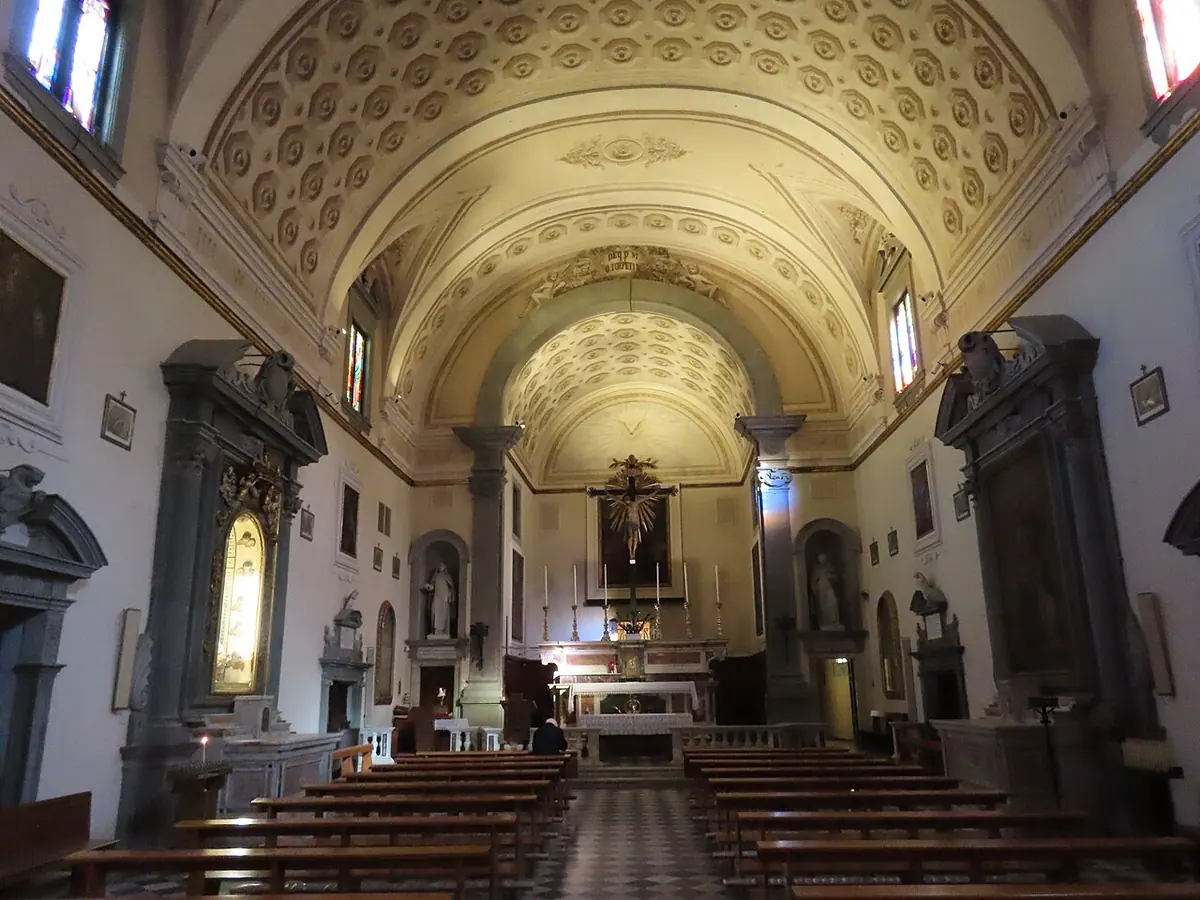
His head rests in a precious reliquary in the church of San Torpè, beside the Roman ruins known as the Baths of Nero. The Discalced Carmelite friars have kept it since 1816. Pisa's tourism office admits that "few Pisans" now know his story, but the friars, the city and the French pilgrims keep it alive each spring.
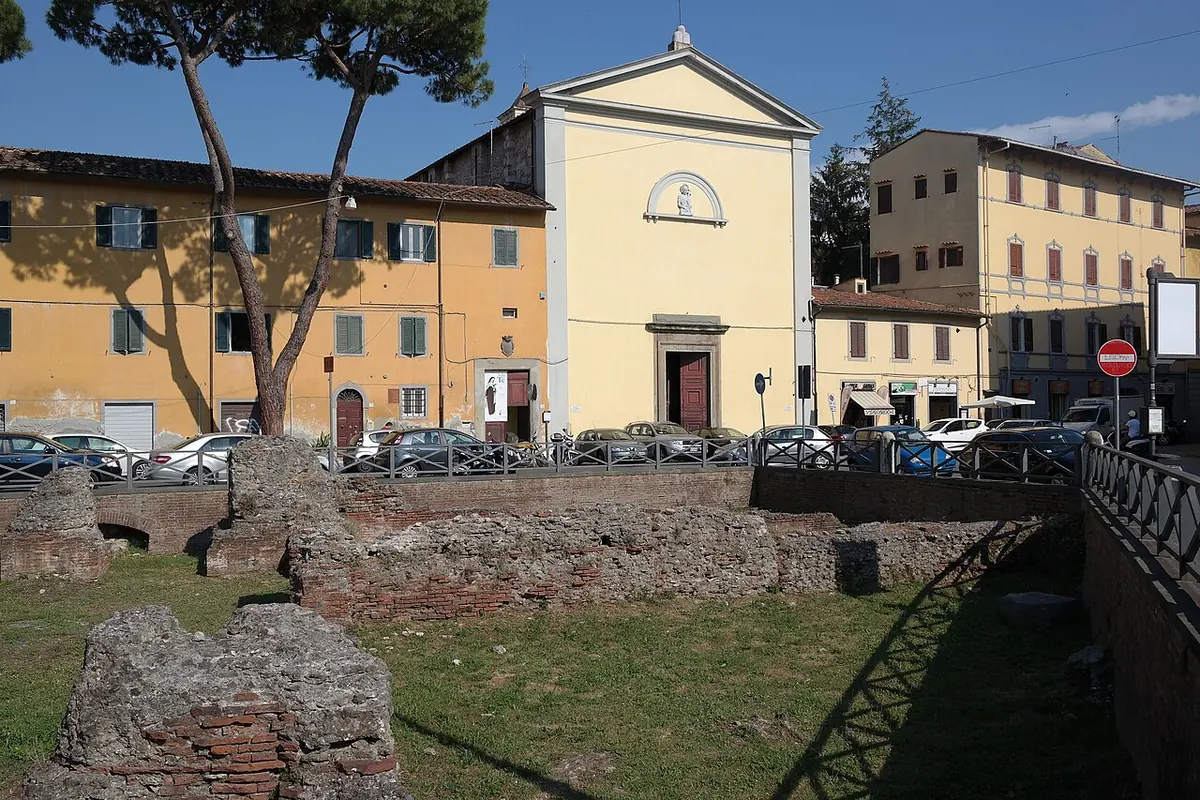
Where the relics of St. Torpes of Pisa are kept: see them on the relics map →
Symbols of St. Torpes in art
- Armor and a soldier's cloak: his office at Nero's court, as Pisa remembers him.
- The martyr's palm: his death for Christ.
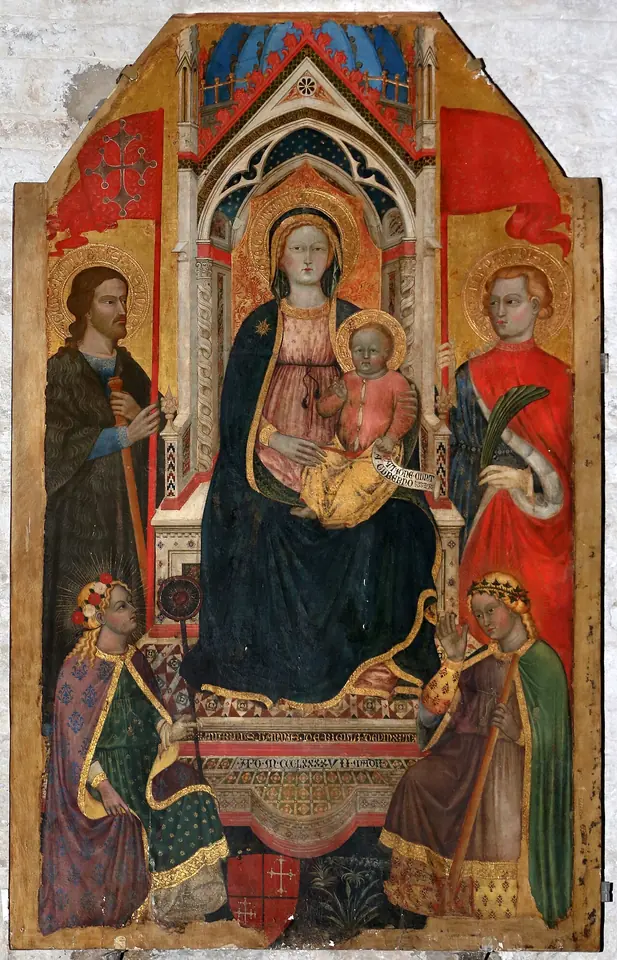
- The red banner of Pisa: in Turino Vanni's altarpiece he and St. Ranieri carry the city's insignia, Ranieri the white cross on red and Torpes the red flag of Pisa.
- A boat with a rooster and a dog: the legend of Saint-Tropez.
- A bust: the form in which Saint-Tropez carries him in the Bravade.
When you see a young armed saint with a red banner in an old Pisan painting, it is often Torpes.
Feast day and prayer
Pisa keeps his feast on April 29, and Saint-Tropez celebrates in mid-May. See other saints of April on our feast days page.
No traditional prayer to St. Torpes is in wide use outside Pisa and Saint-Tropez. Let us ask him to pray for Christians who serve in government and the armed forces, for sailors and fishermen, and for the people of Pisa and Saint-Tropez. St. Torpes, pray for us.
Frequently asked questions
Who was St. Torpes?
A first-century martyr of Pisa. Tradition makes him a Roman officer of Nero's household, converted through St. Paul's preaching, who refused to deny Christ and was beheaded at Pisa. The Book of Saints (1921) says frankly that the legends about him are very unreliable.
Is Saint-Tropez named after St. Torpes?
Yes. Tropez is the Provençal form of Torpes. By legend his headless body came ashore there in a drifting boat, and the town has honored him as its patron ever since, above all in the Bravade festival each May.
Where are the relics of St. Torpes?
His head is kept in a reliquary in the church of San Torpè in Pisa, next to the Roman ruins called the Baths of Nero. His body was kept at Saint-Tropez but was later lost.
When is the feast of St. Torpes?
April 29 at Pisa. The older Roman Martyrology placed him on May 17, the day of the translation of his body, and Saint-Tropez celebrates in mid-May.
Keep exploring
Sources
- Roman Martyrology (English translation of the 1749 edition), May 17. Officer of Nero's court, Philippians 4:22, scourged and exposed to beasts by Satellicus, beheaded April 29, feast moved for the translation of his body
- The Book of Saints (Benedictine monks of St. Augustine's Abbey, Ramsgate, 1921): Torpes (April 29). Martyr under Nero, probably about A.D. 65; "the legends we have about him are very unreliable"
- Comune di Pisa, Turismo: Pisa pays tribute to Saint Torpé. His head in the church of San Torpè, kept by the Discalced Carmelites since 1816; Turino Vanni's painting; the plague of 1633; the pilgrimage from Saint-Tropez since 1953; the Bravade