Blessed Anna Rosa Gattorno, Widow, Mother and Foundress of the Daughters of St. Anne
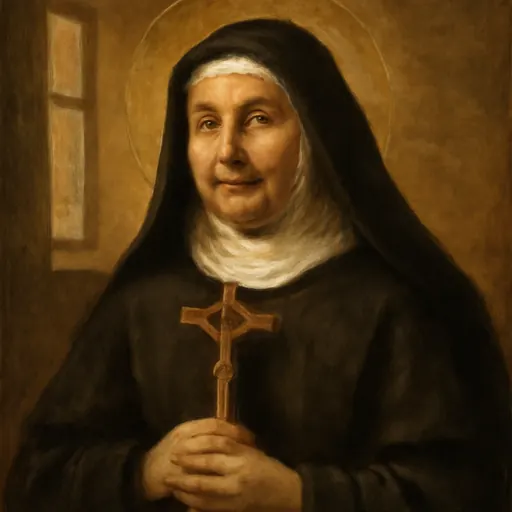
Blessed Anna Rosa Gattorno (1831–1900) was a wife and mother of Genoa who, widowed at twenty-six and grieving a lost child, gave her life to Christ and to the suffering and founded the Daughters of St. Anne, mother of Mary Immaculate. At her death in 1900 she left about 3,500 sisters. She was beatified on April 9, 2000, and her feast is May 6.
Who was Blessed Anna Rosa Gattorno?
Blessed Anna Rosa Gattorno was a wife and mother of Genoa who lost her fortune, her husband and her youngest child in a few short years, and came out of that sorrow with a new vocation. She founded the Daughters of St. Anne, mother of Mary Immaculate, sisters who serve Jesus in the sick, the poor and the abandoned. When she died in Rome in 1900, Mother Rosa left 3,500 sisters in many countries.
At her beatification, St. John Paul II said she "offers the challenge of a life totally spent for him and for her youngest and poorest brethren." He added that "the sorrows and sacrifices that marked her marriage and motherhood soon called her to embrace the crucified Jesus."

The life of Blessed Anna Rosa
A Genoese daughter, wife and widow
Rosa Maria Benedetta Gattorno was born in Genoa on October 14, 1831, into a well-off Christian family, and was baptized the same day in the parish of San Donato. She was taught at home, as daughters of comfortable families were then. At twenty-one, on November 5, 1852, she married her cousin Gerolamo Custo and moved with him to Marseille.
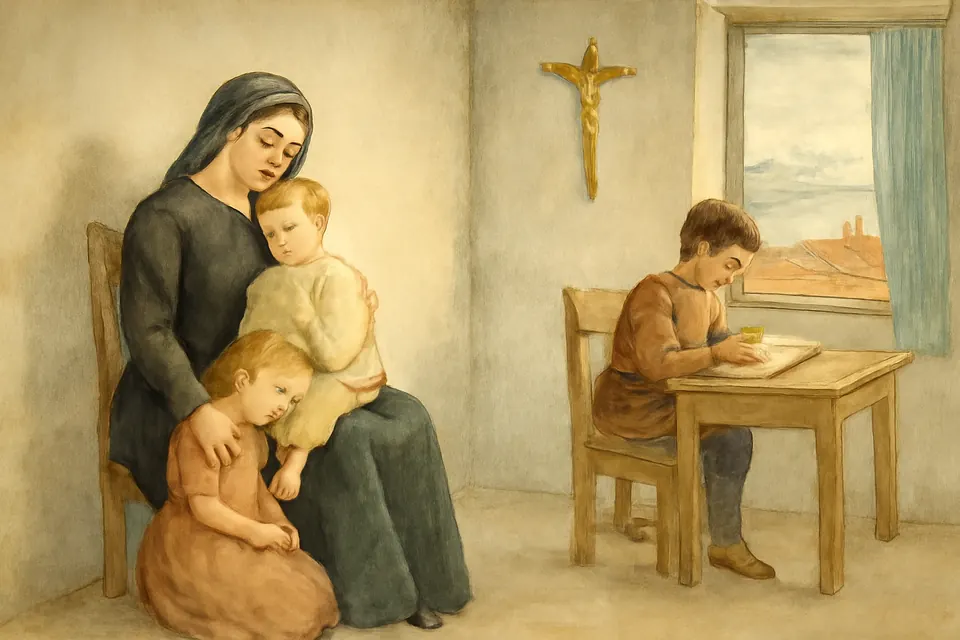
The happiness did not last. A sudden financial collapse sent the young family back to Genoa in poverty. Their first child, Carlotta, was struck by an illness that left her deaf and unable to speak for life. Gerolamo tried to make his fortune abroad and came home gravely ill. He died on March 9, 1858, less than six years after the wedding. A few months later Rosa buried her youngest son.
"My conversion"
Rosa later called what followed her "conversion": a complete offering of herself to the Lord and to her neighbor. Under the direction of her confessor, Don Giuseppe Firpo, she took private vows of chastity and obedience on the feast of the Immaculate Conception in 1858, and a vow of poverty in 1861, as a Franciscan tertiary. Her biographers report that in 1862 she received the hidden stigmata, felt most keenly on Fridays. This is a reported grace, known from her own circle; the Church has not ruled on it.
She went on raising her two surviving children with great tenderness, and she gave every free hour to the sick in the hospitals and in their homes. The Catholic associations of Genoa soon wanted her, and the archbishop asked her to revise the rule of a pious union of women. While praying before the crucifix over that work in February 1864, she received the idea of a new foundation of her own.
"God will take care of your children"
She was afraid. A new institute could take her away from her children. She prayed, did penance, and asked advice, and the Capuchin brother St. Francis of Camporosso encouraged her. Hoping in her heart to be released, she went to Rome to put the question to Pope Pius IX himself. At the audience of January 3, 1866, the pope told her to begin at once. Her biographers record his words: "This Institute will spread rapidly like the flight of a dove to every part of the world. God will take care of your children; you take care of God in his work" (our translation).

On December 8, 1866, in Piacenza, she began the Daughters of St. Anne, mother of Mary Immaculate. She took the habit in 1867 and made her religious profession with twelve companions on April 8, 1870, taking the name Anna Rosa. Father Giovanni Battista Tornatore, a Vincentian priest, wrote the rules and is honored as co-founder.
Servants of the poor
Mother Rosa called her sisters "servants of the poor and ministers of mercy." They nursed the sick of every illness, cared for the old and alone, sheltered girls at risk and trained them for work, and opened schools for the children of the poor. In Piacenza she worked with Bishop Giovanni Battista Scalabrini in his school for deaf girls, work close to a mother whose own daughter could not hear.
The institute received its decree of praise in 1876 and final approval in 1879. In 1878 the first sisters sailed for Bolivia, followed by Brazil, Chile, Peru, Eritrea, France and Spain. In Rome, where she worked from 1873, she opened schools for poor boys and girls, nurseries for the babies of women working in the tobacco factory, and homes for women leaving prostitution. By her death the Daughters of St. Anne had 368 houses.

She fell ill with a severe influenza in February 1900, received the Anointing of the Sick on May 4, and died in the general house in Rome on the morning of May 6, 1900.
Beatification
St. John Paul II beatified Mother Rosa in St. Peter's Square on April 9, 2000, during the Great Jubilee, together with Francis Xavier Seelos and three others. He said she "always drew her strength from daily Eucharistic communion," and that she makes "a strong appeal to us all to love, defend and promote life."
Symbols of Blessed Anna Rosa in art
She lived in the age of photography, so devotional images show her as she looked late in life.
- Religious habit: the dark habit and white wimple of the Daughters of St. Anne.
- Crucifix: her vocation was born before the crucifix, and her spirituality was union with Christ crucified.
- Children: she is sometimes shown with children, for her own three and for the poor children her sisters served.
- St. Anne with the child Mary: the patron of her institute, mother of Mary Immaculate.
Feast day and where she is honored
Her feast is May 6. She rests in the general house of the Daughters of St. Anne in Rome, where she died. Her sisters work today in Europe, Africa, the Holy Land, the Americas, India and beyond. See others honored in May on our feast days page.
Praying with Blessed Anna Rosa
We have not found an official English prayer to Blessed Anna Rosa Gattorno, so we do not print one. Her own longing, recorded at her beatification, was to be "Jesus' voice," bringing his saving love to everyone.
Let us ask Blessed Anna Rosa to pray for widows and grieving mothers, for parents of children with disabilities, for the sick and those who nurse them, and for all who wonder how to serve God without failing the family he has already given them.
Frequently asked questions
Who was Blessed Anna Rosa Gattorno?
A wife, mother and widow from Genoa, born in 1831, who became a Franciscan tertiary and in 1866, at the urging of Pope Pius IX, founded the Daughters of St. Anne in Piacenza to serve the sick, the poor and abandoned children. She died in Rome on May 6, 1900.
When is the feast of Blessed Anna Rosa Gattorno?
May 6, the day she died in Rome in 1900.
When was Anna Rosa Gattorno beatified?
Pope John Paul II beatified her in St. Peter's Square on April 9, 2000, with Francis Xavier Seelos, Mariano de Jesús Euse Hoyos, Mary Elizabeth Hesselblad and Mariam Thresia Chiramel Mankidiyan.
Where is Blessed Anna Rosa Gattorno buried?
In the general house of the Daughters of St. Anne in Rome, where she died.
Keep exploring
Sources
- John Paul II, Homily for the beatification of five Servants of God, April 9, 2000, Vatican. Her life offered for the conversion of sinners; "portavoce di Gesù"
- John Paul II, Address to the pilgrims for the beatification of five Servants of God, April 10, 2000, Vatican. 3,500 sisters at her death; daily Communion
- Anna Rosa Gattorno, Dicastery for the Causes of Saints
- Beata Anna Rosa Gattorno, Santi e Beati. Family, marriage, widowhood, the audience with Pius IX on January 3, 1866, the founding in Piacenza, missions from 1878, 368 houses, her death and burial