St. Peter of Tarentaise
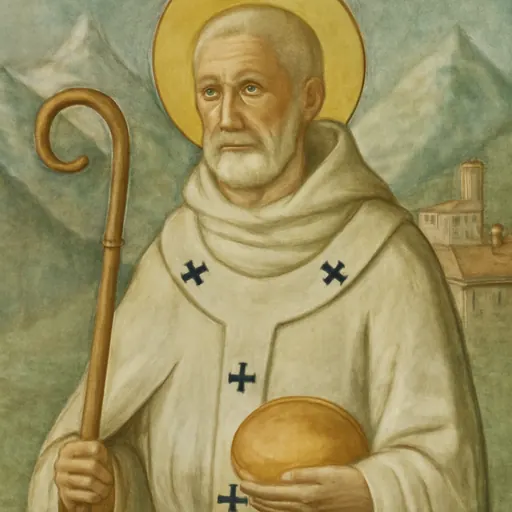
St. Peter of Tarentaise (about 1102–1174) was a Cistercian monk of Bonnevaux, the first abbot of Tamié, and from the 1140s archbishop of Tarentaise in the Savoy Alps. He reformed his diocese, fed the mountain poor, once fled to hide as a lay brother, and was sent by Pope Alexander III to make peace between the kings of France and England. Canonized in 1191, we keep his feast on May 8.
Who was St. Peter of Tarentaise?
St. Peter of Tarentaise was a twelfth-century Cistercian monk who became archbishop of Tarentaise, a poor and rugged diocese in the high Alps of Savoy around the town of Moûtiers. He fed the hungry from his own table, rebuilt churches and hospices, and defended the true pope against the emperor; and he was so troubled by his fame as a wonder-worker that he once ran away to live unknown as a lay brother. Pope Celestine III canonized him in 1191, and we keep his feast on May 8.
He is often called Peter II, to tell him from his predecessor Bl. Peter I of Tarentaise. He is also a different man from Bl. Innocent V, the Dominican pope born Peter of Tarentaise a century later.
The life of St. Peter of Tarentaise
A family that loved the monks
Peter was born about 1102 near Vienne in the Dauphiné, into a family of free farmers. The early life translated in The Cistercian Fathers says he learned the whole Psalter by heart in a single year while still a boy. His parents were known for hospitality to monks and pilgrims; they gave their best beds to the poor and slept on straw themselves. Through them Peter came to know the Cistercians of nearby Bonnevaux, and as a young man he entered that abbey. In time his father, his brothers, and his mother and sister followed him into Cistercian houses.
Abbot of Tamié
About 1132 Bonnevaux founded a new abbey at Tamié, on a narrow pass between Geneva and Savoy, and Peter, not yet thirty, was made its abbot. With Count Amadeus III of Savoy he built a hospital there for the sick and for travelers crossing the pass. The old life remembers that when he traveled he carried loaves and cheeses to share, and ate by the roadside so that "his table might be open to the traveller."
Archbishop in the Alps
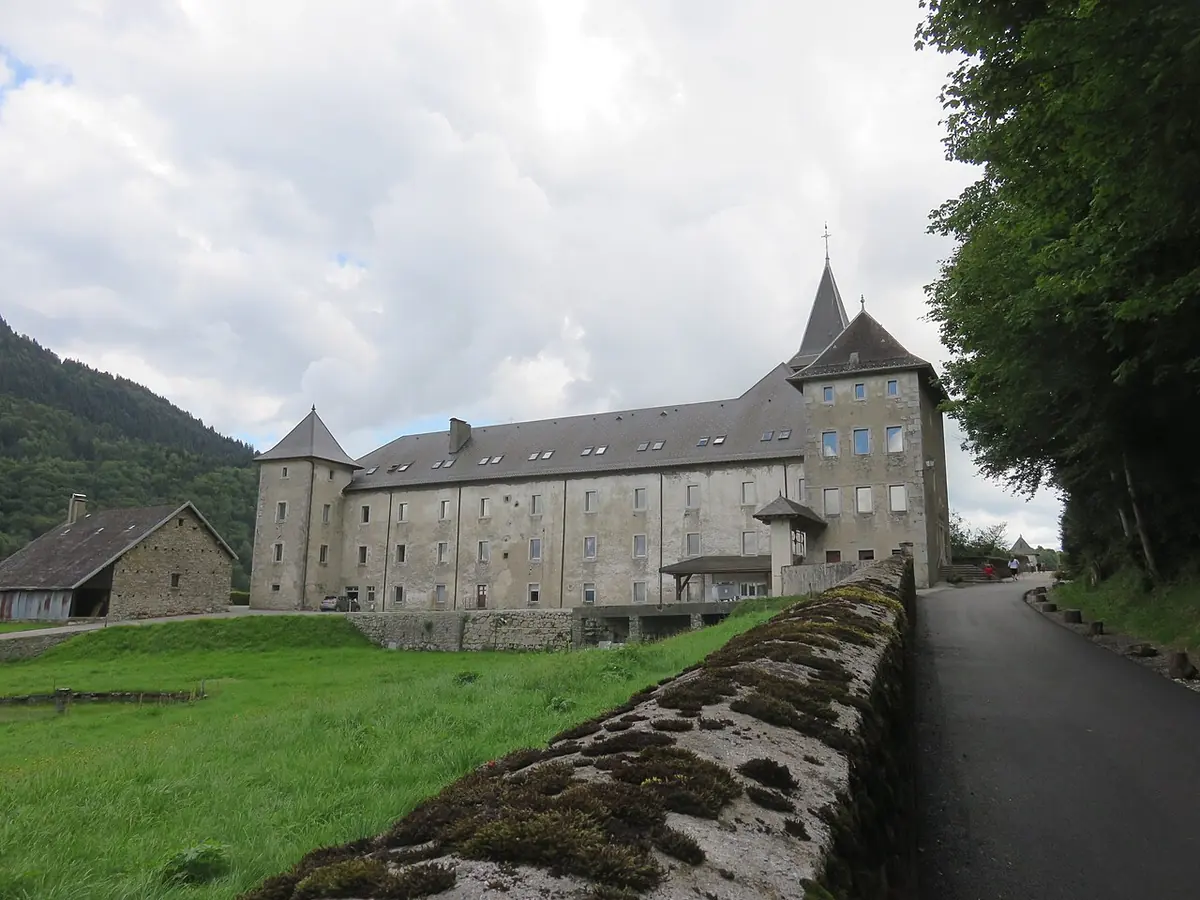
In the early 1140s (the Norwegian Catholic biography gives 1142) Peter was chosen archbishop of Tarentaise. He refused until the Cistercian General Chapter, and St. Bernard of Clairvaux himself, ordered him to accept. He found his diocese in ruins: churches neglected, tithes in lay hands, clergy careless. He brought Augustinian canons into his cathedral and lived among them in the cloister, recovered the tithes, and saw that every parish had books, vestments and a silver chalice. For the poorest villages, the old life says, eggs were collected from house to house and sold each week until the chalice was paid for.
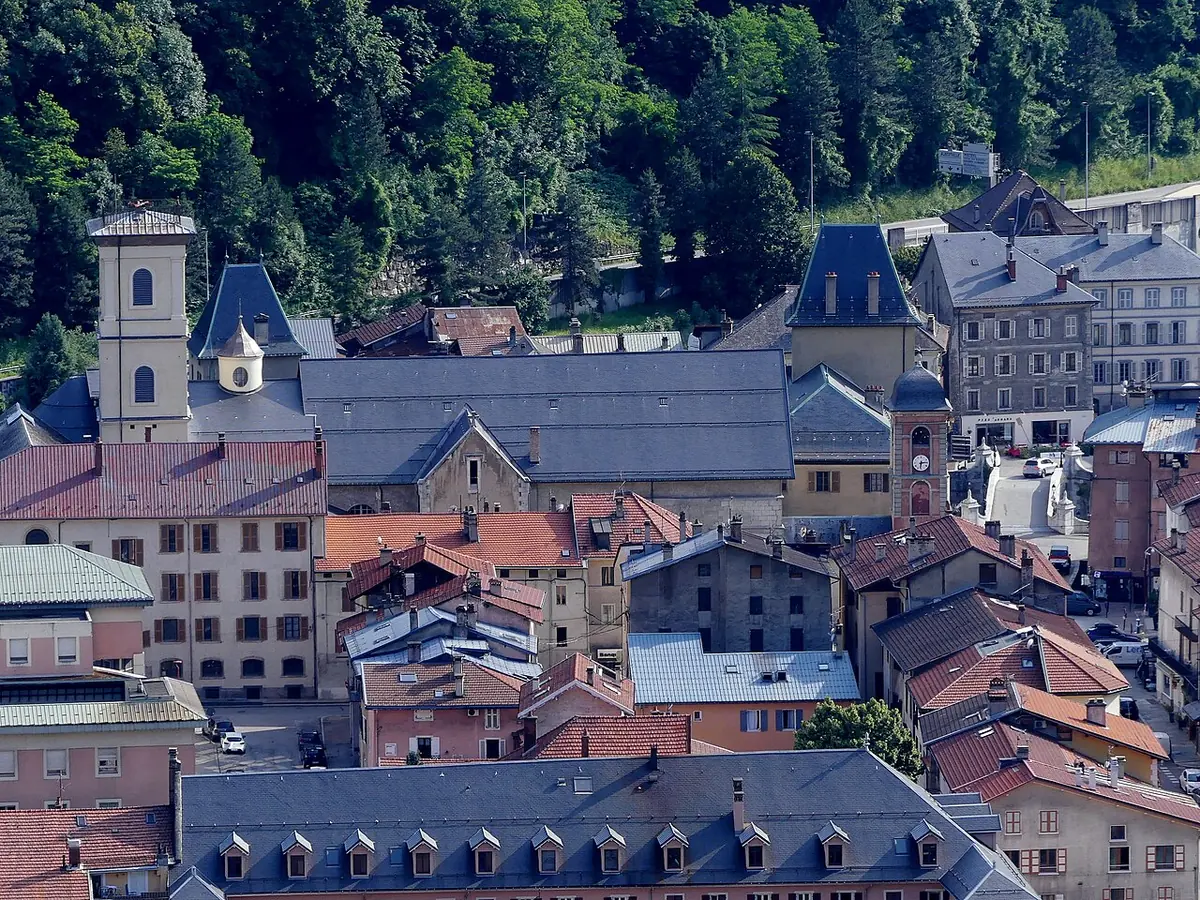
He opened his house to the poor, above all in the lean months before harvest. The Norwegian biography describes his best-known charity, the pain de mai or "May bread": bread and soup at his own expense for every mountain family that came in need during May. He also rebuilt the hospice for travelers on the Little St. Bernard pass.
One winter, the old life says, he met an old woman shivering in the cold and cried, "Alas! there is my mother perishing with cold." He stepped aside, took off the robe beneath his cowl and gave it to her, and came home so chilled that his attendants had to put him to bed.

The runaway archbishop
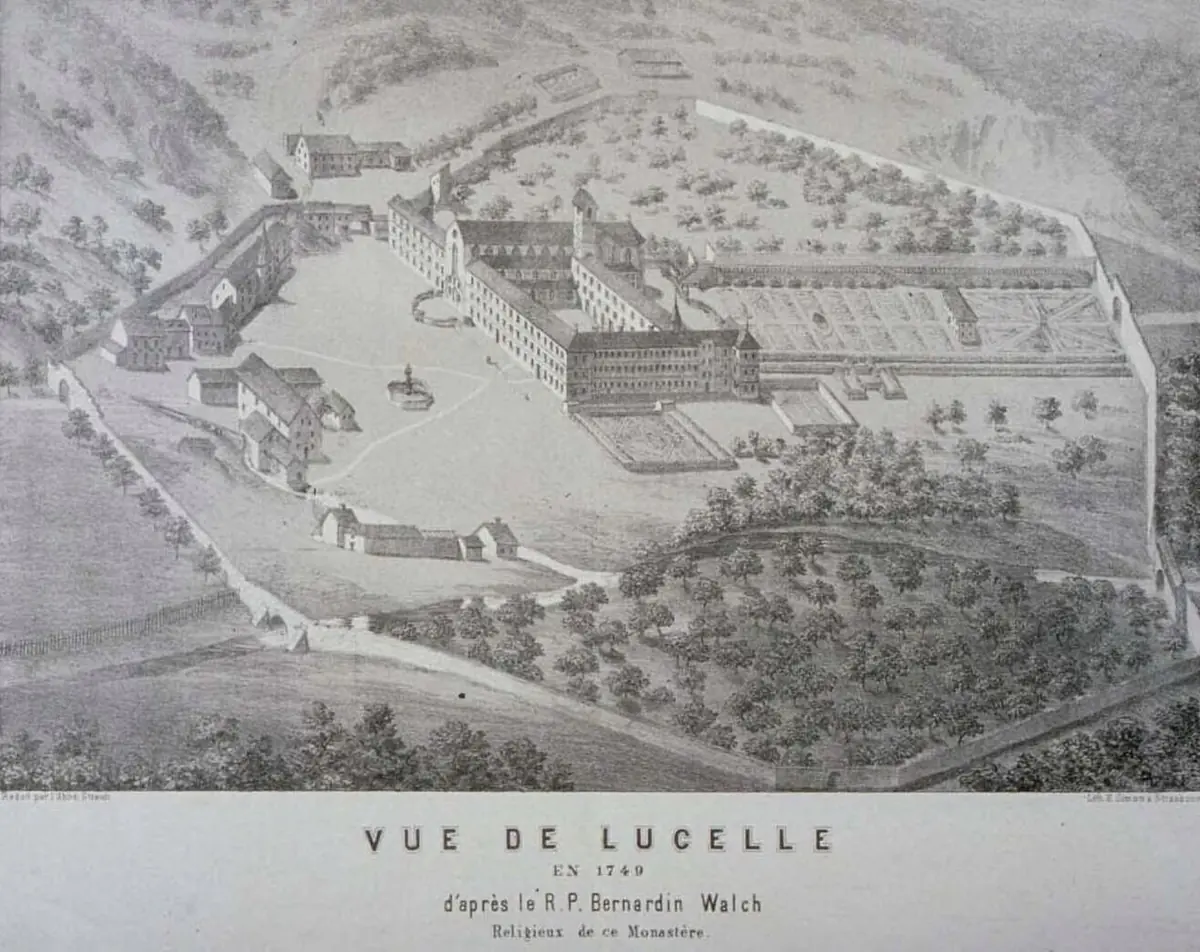
Miracles followed him, and the crowds that came to him frightened him. Around 1155 he slipped away by night and made his way to a remote Cistercian abbey in German-speaking country, which the Norwegian biography identifies as Lucelle, near Basel, where nobody knew him and he lived as a simple monk. After about a year a young man who had grown up in his household found him among the brothers going out to work, fell at his feet and would not let go. The monks knelt too, and Peter was brought home.
Defender of the pope and peacemaker
When a disputed election in 1159 set the antipope Victor IV, backed by Emperor Frederick Barbarossa, against Pope Alexander III, Peter stood firmly for Alexander and preached for him in Burgundy, Lorraine, Alsace and Italy. The old life records that Frederick still treated him with great respect, answering a schismatic bishop who objected: "If I show myself contrary to men, wouldst thou have me also evidently to fight against God?"
Pope Alexander later sent him to make peace between King Louis VII of France and King Henry II of England. The two kings met him at Chaumont, and Henry, the old life says, ran to meet him and threw himself at his feet. Walter Map, a clerk at Henry's court and no friend of the Cistercians, wrote warmly of his holiness and said he had seen a miracle worked through him.
The miracles of St. Peter of Tarentaise
His contemporary life, written by Abbot Geoffrey of Auxerre at the request of Pope Lucius III for the canonization, records many wonders. These are reported miracles, written down by people who knew him; the stories below come from the old life as translated in The Cistercian Fathers:
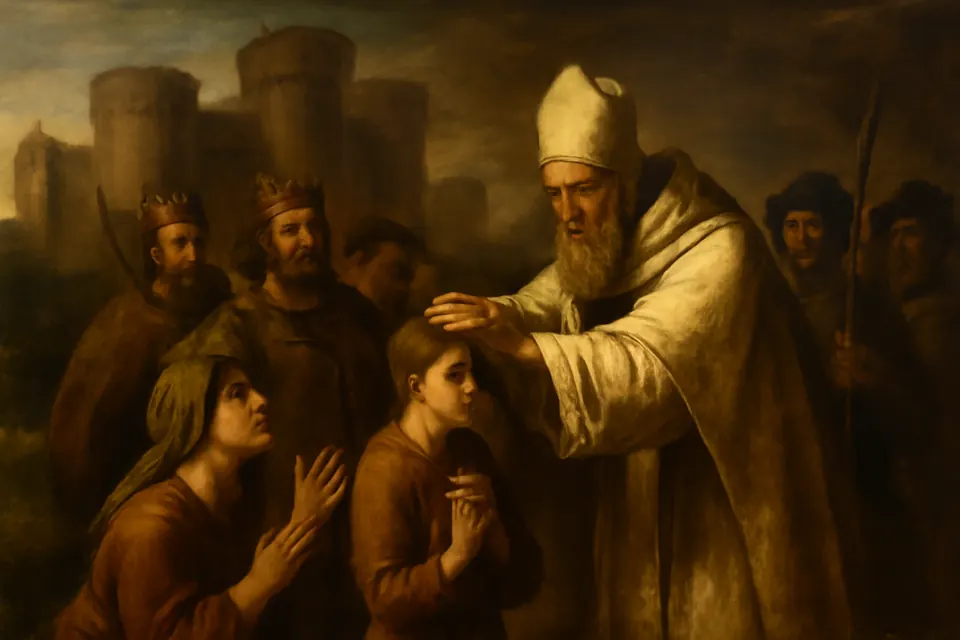
- The blind boy at Chaumont. A boy blind since the age of seven asked him, "My Lord, that I may see." Peter signed his eyes with the cross and prayed, and the boy cried out, "Oh! mother, I see everything." King Louis knelt at the sight.
- A mute girl healed by the sign of the cross on her lips, in the same days.
- Bread multiplied for thousands of hungry listeners on a Sunday, and again at the abbey of Preuilly.
- A stolen relic of the Cross that the thief could not carry out of the abbey until he put it back.
Death and canonization
On his way home he was asked by the pope to settle a quarrel at the abbey of Bellevaux in Franche-Comté. He fell ill with fever on the road and died at Bellevaux on September 14, 1174, his monks singing and praying around him, and he was buried before the altar of the Virgin Mary. Pope Celestine III canonized him on May 10, 1191. His relics were later divided; the largest portions went to Tarentaise, Tamié, Cîteaux and Vesoul.
Symbols of St. Peter of Tarentaise in art
- The white Cistercian cowl: he kept the habit and the Rule all his life.
- The pallium, miter and crozier: his rank as archbishop.
- Loaves of bread: his May bread and his open table for the poor.
He is rarely painted outside Savoy and Cistercian houses, so look for an archbishop in a white monastic habit, often with bread or with a poor person at his feet.
Feast day and prayer
We keep his feast on May 8; some calendars remember him on September 14, the day he died. See our feast days calendar for the other saints of May.
There is no traditional prayer to St. Peter of Tarentaise in common use. Let us ask his help as the poor of the Alps once did: St. Peter, who gave your own robe to a shivering woman and your bread to the hungry, pray for the poor, for travelers and mountain people, for bishops who carry heavy burdens, and for peace between nations. St. Peter of Tarentaise, pray for us.
Frequently asked questions
When is the feast day of St. Peter of Tarentaise?
May 8, his traditional feast. He died on September 14, 1174, and that date is also given for him.
Is St. Peter of Tarentaise the same as Pope Innocent V?
No. Bl. Innocent V, the first Dominican pope (died 1276), was also born Peter of Tarentaise. The saint on this page is the twelfth-century Cistercian archbishop.
What was the "May bread" of St. Peter of Tarentaise?
A charity he founded at his own expense, giving bread and soup during the hungry weeks of May, before the harvest, to the mountain poor who came to his house. The Norwegian Catholic biography says it continued until the French Revolution.
When was St. Peter of Tarentaise canonized?
Pope Celestine III canonized him on May 10, 1191, less than twenty years after his death.
Keep exploring
Sources
- The Cistercian Fathers, or Lives and Legends of Certain Saints and Blessed of the Order of Cîteaux (1874), on archive.org. The English version of his early life, with his parents' charity, the cloak given to the old woman, the flight to a German monastery, the meeting with the kings, the healing of the blind boy, the words of Frederick Barbarossa, and his death and burial at Bellevaux
- Den hellige Peter av Tarentaise (~1102–1174), Den katolske kirke (Norway). Dates of his life, Tamié, the May bread, the Little St. Bernard hospice, Lucelle, the bull of 1171, Walter Map's witness, Geoffrey of Auxerre's life, the canonization of 1191 and the division of his relics