St. Augustine Webster
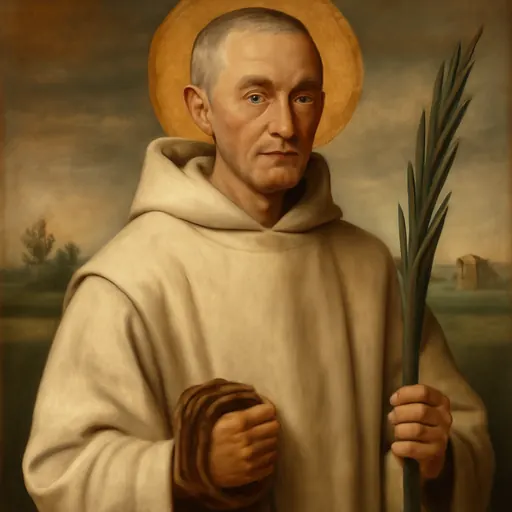
St. Augustine Webster (died 1535) was, from about 1531, prior of the Charterhouse of Axholme. He refused to accept Henry VIII as supreme head of the Church and was hanged, drawn and quartered at Tyburn on May 4, 1535, with St. John Houghton, St. Robert Lawrence and St. Richard Reynolds. We keep his feast on May 4.
Who was St. Augustine Webster?
St. Augustine Webster was a Carthusian monk, prior of the little Charterhouse of Axholme in Lincolnshire, and one of the first martyrs of the English Reformation. On May 4, 1535, he was dragged on a hurdle to Tyburn and hanged, drawn and quartered with his fellow priors St. John Houghton and St. Robert Lawrence, the Bridgettine St. Richard Reynolds and Blessed John Haile. His crime was refusing to swear that King Henry VIII was supreme head of the Church in England.
Pope Leo XIII declared him blessed in 1886. Pope Paul VI canonized him on October 25, 1970, among the Forty Martyrs of England and Wales.
The life of St. Augustine Webster
A monk of Sheen
We know very little about his early years. Dom Bede Camm, writing the lives of the English martyrs in 1904, admitted plainly that "no account of their lives previous to the persecution has come down to us" for Webster and Lawrence. The Catholic Encyclopedia records that Webster had been a monk of Sheen, the large royal Charterhouse on the Thames near Richmond, before he became prior of Axholme. Later writers say he studied at Cambridge, though the early accounts do not mention it.
The Carthusians, the order founded by St. Bruno in 1084, live as hermits within a community. Each monk has his own small house and garden around the great cloister, and the monks meet in church for the night office and the conventual Mass. In Tudor England their silence and austerity gave them great prestige, which is exactly why the king wanted their consent.
Prior of Axholme
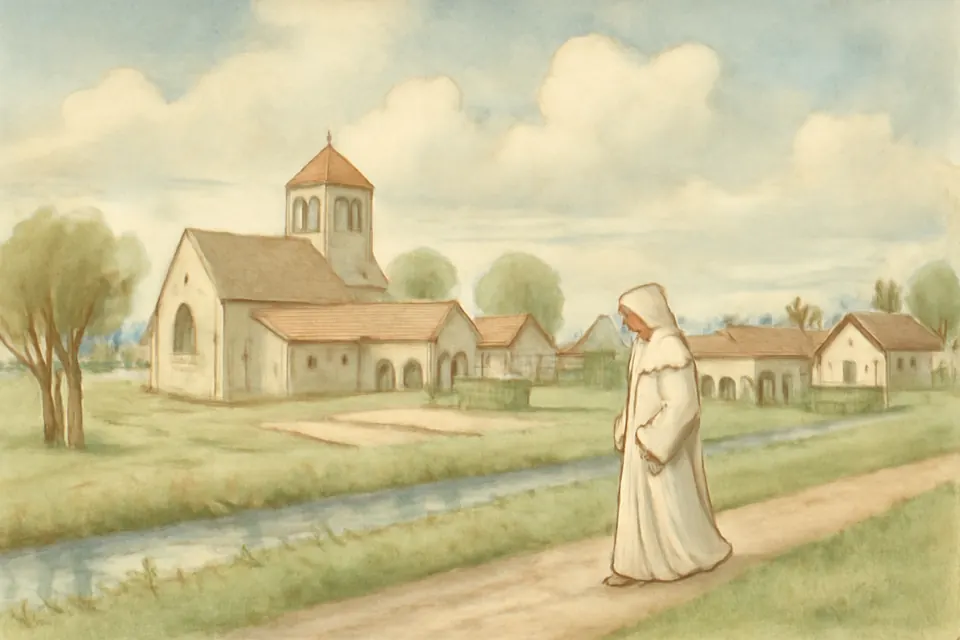
Around 1531 Webster became prior of the Charterhouse of Axholme, dedicated to Our Lady, at Melwood on the Isle of Axholme in north Lincolnshire. It was one of the smaller English charterhouses, set in low, watery country that was still largely undrained.
The journey to London
In April 1535, with the Act of Supremacy now law, Webster traveled to the London Charterhouse. Camm, following the Carthusian chronicler Maurice Chauncy, says he arrived two days after Robert Lawrence, prior of Beauvale in Nottinghamshire. The visitors found the London house under immediate threat: the king had heard that Prior John Houghton was preparing his monks to resist.
The three priors decided to go together to Thomas Cromwell, the king's vicar general, to ask for some easing of the oath. Cromwell's answer was to send them straight to the Tower.
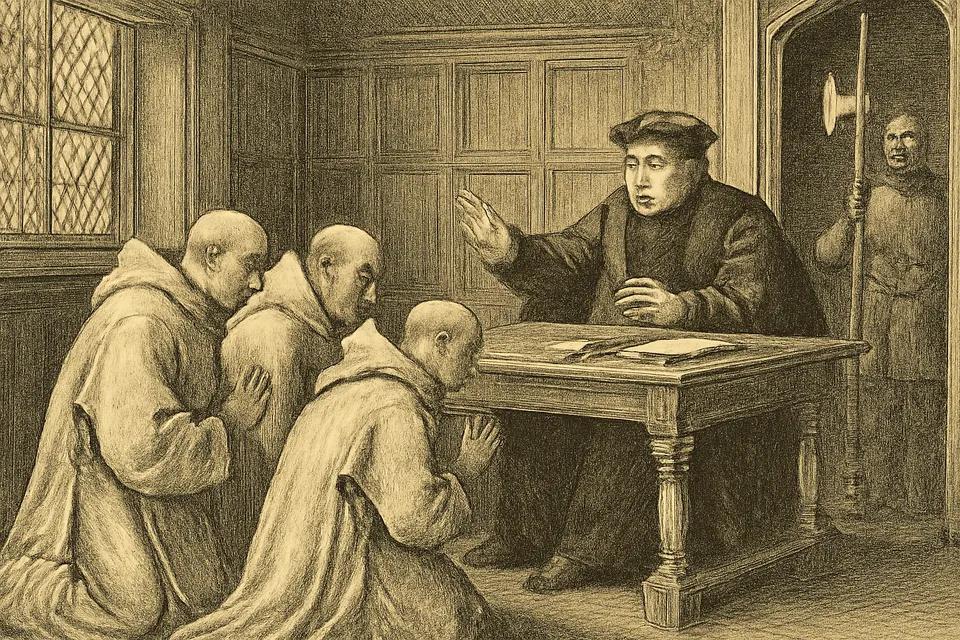
On April 20 the oath was put to them formally. They offered to swear with the condition "as far as the law of God permits." Cromwell refused any condition. Then, Camm writes, they declared that the fear of God would not allow them to abandon the Catholic Church.
Trial
Webster and the others were tried at Westminster Hall with Richard Reynolds of Syon. The indictment accused the priors of declaring, in the Tower on April 26, that "the King our Sovereign Lord is not supreme head in earth of the Church of England." They pleaded not guilty on April 28.
What followed was remarkable. The jury refused to find them guilty and spent a whole day in discussion, unwilling to send holy men to a cruel death. Cromwell sent to ask the reason for the delay, then sent again with threats. Finally he came in person and frightened the jurors into a guilty verdict. The record shows the prisoners condemned on April 29.
The next day, Archbishop Thomas Cranmer wrote to Cromwell asking for mercy for "the Prior of Axholme, named Webster, and Master Reynolds of Syon," whom he called "learned men." He hoped they might be won over by argument rather than killed. The letter changed nothing.
Tyburn
On May 4, 1535, the five condemned men were tied to hurdles in their religious habits and dragged behind horses three or four miles to Tyburn. By special order they were not stripped of their habits first, so that the crowd would see monks die as traitors. Several great lords of the court watched from close by.
From his window in the Tower, St. Thomas More saw them leave and said to his daughter Margaret that these blessed fathers were going "as cheerfully to their deaths, as bridegrooms to their marriage." Houghton died first. A contemporary account sent to Rome says that, as it was believed, one of the priors saw the other's execution carried through before he died himself, "a pitiful and strange spectacle." The same writer adds that no change was seen "in their colour or tone of speech," and that they exhorted the crowd to obey the king in everything not against the honor of God and the Church.
After his death
The Charterhouse of Axholme did not outlive him by many years; it was swept away with the other English charterhouses in the dissolution of the monasteries. Only a few traces of it remain at Melwood, among farm buildings and fields.
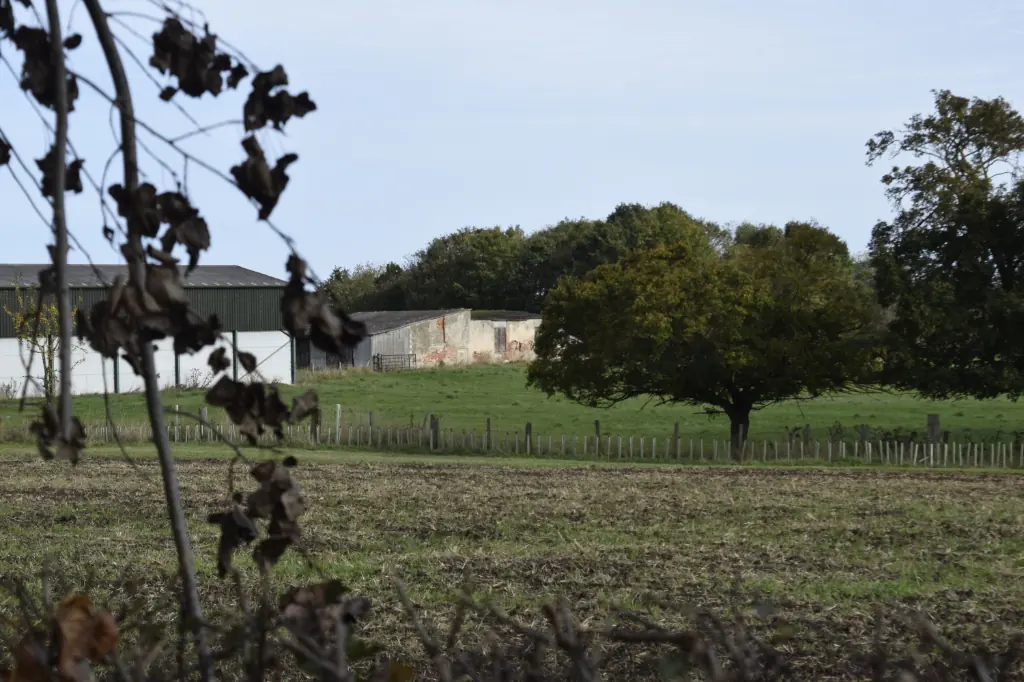
His memory is kept close to home: the Catholic parish of St. Mary and St. Augustine Webster and the St. Augustine Webster Catholic Voluntary Academy, both in North Lincolnshire, bear his name.
Miracles
No miracles are recorded for St. Augustine Webster, and none was required. A martyr is canonized for his death for the faith.
Symbols of St. Augustine Webster in art
He is rarely shown alone. Look for him among the Carthusian martyrs:
- The white Carthusian habit, with its hood and broad scapular joined by bands at the sides. He died wearing it.
- A hurdle, the wooden frame on which the priors were dragged to Tyburn.
- A rope, for his hanging.
- A martyr's palm.
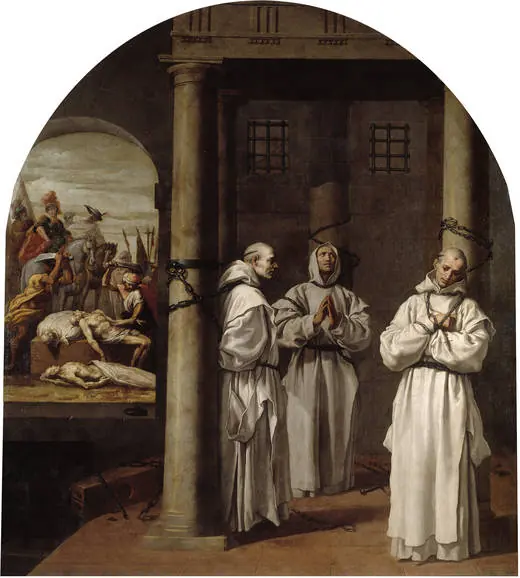
The great cycle of paintings by Vicente Carducho for the Charterhouse of El Paular near Madrid, now owned by the Prado, tells the story of the London Carthusians. There the three priors appear together in white habits, which is the surest way to recognize him.
Feast day
We keep his feast on May 4, the day of his death, which is also the feast of the English Martyrs in England. He is honored with all the Forty Martyrs of England and Wales. See our feast days page for other saints of May.
Prayer to St. Augustine Webster
No traditional prayer to St. Augustine Webster has come down to us. Houghton, who died first that morning, prayed the psalm "In Thee, O Lord, have I hoped" on the ladder, and his companions shared his faith. Let us pray that psalm with them, and ask St. Augustine Webster to intercede for monks and nuns, for priests who must stand firm, and for all whose conscience is tested by those in power.
Frequently asked questions
When is the feast day of St. Augustine Webster?
May 4, the day he was executed at Tyburn in 1535. He is also honored with all the Forty Martyrs of England and Wales, canonized together in 1970.
What was St. Augustine Webster prior of?
The Charterhouse of Axholme, a small Carthusian monastery dedicated to Our Lady at Melwood on the Isle of Axholme in north Lincolnshire. Before that he was a monk of the Charterhouse of Sheen, near Richmond.
Why was St. Augustine Webster executed?
He refused the oath acknowledging King Henry VIII as supreme head of the Church in England. He was condemned for high treason on April 29, 1535, and executed five days later.
Who died with St. Augustine Webster?
St. John Houghton, prior of the London Charterhouse; St. Robert Lawrence, prior of Beauvale; St. Richard Reynolds, a Bridgettine monk of Syon; and Blessed John Haile, vicar of Isleworth.
Keep exploring
Sources
- Bede Camm (ed.), Lives of the English Martyrs Declared Blessed by Pope Leo XIII in 1886 and 1895, vol. 1 (1904), on archive.org. His arrival at the London Charterhouse, the visit to Cromwell, the trial and jury, the "contemporary account" of the executions, and Cranmer's letter of April 30, 1535
- Catholic Encyclopedia (1910): Blessed John Houghton. Webster as prior of Axholme and former monk of Sheen; the oath tendered on April 20; indictment on April 28
- Pope Paul VI, homily for the canonization of the Forty Martyrs of England and Wales, October 25, 1970 (Italian)