St. Vitalis of Assisi
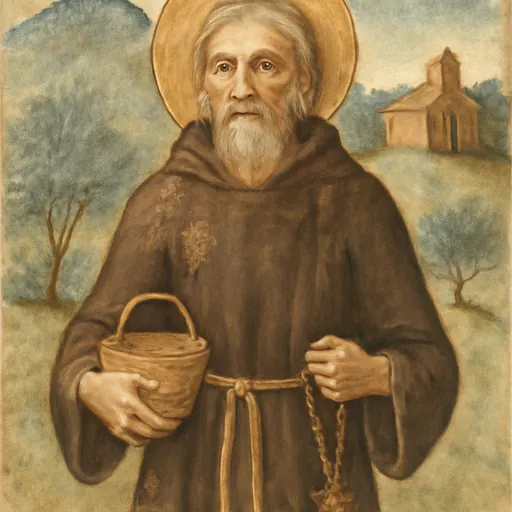
St. Vitalis of Assisi (1295–1370) was an Umbrian from Bastia who, tradition says, led a wild and sinful youth, then repented, walked as a poor pilgrim to the shrines of Italy, France and Spain, and became a Benedictine hermit at Santa Maria di Viole near Assisi. His feast is May 31, and he is invoked for diseases of the bladder and genitals.
Who was St. Vitalis of Assisi?
St. Vitalis of Assisi is a small saint of a famous town: a fourteenth-century hermit who lived and died in a little hermitage on the slopes below Assisi, a century and a half after St. Francis. Italians call him San Vitale. He was born in 1295 at Bastia Umbra, a few miles away in the valley, and by every account he spent his youth badly. He repented, went on long pilgrimages as a poor man, became a Benedictine monk, and passed his last twenty years alone at Santa Maria di Viole, living in rags. He died on May 31, 1370.
We know him through a short local tradition, a confraternity he founded, a handful of paintings and the people of Assisi, who have kept his memory for six and a half centuries. There is no long medieval life of him in print, and his story is short. What it says is worth hearing: no life is too far gone for God, and a man who once frightened his neighbors can end his days praying for them.
He is easy to confuse with other saints named Vitalis, above all the early martyr St. Vitalis of Milan of the Basilica of San Vitale in Ravenna. This page is about the hermit of Assisi.
The life of St. Vitalis
A wild youth in the Spoleto valley
Vitalis was born at Bastia Umbra in 1295. The Italian hagiographer Elisabetta Nardi, writing for the Santi e Beati database, says he spent his youth committing "orrendi peccati," dreadful sins. The summary on the same page goes further and repeats a local tradition that he was the well-known leader of a band of robbers who raided across the whole Spoleto valley. We can't check that story against any document from his time, so we give it as tradition. Every account agrees on the main point: he was a great sinner, and he knew it.
The penitent pilgrim
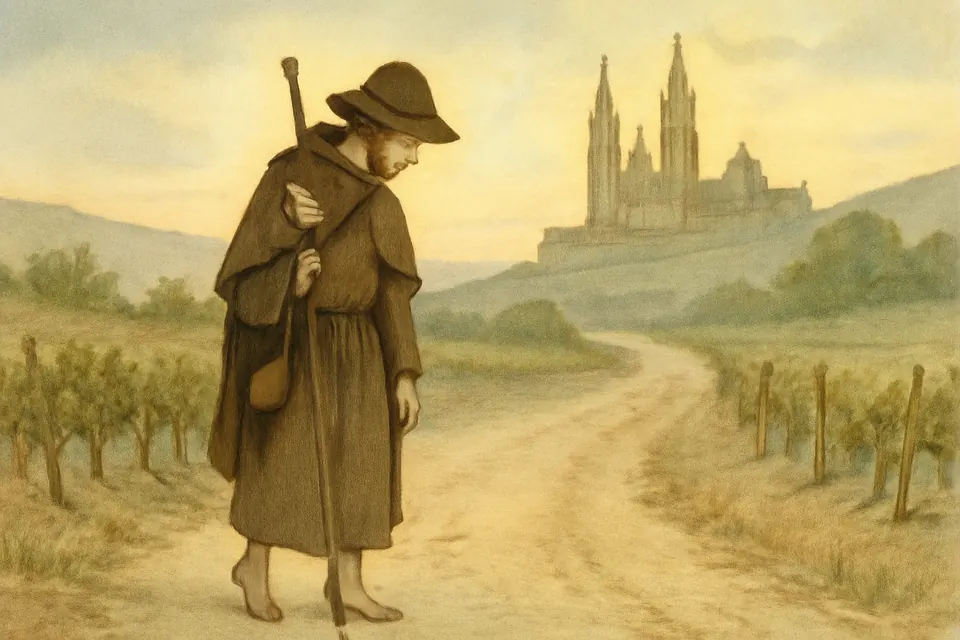
When he repented, he did what serious penitents of the Middle Ages did. He left his home and went on foot, as a poor pilgrim, to the most venerated shrines of Italy, France and Spain. The sources don't name them, but for a fourteenth-century Italian, Rome and Santiago de Compostela, the tomb of St. James, were the great goals. Pilgrimage was penance, with hunger, cold, danger on the roads and dependence on strangers for bread.
Monk and hermit of Viole
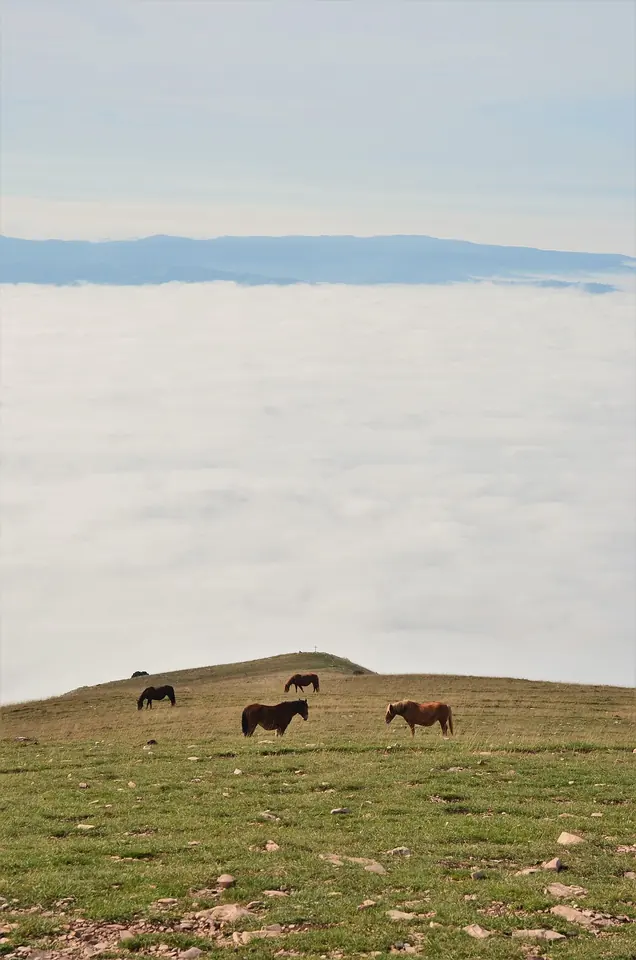
Back in Umbria, Vitalis became a monk. Santi e Beati names the abbey of San Benedetto on Monte Subasio, the old Benedictine house on the mountain above Assisi. Some English accounts say Subiaco, the abbey near Rome where St. Benedict began, but the Italian sources point to Subasio, and that fits everything else in his story. The abbey gave him as his hermitage the "locum sanctae Mariae de violis," the place of St. Mary of the Violets, at Viole on the lower slopes of the mountain.
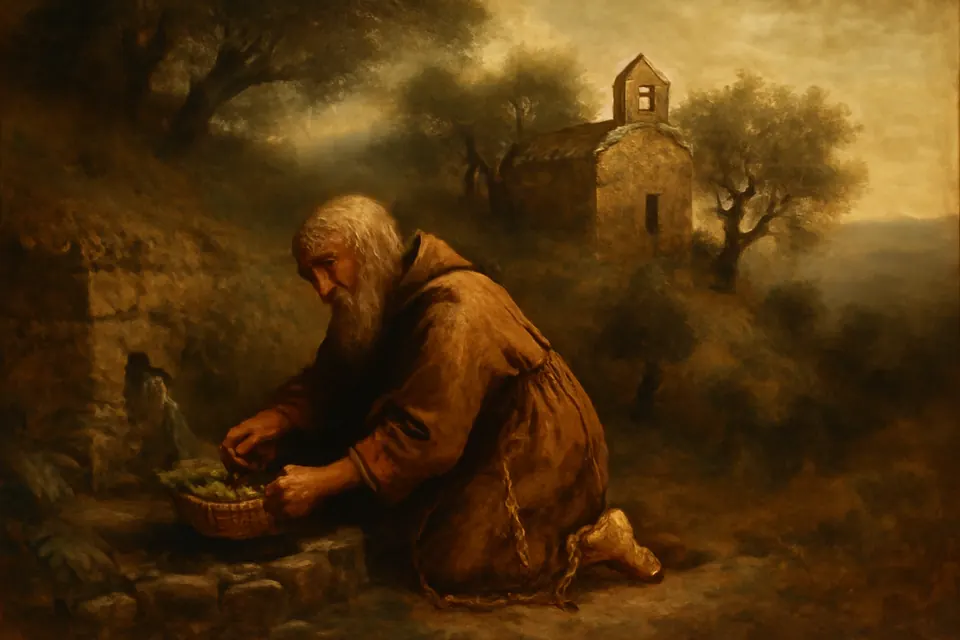
There he stayed for twenty years. He went barefoot, dressed in rags and let his hair grow uncut. His one possession, the Italian life says, was a basket he used to fetch water from a nearby spring. He lived what the Benedictine tradition calls the life of the hermit, the solitary who has first learned obedience in community and then is sent out alone, like the hermits of St. Romuald.
His confraternity
Solitude did not cut him off from the people. Before 1362, according to the records gathered by Key to Umbria, Vitalis founded a lay confraternity on Monte Subasio, the Confraternita di San Vitale. Confraternities were the great lay movements of medieval Italy: bands of men and women who met to pray, do penance, bury the dead and care for the poor. At the end of the fourteenth century his confraternity moved into an oratory in Assisi itself, and it lasted until Bishop Nicolò Sermattei suppressed it in 1772.
His death
Vitalis died at Viole on May 31, 1370, about seventy-five years old. He was buried at his hermitage, and a church dedicated to him was built over the place of his burial. Key to Umbria notes that miracles were soon recorded at his tomb.
The miracles of St. Vitalis
- Healings at his tomb: reported. Wonders were recorded at his grave soon after his death, and Santi e Beati says that many of them were cures of people with diseases of the bladder and genitals. They were never examined in a formal process.
- The healing of a mute young man: traditional. The confraternity's altarpiece in San Rufino, by the painter Cesare Sermei and first recorded in 1613, showed Vitalis restoring speech to a young man who could not speak. Key to Umbria records that successive bishops of Assisi objected to the subject, probably because the miracle had no firm foundation, and tried in 1632 and 1659 to have the painting removed. The confraternity kept it in place until the altar was rebuilt in 1848. The painting is now in the cathedral's Museo Diocesano.

Why St. Vitalis is the patron saint of bladder and genital ailments
The patronage grew out of the favors people reported after his death. So many who suffered from diseases of the bladder and genitals said they were helped through his prayers that he became, in the words of Santi e Beati, "il protettore di questi ammalati," the protector of these sick people. Nothing in his life explains it. It came from the people who went to his tomb and came back helped.
It is a humble patronage, and a merciful one. These are illnesses people are often ashamed to speak about, even to a doctor. We can bring them without embarrassment to a saint who knew the weight of the body's sins and spent his old age in penance. Let us ask St. Vitalis to pray for all who suffer in secret, and for the doctors and nurses who care for them.
Symbols of St. Vitalis in art
Vitalis is a local saint, and he has no fixed set of attributes the way St. Francis or St. Roch do. Look for:
- A ragged hermit: a thin, barefoot man in a torn and patched habit, with long uncut hair, as the oldest life describes him.
- A basket: the one thing he owned, which he used to carry water from the spring.
- Kneeling brothers: on the fifteenth-century double-sided banner of his confraternity, attributed to Pietro di Giovanni Mazzaforte and now in the Pinacoteca Civica of Foligno, "the Blessed Vitale" stands surrounded by the kneeling brothers of his confraternity, with Sts. Francis and Clare.
- In company with Assisi's saints: in Dono Doni's Christ in Glory (1555), in the Cathedral of San Rufino, Vitalis appears below with St. Anthony Abbot, St. Francis and St. Clare as an angel brings the palm of martyrdom to St. Rufinus.
If you see an unnamed barefoot hermit next to Francis and Clare in an Umbrian church, Vitalis is a good guess.
His relics, from Viole to San Rufino and back
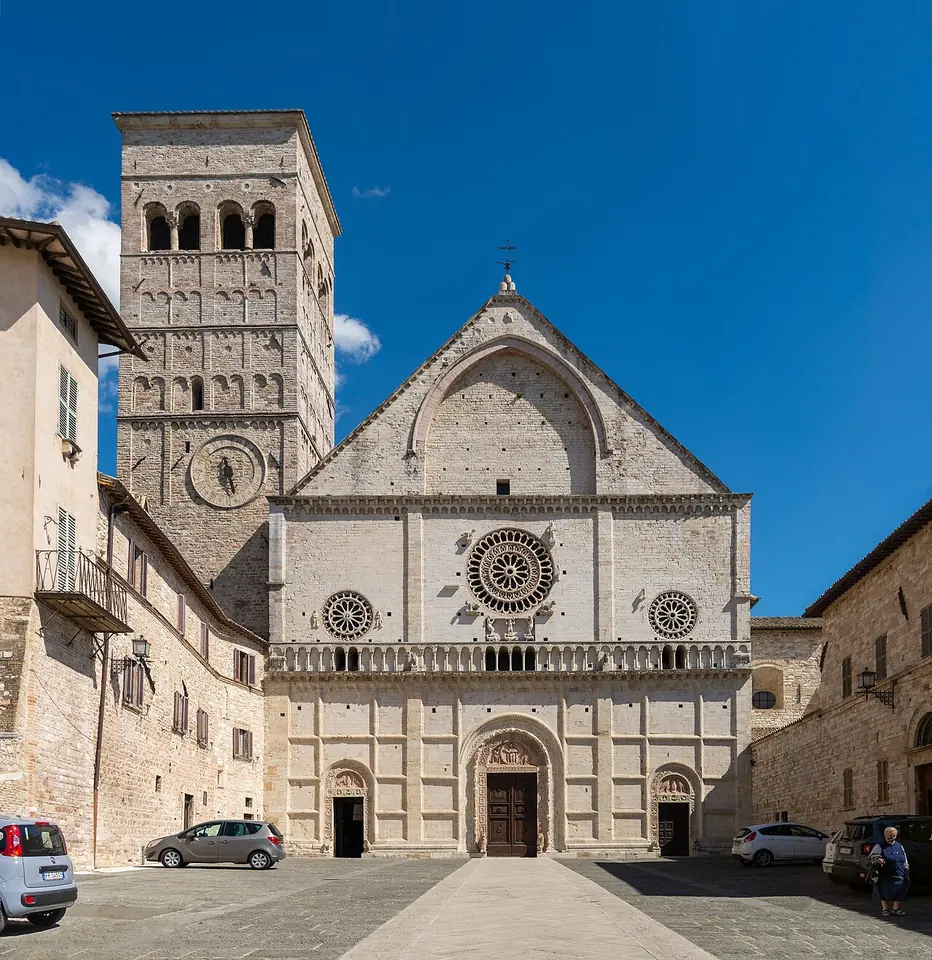
Vitalis lay at Viole for more than two centuries. In 1586 Bishop Giovanni Battista Brugnatelli of Assisi, who was rebuilding the choir of the cathedral, translated his relics to a new altar in the Cathedral of San Rufino that belonged to the Confraternity of San Vitale. The Altare di San Vitale still stands on the right side of the presbytery, though it was rebuilt in 1848.
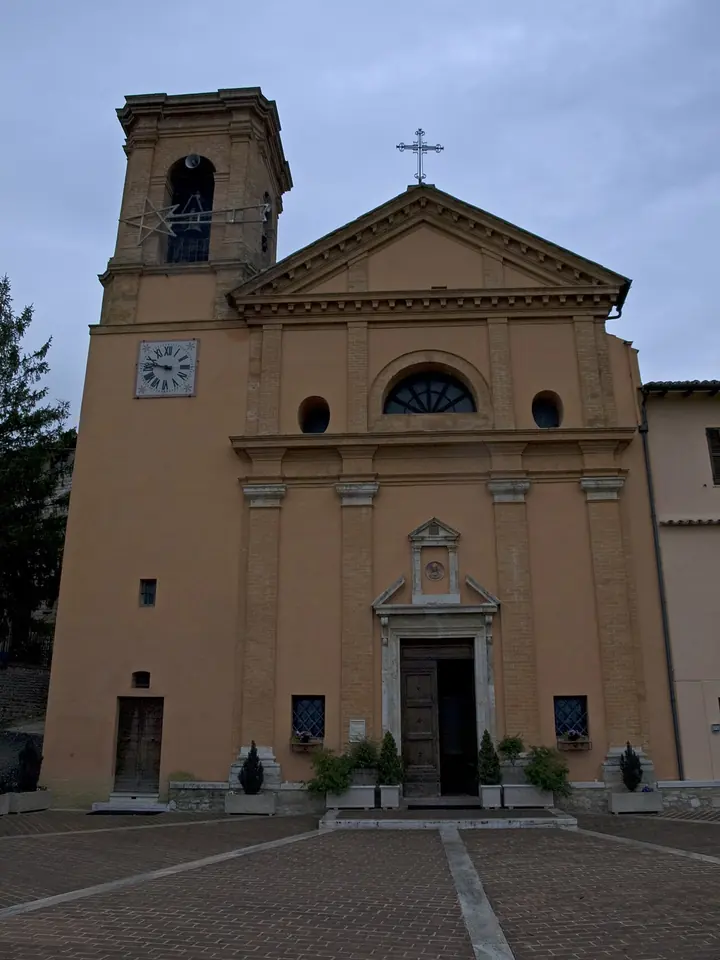
In 2001 the relics went home. They were translated back to Viole, to the church built in his honor, and they rest there today. The Church of San Vitale at Viole di Assisi is a parish of the Diocese of Assisi–Nocera Umbra–Gualdo Tadino, about a mile and a quarter from the Eremo delle Carceri, the hermitage of St. Francis higher up the same mountain.
The skull sold in Ireland
In May 2011 a skull said to be the head of St. Vitalis was put up for auction at Annesbrook House in County Meath, Ireland. The family selling it believed an Anglo-Irish couple had brought it home from a European tour in the nineteenth century. How it left Italy, and whether it is truly his, are unknown. The relics at Viole are the ones the Church of Assisi honors.
Feast day
We keep the feast of St. Vitalis on May 31, the day of his death, the same day the Church celebrates the Visitation of the Blessed Virgin Mary. It is a local feast of the Diocese of Assisi, and you can find the other saints of the season on our feast days page and other patrons for the sick on our patron saints page.
Prayer to St. Vitalis of Assisi
We have not found a traditional prayer to St. Vitalis in any standard prayer book, and we won't invent one in his name. Those who ask his help usually pray in their own words, as the people of Assisi have done at his tomb since 1370, and often add an Our Father, a Hail Mary and a Glory Be. Bring him the illness you would rather not name aloud, ask him to pray for you, and ask too for the grace he received: a clean break with sin and a heart turned wholly to God. A pilgrim to Assisi can pray at his relics in the church of San Vitale at Viole, a short walk below the town.
Frequently asked questions
When is St. Vitalis of Assisi's feast day?
May 31, the day he died at his hermitage in 1370. It is kept in the Diocese of Assisi; he is not on the General Roman Calendar.
What is St. Vitalis of Assisi the patron saint of?
He is invoked for diseases of the bladder and the genitals. The Italian hagiographer Elisabetta Nardi, writing for Santi e Beati, explains that so many wonders were reported for people with these illnesses after his death that he became their protector. The patronage comes from those reported favors, not from anything in his life.
Was St. Vitalis of Assisi ever canonized?
No. He was never formally canonized. He has been honored as a saint in Assisi by local cult since his death, as many medieval holy men and women were before the papacy reserved canonization to itself. A fifteenth-century banner still calls him "the Blessed Vitale."
Where are the relics of St. Vitalis of Assisi?
In the church of San Vitale at Viole, just below Assisi, where he lived and died. They were moved to the Cathedral of San Rufino in Assisi in 1586 and brought back to Viole in 2001. A skull sold at an Irish auction in 2011 as his head has no documented link to Viole.
Is St. Vitalis of Assisi the same as St. Vitalis of Milan?
No. St. Vitalis of Milan was an early Christian martyr, honored at the great Basilica of San Vitale in Ravenna. Vitalis of Assisi lived more than a thousand years later, in the fourteenth century, and died a natural death as a hermit.
Keep exploring
Sources
- Elisabetta Nardi, San Vitale di Assisi, Monaco eremita (Santi e Beati). His birth at Bastia Umbra in 1295, his youth, pilgrimages, the abbey on Monte Subasio, twenty years at Viole, his poverty and his patronage
- Key to Umbria: St. Vitalis of Assisi (31st May)
- Key to Umbria: Cathedral of San Rufino, Assisi. The translation of his relics in 1586, Cesare Sermei's altarpiece of the healing of the mute youth, and the bishops' objections
- Key to Umbria: Oratories and Confraternities of Assisi. The Confraternity of San Vitale, founded before 1362, and its fifteenth-century banner
- GCatholic: Chiesa San Vitale, Viole di Assisi
- NBC News: For Sale, Severed Head of the 'Saint of Genital Disease' (May 24, 2011)