St. Victor Maurus (Victor the Moor)
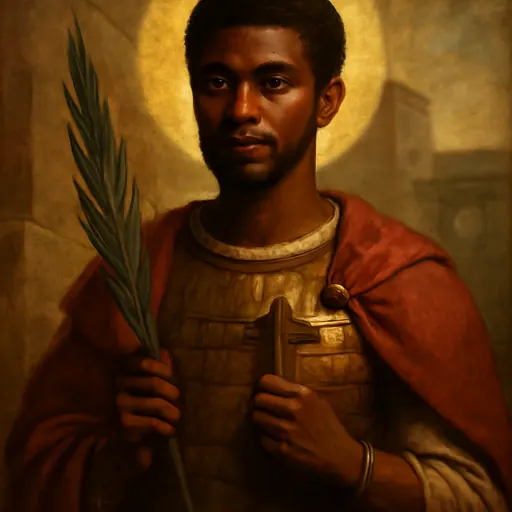
St. Victor Maurus, "Victor the Moor," was a Christian soldier from Mauretania in North Africa, serving in the Roman army at Milan, who was beheaded around 303 for refusing to sacrifice to the gods. St. Ambrose praised him with his companions Nabor and Felix. His feast is May 8, and he is a patron of prisoners and exiles.
Who was St. Victor Maurus?
St. Victor Maurus, "Victor the Moor," was a soldier from Mauretania, the Roman province on the Atlantic coast of North Africa, who served in the imperial army at Milan. When the emperor Maximian ordered the soldiers to sacrifice to the gods during the Great Persecution, Victor laid down his arms and refused. He was beheaded around the year 303. Milan has loved him ever since, and we keep his feast on May 8.
His surname is a description, not a family name. Maurus means a man from Mauretania, and it distinguishes him from the many other martyrs called Victor, a common name in the Roman world. The Roman Martyrology puts it plainly: at Milan, the commemoration of St. Victor, martyr, "of Moorish origin," a soldier who laid down his arms when Maximian ordered him to sacrifice to idols, and who was taken to Lodi and died by the sword.
What we know, and where it comes from
The oldest witness to Victor is St. Ambrose, bishop of Milan from 374. Ambrose wrote about Victor in his commentary on the Gospel of Luke and honored him in the hymn Victor, Nabor, Felix pii, which names three soldiers from Mauretania, stationed at Milan, who died for the faith. So within a lifetime of his death, Victor was already one of Milan's own martyrs.
The fuller story comes from his Acts, which were written much later, in the 8th century. They are a work of devotion, and we read them as tradition rather than a court record.
His trial and death, as tradition tells it
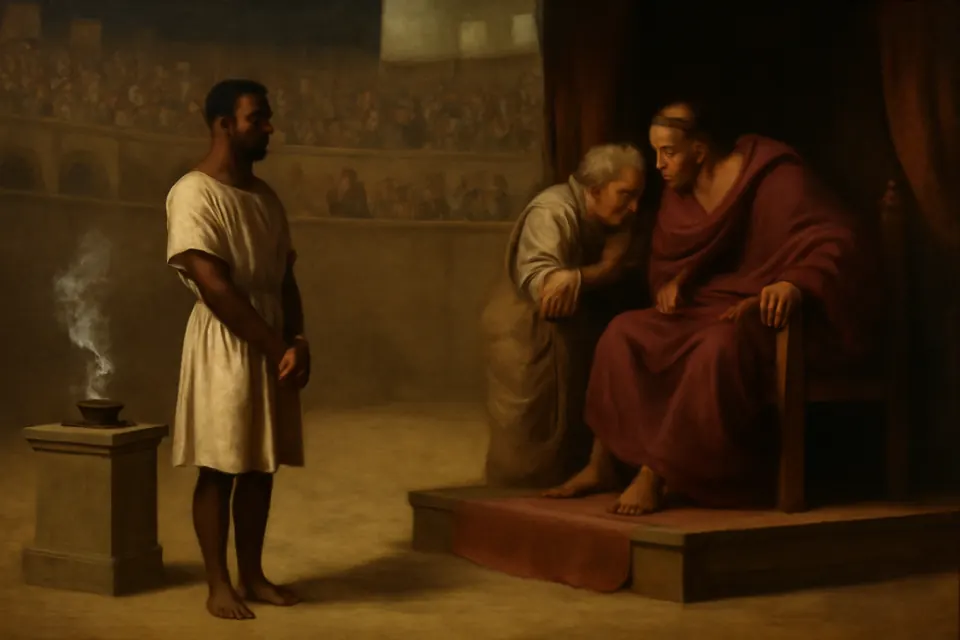
According to the Acts, Victor was arrested for refusing to serve and kept six days without food or water to break his will. Then he was dragged into the hippodrome of the circus, near today's Porta Ticinese, and questioned by Maximian himself and his counselor Anulinus. He would not sacrifice. He was flogged and returned to prison, and the Acts add that molten lead was poured on his wounds.
One day, the story goes, his guards grew careless and he slipped away. He hid in a stable near a theater by the Porta Vercellina, but he was found, led into a wood of elms and beheaded. The two traditions about the place of his death have never been fully reconciled: the Acts set it outside Milan, and the Roman Martyrology says he was taken to Lodi, where his companions Nabor and Felix also died.
The miracles and legends of St. Victor
- Traditional: his escape from prison. The Acts describe it as almost miraculous, though they do not say an angel opened the doors.
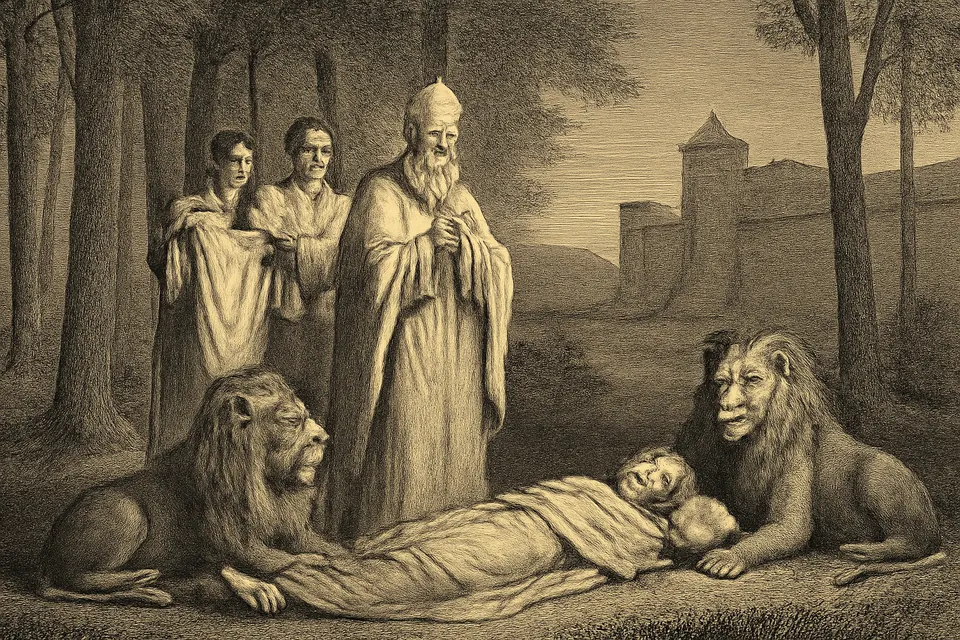
- Traditional: his body was left unburied for a week and found whole by Bishop Maternus of Milan, guarded by two wild beasts that kept everything else away. Maternus gave him a fitting burial.
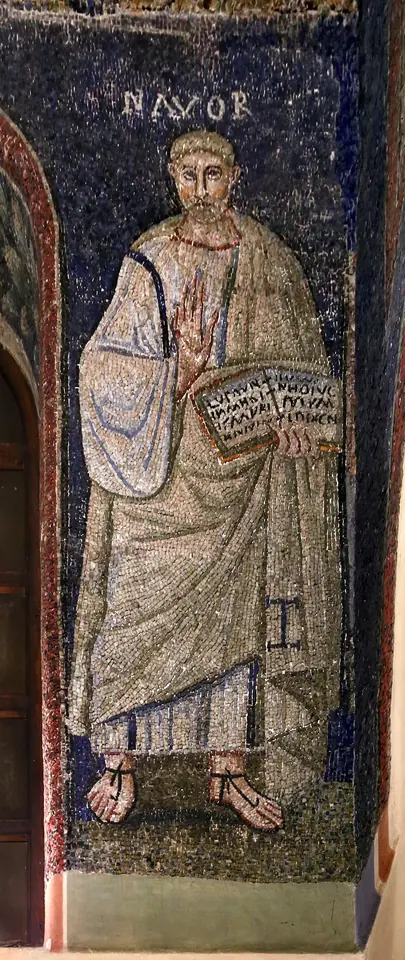
The New Liturgical Movement's account of his basilica says it was Bishop Mirocles, who led Milan at the time of the Edict of Milan in 313, who first buried the martyr in a small basilica outside the walls. Both bishops appear in the mosaics of Victor's chapel.
The golden chapel and the relics
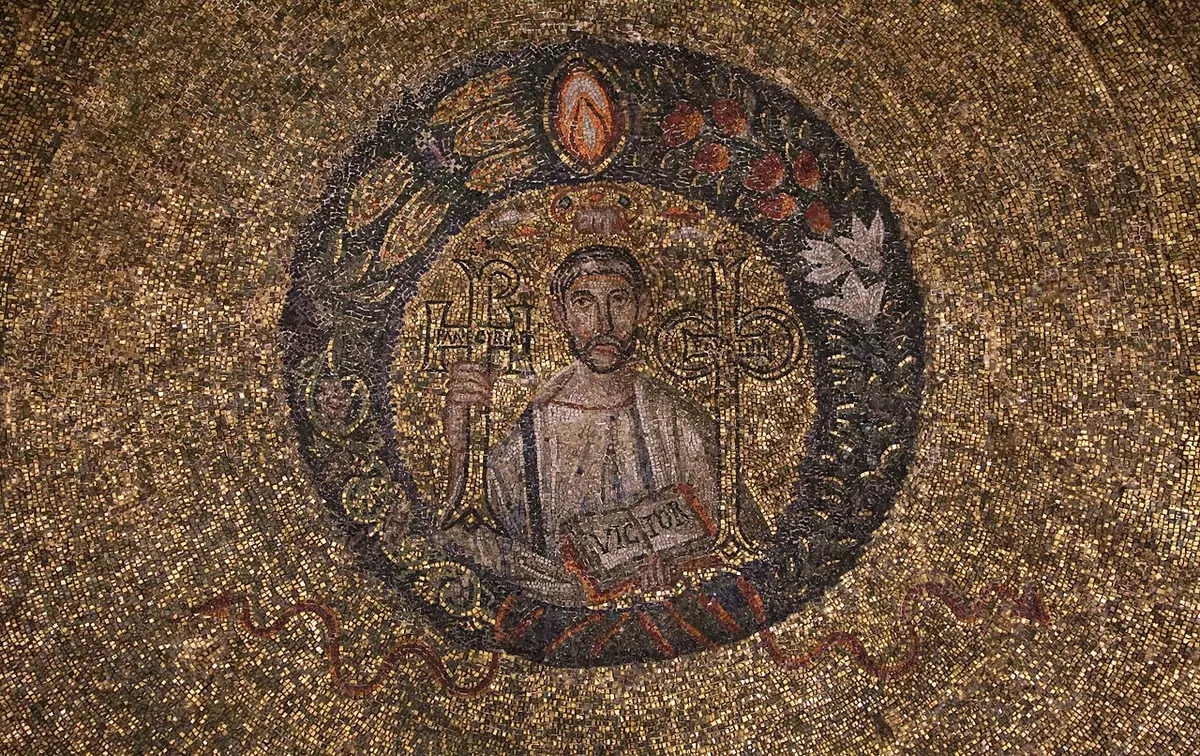
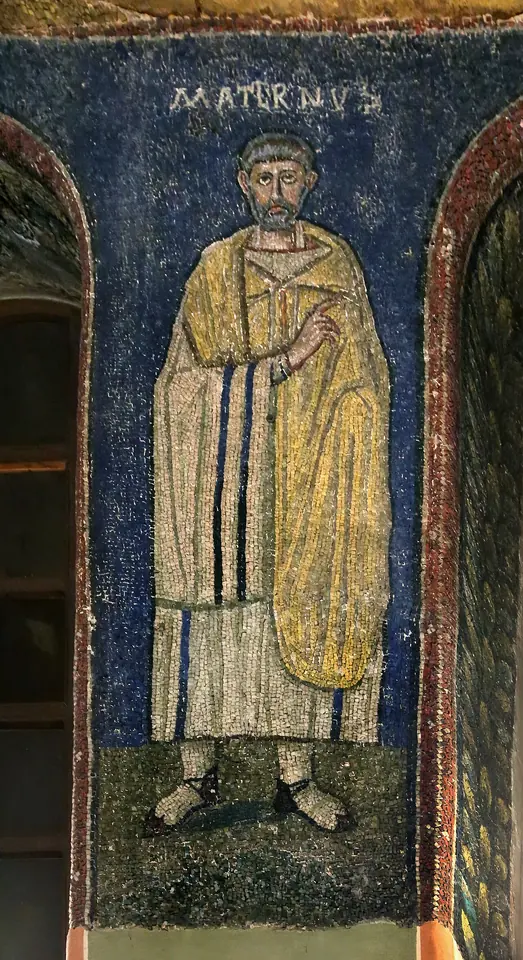
Later in the 4th century Ambrose moved Victor's relics to a chapel in the basilica where Ambrose himself would be buried, the church now called Sant'Ambrogio. That chapel is San Vittore in Ciel d'Oro, "St. Victor in the golden sky," named for its dome of gold mosaic, made around 450 to 500, with Victor's portrait at the center. The side walls show the bishops and martyrs of Milan, among them Ambrose, Maternus, Nabor and Felix. Ambrose also buried his own brother, St. Satyrus, beside Victor.
In the 9th century the relics went back to the original basilica outside the walls, which was then called St. Victor ad corpus, "at the body." Today it is the Basilica of San Vittore al Corpo. St. Charles Borromeo carried out a solemn recognition of the relics in 1576, and the New Liturgical Movement notes that he consecrated the main altar that holds them in the same year. Blessed Ildefonso Schuster, archbishop of Milan, recognized the relics as authentic in 1941.
Milan has other churches named for him. San Vittore al Teatro took its name from the old Roman theater near the Porta Vercellina, the quarter where the Acts place his last hiding place; it was demolished in 1911. Even Milan's best-known prison carries his name, San Vittore.

Where the relics of St. Victor Maurus are kept: see them on the relics map →
Why St. Victor is the patron saint of prisoners and exiles
Victor was a prisoner and an exile twice over: an African far from home, and a man held in a cell for his faith. By the time St. Charles Borromeo gathered his relics, he was already invoked as patron of exiles and prisoners. He is also the patron of Varese, north of Milan, whose basilica is dedicated to him.
Symbols of St. Victor Maurus in art
The 5th-century mosaic in his chapel is his oldest portrait. There he is a young man with dark hair and a short beard, between two jeweled crosses, holding an open book. Later painters show him as a Roman soldier. Look for:
- Soldier's armor: his service in the imperial army, which he left rather than deny Christ.
- Martyr's palm: his victory, and his name means "victor."
- Crosses and a book: the faith he professed, as in the 5th-century mosaic.
- Dark skin: many Italian and Spanish images show him as an African, faithful to his name.
- A sword: the sword that beheaded him.
He is easy to confuse with St. Victor of Marseilles, also a soldier-martyr, who is usually shown with a millstone. Like St. Maurice, he is one of the Black saints honored in the Church since the ancient persecutions.
Feast day and prayer
We keep his feast on May 8. See the feast day calendar for the other saints of the season.
We have not found a traditional English prayer to St. Victor. Let us ask him to pray for prisoners and for all who live far from home, and for soldiers whose conscience is tested. St. Victor the Moor, pray for us.
Frequently asked questions
Who was St. Victor Maurus?
A soldier from Mauretania in North Africa, stationed at Milan under the emperor Maximian, who laid down his arms rather than sacrifice to the gods and was beheaded around 303. "Maurus" means "the Moor," that is, a man from Mauretania.
When is the feast of St. Victor the Moor?
May 8. The Roman Martyrology commemorates him at Milan on that day.
Where are the relics of St. Victor Maurus?
In the main altar of the Basilica of San Vittore al Corpo in Milan. His first tomb was in the chapel now called San Vittore in Ciel d'Oro, inside the Basilica of Sant'Ambrogio.
What is St. Victor Maurus the patron saint of?
Prisoners and exiles, because he was a prisoner and an exile far from Africa, and the city of Varese. Milan's old prison of San Vittore takes its name from him.
Keep exploring
Sources
- Santi e Beati: San Vittore il Moro, soldato e martire. The Roman Martyrology entry, St. Ambrose as the oldest source, the 8th-century Acts, St. Charles Borromeo's recognition of 1576, patronages
- New Liturgical Movement: The Basilica of St Victor in Milan (May 8, 2019). His burial by Bishop Mirocles, Ambrose's translation, the return of the relics to San Vittore al Corpo and the 1941 recognition