St. Nilus of Sora (Nil Sorsky), Russian Elder of Silence and Prayer

St. Nilus of Sora (Nil Sorsky, about 1433–1508) was a Russian monk who learned the hesychast way of prayer on Mount Athos and founded a small forest skete on the Sora River. He taught stillness, the prayer of the heart and the monastic poverty of monks who live by their own work. The Orthodox Church honors him on May 7.
Who was St. Nilus of Sora?
St. Nilus of Sora, Nil Sorsky in Russian, was a fifteenth-century monk who brought the quiet prayer of Mount Athos into the forests of northern Russia. In an age when Russian monasteries were growing rich in lands and villages, he chose the opposite road: a handful of monks, a small wooden church in a swampy forest by the little Sora River, no estates, no splendor, only work, the Fathers and unceasing prayer. His short writings on prayer and on the struggle with thoughts are among the treasures of Russian spirituality.
The Orthodox Church honors him as a venerable father. The Orthodox Church in America calls him "a great ascetic of the Russian Church."
The life of St. Nilus of Sora
From the Maikov family to St. Cyril's
He was born around 1433 into the Maikov family, and was baptized Nikolai. He became a monk at the great monastery of St. Cyril of White Lake (Kirillo-Belozersky), north of Vologda, where his guide was the elder Paisius Yaroslavov, later abbot of the Trinity-St. Sergius Lavra, the house of St. Sergius of Radonezh. Nilus learned obedience and the reading of the Fathers there.
Pilgrimage to the East
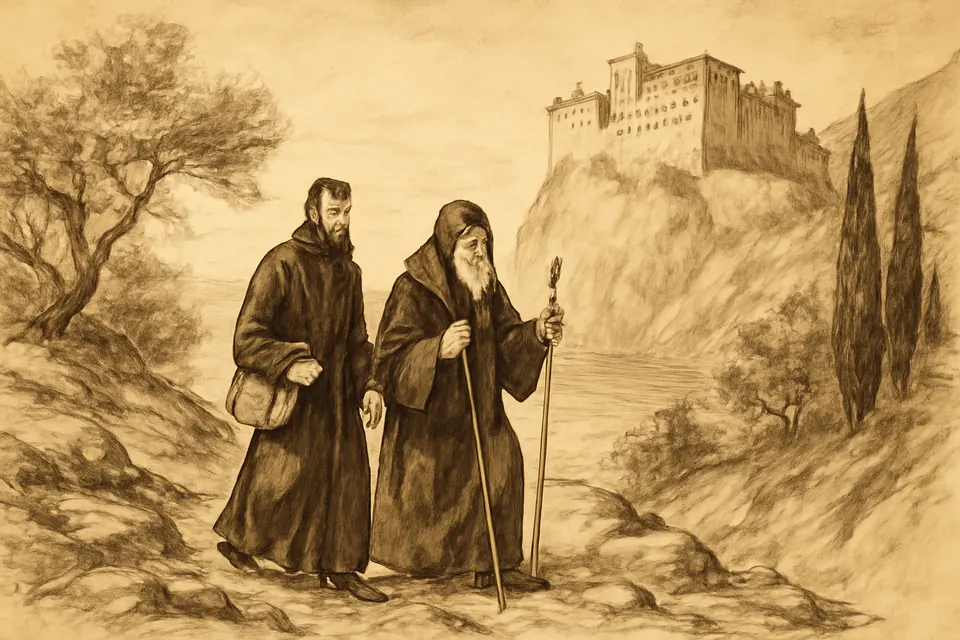
He then traveled widely in the East, studying monastic life in Palestine and on Mount Athos. On the Holy Mountain he met the living tradition of hesychasm, the way of inner stillness, watchfulness over the thoughts, and the prayer of the heart, the prayer we know today as the Jesus Prayer.
The skete on the Sora
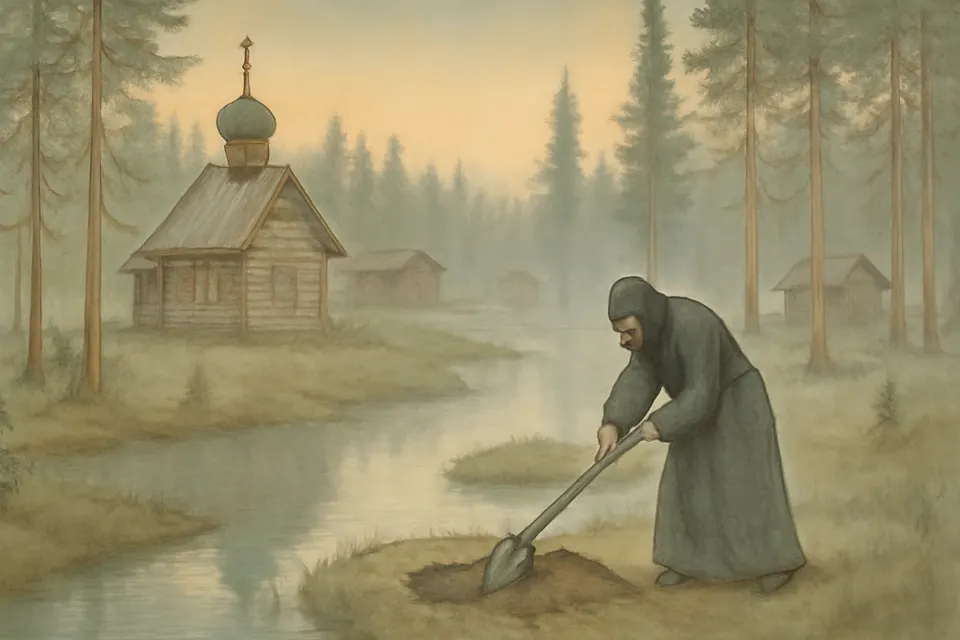
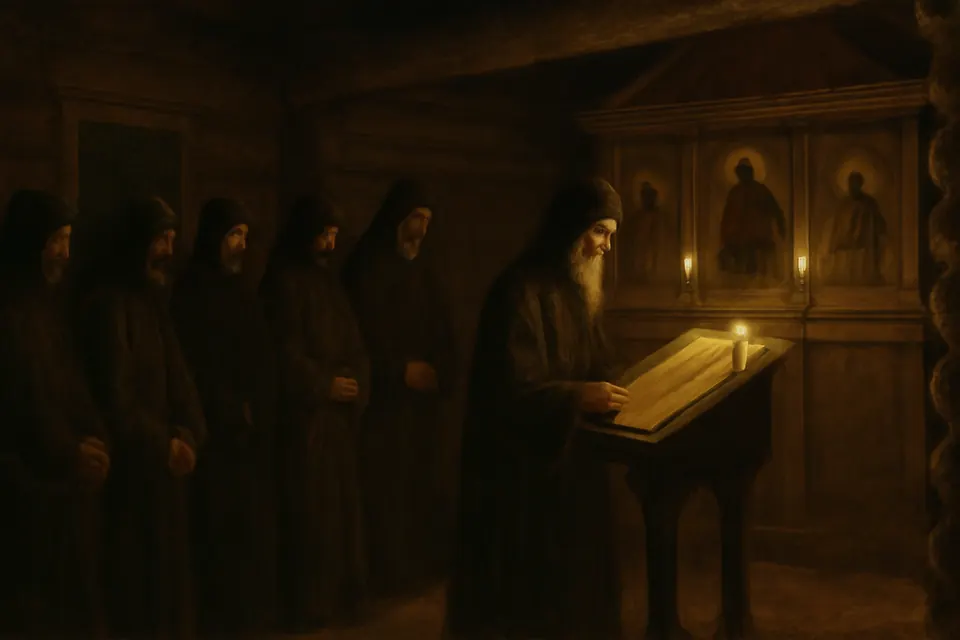
Back in Russia, he withdrew from St. Cyril's to the Sora, a small river in the Vologda forests about ten miles away, and built a cell and a chapel. Disciples came, and a skete grew up under a rule new to Russia, brought from Athos. The Orthodox Church in America sets it out: the monks lived by their own handwork and accepted alms only in real need; they avoided splendor even in church; no women entered; no monk left the skete on any pretext; and owning lands or estates was forbidden. They lived in separate cells in the forest, one, two or at most three to a cell, around a small church of the Meeting of the Lord, and came together only for the services. At the all-night vigil they read the holy Fathers, and the vigil really did last all night.
The Rule and the Tradition
Nilus wrote down his teaching in two works: the Tradition, addressed to "my disciple, wishing to live in the wilderness," and the longer Rule. They describe the steps of inner prayer: first, renunciation of every worldly distraction; then unceasing prayer joined to the remembrance of death. He writes in detail about the struggle with thoughts and passions, which he fought all his life. The fruit, as the Orthodox life puts it, is peace in the soul, clarity in the mind, and contrition and love in the heart.
The councils of 1490 and 1503
The Russian bishops respected him deeply, and he took part in the church councils of 1490 and 1503. At the 1503 council he is remembered for urging that monasteries should not own villages and peasants. St. Joseph of Volokolamsk defended the monasteries' estates, which he saw as the means of their charity, and his view prevailed. History later named the two parties the non-possessors and the possessors; the Russian Church honors both men as saints.
The miracles of St. Nilus of Sora
Nilus dug a pond and a well at the skete, and the Orthodox life says its water "had healing power"; this is a traditional account. After his death his grave was "glorified by many miracles," which are reported in the local tradition of the hermitage.
His death
Nilus wanted no honor even in death. He told his disciples to throw his body into the forest for the beasts and birds, or else to bury it without any honor where he had struggled. He died in the seventy-sixth year of his life, on May 7, 1508, and was buried in the skete.
Symbols of St. Nilus of Sora in art
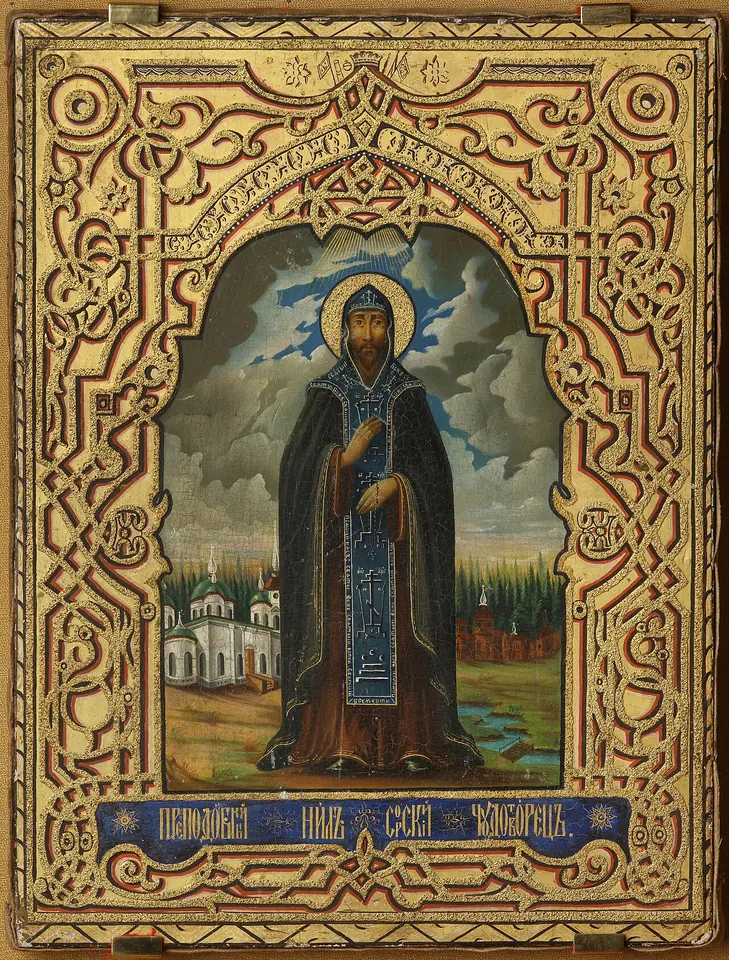
Icons show him as an old monk with a long gray beard, wearing the black great schema embroidered with the cross, often holding a prayer rope or an open scroll with words from his Rule. Behind him there is often the forest and river of his skete, or its churches, as in the icon on this page from the State Museum of the History of Religion in St. Petersburg.
Feast day and his hermitage
The Orthodox Church keeps his feast on May 7. The Nil Sorsky Hermitage still stands near Kirillov in the Vologda region, with its gate church of the Protection of the Mother of God. See more saints of early May on our feast days page.

Praying with St. Nilus
The Russian Church sings a troparion and kontakion to him, but we have no English translation we can cite. His own teaching is the best way to pray with him: to sit quietly, set aside distracting thoughts, and call on the Lord Jesus with a humble heart. Let us ask his help: holy Father Nilus, you loved silence and poverty for Christ's sake; pray for us, that we may learn to keep watch over our hearts and to pray without ceasing.
Frequently asked questions
Who was St. Nilus of Sora?
A Russian monk of the fifteenth century, from the Maikov family, who trained at the monastery of St. Cyril of White Lake, studied monastic life on Mount Athos and in Palestine, and founded the Sora skete, where a few monks lived in silence and prayer by the work of their hands.
When is the feast of St. Nilus of Sora?
May 7, the day of his repose in 1508 (May 20 on the civil calendar for churches that keep the old reckoning).
What did St. Nilus of Sora write?
A short Tradition for his disciples who wished to live in the wilderness and a longer Rule (Ustav) on the inner struggle with thoughts and passions and on prayer. English fragments appear in G. P. Fedotov's A Treasury of Russian Spirituality.
What is a non-possessor?
The name later given to Nilus and his followers, who held that monks should not own lands and villages but live by their own labor. Their opponents, led by St. Joseph of Volokolamsk, defended the monasteries' estates.
Keep exploring
Sources
- Repose of Venerable Nilus, Abbot of Sora (Orthodox Church in America). His tonsure at St. Cyril's, the elder Paisius Yaroslavov, the rule of the skete, the healing well, the councils of 1490 and 1503, his last wishes and his death in his seventy-sixth year
- G. P. Fedotov, ed., A Treasury of Russian Spirituality (1948). English fragments of his Tradition and Rule
- Нил Сорский (Great Soviet Encyclopedia article, Vologda Regional Library). His baptismal name, Nikolai Maikov, and the dates about 1433–1508 (in Russian)