Blessed Emilia Bicchieri, Dominican Prioress of Vercelli
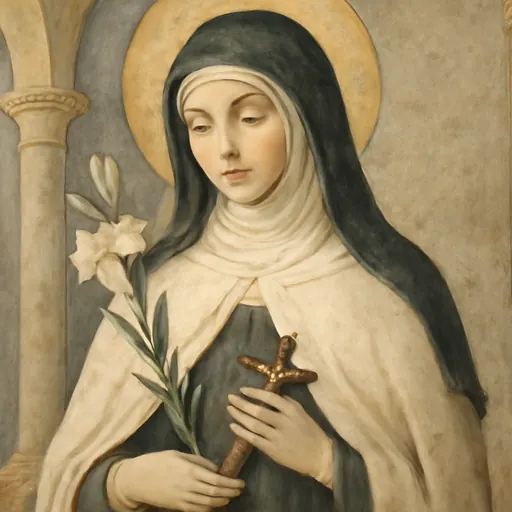
Blessed Emilia Bicchieri (1238–1314) was a noblewoman of Vercelli, Italy, who lived under the Rule of the Third Order of St. Dominic in a convent her father built. As prioress she took her turn at the humblest chores. She died on her birthday, May 3, which is her feast. Pope Clement XIV confirmed her cult in 1769.
Who was Blessed Emilia Bicchieri?
Blessed Emilia Bicchieri, often called Emily in English, was a thirteenth-century noblewoman of Vercelli in Piedmont who gave up a life of comfort to serve God and her sisters in a small Dominican convent. Her father built the house for her, and she governed it for many years. Yet the thing her sisters remembered was not her rank but her humility: the foundress and prioress took her turn at the lowliest work of the house.
The Italian encyclopedia Santi e Beati counts her community among the first in which women lived under vows according to the Rule of the Third Order of St. Dominic, a milder rule than that of the enclosed Dominican nuns, which left room for works of charity.
The life of Blessed Emilia
A daughter of the Bicchieri
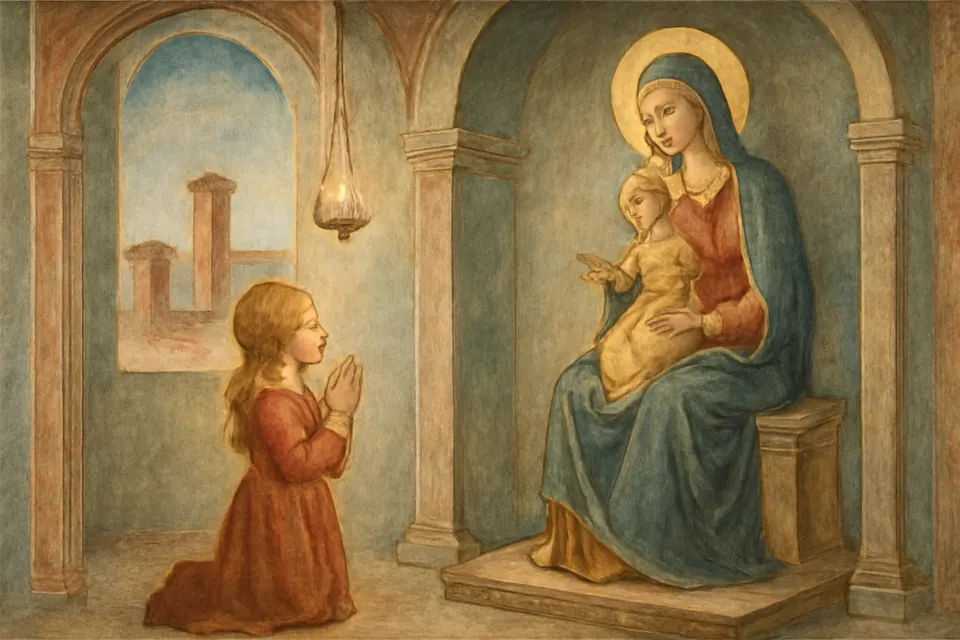
Emilia was born in Vercelli on May 3, 1238, the fourth of seven daughters of Pietro Bicchieri, a Ghibelline nobleman. Her mother died when she was small. The 1901 Short Lives of the Dominican Saints tells that the little girl threw herself at the feet of a statue of Our Lady and begged the Mother of God to take her under her protection. Santi e Beati adds that she disliked idle talk, loved to slip away to her room to pray and could be heard singing the psalms around the house.
The convent of St. Margaret
Her father loved her dearly, and that was the hardest obstacle when she told him, at about sixteen, that she wished to give herself to God in the Third Order of St. Dominic. He gave way. In 1255, Santi e Beati records, he built at his own expense a new Dominican convent on the edge of Vercelli and dedicated it to St. Margaret. Emilia entered it with other young women of good family.
The sources differ on when she became prioress. The 1901 Short Lives says she was elected at twenty; Santi e Beati gives 1273. Either way, she governed the house for many years.

"Do everything for God alone"
Her watchword, according to Santi e Beati, was "Do everything for God alone" (our translation). The Short Lives says the point she pressed hardest was purity of intention. She urged her sisters to meditate on the mysteries of faith and said that a nun untrained in this kind of prayer "is like a stranger going to a city in order to make purchases, and not knowing with whom to deal or at what price to buy." She also taught them to be grateful for all God's gifts.
She trained her sisters in small sacrifices. When one sister, Cecilia, asked to drink outside mealtimes, Emilia told her to offer up her thirst in union with Christ's thirst on the Cross. Dominican tradition says that Cecilia, after her death, appeared to the prioress and told her that her guardian angel had quenched the flames of purgatory with the very water she had given up.
Miracles and visions
The Church has not formally examined the wonders told of her. They come to us through Dominican tradition, set down in the old lives of the order's saints:
- The invitation to Communion (traditional). Allowed to receive Communion three times a week and on feast days, which was unusual then, she held back out of humility. Christ appeared to her and said, "Learn that those who receive Me out of love please Me infinitely more than those who keep away from Me out of fear."
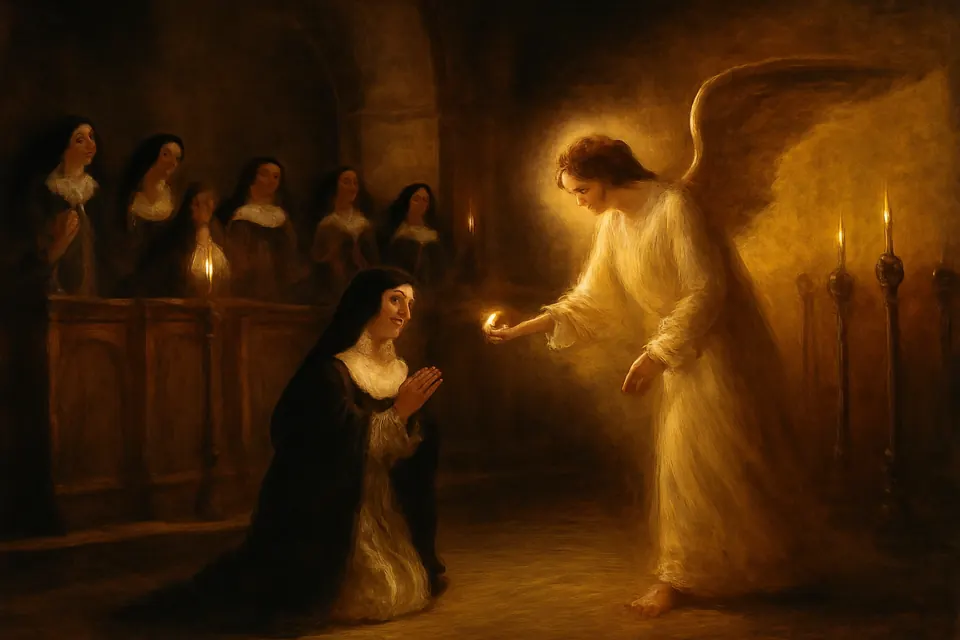
- The angel's Communion (traditional). Kept from Mass one day by a sick sister, she offered the loss to God; an angel then brought her Holy Communion in the sight of the community.
- Prayers in time of storm (traditional). When long rains threatened Vercelli, the Short Lives says Our Lady taught her prayers against storms. She had great faith in the Sign of the Cross and holy water, "and was endowed with the gift of miracles."
Death and beatification
She died at seventy-six, on May 3, 1314, her birthday. The Short Lives says she received the sacraments, embraced each of her sisters, and died with the names "Jesus, Mary, Dominic" on her lips. Pope Clement XIV confirmed her ancient cult on July 19, 1769, which made her a Blessed. In 1811 her relics were moved from the convent to Vercelli Cathedral.
Symbols of Blessed Emilia in art
- The Dominican habit: white tunic and scapular, black veil.
- The lily: her purity and her total gift of self to God.
- An angel with the Host: the story of the Communion brought to her in choir.
- The crucifix: her devotion to the Passion and the three-o'clock prayer.
- Holy water: her trust in the Church's sacramentals against storms and evil.
In Piedmontese churches and Dominican houses she is usually shown as a young sister in the Dominican habit, with an angel or a lily.
Feast day and where she is honored
Her feast is May 3 in the Roman Martyrology; older Dominican calendars placed her on August 17. Her relics rest in the Cathedral of St. Eusebius in Vercelli, the church of the city's first bishop, St. Eusebius of Vercelli, among the many saints and blesseds who rest there. See others honored in May on our feast days page.

Prayer to Blessed Emilia Bicchieri
This is the Dominican collect for her feast, as printed in the Short Lives of the Dominican Saints (1901):
O God, who gavest unto Blessed Emily, Thy Virgin, grace to despise all earthly things and to seek Thee alone, grant, through her merits and intercessions, that, despising all perishable allurements, we may love Thee with our whole heart. Through Christ our Lord. Amen.
The Short Lives also records the devotion Christ is said to have given her: three Our Fathers and three Hail Marys prayed at about three in the afternoon in honor of his Crucifixion. Let us ask Blessed Emilia to pray for religious superiors, for all who serve in humble work, and for the grace to do everything for God alone.
Frequently asked questions
Who was Blessed Emilia Bicchieri?
A daughter of the noble Bicchieri family of Vercelli, born in 1238. Around 1255 her father built and endowed a convent of St. Margaret outside the city, where she lived with other young women under the Dominican Third Order Rule. She served many years as prioress and died on May 3, 1314.
When is the feast of Blessed Emilia Bicchieri?
May 3, the day of her death in the Roman Martyrology. Older Dominican calendars, such as the one in the 1901 Short Lives of the Dominican Saints, kept her feast on August 17.
Where are the relics of Blessed Emilia Bicchieri?
In the Cathedral of St. Eusebius in Vercelli. They were first kept at her convent and moved to the cathedral in 1811.
What devotions are linked to Blessed Emilia?
Dominican tradition says that Christ promised her an increase of faith, hope and charity for all who pray three Our Fathers and three Hail Marys at about three in the afternoon in honor of his Crucifixion, and that Our Lady asked her to pray three Our Fathers and three Hail Marys for the dying.
Keep exploring
Sources
- Short Lives of the Dominican Saints, Congregation of St. Catharine of Siena (London, 1901), archive.org. Her birth on May 3, 1238, the convent of St. Margaret, Sister Cecilia, the vision about Communion, the angel bringing Communion, the three-o'clock devotion, her death, and the Dominican collect (pp. 232–236)
- Beata Emilia Bicchieri, Santi e Beati. Her father Pietro Bicchieri, the convent founded in 1255, prioress from 1273, her motto, the confirmation of her cult on July 19, 1769, and the translation of her relics in 1811 (our translations from the Italian)