St. José María Rubio, the Apostle of Madrid
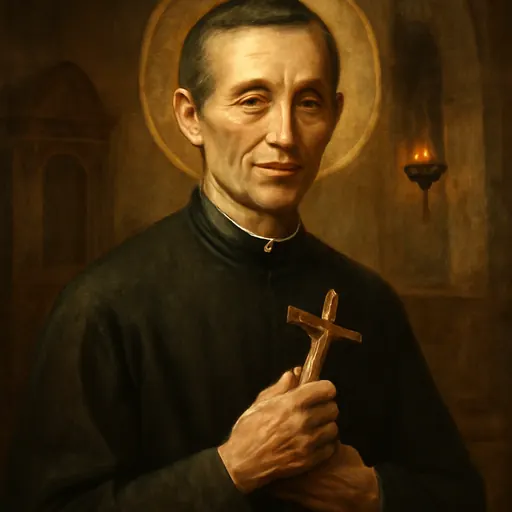
St. José María Rubio (1864–1929) was a Spanish priest who became a Jesuit at forty-two and spent his last years in Madrid hearing confessions from dawn, guiding lay people and sending them into the city's poorest districts with schools and help. The bishop of Madrid called him the Apostle of Madrid. He was canonized in Madrid in 2003, and we keep his feast on May 2, the day he died.
Who was St. José María Rubio?
St. José María Rubio was a Spanish priest who waited nineteen years to become a Jesuit and then, in the eighteen years left to him, became the best-loved confessor in Madrid. People lined up before dawn to see him. The bishop of Madrid called him "the Apostle of Madrid," and the name stuck. He died on May 2, 1929, was beatified in 1985 and was canonized by St. John Paul II in Madrid on May 4, 2003. We keep his feast on May 2, the day of his death; the Jesuits celebrate him on May 4.
A farmer's son from Almería
He was born on July 22, 1864, in Dalías, a village in the province of Almería in southern Spain. His parents were farmers and had twelve children, six of whom died young. He grew up in a Christian home, began secondary school in Almería in 1875, and the next year, feeling called to the priesthood, moved to the diocesan seminary. In 1878 he went on to the major seminary of Granada, where he studied philosophy, theology and canon law. He was ordained on September 24, 1887.
He felt drawn to the Society of Jesus even then, but he had taken on the care of an elderly priest who needed him, and he would not leave. He waited nineteen years.
Priest of Madrid
After his ordination he served as assistant pastor in Chinchón and then as pastor of Estremera, two towns south of Madrid. In 1890 the bishop called him to the capital as a synodal examiner. He taught metaphysics, Latin and pastoral theology at the Madrid seminary and was chaplain to the Bernardine nuns.
In 1905 he made a pilgrimage to the Holy Land. The next year, at forty-two, he finally entered the Jesuit novitiate in Granada, and on October 12, 1908, he made his vows as a Jesuit. From 1911 until shortly before his death he lived and worked at the Jesuit residence in Madrid.
The confessor of the city
His preaching was simple and direct, and it moved many to conversion. But it was in the confessional that Madrid came to know him. The faithful sought him out from the first hours of the morning for confession and spiritual direction, and he received rich and poor alike.
Adoration of Jesus in the Blessed Sacrament was the center of his life, and he taught the people around him that prayer came before any work. He served as chaplain to the Marías de los Sagrarios of Madrid, women devoted to keeping company with Christ in the tabernacle. His motto, as St. John Paul II recalled at his canonization, was:
Do what God wants and want what God does!
Among the poor of Madrid
Through his preaching and spiritual direction he gathered men and women who wanted to live the Gospel in earnest, and he sent them where the need was greatest. With his guidance they opened free schools that taught both reading and trades, visited the sick and the disabled, and tried to find work for the unemployed. He organized popular missions and retreats in the poorest districts on the edge of the city, such as Cuatro Caminos, Puente de Vallecas and the area around the slaughterhouse, and he brought catechism to the ragpickers who lived on what the city threw away.
He was the heart of all these works but kept to the background, letting his lay collaborators take the lead. St. John Paul II noted that many of the Christians he formed in his retreats would later die as martyrs in the religious persecution in Spain.
His death
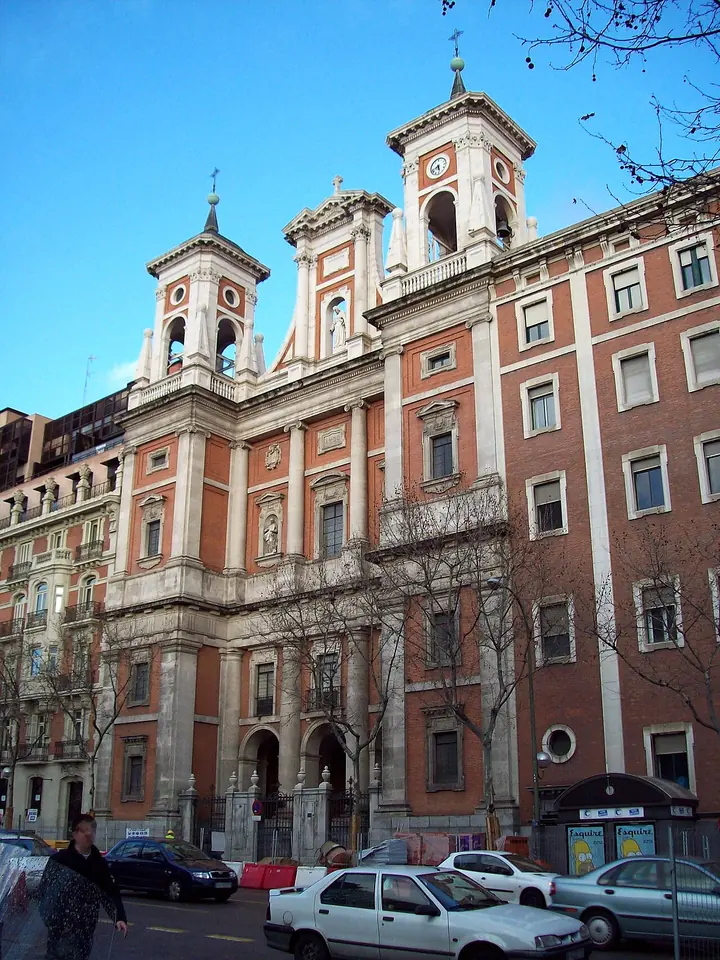
Shortly before his death he went to the Jesuit novitiate at Aranjuez, south of Madrid. Many people traveled there to see him one last time. He died on May 2, 1929, and his death brought an outpouring of grief in Madrid. He was buried in the novitiate's cemetery, and in 1953 his remains were brought back to Madrid, to the cloister of the Jesuit church on Calle de Serrano, where crowds came to venerate them.
Beatification and canonization
St. John Paul II beatified him in Rome on October 6, 1985, together with two other Spanish Jesuits, Diego Luis de San Vitores and Francisco Gárate. On May 4, 2003, the Pope canonized him at the Plaza de Colón in Madrid, the city he had served. Like every saint who was not a martyr, he was beatified and canonized only after the Church had investigated and approved miracles through his intercession. The Vatican's biography does not describe them, and we do not repeat accounts we could not verify.

Symbols of St. José María Rubio in art
He lived in the age of photography, and his images follow the photographs. Look for:
- A black Jesuit cassock: the plain dress of a priest of the Society of Jesus.
- A crucifix or a stole: the preacher and the confessor.
- The Sacred Heart or the Eucharist: the two devotions at the center of his life and his apostolate.
- A thin, gentle face: most images show him in his later years in Madrid.
Feast day and prayer
We keep his feast on May 2, the day he died, and the Society of Jesus keeps it on May 4. Pilgrims visit his tomb in the cloister of the Jesuit church on Calle de Serrano in Madrid. See the feast day calendar for other saints of May.
We know of no single traditional prayer to him that we could confirm, so we do not print one. His own motto is a prayer in itself. Let us ask St. José María Rubio to pray for confessors and spiritual directors, for the poor of our great cities, and for us, that we may learn to do what God wants and want what God does.
Frequently asked questions
Who was St. José María Rubio?
A diocesan priest from Almería who taught at the Madrid seminary, entered the Society of Jesus in 1906, and from 1911 worked at the Jesuit residence in Madrid as a confessor, preacher and spiritual director. With the lay people he formed, he opened free schools, cared for the sick and sought work for the unemployed in the poorest neighborhoods of the city.
When is the feast of St. José María Rubio?
May 2, the day of his death in 1929. The Jesuits keep his memorial on May 4.
What was St. José María Rubio's motto?
"Do what God wants and want what God does!" St. John Paul II quoted it as his motto at the canonization in Madrid.
Where is St. José María Rubio buried?
In the cloister of the Jesuit church on Calle de Serrano in Madrid, dedicated to the Sacred Heart and St. Francis Borgia. His body was moved there in 1953 from the cemetery of the Jesuit novitiate at Aranjuez, where he died.
Keep exploring
Sources
- José María Rubio y Peralta (1864–1929): biography (Vatican, canonization of May 4, 2003). His birth, family, studies, ordination on September 24, 1887, his posts, the 19-year delay, his Jesuit vows on October 12, 1908, his works and death, beatification on October 6, 1985
- John Paul II, Homily at the Mass and canonization at Plaza de Colón, Madrid, May 4, 2003. His motto and the many he formed who later died as martyrs
- Saint José Maria Rubio (The Society of Jesus). His life at the Professed House of Madrid from 1911 and his death at the novitiate in Aranjuez
- "José María Rubio y Peralta, Santo" (Catholic.net, in Spanish). The neighborhoods where he worked, the transfer of his remains to the church on Calle de Serrano in 1953