St. John Houghton
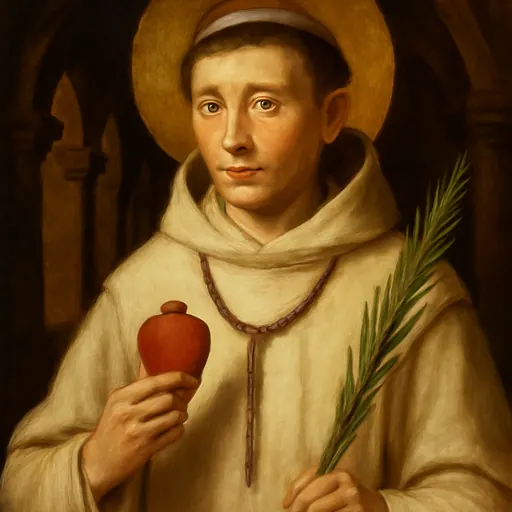
St. John Houghton (1487–1535), Carthusian prior of the London Charterhouse, rejected King Henry VIII as supreme head of the Church in England. In 1535 he died at Tyburn, the first martyr of the English Reformation. We keep his feast on May 4, and he is one of the Forty Martyrs of England and Wales canonized in 1970.
Who was St. John Houghton?
St. John Houghton was the prior of the London Charterhouse, a house of Carthusian monks just outside the old city walls, and the first martyr of the English Reformation. On May 4, 1535, he was dragged to Tyburn and executed for refusing to swear that King Henry VIII was supreme head of the Church in England. Hundreds of English and Welsh Catholics would follow him over the next century and a half. He went first.
We keep his feast on May 4. Pope Paul VI canonized him on October 25, 1970, among the Forty Martyrs of England and Wales. (For what the Church means by the word, see what is a martyr.)

The life of St. John Houghton
From Cambridge to the Charterhouse
John Houghton was born in Essex in 1487 and studied law at Cambridge, where St. John Fisher was chancellor. According to his first biographer, Dom Maurice Chauncy, a monk of his own house, his parents hoped to see him married; instead he slipped away to a priest who hid him until he was ordained. After four years as a parish priest he asked to join the Carthusians, the strict contemplative order founded by St. Bruno. The Catholic Encyclopedia dates his entry to the London Charterhouse to 1505 and his profession to 1516.
Chauncy remembered him as short, graceful and modest, "winning in speech." He served as sacristan and then procurator, and in 1531 he was elected prior of Beauvale in Nottinghamshire. A few months later the London monks called him home as their prior by a unanimous vote. He disliked titles. "It is not lawful," he would say, "for a poor Carthusian monk to broaden the fringes of his garment or be called by men Rabbi."
The oath
In 1534 royal commissioners came to the Charterhouse to demand the oath to the new Act of Succession. Houghton answered that it was no business of monks whom the king married, but that he could not see how a marriage solemnized by the Church could be undone. He and his procurator, Humphrey Middlemore, spent a month in the Tower. On the advice of men they trusted, they took the oath "as far as it was lawful," and the community followed on May 29, 1534.
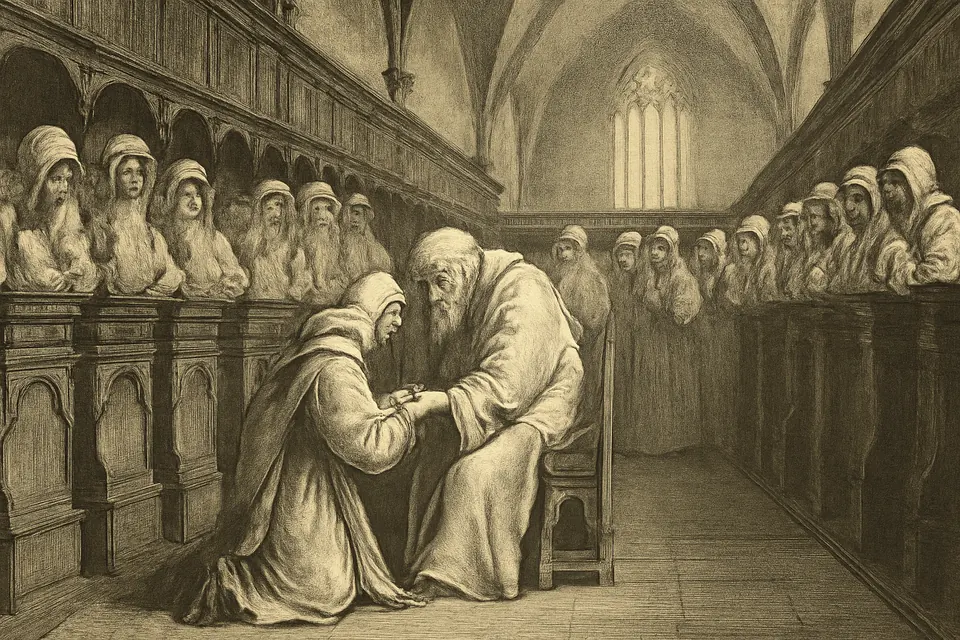
The next year Parliament made the king supreme head of the Church in England and made denying it high treason. Houghton knew what was coming. He gave his monks three days of preparation. On the first, all made a general confession. On the second, after speaking to them on charity and patience, he rose from his place, knelt before the oldest monk in the house and asked his forgiveness, and then went to every monk in turn, down to the last lay brother. The others did the same.
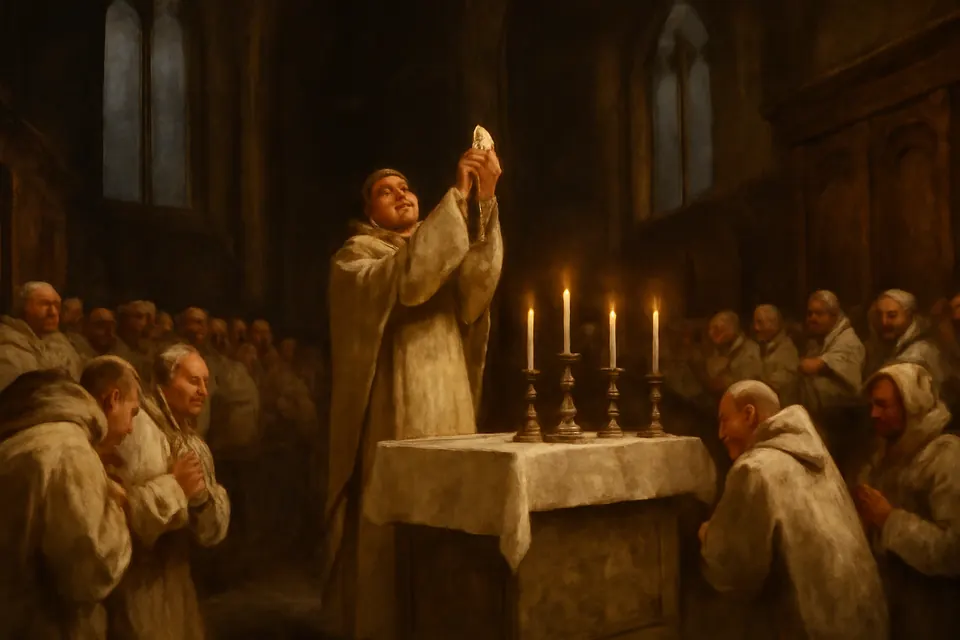
On the third day he sang a votive Mass of the Holy Spirit. Chauncy, who was there, writes that at the elevation the monks heard "the sound of a gentle wind," and the prior wept so freely that for a long time he could not go on. It is a reported grace, set down by an eyewitness, not a miracle the Church has ever examined.
Trial and martyrdom
In April 1535 Houghton went with two visiting priors, Robert Lawrence of Beauvale and Augustine Webster of Axholme, to ask Thomas Cromwell for a milder form of the oath. Cromwell sent all three to the Tower. They offered to swear "as far as the law of God permits," and Cromwell refused any condition. The jury at their trial would not convict until Cromwell came in person and frightened them into it.
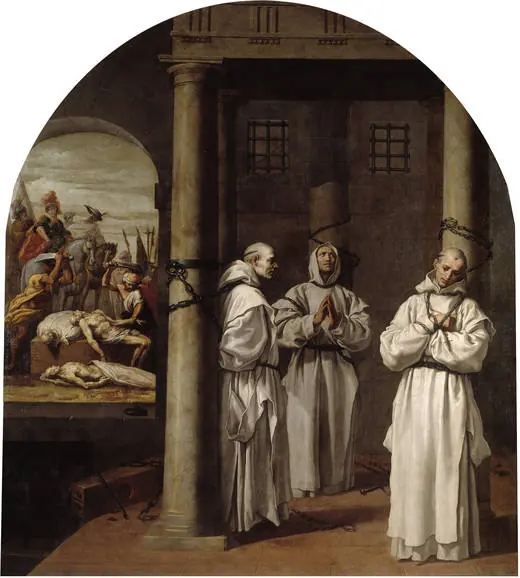
On May 4 the three priors, the Bridgettine monk St. Richard Reynolds and the priest John Haile were dragged on hurdles to Tyburn. From his cell in the Tower, St. Thomas More watched them go and told his daughter Margaret that they went "as cheerfully going to their deaths, as bridegrooms to their marriage."
Houghton was first. On the ladder he refused a last offer of pardon and spoke to the crowd:
I call God to witness, and beg of you all likewise to bear me witness at the dread judgment day, that here, about to die, I declare publicly that I refuse to comply with the will of our Lord the King, not out of any pertinacity, malice, or rebellious disposition, but only from the fear of God, lest I should offend His Sovereign Majesty.
He asked them to "pray for me, and pity my brethren whose unworthy prior I have been," and recited the psalm "In Thee, O Lord, have I hoped." He was cut down alive and butchered, praying all the while. Chauncy gives his last words: "Good Jesus, what will ye do with my heart?" One quarter of his body, with an arm, was nailed over the gate of his own monastery. Within three years, more of his monks had died for the same cause.
Why St. John Houghton matters
He was not a politician and never wanted to be one. He was a contemplative who prepared his community for death by confession, mutual forgiveness and the Mass, and then walked ahead of them. That is why Catholics in England have long called him the protomartyr of the persecution. When Leo XIII beatified the English martyrs in 1886, he was among them.
Symbols of St. John Houghton in art
The Carthusians of Spain painted their London brothers often, so the best images of him are Spanish:
- The white Carthusian habit: he died in it, by the king's order, and he is always shown wearing it.
- A heart in his hand: from his last words, "what will ye do with my heart?" Zurbarán's portrait above shows it clearly.
- A rope around the neck: the gallows rope at Tyburn.
- The martyr's palm: as for every martyr.
Vicente Carducho's great cycle for the Charterhouse of El Paular near Madrid, now owned by the Prado, tells the story of the London Carthusians in several large arched paintings. If you see three white-robed monks on hurdles behind horses, you are looking at Houghton, Lawrence and Webster.
Feast day and places to visit
His feast is May 4, with all the English martyrs, and he is honored again on October 25 with the Forty Martyrs. See more on our feast days page.
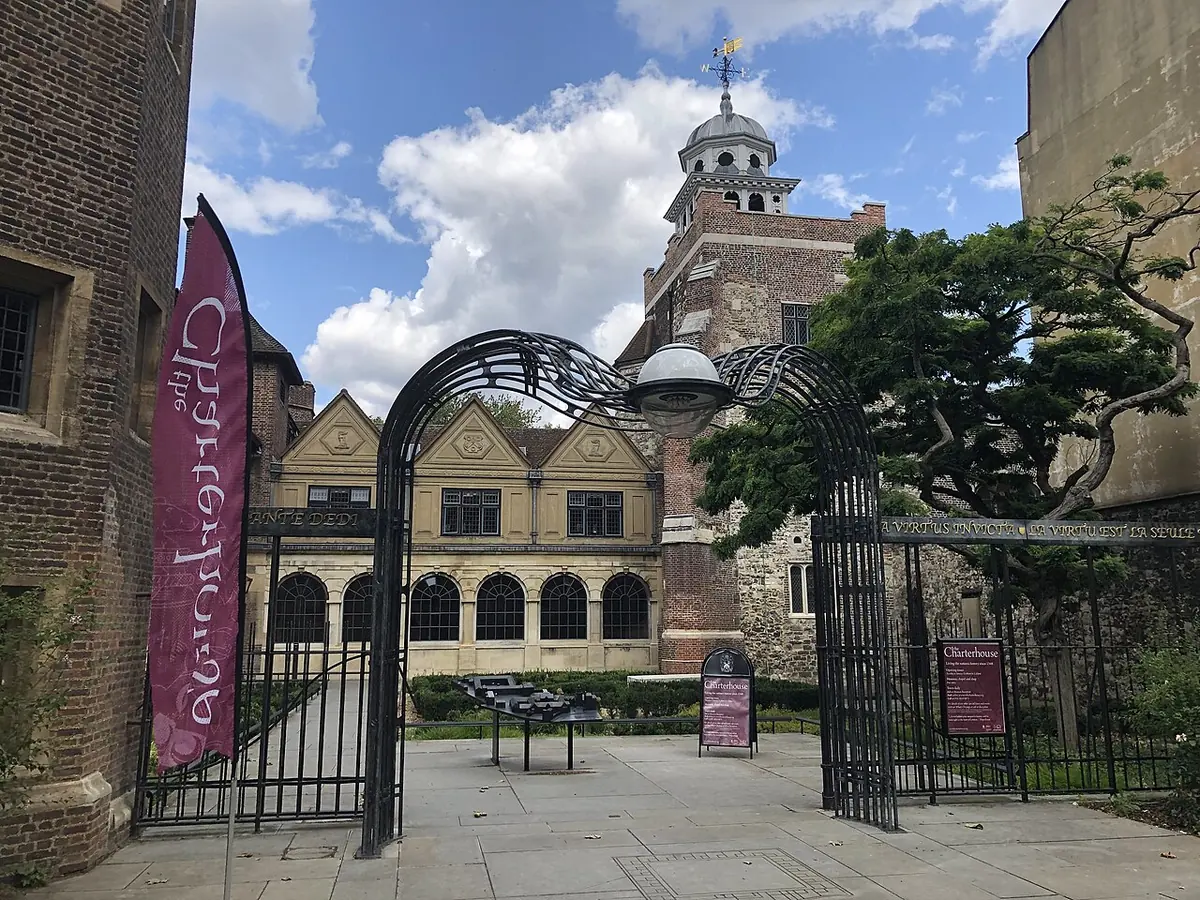
The London Charterhouse still stands on Charterhouse Square, though the monks are long gone. After the dissolution the buildings became a mansion and later a school and almshouse, and the site is open to visitors.
Praying with St. John Houghton
We know of no traditional prayer composed in his honor, so we don't print one here. The Church keeps his memory in the Mass of the English martyrs.
Let us ask St. John Houghton to pray for monks and nuns, for priors and all who lead communities, for those who must choose between their conscience and their safety, and for the unity of the Church in England. St. John Houghton and all you holy martyrs, pray for us.
Frequently asked questions
Who was St. John Houghton?
He was an English Carthusian monk, prior of the London Charterhouse from 1531, and the first person put to death for refusing the Oath of Supremacy under Henry VIII. He died at Tyburn on May 4, 1535.
When is the feast day of St. John Houghton?
May 4, the anniversary of his martyrdom, which England keeps as the feast of all its Reformation martyrs. He is also honored with the Forty Martyrs of England and Wales on October 25.
What were St. John Houghton's last words?
The Carthusian chronicler Maurice Chauncy, who lived in his monastery, records that he prayed throughout and, at the very end, said, "Good Jesus, what will ye do with my heart?"
Why is St. John Houghton shown holding a heart?
Because of those last words. Painters such as Zurbarán show him holding his own heart as the sign of his martyrdom, often with the rope of the gallows around his neck.
Keep exploring
Sources
- Catholic Encyclopedia (1910): Blessed John Houghton. His offices in the Order, the first imprisonment of 1534 and the trial of April 1535
- Bede Camm, ed., Lives of the English Martyrs, vol. 1 (1904), on archive.org. Chauncy's account of the Mass of the Holy Spirit, the trial, the speech at Tyburn and his last words; the quarter set over the monastery gate
- Pope Paul VI, homily for the canonization of the Forty Martyrs of England and Wales, October 25, 1970. Canonization