Blessed Ulrika Nisch of Hegne

Blessed Ulrika Nisch (1882–1913) was a German servant girl who joined the Sisters of Mercy of the Holy Cross at Hegne and served as a kitchen sister, praying without ceasing at the stove. She died of tuberculosis at thirty. John Paul II beatified her in 1987, and her tomb there draws pilgrims daily. Her feast is May 8.
Who was Blessed Ulrika Nisch?
Blessed Ulrika Nisch was a kitchen sister who became a mystic at the stove. Born Franziska Nisch into a very poor family in Württemberg, she worked as a maid from sixteen, entered the Sisters of Mercy of the Holy Cross at Hegne on Lake Constance, cooked for others for a few short years, and died of tuberculosis at thirty. Nothing she did looked great. Yet her sisters and the girls she trained saw a woman for whom, as one witness quoted by John Paul II put it, "everything had become prayer."
Pope John Paul II beatified her on November 1, 1987. We keep her feast on May 8.
A poor girl who loved to pray
Franziska was born on September 18, 1882, at Oberdorf in the parish of Mittelbiberach, the first of eleven children of a family the Dicastery for the Causes of Saints calls "extremely poor." She grew up partly with an aunt, whose inn she helped run, and went to school in Unterstadion, where she helped her father deliver the bread from his baking oven. As a child she was drawn to slip into church and stay there quietly in prayer.
At sixteen she went into service as a maid and nanny. In October 1901, hoping for better wages to help her parents and brothers and sisters, she took a post in Rorschach, Switzerland. There she fell seriously ill and was nursed in the hospital by the Sisters of Mercy of the Holy Cross of Ingenbohl. The meeting confirmed her old wish to become a sister.

Sister Ulrika in the kitchen
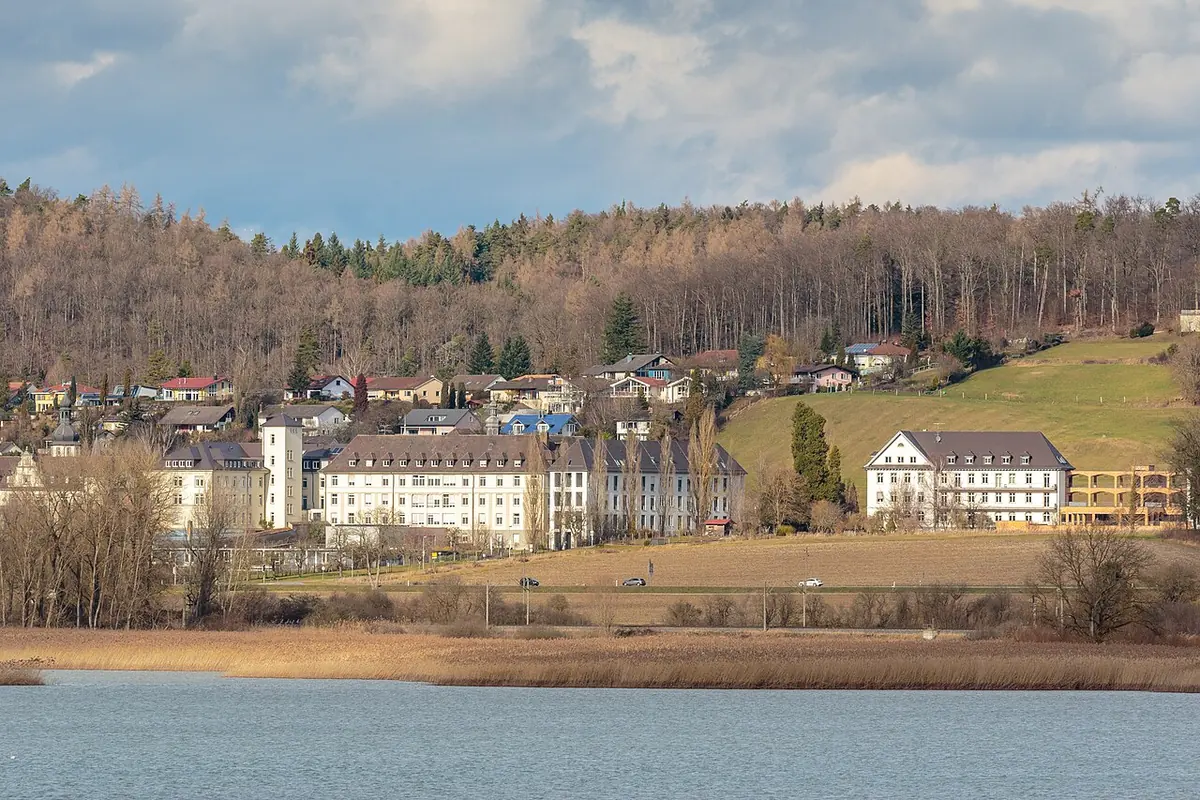
In October 1904 she entered the sisters' provincial house at Hegne, near Konstanz. At her clothing in April 1906 she received the name Ulrika, and she made her vows in April 1907. She was sent to cook, first at the hospital in Bühl and then as second cook at the St. Vincent house in Baden-Baden, where she stayed about four years.
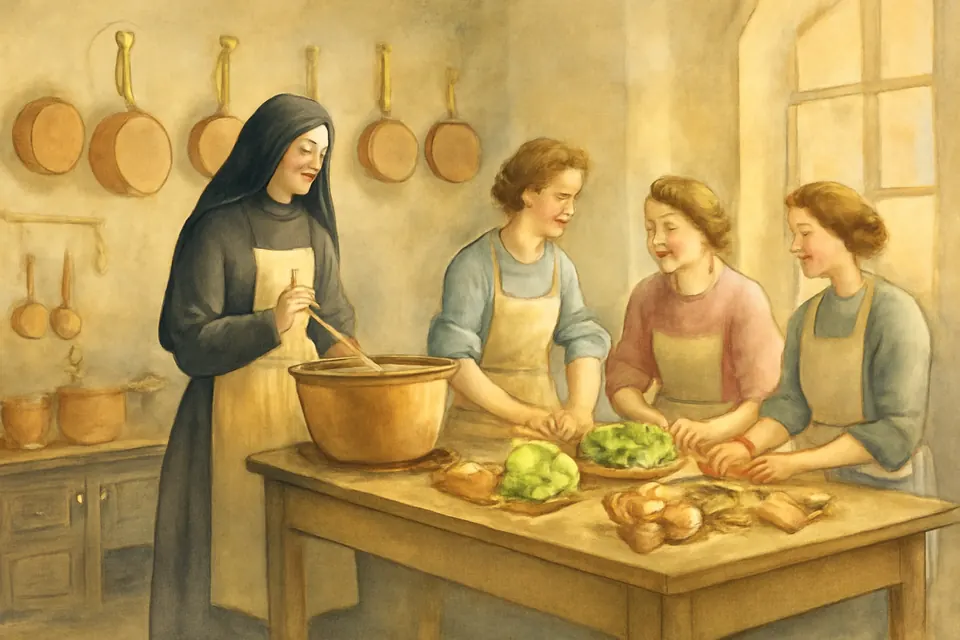
She also trained the young women who came to learn cooking. They remembered her as a capable teacher and as a woman full of love, who often sang, danced and laughed with them. They also saw her praying while she worked. John Paul II, in his beatification homily, spoke of a time of darkness she passed through in prayer, and of the people who felt, in her presence, "as if in paradise."
Two of her sayings are kept by the community at Hegne (our translations from the German):
I am poor and yet I have everything. O life, O riches!
Love knows no measure.
Illness and death
In the spring of 1912 she was diagnosed with tuberculosis, then one of the commonest causes of death. She grew worse quickly and in July 1912 was brought back to Hegne, to the sisters' hospital of St. Elisabeth. She died there on the evening of May 8, 1913, not yet thirty-one.
The cause and the miracle
Devotion to her began among the girls she had trained and grew steadily after her death. A book laid at her grave from June 1951 to February 1953 collected more than twenty thousand entries from visitors. The cause for beatification opened in 1952, and she was declared Venerable in 1984.
- Approved: on January 3, 1987, Pope John Paul II recognized a medically unexplained healing through her intercession as a miracle.
- Reported: the Hegne community speaks of countless people who testify to her help and intercession; these are private accounts, not formally investigated.
She was beatified in Rome on the Solemnity of All Saints, November 1, 1987, together with Brother Arnould Rèche and Sister Blandine Merten. The Pope said, in the Italian text of his homily (our translation), that she could be beatified because in her thirty-one years "the conditions set by the Beatitudes of the Gospel were fulfilled."
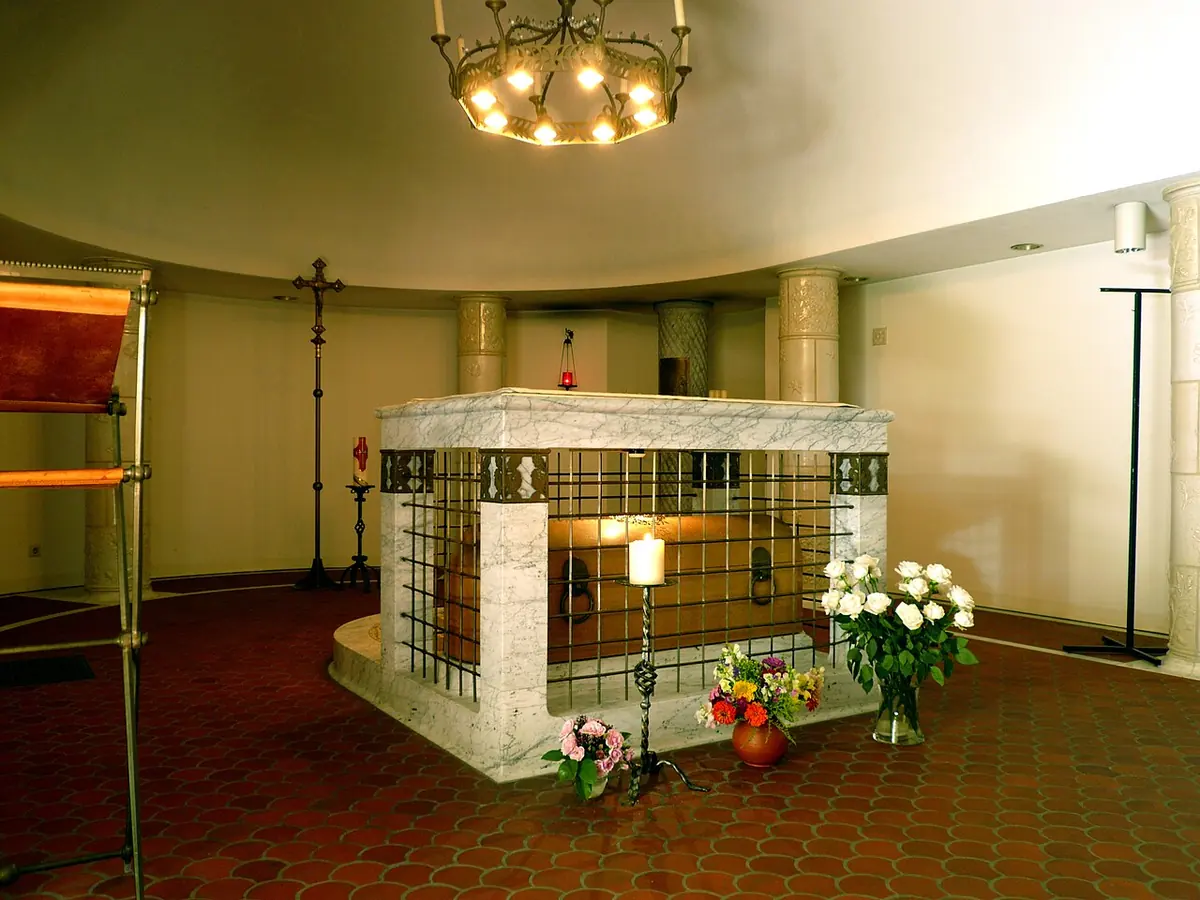
Her tomb at Hegne
On May 5, 1991, her remains were moved into a new crypt built beneath the convent church of St. Konrad at Hegne. The crypt is open every day. People come to sit in the silence, light a candle and ask for her prayers. A pilgrims' Mass is held there each Wednesday, and on the 8th of every month, in memory of the day she died, there is an hour of adoration.
Symbols of Blessed Ulrika Nisch in art
Her images are modern and simple:
- The black habit and veil of the Sisters of Mercy of the Holy Cross;
- A work apron, a pot or a ladle, for the kitchen where she served;
- The rosary or folded hands, for the unbroken prayer people saw in her;
- Sometimes a lily, for purity of heart, the Beatitude John Paul II applied to her.
Feast day and prayer
We keep the feast of Blessed Ulrika Nisch on May 8. See the feast day calendar.
We know of no older traditional prayer to her in English. Let us ask Blessed Ulrika to pray for cooks, housekeepers and all who serve others in hidden ways, for the sick, and for the grace to pray while we work.
Frequently asked questions
Who was Blessed Ulrika Nisch?
Franziska Nisch, the eldest child of a poor family in Württemberg, worked as a maid and nanny from sixteen, met the Sisters of Mercy of the Holy Cross while in the hospital, and joined them at Hegne in 1904, taking the name Ulrika. She worked as a cook in Bühl and Baden-Baden and died of tuberculosis at Hegne on May 8, 1913.
What miracle led to Ulrika Nisch's beatification?
On January 3, 1987, Pope John Paul II recognized a medically unexplained healing through her intercession as a miracle. She was beatified in Rome on November 1, 1987, with Brother Arnould Rèche and Sister Blandine Merten.
Where is Blessed Ulrika Nisch buried?
In the crypt under the convent church of St. Konrad at Kloster Hegne, on the Untersee of Lake Constance near Konstanz. Her remains were moved there on May 5, 1991. The crypt is open daily.
When is the feast of Blessed Ulrika Nisch?
May 8, the day she died in 1913.
Keep exploring
Sources
- Theodosius Akademie, Kloster Hegne: Leben und Botschaft (Sr. Ulrika). Her childhood, work in Rorschach, entry at Hegne, kitchen work, the 20,000 entries in the grave book, the miracle of January 3, 1987, the transfer of 1991 and her sayings (in German)
- Theodosius Akademie, Kloster Hegne: Krypta. The crypt built 1988–1991 and the monthly hour of adoration on the 8th (in German)
- Dicastery for the Causes of Saints: Ulrika Nisch. Short biography and John Paul II's beatification homily of November 1, 1987 (in Italian)