St. Hugh of Cluny (Hugh the Great)

St. Hugh of Cluny, called Hugh the Great, was abbot of Cluny from 1049 to 1109 and a trusted adviser of popes and kings during the eleventh-century reform of the Church. He began the third abbey church of Cluny, for centuries the largest in Christendom. Pope Callistus II canonized him in 1120, and we keep his feast on April 29.
Who was St. Hugh of Cluny?
St. Hugh of Cluny, remembered as Hugh the Great, was the abbot of the Benedictine abbey of Cluny in Burgundy for sixty years, from 1049 until his death in 1109. In those years Cluny was the heart of a family of monasteries that stretched across France, Spain, Italy, Germany and England. Hugh was the friend of St. Gregory VII and of pope after pope, the godfather of an emperor and the counselor of kings, and through all of it he remained a monk who loved the choir, the poor and his brothers.
We keep his feast on April 29.
Early life and vocation
Hugh was born in 1024 at Semur-en-Brionnais, the eldest son of Count Dalmatius of Semur and his wife Aremberge. His father wanted a knight to inherit the family lands. His mother, the old biographers say, had been told by a priest's vision that her son belonged to God. The boy himself had no taste for hunting or war, and his father finally entrusted him to his great-uncle Hugh, Bishop of Auxerre, to be prepared for the priesthood.
At fourteen he entered the novitiate at Cluny. The monks allowed him to take his vows a year later, without the usual long probation, and he was a priest at twenty. They soon made him grand prior, in charge of the daily life of the whole house. When the holy abbot Odilo died on January 1, 1049, the community elected Hugh in his place. He was twenty-five.
Abbot of Cluny
Cluny had been founded in 910 under the direct protection of the Holy See, free from the control of local lords. Under Hugh that freedom became a gift he could share. Monasteries all over Europe asked to be joined to Cluny so that they could escape the grip of nobles who sold church offices. New houses opened in France, Spain, Italy and Germany. In 1077 Hugh founded the priory of St. Pancras at Lewes, the first Cluniac house in England.
The friend of popes
The same year he was elected, Hugh spoke so forcefully against simony at the Council of Reims, in the presence of Pope Leo IX, that the Pope took him to Rome for his next council. Pope Stephen IX died in his arms in Florence in 1058. When Hildebrand became Pope Gregory VII, he wrote to Cluny asking for Hugh's help with the reform. In one letter Gregory described him as a man "whom no imprecation, no applause or favours, no personal motives can divert from the path of rectitude."
Canossa
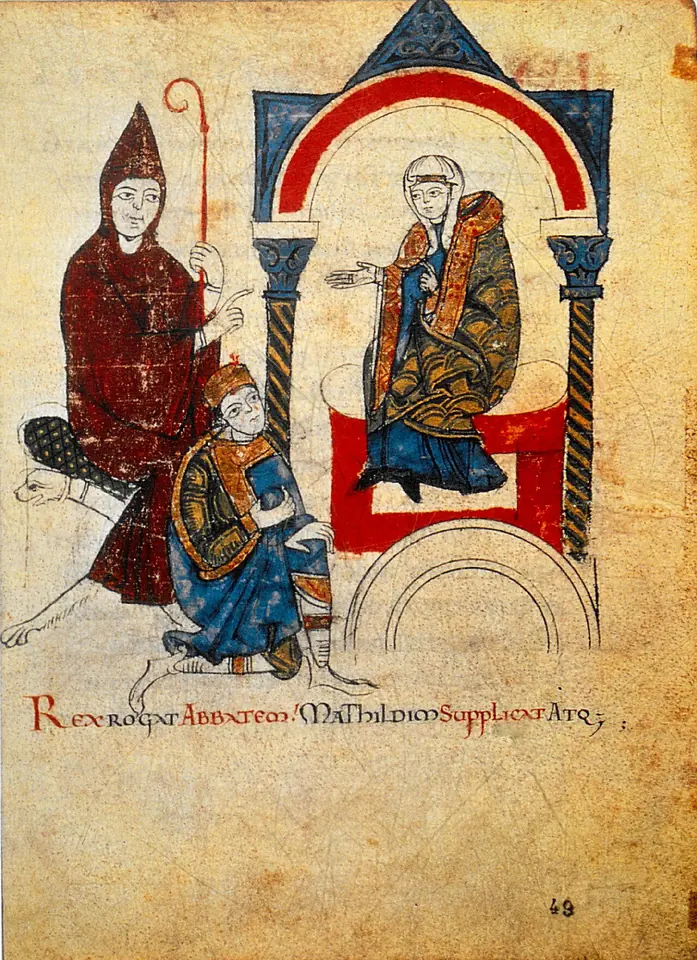
Hugh's hardest task was peace between Gregory and the young Emperor Henry IV, his own godson. In January 1077 he went to Canossa, and with Countess Matilda of Tuscany he helped bring about the meeting at which the Pope lifted the emperor's excommunication. The reconciliation did not last, but Hugh never stopped working for it. Henry wrote to him as his "dearest father" until the emperor's death in 1106.
The great church
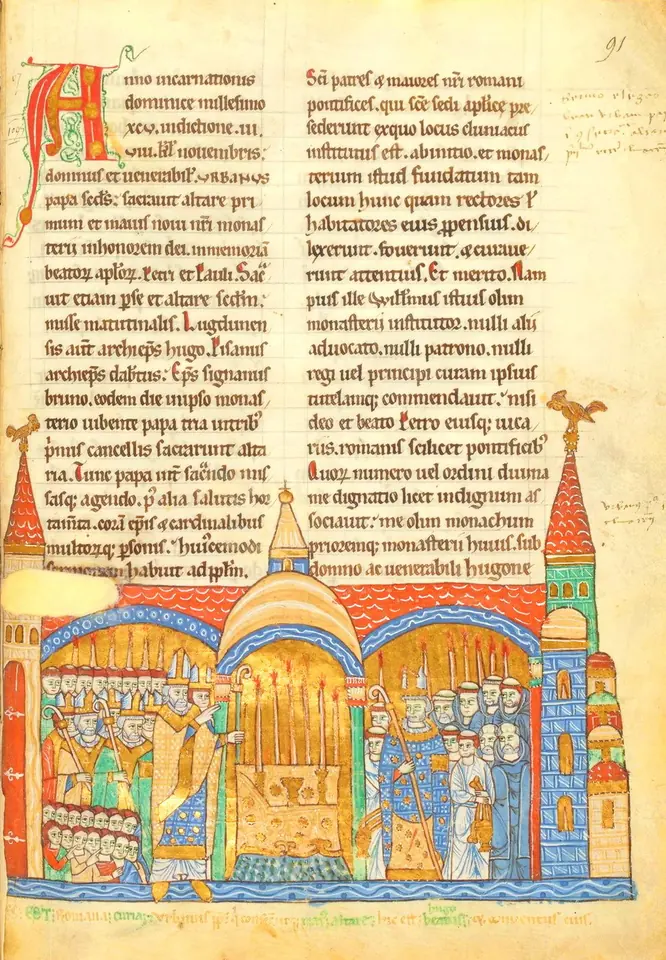
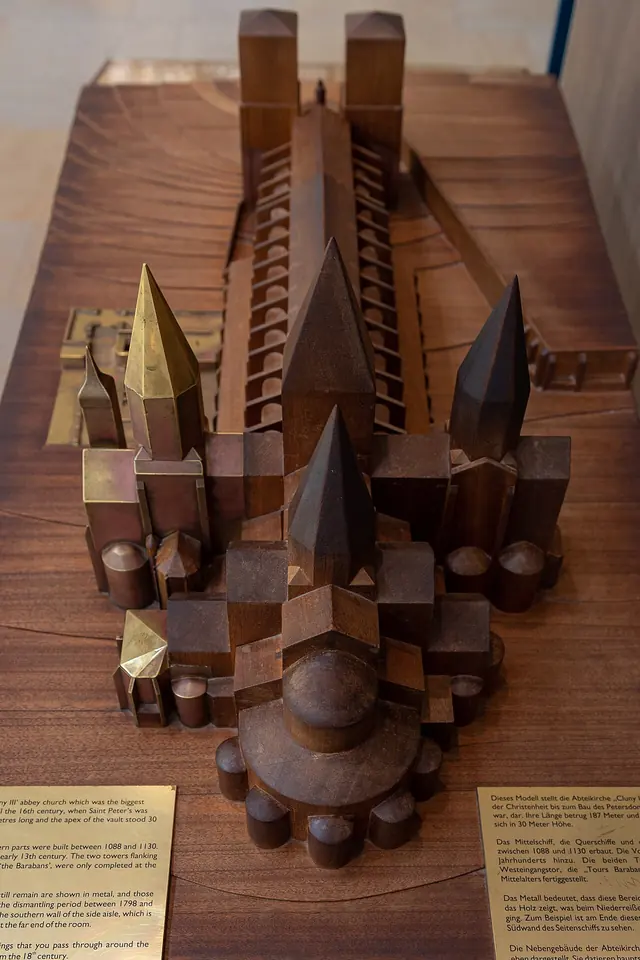
In 1089 Hugh began a new abbey church at Cluny, the church historians call Cluny III. It was 555 feet long, with five aisles and a forest of towers, and until the building of the new St. Peter's in Rome it was the largest church in Christendom. On October 25, 1095, Pope Urban II, who had been one of Hugh's monks, consecrated its high altar. A few weeks later at the Council of Clermont, the council that launched the First Crusade, Hugh helped draft and publish the decrees.
A father to his monks and to the poor
For all his travels, Hugh was first a monk. He gave great care to the liturgy at Cluny; one of his customs, singing the Veni Creator Spiritus at Terce on Pentecost, later spread to the whole Roman Church. He founded the convent of nuns at Marcigny, where his sister became the first prioress in 1061 and his mother took the veil. He built a house for lepers and did the lowliest work there himself. He taught in the abbey school, and his favorite study was Scripture.
His holy death and canonization
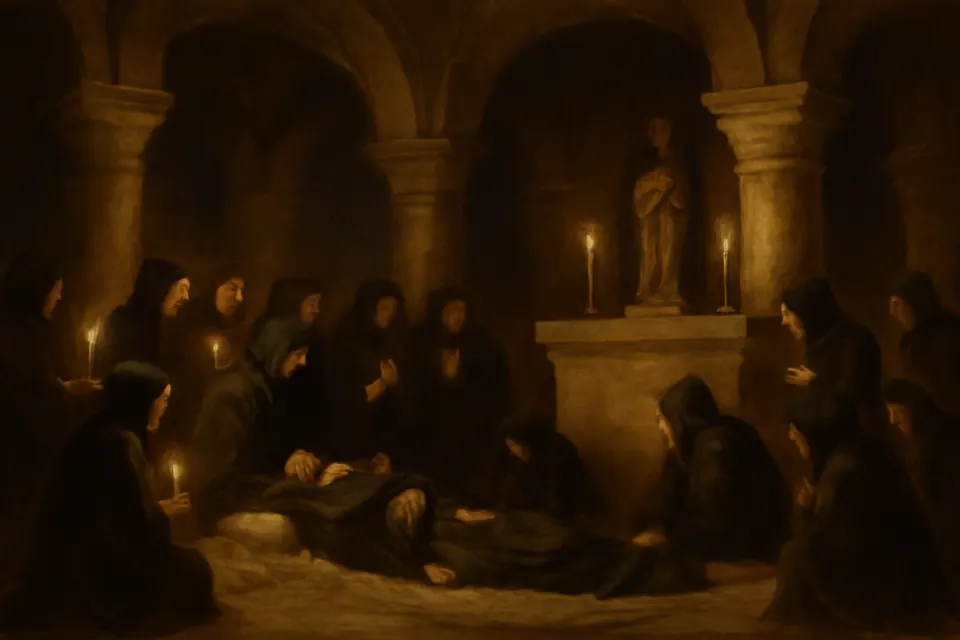
In the spring of 1109, worn out, Hugh asked for the Last Sacraments. He gathered his monks, gave each the kiss of peace, and dismissed them with the word Benedicite. Then he asked to be carried to the chapel of Our Lady. There he was laid on sackcloth and ashes before her altar, and he died on the evening of Easter Monday, April 28, 1109.
Reported miracles soon followed at his tomb. Pope Gelasius II came to Cluny as a pilgrim and died there in January 1119. His successor, Callistus II, elected at Cluny itself, opened the cause at once and declared Hugh a saint on January 6, 1120, appointing April 29 as his feast. His remains were moved to a costly shrine in 1220, but in 1575, during the Huguenot rising, the shrine disappeared with all but a few relics.
Symbols of St. Hugh of Cluny in art
Hugh is not often painted, and he has no single fixed attribute. In medieval manuscripts he appears as a Benedictine abbot:
- The crozier: the shepherd's staff of an abbot.
- The black habit and cowl: Cluny's monks wore the black of the Benedictines.
The best-known picture of him is a miniature painted only six years after his death, in Donizo's Life of Matilda: a hooded abbot with a crozier, the emperor kneeling before him, Countess Matilda enthroned beside. Its Latin caption reads "The king asks the abbot, and humbly begs Matilda."
Cluny today and a prayer
The French Revolution sold Cluny's abbey church, and it was almost entirely torn down for building stone. Only one arm of the great transept and its octagonal bell tower still stand, but visitors can walk the site and the abbey grounds.
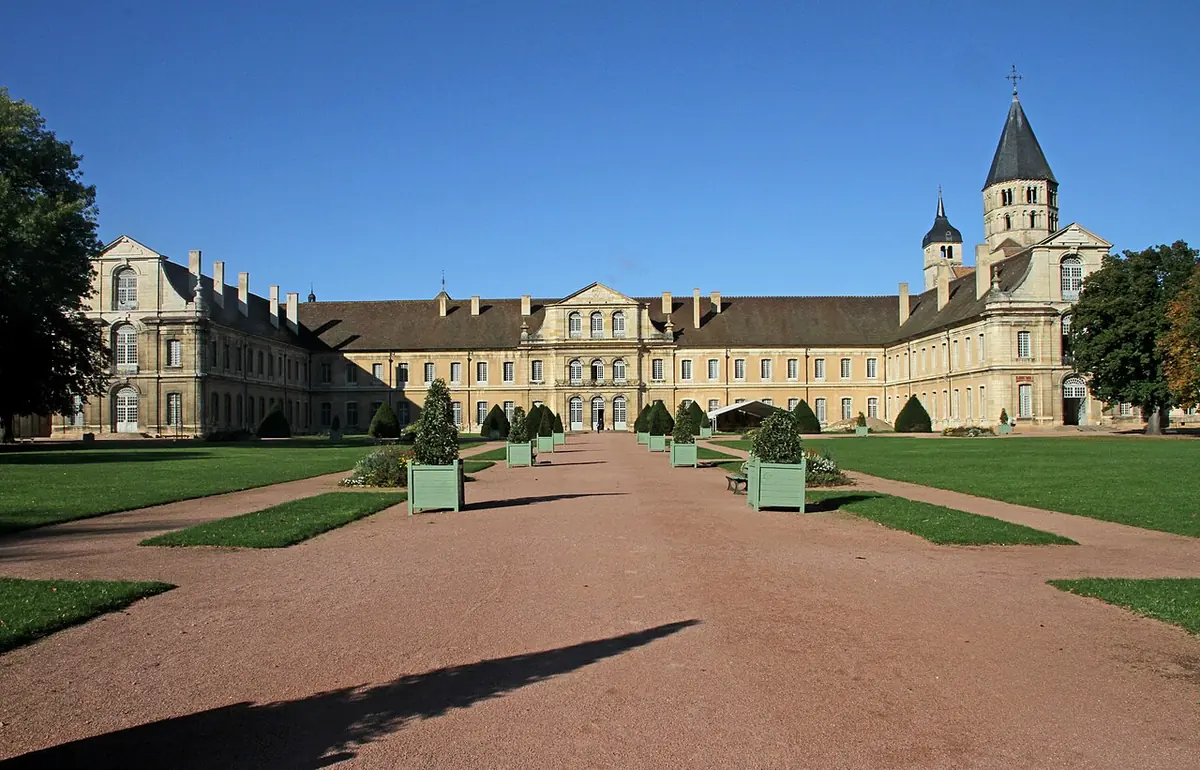
We keep his feast on April 29; see the feast day calendar. No traditional prayer to St. Hugh is in common use. Let us ask him, who served so many popes and never stopped praying for an emperor who failed him, to pray for peace between the Church and the powers of the world, for monks and nuns, and for all who work for reform with patience. Bishop Bruno of Segni wrote of the old abbot that he was "a man in all things most laudable, difficult of comparison, and of wonderful sanctity."
Frequently asked questions
Who was St. Hugh of Cluny?
The sixth abbot of Cluny, elected in 1049 at the age of twenty-five. Under him hundreds of monasteries joined Cluny's family of houses, and he worked with Popes Leo IX, Gregory VII and Urban II for the reform of the clergy.
When is the feast of St. Hugh of Cluny?
April 29. He died on the evening of Easter Monday, April 28, 1109, and Pope Callistus II named April 29 as his feast when he canonized him on January 6, 1120.
What did St. Hugh have to do with Canossa?
He was the godfather of Emperor Henry IV and a friend of Pope Gregory VII. In January 1077 he went to Canossa and, with Countess Matilda of Tuscany, helped bring about the reconciliation between the pope and the emperor.
Is St. Hugh of Cluny the same as St. Hugh of Grenoble or St. Hugh of Lincoln?
No. St. Hugh of Grenoble was a bishop who helped St. Bruno found the Carthusians, and St. Hugh of Lincoln was a Carthusian bishop in England. Hugh of Cluny was the Benedictine abbot of Cluny.
Keep exploring
Sources
- Catholic Encyclopedia (1910): St. Hugh the Great. His family, election, Canossa, his death on sackcloth, the canonization of 1120, the shrine destroyed in 1575, and the words of Gregory VII and Bruno of Segni
- Catholic Encyclopedia (1908): Congregation of Cluny. The abbey church, 555 feet long, begun by Hugh in 1089 and the largest church in Christendom until St. Peter's; Lewes Priory (1077)